



Cut Glass Stopper
A cut glass stopper seals spirits, wine and perfume with brilliant weight and precision.
Cut Glass Stopper
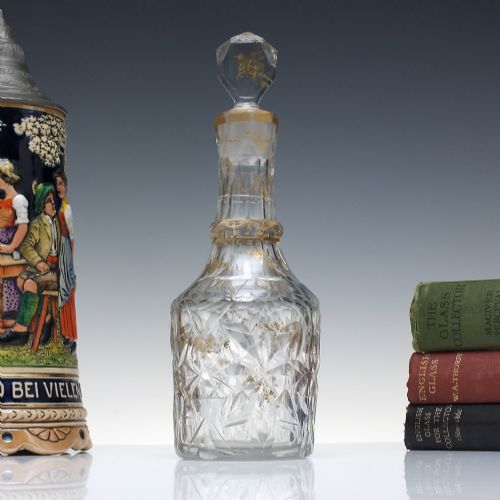
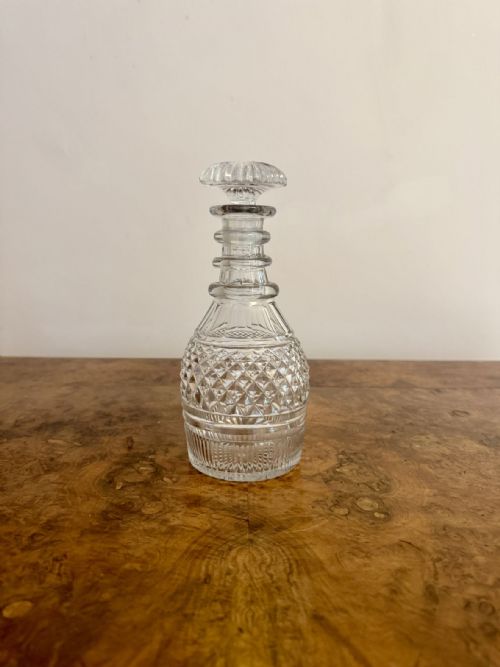
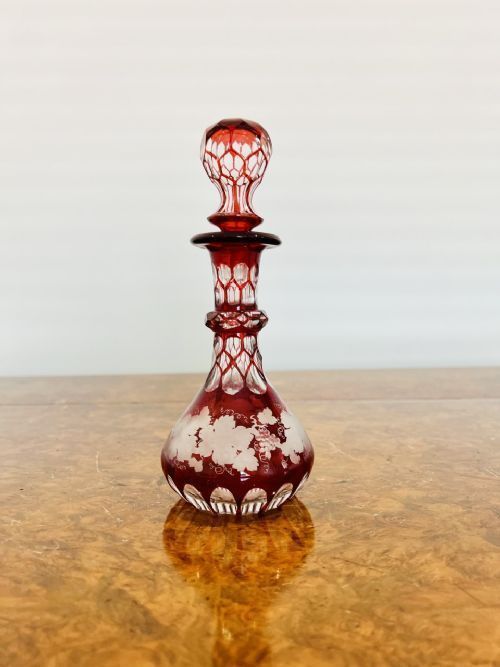
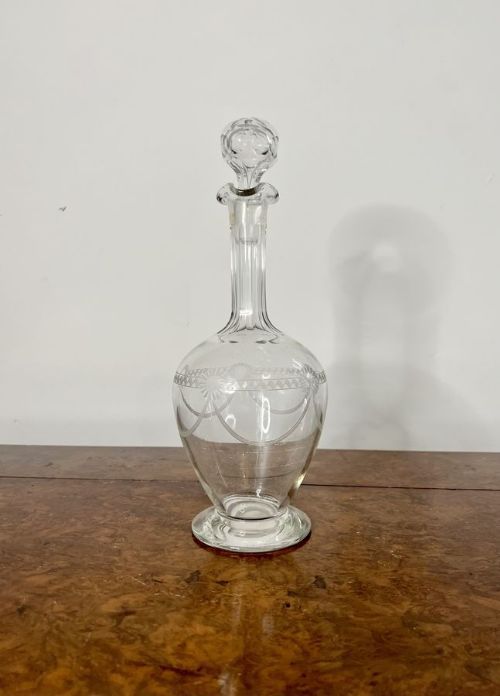
When searching for a cut glass stopper, buyers encounter vessels designed to hold wine, spirits and perfume across several centuries of British and European craftsmanship. The selection centres heavily upon Edwardian and Victorian decanters, alongside Georgian, Regency and George V examples that serve similar functions.
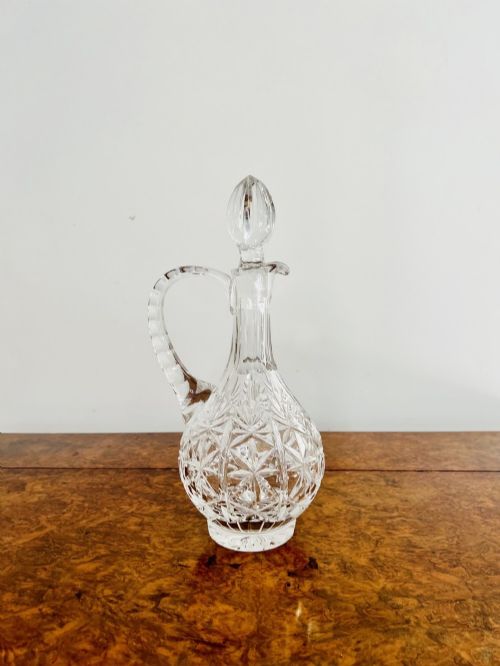
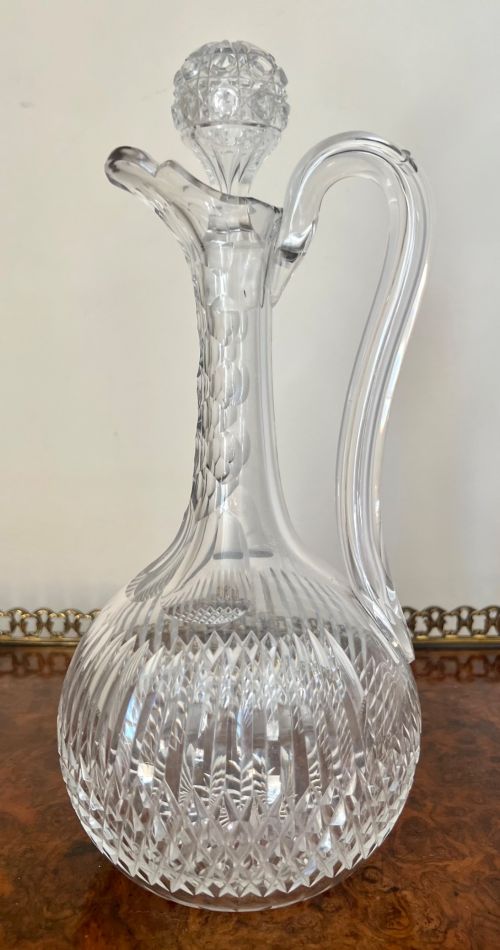
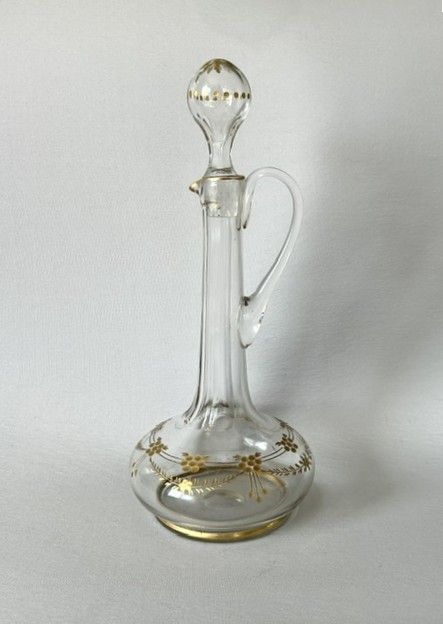
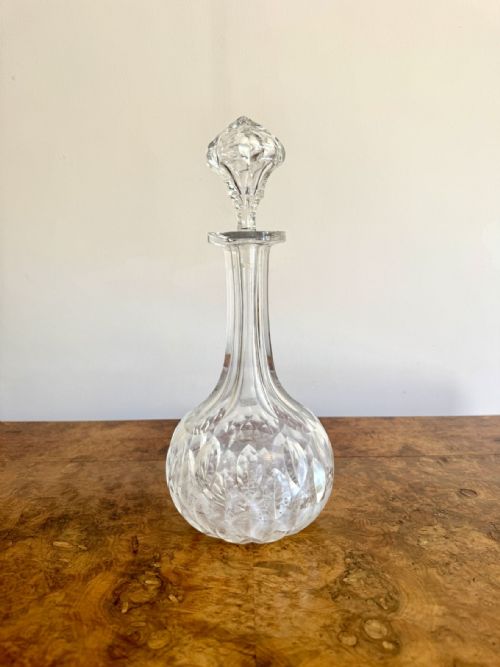
Most pieces on this page combine heavy glass bodies with matching stoppers, appearing as decanters, scent bottles, claret jugs and perfume bottles. Forms range from bell-shaped and ship's decanters to shaft and globe profiles, often finished with star-cut bases.
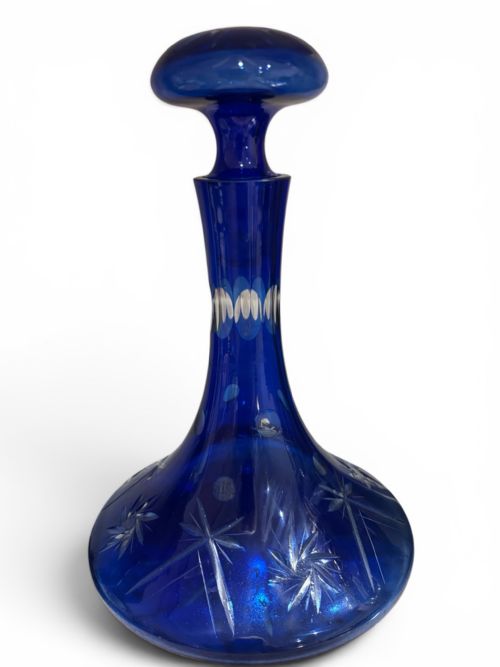
Materials span clear glass, lead crystal and cut crystal, frequently accented with sterling silver collars, silver plate or gilding. Bohemian makers also contribute coloured crystal variations, including cobalt and amber vessels.
Glass cutting and mounting
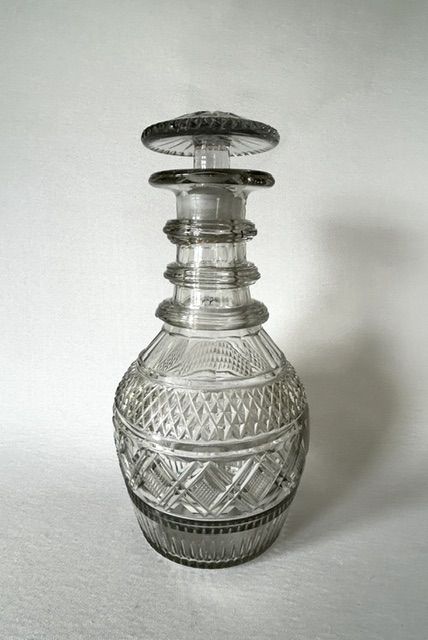
Makers shaped these vessels using heavy lead crystal or clear glass, employing wheel-cutting techniques to create deep geometric facets, flutes and star motifs that catch the light. Engraving and gilding frequently adorn the surface alongside the primary faceted cuts.
Collars, mounts and stoppers often incorporate sterling silver or silver plate, mounted securely to the glass necks. Enamel work and silver mounts appear on specific perfume bottles and spirit jugs from later periods.
A ship's decanter kept the port upright while rolling across the ocean waves.
Clarity, weight and fit
Quality rests in the purity of the crystal and the crispness of the cutting, where sharp, deep facets distinguish superior vessels from softer, moulded alternatives. Weight and balance also indicate a finer piece, as dense lead crystal provides a substantial feel in the hand.
The relationship between the vessel and its stopper matters greatly, with well-fitted, original matching stoppers preserving the integrity and completeness of the piece. Fine engraving, gilding and intact silver or enamel mounts elevate the distinction of the work.
James Giles·Karl Palda·Webb
The Cut Glass Stopper Glossary
- Cut Glass
- Glass decorated by holding it against a rotating wheel to grind geometric patterns into the surface. This technique produces sharp facets that refract light.
- Lead Crystal
- Glass containing metallic lead oxide, which increases the weight, clarity and refractive index of the material. It allows for deeper and sharper cutting.
- Ship's Decanter
- A decanter with a broad, flat base and sloping sides designed to prevent tipping at sea. The shape keeps the vessel stable on a dining table.
- Star Cut
- A decorative motif ground into the base or body of a vessel resembling a multi-pointed star. It is frequently found on the undersides of decanters.
- Silver Collar
- A metal band of sterling silver fitted around the neck of a decanter or perfume bottle. It often holds a chain or provides a secure seat for the stopper.
Cut Glass Stopper: Frequently Asked Questions
How do I know if the stopper is original?
An original stopper matches the glass colour, weight and cut pattern of the decanter body. Wear marks on the ground glass peg should align naturally with the interior neck.
Slight variations in tint or clarity often indicate a replacement, even if the fit appears correct at first glance.
Were these decanters used for wine or spirits?
Vessels on this page served multiple functions depending on their shape and period. Bell-shaped and ship's decanters held wine, port, sherry or whisky.
Smaller bottles with silver collars and stoppers functioned as scent or perfume bottles, while ewers and claret jugs served at the dining table.
How do I clean inside an antique decanter?
Cleaning requires warm water and mild detergent, avoiding harsh abrasives that scratch the interior crystal. Specialist bottle brushes help reach the base without damaging the glass.
Stoppers should be washed separately and dried thoroughly before being placed back into the neck.
What is the difference between glass and crystal?
Crystal contains lead oxide, which adds significant weight and allows the material to be cut into sharper, more brilliant facets than standard glass. Standard glass feels lighter and lacks the same refractive sparkle.
Both materials appear frequently across Victorian and Edwardian examples on this page.