




Diamond Cut Glass Decanter
These heavy lead crystal vessels catch the light across a dining table, holding spirits and wine with period weight and sparkle.
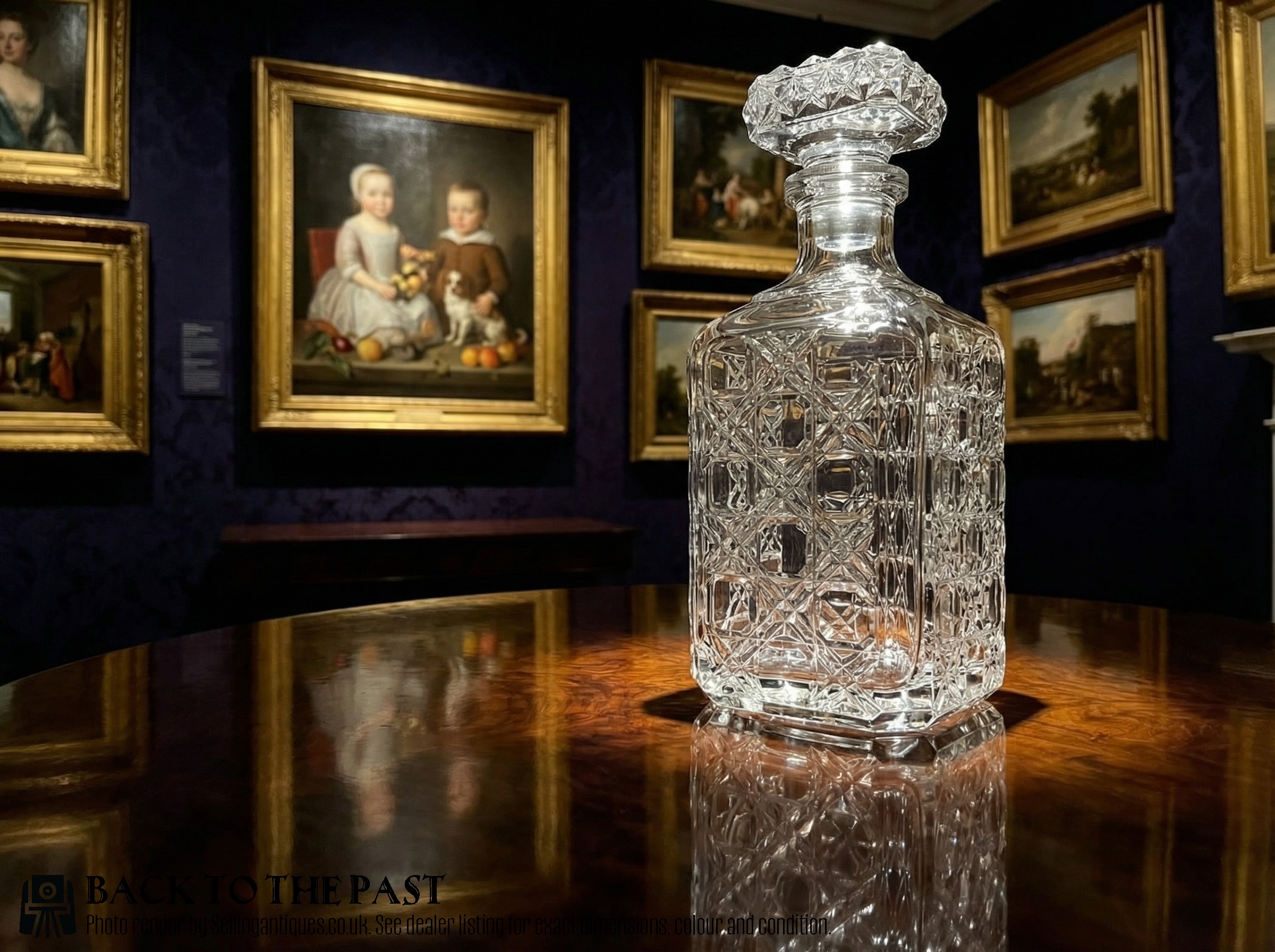
Diamond Cut Glass Decanter
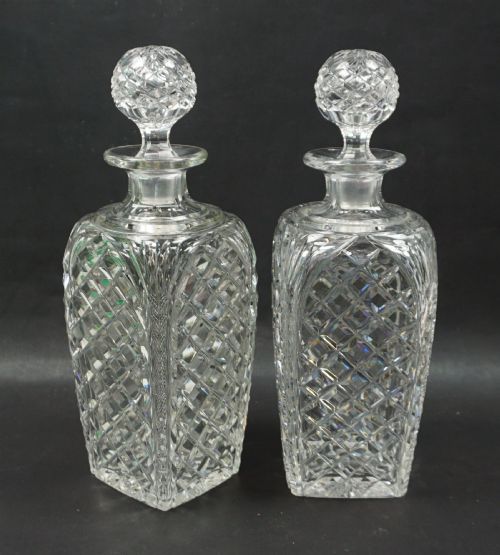
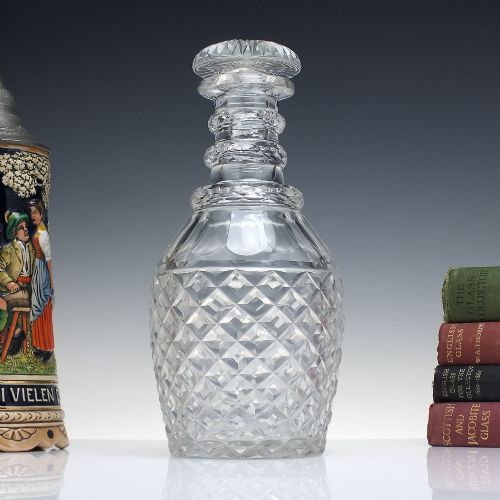
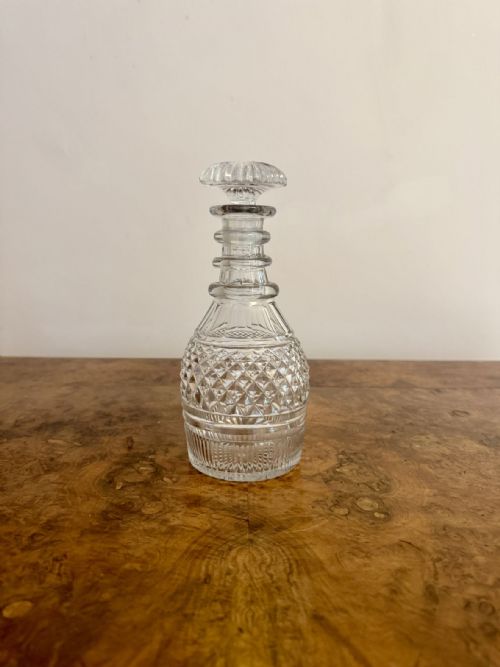
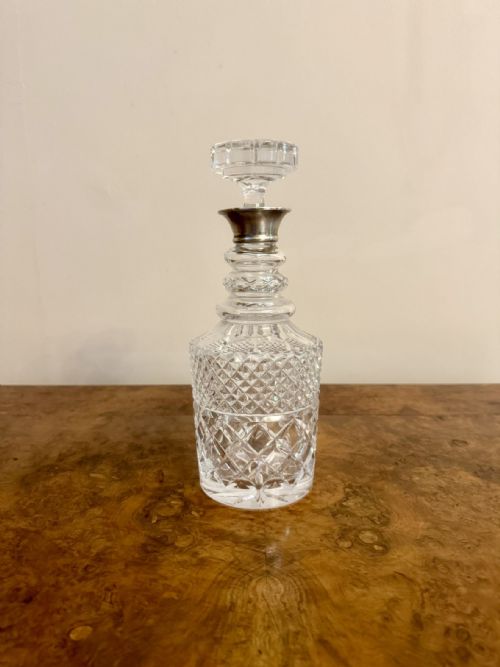
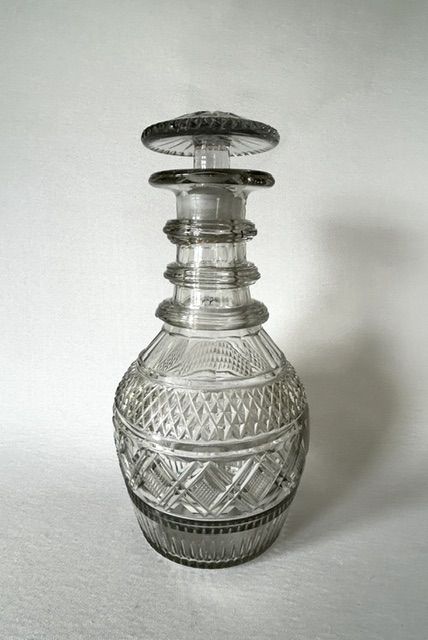
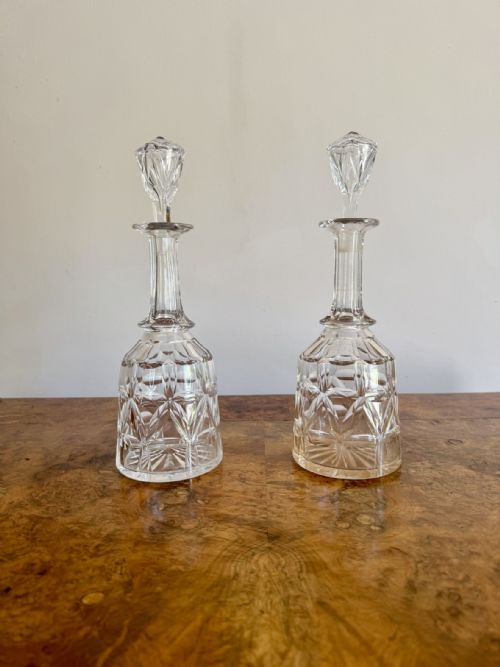
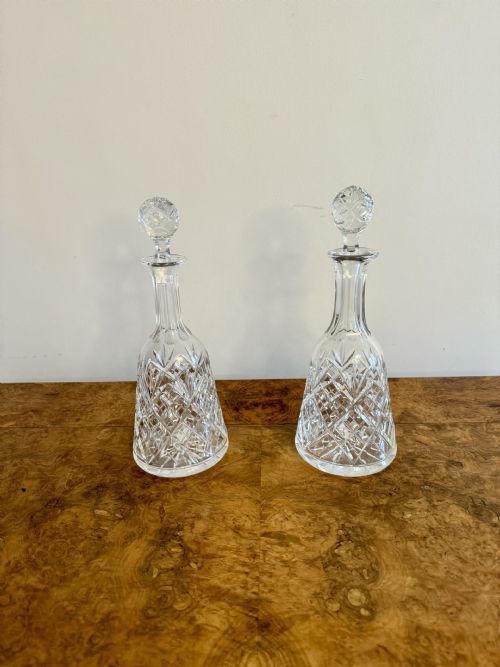
A diamond cut glass decanter brings together heavy vessel forms and intricate geometric facets designed to refract candlelight. You will encounter these pieces chiefly from the Georgian, Victorian, and Edwardian eras, spanning square section shapes, bell profiles, and tapered jugs.
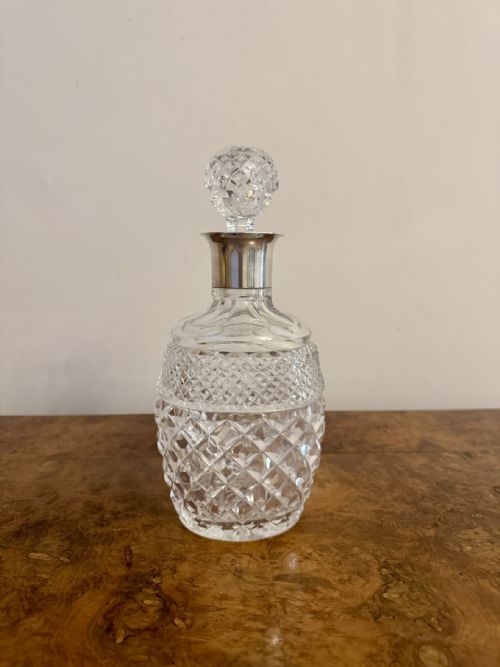
The material composition ranges from standard glass and cut crystal to heavy lead crystal. Many examples incorporate sterling silver or silver plate collars and mounts, whilst select items appear in novelty forms such as a Scottish thistle.
Makers produced these functional serving pieces to sit on sideboards or grace formal dining tables. The surviving specimens demonstrate distinct regional origins including English and Irish workshops.
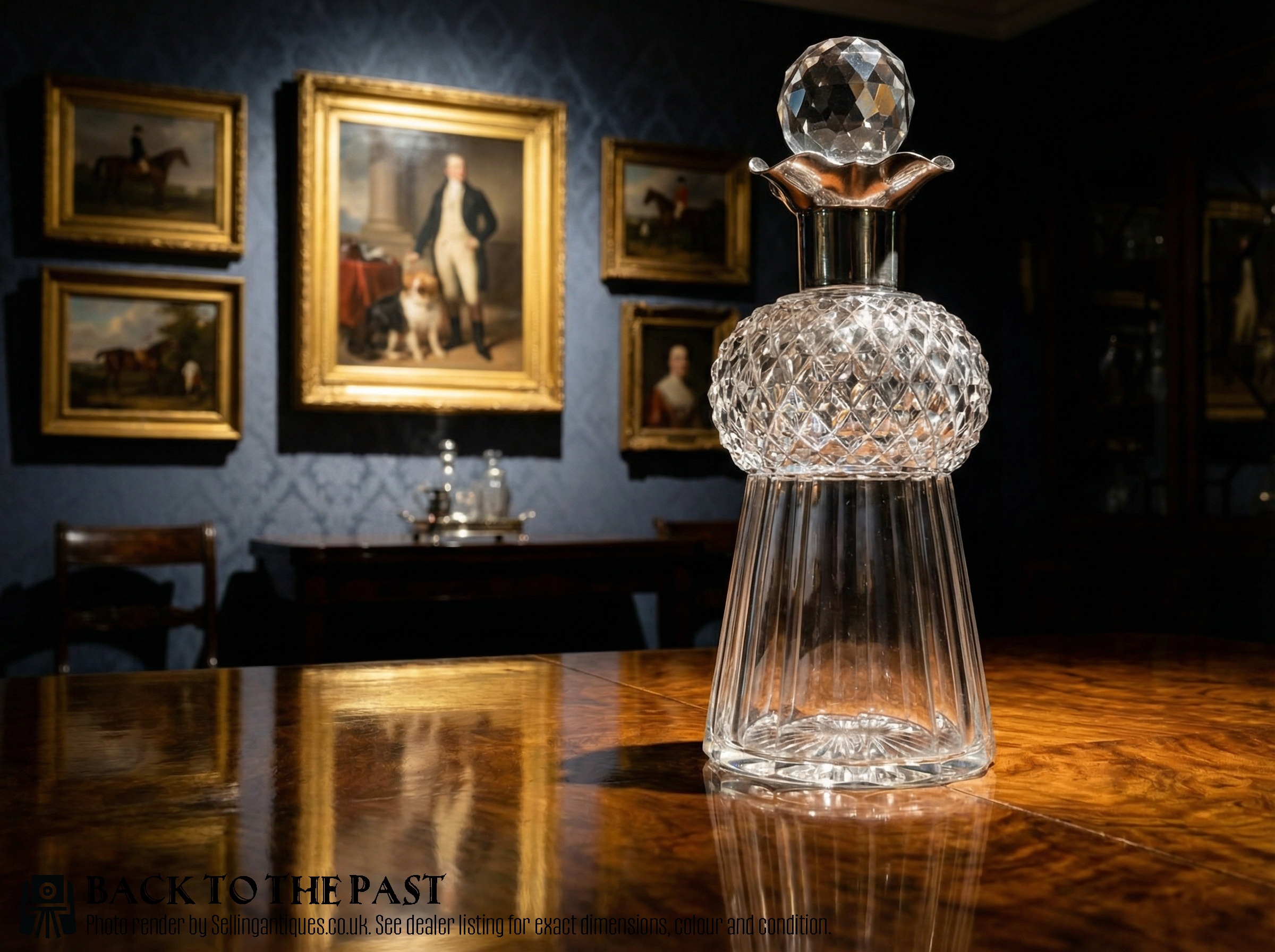
Materials and facet cutting techniques
Craftsmen shaped the vessels using heavy lead crystal and cut glass, which allowed deep geometric facet cutting without compromising the structural integrity of the walls. Artisans then polished the faceted surfaces to achieve high transparency and sharp refractive edges.
Metal components such as sterling silver and silver plate were shaped into collars, mounts, and pouring spouts, often secured directly to the neck of the vessel. Stoppers were ground by hand to fit individual bottlenecks precisely.
Diamond Cut Glass Decanter Retail Price Guide 2026
Typical asking prices for diamond cut glass decanter among the pieces listed under this phrase on Sellingantiques today, from the lower quarter to the upper quarter. They describe what is for sale here now, not the wider market.
Listings span the nineteenth century through the Edwardian period, incorporating materials like sterling silver, cut crystal, and silver plate.
Evaluating the weight and facet depth
The distinction between standard examples and finer items rests upon the depth and crispness of the cutting. Superior pieces display sharp, well-defined diamond facets that catch light cleanly, whereas lower tiers show softer, more rounded edges from hurried finishing.
Weight and metalwork also divide the range. Heavier lead crystal bodies combined with hallmarked sterling silver collars or robust silver plate mounts indicate higher original production standards than lighter glass vessels with plain rims.
Hukin & Heath
The Diamond Cut Glass Decanter Glossary
- Lead crystal
- Glass containing a high proportion of lead oxide, which increases weight, clarity, and the refractive index for deeper sparkle.
- Claret jug
- A specialised pouring vessel designed for red wine, frequently featuring a hinged metal mount and handle.
- Silver collar
- A metal band fitted around the neck of a decanter, often executed in hallmarked sterling silver or silver plate to reinforce the rim.
- Spirit decanter
- A smaller vessel intended for storing concentrated spirits rather than table wine, often part of a matched set.
- Ewer
- A large jug with a wide spout and arched handle, utilised for serving water or wine during formal meals.
Diamond Cut Glass Decanter: Frequently Asked Questions
How do I date a cut glass decanter?
Dating relies on combining the shape of the body, the style of the cutting, and any accompanying metal mounts. Georgian and Regency examples often feature distinct geometric profiles, whilst Edwardian pieces frequently display lighter bell forms and precise collars.
Silver hallmarks provide the most precise indication of age when present. Examining the stopper fit and the wear on the base also helps distinguish nineteenth-century production from later Edwardian work.
Can I use antique decanters for serving wine?
These vessels were built to hold wine and spirits and remain fully functional for modern dining. Lead crystal safely stores beverages, though hand washing is necessary to protect the antique glass and metal collars.
Care should be taken with temperature changes to prevent thermal shock in older crystal. Storing them empty with the stoppers slightly loose preserves the interior atmosphere.
What is the difference between crystal and glass?
Lead crystal contains metallic oxides that increase the density and refractive properties of the material. This composition allows cutters to achieve sharper, deeper facets than standard soda-lime glass permits.
Crystal objects feel noticeably heavier in the hand and produce a distinct ringing tone when tapped gently. This material was favoured for high-grade nineteenth-century tableware.
How do I identify a claret jug?
Claret jugs feature integrated handles and hinged metal covers designed for one-handed pouring at the table. They typically combine cut glass or crystal bodies with elaborate silver-plated or sterling silver mounts.
Unlike standard decanters that rely on glass stoppers, claret jugs use thumb-pieces and spouts. This form became particularly popular during the Victorian era for serving red wine.