

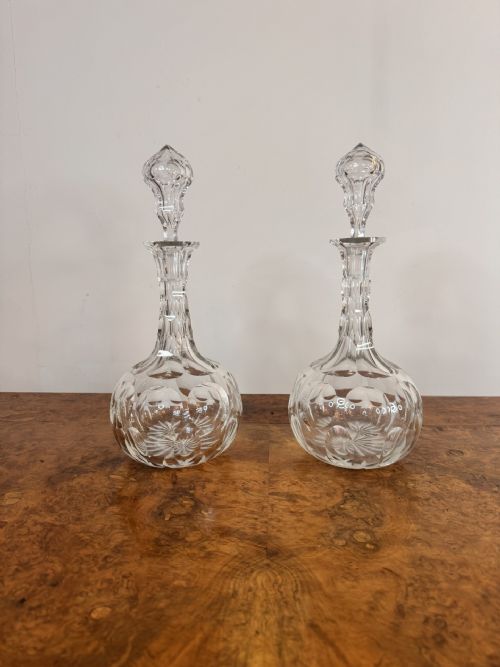
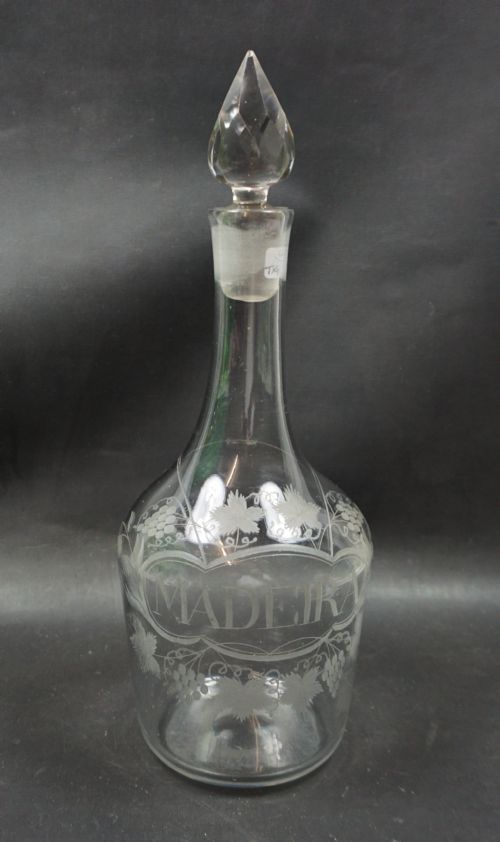


Faceted Crystal Stopper
These faceted crystal stopper pieces are brilliant glass closures designed to seal decanters and perfume bottles securely.
Faceted Crystal Stopper
When you search for a faceted crystal stopper, you look at functional glass closures belonging to decanters, scent bottles, and perfume bottles spanning Georgian, Victorian, Edwardian, and Art Deco periods. These items range from large shoulder decanters engraved with labels to small perfume bottles with silver collars.
You meet Edwardian cut glass decanters and Victorian pieces most frequently on this page, often accompanied by matching pairs or trios. Many examples incorporate silver mounts, sterling silver necks, or enamel detailing alongside the cut glass bodies.
Materials and construction
The pieces on this page are formed from glass, lead crystal, and cut crystal, shaped into decanters, ewers, and bottles. Makers utilise cutting techniques to produce faceted surfaces that catch the light.
Metal components such as silver, sterling silver, and enamel appear across Victorian, Edwardian, and Art Deco items, providing collars, mounts, and locking mechanisms.
Faceted Crystal Stopper Retail Price Guide 2026
Typical asking prices for faceted crystal stopper among the pieces listed under this phrase on Sellingantiques today, from the lower quarter to the upper quarter. They describe what is for sale here now, not the wider market.
Listings span periods from 1750 through Victorian, Edwardian, and Art Deco eras, utilising cut glass, crystal, silver, and enamel.
Distinctions in quality
The standard of a piece depends on the crispness of the glass cutting and the weight of the crystal. Superior examples display precise facets and clear metal mounts.
Design complexity and maker attribution separate standard production items from notable works, particularly when incorporating hallmarked silver collars or specialised enamel work.
Karl Palda·Betjemann Brothers·Hukin and Heath
The Faceted Crystal Stopper Glossary
- Cut glass
- Glass shaped and patterned by abrasive wheels and polishing. This technique creates sharp facets on stoppers and bodies.
- Decanter
- A vessel used for holding and serving liquids such as whiskey or wine. These often feature matching stoppers.
- Sterling silver
- An alloy containing silver used for collars and neck mounts. It adds weight and decorative contrast to the glass.
- Lead crystal
- Glass containing lead oxide, which increases brilliance and weight. It allows for deep, sharp cutting.
- Ewer
- A large jug with a wide spout for carrying liquids. Some examples match the style of contemporary decanters.
Faceted Crystal Stopper: Frequently Asked Questions
How do I clean a glass decanter?
Wash the interior carefully with warm water and mild detergent, avoiding harsh abrasives that scratch the surface. Rinse thoroughly and allow the vessel to dry completely before replacing the stopper.
Keep silver collars polished with a suitable cloth while taking care not to let cleaning agents contact the glass body directly.
What periods do these pieces span?
The inventory covers items from the mid-eighteenth century through the Georgian and Victorian eras, extending into Edwardian and Art Deco periods.
Victorian and Edwardian examples appear most frequently, reflecting the manufacturing output of those decades.
Are stoppers original to the bottles?
Many decanters retain their original stoppers, shaped and cut to match the specific neck and body of the vessel. Inspecting the fit and glass colour helps determine original pairing.
Matched pairs often show consistent wear patterns across both the bottle and the corresponding stopper.
How were locking decanters used?
Locking decanters utilise a metal collar and mechanism to secure the stopper in place, preventing unauthorized access to spirits. These were common in wealthier households during the Victorian and Edwardian periods.
A key operates the mechanism to release the neck collar when pouring drinks.