
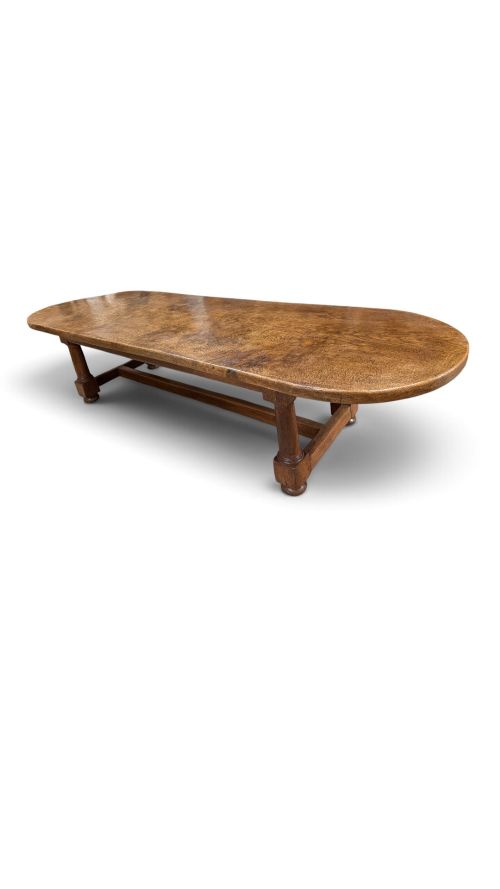
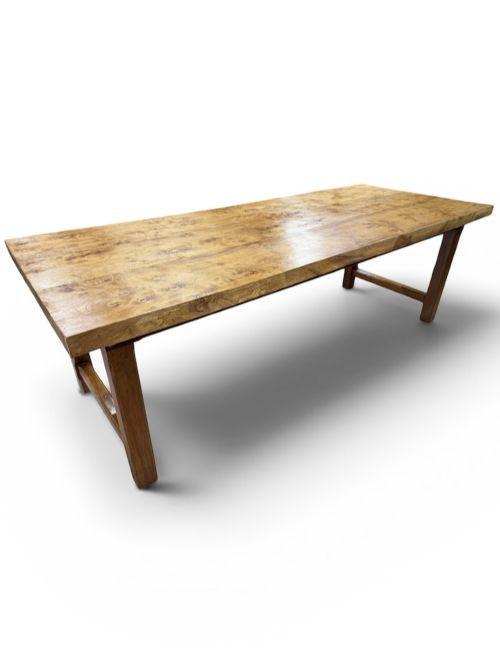
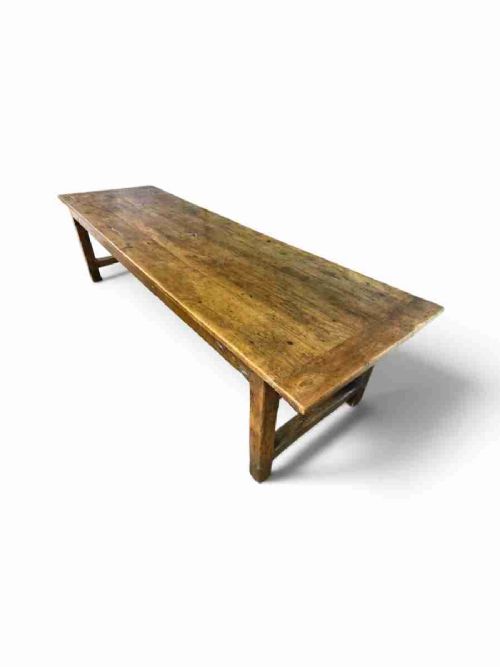
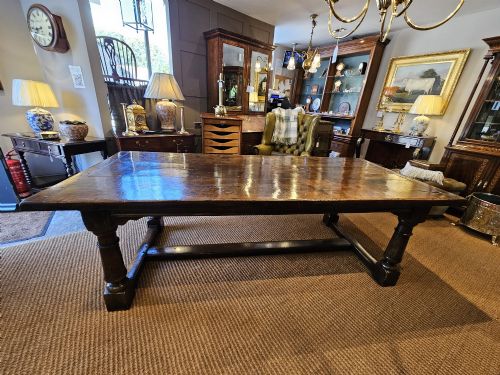
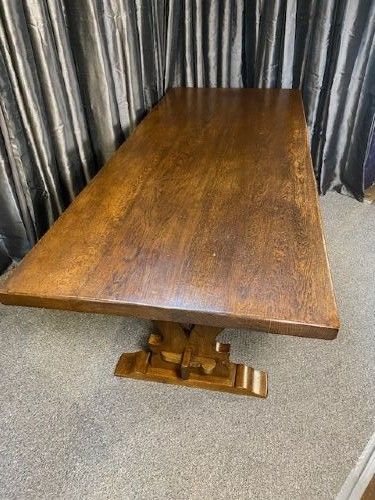
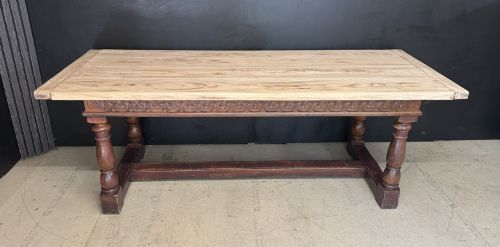
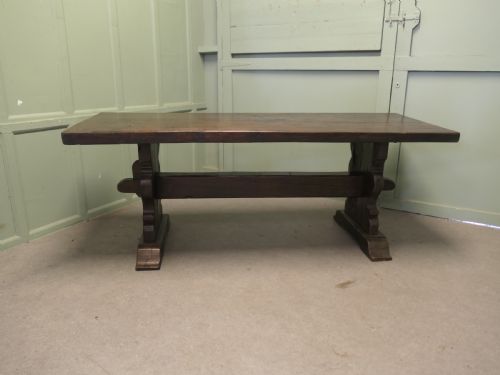
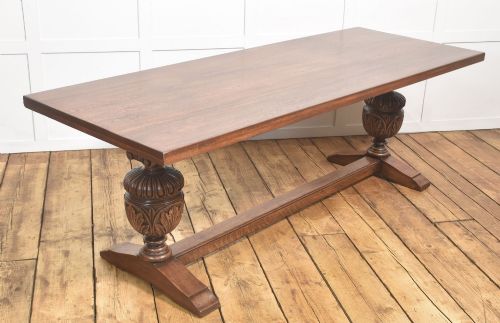
Country Oak Trestle Table
A country oak trestle table brings working heritage straight into the kitchen, offering solid timber construction built to gather family and friends for centuries.

Country Oak Trestle Table
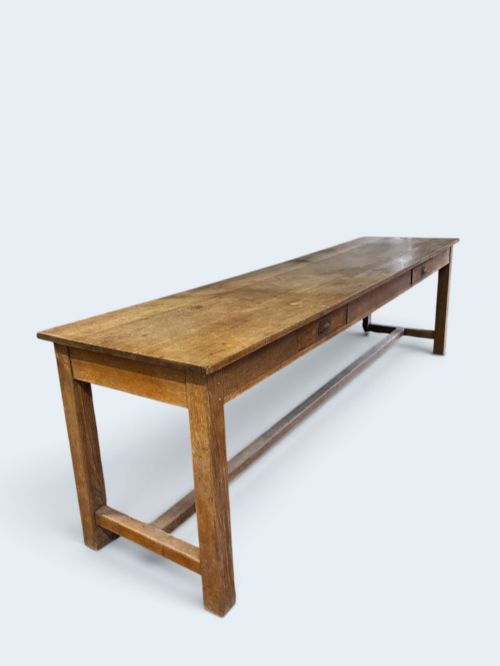
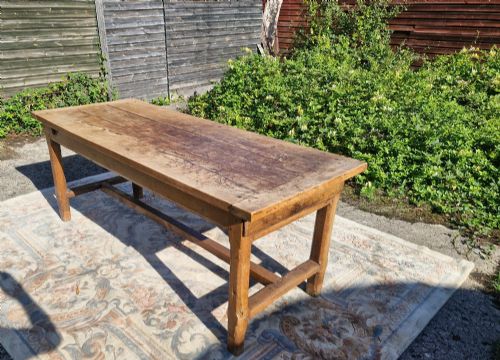
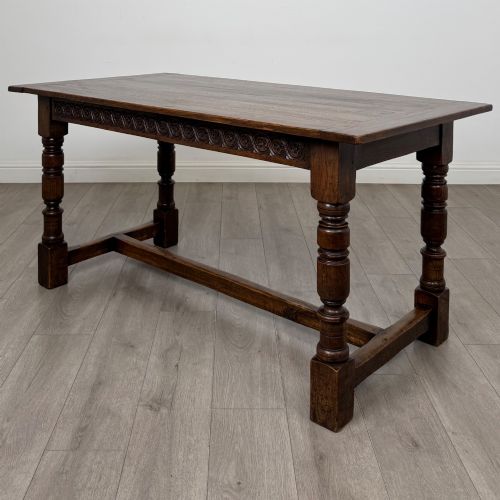
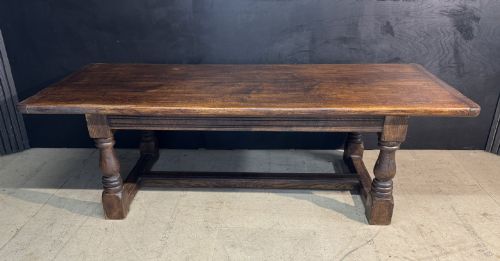
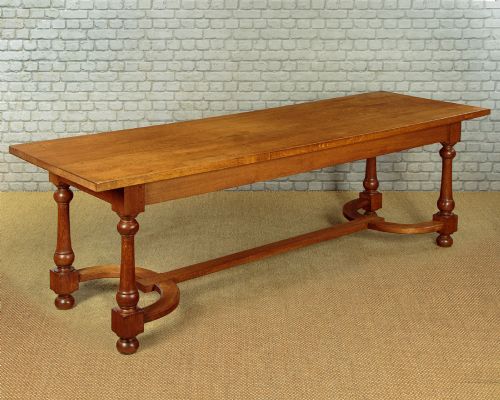
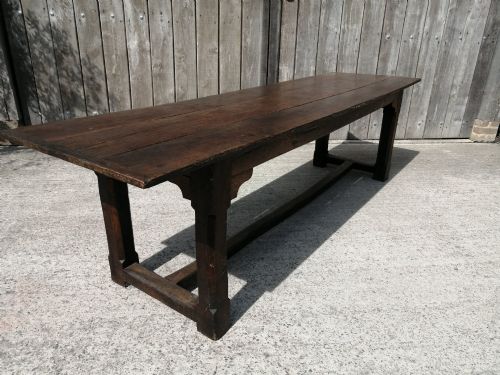
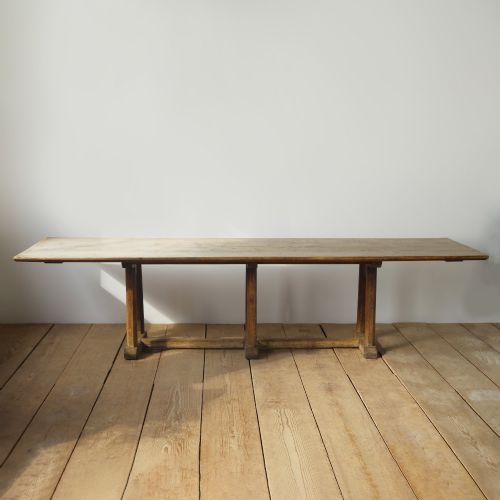
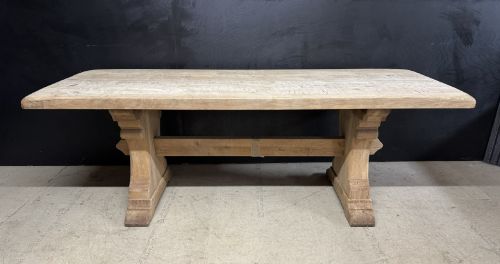
A country oak trestle table represents the traditional heart of domestic life, designed originally for communal dining in farmhouses, taverns, and rural kitchens. When searching for a country oak trestle table, buyers encounter heavy rectangular tops supported by substantial ends or central beams rather than four corner legs.
The pieces listed here span centuries of rural craftsmanship, including items from the eighteenth and nineteenth centuries alongside later revival periods. Dining tables and refectory forms dominate the selection, often featuring deep timber planks and straightforward functional proportions.
Origins vary between English and French traditions, bringing different timber treatments and edge profiles to the same foundational form. Buyers frequently meet pieces showing considerable length and depth, designed to accommodate large gatherings in traditional spaces.
What varies in quality
Quality rests in the integrity of the timber selection and the weight of the primary top boards. Single plank construction and dense grain patterns elevate the character of a piece significantly.
Proportion and the handling of the base structure separate standard utilitarian examples from finer vernacular pieces. The integration of pegged joints and balanced undercarriages dictates the structural harmony.
Several dining tables include integrated drawers once reserved for storing cutlery and table linens near the seat.
The Country Oak Trestle Table Glossary
- Refectory table
- A long, narrow dining table traditionally used in monasteries and large halls. These forms provide substantial seating capacity along the length.
- Single plank
- A tabletop constructed from one wide board rather than multiple joined pieces. This feature indicates large mature timber sources.
- Trestle
- A structural support consisting of a horizontal beam fixed to two upright feet. This framework leaves maximum legroom beneath the surface.
- Vernacular furniture
- Items made by local craftsmen for everyday use rather than high-style urban workshops. These pieces reflect regional materials and practical needs.
Country Oak Trestle Table: Frequently Asked Questions
How do I style a country oak trestle table?
Pair the table with simple benches or ladder-back chairs to maintain the traditional rural aesthetic. Keep centrepieces low and natural, allowing the grain of the timber to remain the primary focus.
Allow the wood to breathe by avoiding heavy synthetic runners or cloths. Daily use and natural oils will continue to improve the surface patina over time.
What is the difference between refectory and trestle tables?
A trestle table specifically uses end supports joined by a central stretcher, whereas a refectory table often employs four or more recessed legs beneath a long top. Both forms served similar communal dining functions in historical settings.
Distinguishing between them depends on how the undercarriage transfers weight to the floor. Trestle designs offer distinct advantages for seating arrangement flexibility along the sides.
How should I care for an antique oak surface?
Clean the timber using a damp cloth and mild soap, avoiding harsh chemical sprays that strip historical finishes. Apply bees-wax periodically to nourish the dry wood and protect against moisture.
Place the table away from direct heat sources and sudden temperature changes to prevent timber splitting. Use felt pads beneath hot dishes to preserve the vintage wax finish.
Can I use a country oak table daily?
These tables were originally built for heavy daily labour and robust family dining. Their solid construction handles everyday meals, homework, and gatherings with ease.
Embrace minor marks and dents as part of the ongoing history of the piece. Regular use actually helps maintain the rich lustre of the oak.