
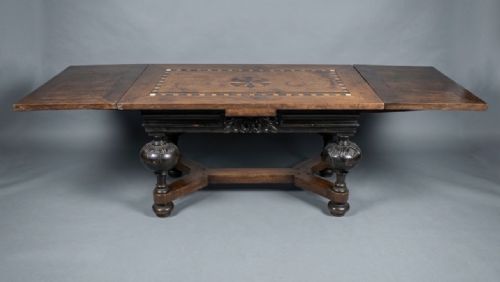
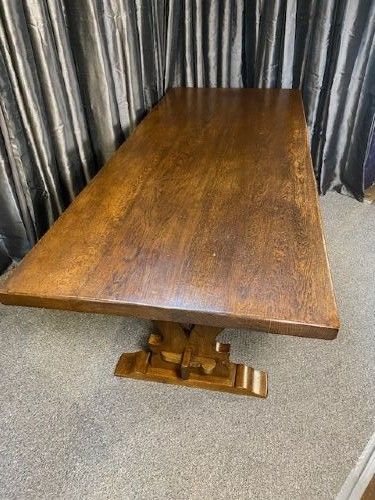
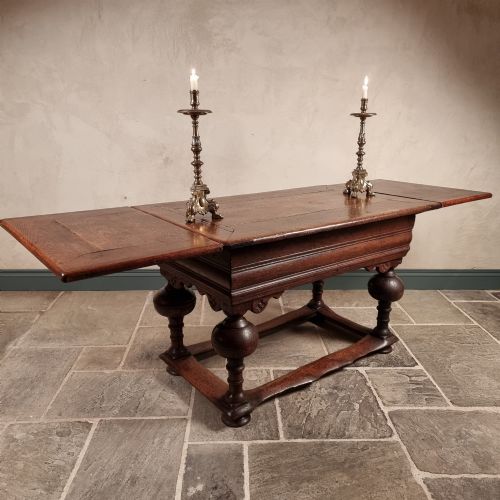
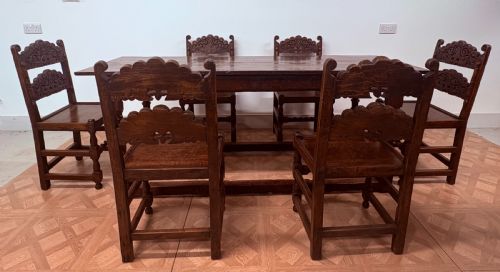
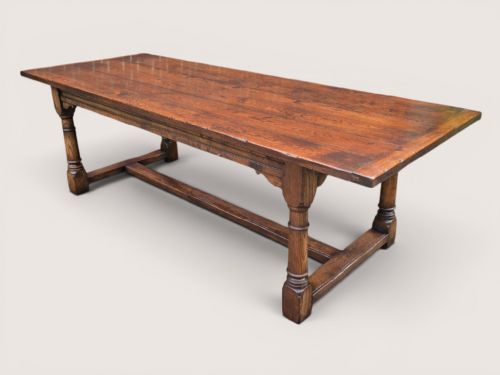


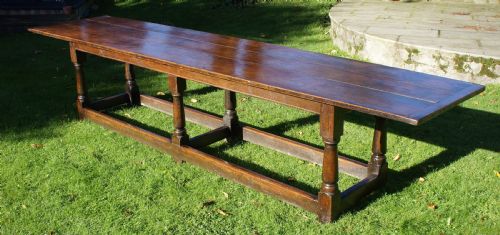


Seventeenth Century Refectory Table
A seventeenth century refectory table brings monumental presence and heavy timber construction into a dining room.

Seventeenth Century Refectory Table
A seventeenth century refectory table is a long, heavy dining surface designed for communal dining in large halls. When you search for a seventeenth century refectory table, you encounter massive wooden boards supported by substantial legs or trestles.
The versions most commonly met on this page span the seventeenth century alongside later revivals from the nineteenth and twentieth centuries. These pieces appear in forms ranging from simple rustic farmhouse boards to sophisticated draw leaf extending dining tables.
Materials and construction
These tables are constructed primarily from solid oak, with occasional examples utilised in walnut and incorporating wood inlay. Artisans joined heavy timber planks using traditional peg and tenon joinery to build rigid frames capable of withstanding heavy daily use.
Surface preparation relied on hand-planing timber boards, leaving tool marks and natural grain variations visible across the top. Extension mechanisms on variants like draw leaf tables utilised sliding under-frames to support additional end leaves.
Many tables retain ink stains and knife marks from centuries of diners who treated the wood as a working surface.
Assessing quality and proportion
Quality in these tables rests upon the integrity of the timber and the honesty of the construction. Pieces fashioned from solid oak with thick, boarded tops and original structural framing demonstrate superior durability compared to later adaptations.
Proportion and surface patination further separate examples, as centuries of use impart a deep, warm tone to the wood. The harmony between the length of the top and the thickness of the supporting legs defines the visual balance of the table.
The Seventeenth Century Refectory Table Glossary
- Refectory table
- A long, narrow dining table originally used in monastic dining halls. These tables are characterised by substantial length and heavy timber construction.
- Draw leaf
- An extension system where two leaves slide out from beneath the main top. This mechanism allows the table length to increase while keeping the main surface stable.
- Trestle table
- A table supported by two or more upright frames connected by a horizontal stretcher beam. This design provides robust floor support without obstructive corner legs.
- Jacobean
- A style dating to the reign of James I, noted for heavy, rectilinear furniture design. Pieces from this period often display dark oak timber and geometric turnings.
Seventeenth Century Refectory Table: Frequently Asked Questions
What is a refectory table?
A refectory table is a long, narrow dining table traditionally built for communal dining halls. These pieces are characterised by sturdy wooden construction and long rectangular proportions.
Today, they serve as substantial gathering tables in large kitchens and dining rooms. Their design prioritises durability and ample seating space along the sides.
How do I spot a reproduction?
Distinguishing period pieces from later revivals involves examining the tool marks, timber shrinkage, and joinery methods. Seventeenth century originals display hand-planed surfaces and pegged joints that differ from modern machine production.
Additionally, the colour and wear patterns on the wood develop naturally over centuries of handling and cleaning. Later nineteenth and twentieth century interpretations often utilise older styles with different construction tolerances.
How were they used historically?
These tables served as the central dining furniture in monasteries, castles, and large manor houses. Communities gathered around them daily for meals and formal assemblies.
Their heavy construction meant they remained stationary in the great hall rather than moving between rooms. The long top accommodated many diners seated along both sides.
What chairs match these tables?
Pairing seating with these tables involves balancing the heavy visual weight of the oak or walnut timber. Simple ladder-back chairs or upholstered armchairs complement the rustic and formal styles alike.
Benches also suit the communal history of refectory furniture, fitting neatly underneath the top when not in use. The key is matching the scale of the seating to the substantial proportions of the table.