

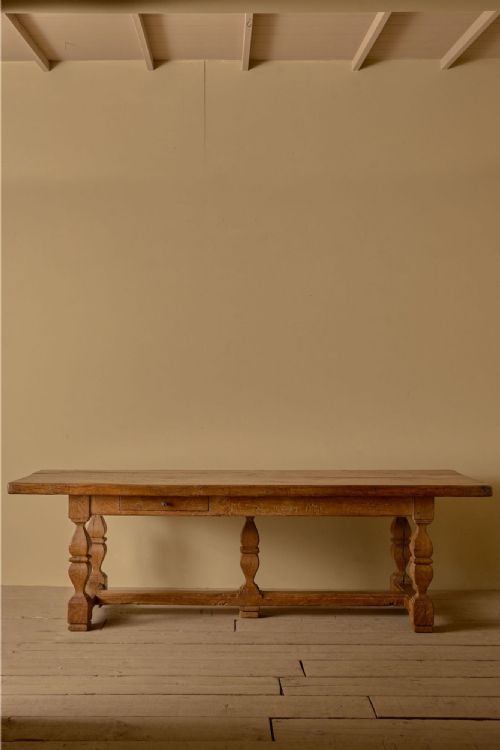
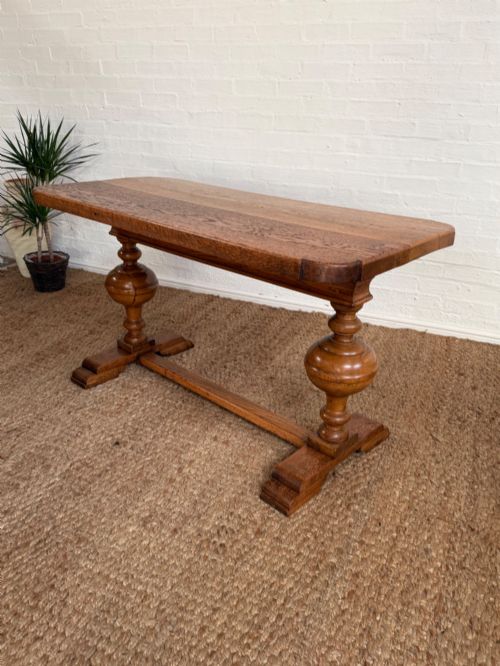
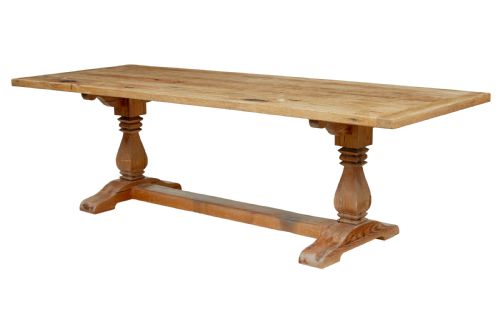


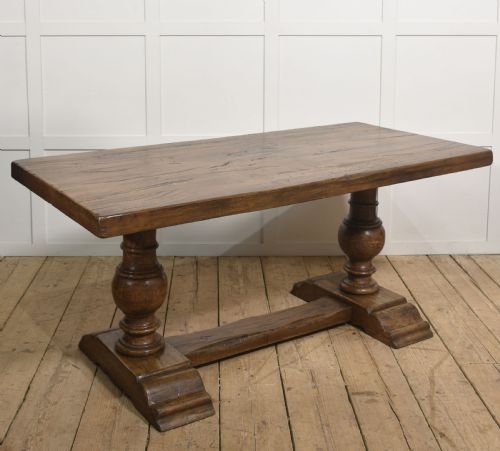


Baluster Leg Refectory Table
A baluster leg refectory table anchors a room with solid timber proportions and turned supports, offering a surface built for daily gathering.
Baluster Leg Refectory Table
A baluster leg refectory table is a substantial dining table designed for communal dining, characterised by its long rectangular top and sturdy vertical supports. When searching for a baluster leg refectory table, buyers encounter formats spanning the nineteenth century through to the 1930s.
The versions most commonly met on this page are constructed from oak and pine, reflecting vernacular farmhouse styles and revival periods. These pieces draw on Jacobean, French provincial, and English country house traditions.
The form prioritises floor space and legroom beneath the top, often utilising draw-leaf extensions or fixed planks. They serve as central dining surfaces in domestic and kitchen settings.
How they were made
Construction relies heavily on solid oak and pine timbers, shaped into thick planks for the top and sturdy members for the base. Joinery techniques connect these heavy components to withstand continuous daily use.
Turned baluster supports provide the defining vertical architecture, sometimes accompanied by stretchers for additional stability. Surfaces are finished in various states, from scrubbed and bleached oak to painted wood and carved detail.
Baluster Leg Refectory Table Retail Price Guide 2026
Typical asking prices for baluster leg refectory table among the pieces listed under this phrase on Sellingantiques today, from the lower quarter to the upper quarter. They describe what is for sale here now, not the wider market.
Listings feature oak, solid oak, scrubbed oak, bleached oak, and pine across the nineteenth century, Edwardian era, and the 1900s to 1930s.
What varies in quality
Quality separates tables by the selection and density of the timber, particularly where solid oak or pine is chosen for the main top planks. Heavier timber gauges and tighter grain patterns indicate higher grade material selection during construction.
The execution of the carved detail on the baluster legs and the tightness of the structural joinery distinguish finer examples from simpler vernacular pieces. Surface treatments such as bleaching or scrubbing also reflect the care taken in historical preparation.
The Baluster Leg Refectory Table Glossary
- Baluster leg
- A turned vertical support column with a swollen profile, often resembling a vase or pillar. It forms the primary structural and decorative leg in these tables.
- Refectory table
- A long dining table historically used in monasteries and large halls for communal meals. The form prioritises length and stability.
- Draw-leaf table
- A dining table with sliding leaves stored beneath the main top that pull out to extend the surface area. This mechanism allows the table length to increase.
- Bleached oak
- Timber treated to lighten its natural colour, producing a pale, weathered surface. This finish is frequently found on nineteenth-century and later English examples.
- Stretchers
- Horizontal wooden bars connecting the lower legs of a table for added rigidity. They prevent the legs from spreading under heavy loads.
Baluster Leg Refectory Table: Frequently Asked Questions
What is a baluster leg?
A baluster leg is a turned wooden support column shaped with a characteristic swelling profile. It provides the structural and decorative foundation for the table.
These turned supports draw on historical revival styles such as Jacobean designs. They balance heavy timber tops while adding architectural detail to the base.
How do I date these tables?
Dating relies on observing material characteristics, construction methods, and stylistic cues recorded across periods from the nineteenth century to the 1930s. Oak and pine usage shifted across these decades.
Revival pieces often emulate earlier centuries through carved details and turned legs. Examining the timber grain and joinery helps distinguish nineteenth-century work from later twentieth-century production.
Are these tables suitable for daily dining?
These tables are built for heavy communal use, featuring solid timber construction designed to withstand regular family gatherings and kitchen tasks. Their robust frames handle daily wear well.
Large formats can seat many diners comfortably, depending on the length of the top and the placement of the baluster legs.
What is the difference between oak and pine versions?
Oak provides a denser, heavier surface with visible grain patterns, frequently associated with formal revival styles and longer-lasting durability. It underpins many traditional refectory forms.
Pine offers a lighter timber weight and is often found in kitchen or provincial farmhouse contexts. Pine tables frequently feature scrubbed surfaces or painted wood finishes.