







Carved Oak Long Table
A carved oak long table brings substance and history to a room, offering sturdy utility derived from centuries of craftsmanship.
Carved Oak Long Table
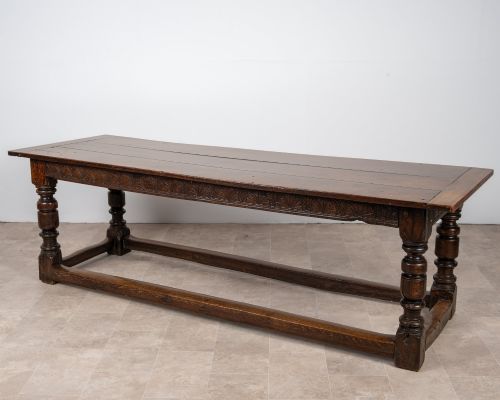
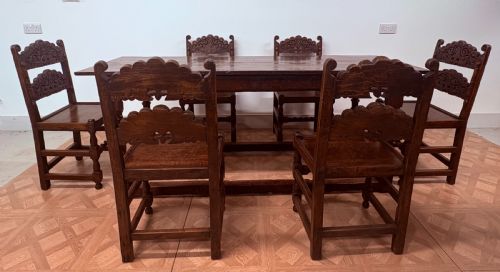
A carved oak long table encompasses substantial dining surfaces and refectory forms built from robust timber. Buyers searching for a carved oak long table encounter substantial dining tables, refectory tables, and boardroom tables spanning the seventeenth to the nineteenth centuries.
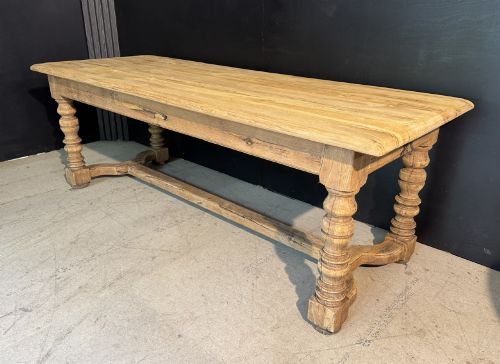
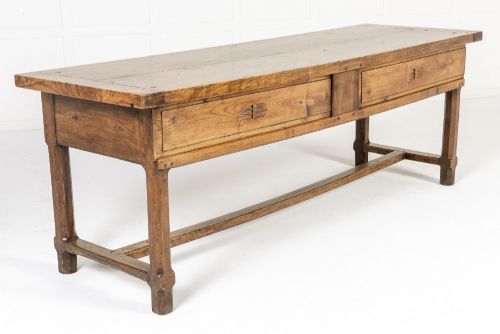
The version most commonly met on this page is the refectory table, often constructed with multiple planks and supported by sturdy stretchers. These pieces originate from various regional traditions including English farmhouse, Jacobean, Charles II, and French provincial styles.
Forms extend beyond traditional dining to include coffee tables and console tables derived from earlier refectory structures. Timelines stretch from the sixteenth-century Tudor period through Victorian interpretations and early twentieth-century revivals.
How they were made
Construction relies primarily on solid oak planks assembled for table tops, sometimes reinforced with iron or brass elements. Frames utilise sturdy timber joinery designed to support long spans without central legs interfering with seating.
Secondary structural timbers such as pine appear in concealed framework or drawers, supporting the heavier oak surfaces. Surfaces show hand-carved detailing characteristic of Jacobean, Gothic revival, and rustic farmhouse traditions.
Carved Oak Long Table Retail Price Guide 2026
Typical asking prices for carved oak long table among the pieces listed under this phrase on Sellingantiques today, from the lower quarter to the upper quarter. They describe what is for sale here now, not the wider market.
Materials documented across the inventory include solid oak, supplementary pine, and structural iron and brass hardware.
What varies in quality
Quality rests upon the integrity of the timber top, particularly whether original planks remain intact and how evenly the wood has aged over centuries. Three-plank and two-plank constructions demonstrate different levels of joinery ambition and surface continuity.
The depth and crispness of the carving distinguish standard utilitarian pieces from more sophisticated regional or period commissions. Proportion and the relationship between the base stretchers and the top define the architectural success of each individual table.
The Carved Oak Long Table Glossary
- Refectory table
- A long, narrow dining table originally built for monastic refectories, typically featuring sturdy legs connected by longitudinal stretchers. This form dominates the earlier periods represented on the page.
- H stretcher
- A horizontal wooden brace connecting the legs of a table in the shape of the letter H, providing rigidity to the base. This component is common in farmhouse and refectory designs.
- Plank top
- A table surface constructed from boards joined edge to edge, often counted by dealers to indicate the scale and age of the timber. Surviving examples range from two to three principal boards.
- Jacobean style
- The furniture style prevalent during the reign of James I, characterised by heavy proportions, dark oak, and geometric or strapwork carving. Pieces from this era display distinct architectural moulding.
Carved Oak Long Table: Frequently Asked Questions
How do I clean a carved oak long table?
Dust regularly with a dry cloth and apply occasional natural wax to nourish the antique grain without building up a sticky residue.
Avoid placing these surfaces near direct heat sources or moisture, which can cause historical timber planks to warp or split.
Can I use an antique refectory table for daily dining?
These pieces were originally constructed for heavy daily use in monastic or domestic settings, making them robust enough for modern family dining.
Use protective mats for hot dishes and liquids to preserve the historic patina of the oak surface.
How can I tell a seventeenth century table from a later revival?
Examine the construction marks underneath the top and the wear patterns on the timber stretchers where feet rested over generations.
Seventeenth-century examples display hand-cut joinery and authentic surface oxidation that twentieth-century Gothic revival pieces imitate.
What seating works best with a long oak table?
Pair these substantial tables with turned oak dining chairs or benches that match the period and wood tone of the base frame.
Allow sufficient clearance beneath the aprons for knee room, as early tables often feature low structural rails.