




Cotton Embroidered Tapestry
These cotton embroidered tapestry pieces, often called suzanis, bring rich Central Asian textiles into modern interiors as striking wall hangings.
Cotton Embroidered Tapestry
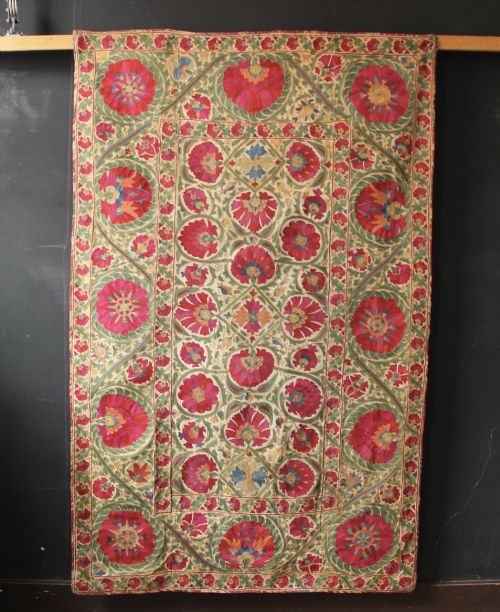
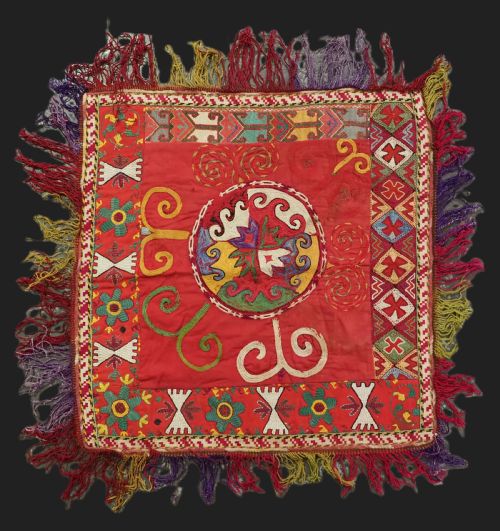
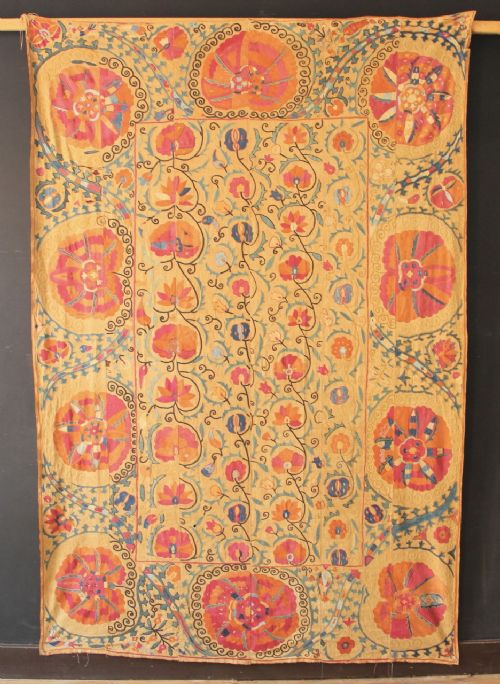
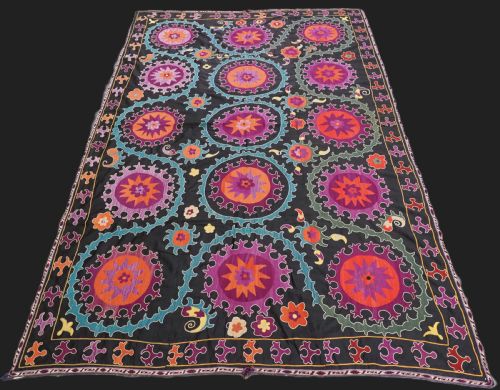
When you search for cotton embroidered tapestry, you are looking at traditional Central Asian hangings and covers that originate largely from nineteenth and early twentieth century Uzbekistan. These pieces take forms such as full suzanis, smaller nim suzanis, and specific regional formats including prayer designs.
The version you are most likely to meet on this page is an antique Uzbek suzanis, worked with intricate needlework on a sturdy cotton foundation. Regional variations span from Tashkent and Samarkand to Shahrisabz, each displaying distinct layout traditions and tribal motifs.
Such textiles served originally as dowry items or domestic furnishings, created to mark important family milestones. Today they function primarily as decorative wall art, bringing historical colour and texture into contemporary rooms.
Materials and construction
Maker communities constructed these textiles by working fine silk thread embroidery across a woven cotton ground. The ground fabric often appears in distinctive shades such as yellow, red, or black cotton, providing a vibrant backdrop for the needlework.
Stitch techniques varied from fine outlining to dense filling, depending on whether the piece is described as a full work or partial embroidery. Artisans relied on natural dye traditions for the silk threads, resulting in deep, varied colour palettes across the surface.
Listings span nineteenth and early twentieth century periods, featuring cotton grounds paired with silk thread embroidery from Central Asian regions.
What separates examples
Quality in these textiles rests upon the density and precision of the silk embroidery relative to the cotton ground. Pieces classified as full work display a completeness of needlework that distinguishes them from simpler layouts.
The vibrancy and preservation of the dyed silk threads further define the upper tier of examples. Intricacy of regional design, such as central medallion variants or prayer formats, also dictates the distinction between standard domestic items and masterwork pieces.
The Cotton Embroidered Tapestry Glossary
- Suzani
- An embroidered hanging from Central Asia, traditionally worked by women as part of a bride's dowry. The word derives from the Persian term for needle.
- Nim Suzani
- A smaller version of the standard suzani format, typically measuring about half the length. These pieces offer a more compact option for wall display.
- Palak
- A specific style of suzani featuring a fully embroidered design dominated by a central star or medallion motif. The dense needlework covers almost the entire cotton ground.
- Ilgich
- A type of tribal dowry embroidery used for wall decoration, often associated with specific groups like the Lakai tribe. These pieces display distinct folk art characteristics.
- Prayer format
- A textile layout defined by an architectural arch or mihrab design at one end. Such pieces were traditionally hung on a wall to indicate a direction.
Cotton Embroidered Tapestry: Frequently Asked Questions
What is a cotton embroidered tapestry?
These items are traditional Central Asian textiles, commonly known as suzanis, made with silk embroidery on a woven cotton foundation. They were historically produced in regions such as Tashkent, Samarkand, and Shahrisabz as part of a bride's dowry.
Today, collectors and interior designers use them as decorative wall hangings. Their combination of bold folk art motifs and rich textile history makes them versatile for interior styling.
How do I hang a textile safely?
Mounting a textile requires distributing the weight evenly across the entire upper edge to prevent strain on the cotton ground. Conservation framing behind UV-filtering glass or professional sleeve mounting is standard practice.
Avoid hanging pieces in direct sunlight or areas of high humidity to protect the dyed silk threads. Proper mounting ensures the historic fabric remains secure over years of display.
How do I identify regional suzani types?
Regional attribution relies on observing the specific layout, colour palette, and embroidery density of the piece. For instance, Tashkent examples often feature dense palak designs, while Shahrisabz work displays particular floral configurations.
Tribal pieces associated with the Lakai group show distinct folk art spontaneity in their motifs. Comparing these structural traits against known examples helps distinguish one origin from another.