





Uzbek Silk Bedspread
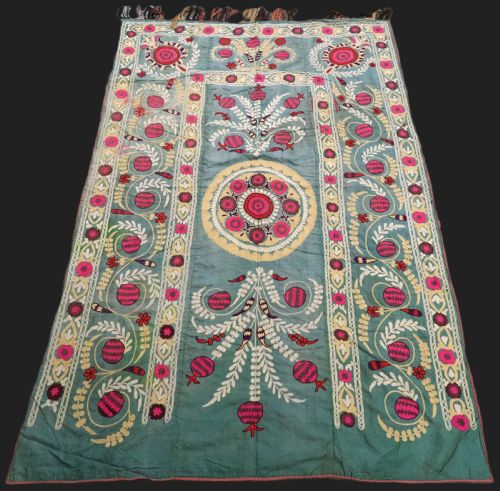
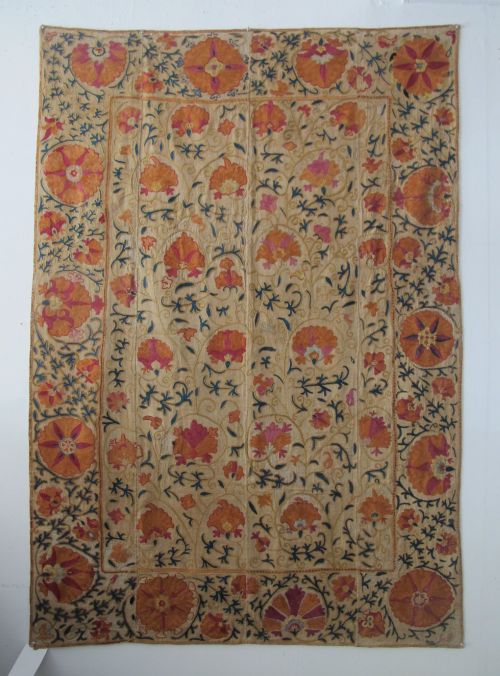
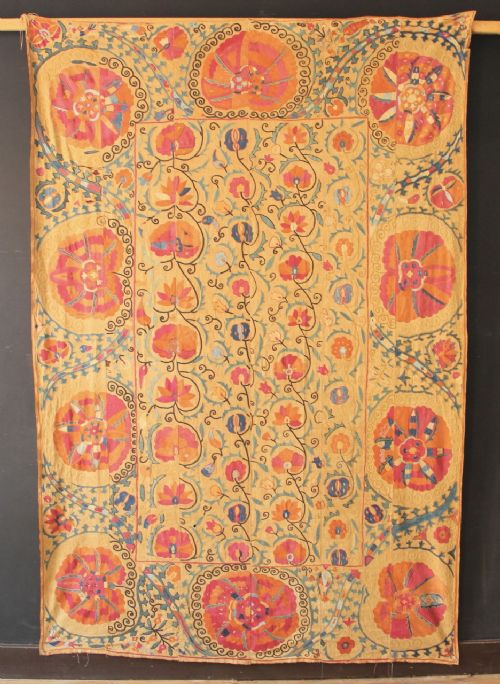
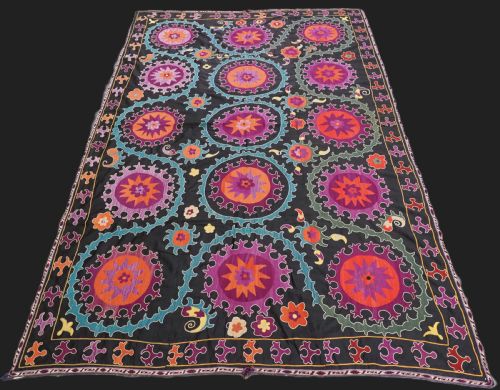
These uzbek silk bedspread pieces are richly embroidered Central Asian textiles used as traditional covers and wall hangings.
Uzbek Silk Bedspread
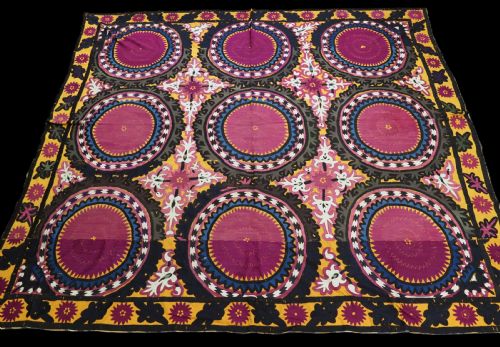
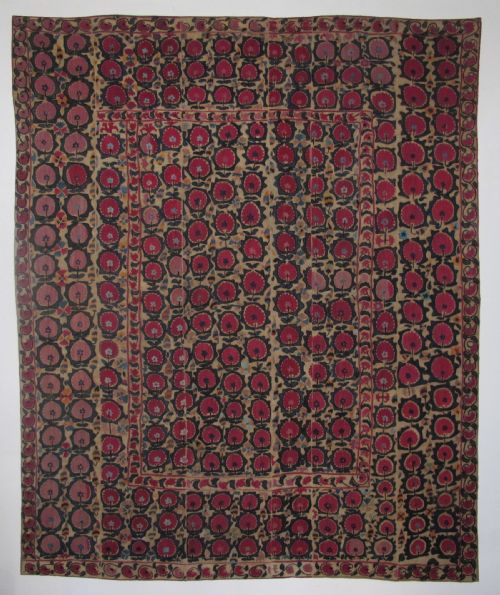
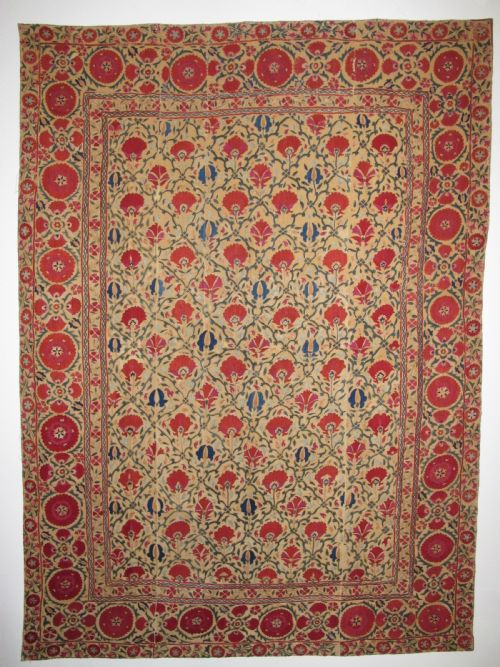
An uzbek silk bedspread primarily encompasses antique and vintage suzani textiles originating from Central Asia. These pieces function as decorative textiles, wall hangings, and traditional bed covers.
The selections on this page span from the early nineteenth century through the early twentieth century. Examples include regional variations such as Ura Tube, Bukhara, Samarkand, and Tashkent works.
Specific formats include full work suzanis, nim suzanis, and Tajik ru-i-jo bed covers. Tribal associations like the Lakai also appear among the listed items.
How they were made
Maker execution relies heavily on silk embroidery thread applied to woven foundations. These grounds consist of cotton, silk, or adras, which is a mixed silk and cotton fabric.
Ground fabrics exhibit various dyed colours including red, yellow, and black. Needlework techniques produce dense patterns characteristic of Central Asian folk art and traditional regional styles.
Listings incorporate silk, cotton, silk thread, and adras materials across Central Asian traditional and folk art styles.
What varies in quality
Quality differences emerge through the density and complexity of the silk embroidery work. Full work examples demonstrate greater coverage and intricate needle execution compared to simpler layouts.
The choice of ground material and the vibrancy of the dyed silk threads also define the visual impact. Regional execution styles, from Samarkand to Bukhara, display distinct artistic refinements.
The Uzbek Silk Bedspread Glossary
- Suzani
- A traditional embroidered Central Asian textile often used as a wall hanging or bed cover. These pieces feature elaborate silk needlework on various woven grounds.
- Adras
- A traditional hybrid fabric woven from a combination of silk and cotton threads. It serves as a sturdy foundation for coloured silk embroidery.
- Nim Suzani
- A smaller or half-size variant of the standard suzani textile. These pieces were typically utilised for specific domestic coverings.
- Ru-i-jo
- A traditional Tajik bed cover textile designed for domestic use. Examples are frequently worked in silk on a silk foundation.
- Full Work
- A descriptive term for suzanis featuring exceptionally dense embroidery coverage across the entire ground. This style requires extensive needlework.
Uzbek Silk Bedspread: Frequently Asked Questions
What is an uzbek silk bedspread?
An uzbek silk bedspread is an embroidered Central Asian textile historically used as a decorative cover or wall hanging. These antique and vintage pieces showcase traditional needlework originating from towns like Bukhara and Samarkand.
Maker traditions across the region produced diverse styles, including full work suzanis and tribal Lakai pieces. They remain valued as decorative textiles and historical works of folk art.
How were these textiles used?
These textiles served primarily as traditional bed covers, decorative wall hangings, and domestic furnishings in Central Asian households. Specific regional formats like the ru-i-jo functioned directly as bedding covers.
Today, collectors typically display these large embroidered pieces as wall hangings or decorative interior textiles. Their scale and colour allow them to anchor a room as textile art.
How do I care for an antique textile?
Preserving these antique textiles requires protection from direct sunlight to prevent fading of the dyed silk threads. Gentle vacuuming through a mesh screen helps manage dust without damaging the embroidery.
Avoid folding the pieces along the same crease lines repeatedly to protect the historic cotton and silk foundations. Professional textile conservation cleaning is recommended for significant maintenance.
How are different regional styles told apart?
Regional styles differ through distinct embroidery layouts, motif arrangements, and colour palettes associated with cities like Tashkent, Bukhara, and Samarkand. For instance, Ura Tube pieces often feature specific medallion variants.
Ground materials also help distinguish types, ranging from black and yellow cotton to red adras and pure silk. Tribal attributions, such as Lakai works, display unique folk art characteristics.