





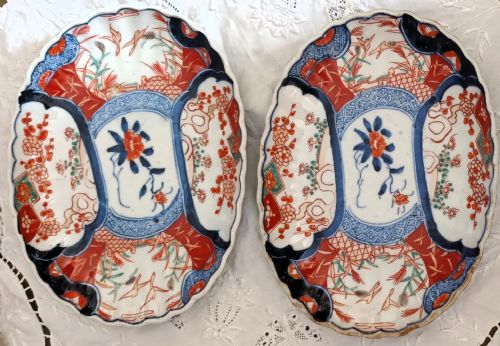
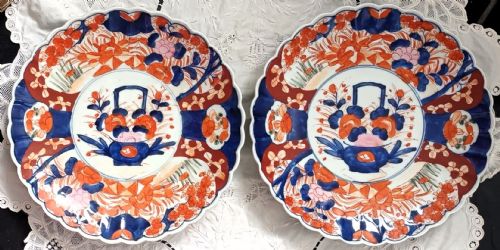
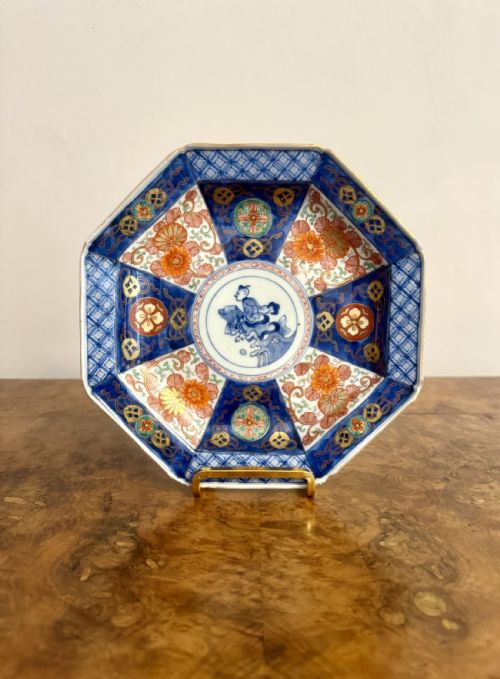
Cobalt Red Japanese Plates
Cobalt red Japanese plates bring rich nineteenth-century palette work and traditional form to a table or wall.
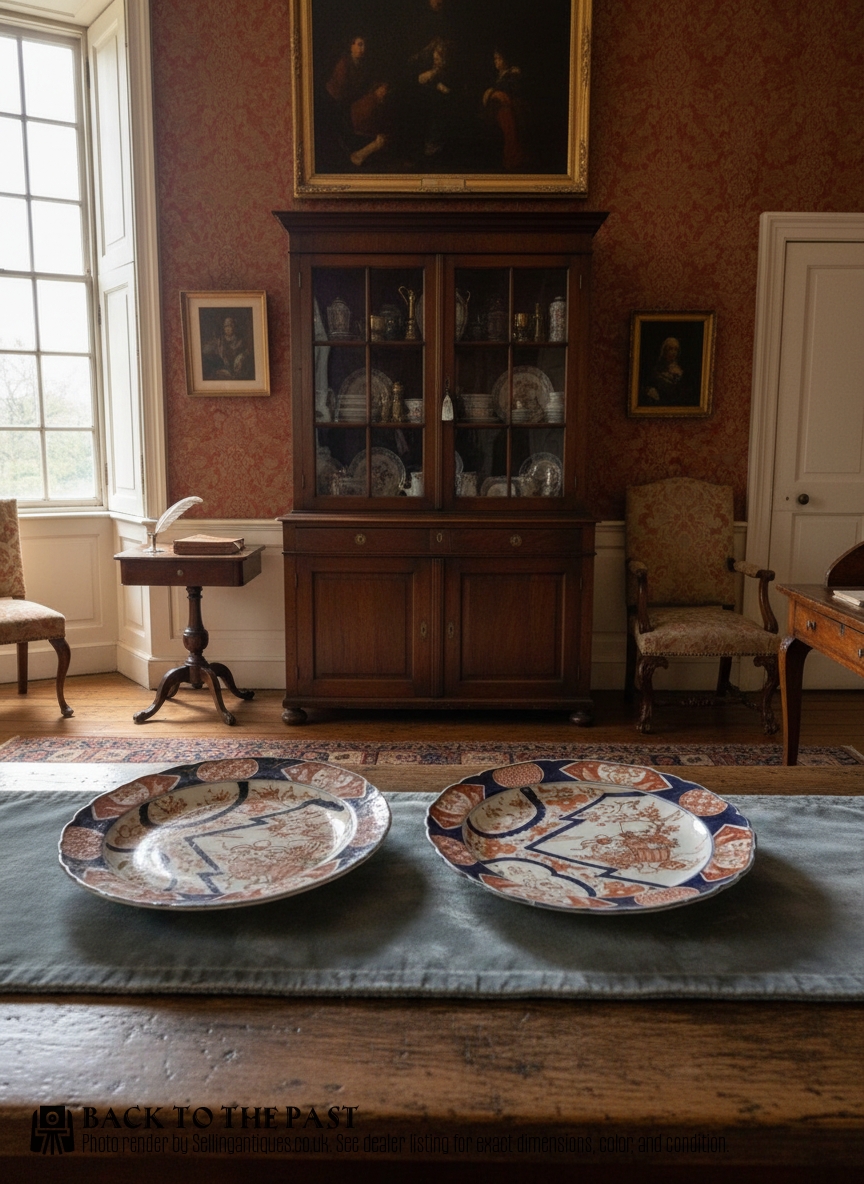
Cobalt Red Japanese Plates
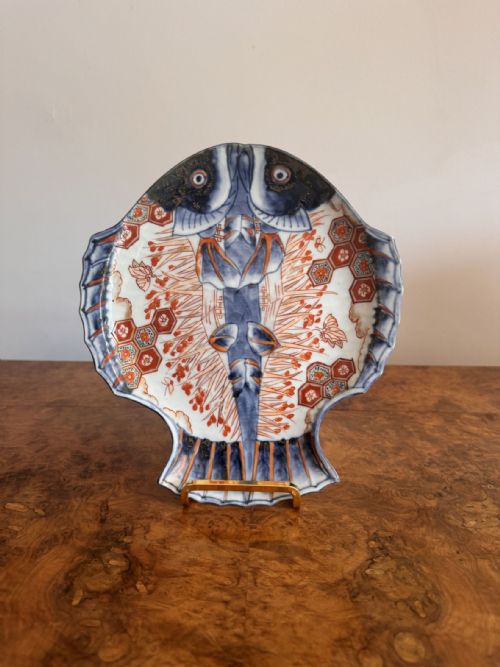
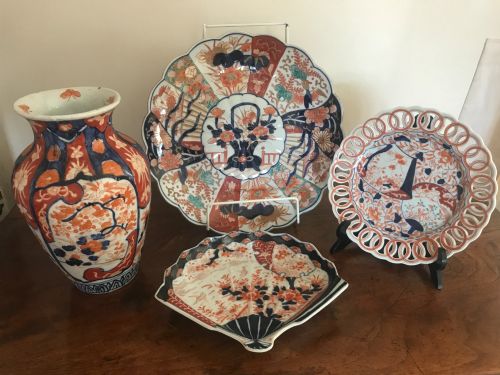
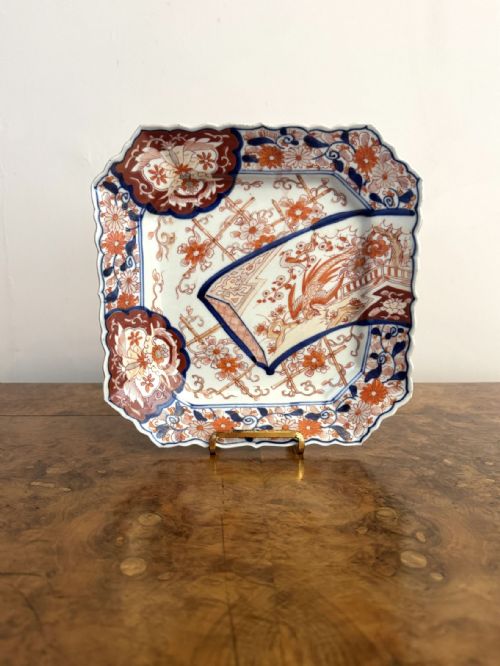
Cobalt red Japanese plates span nineteenth-century production, featuring decorative plates, chargers, and dishes shaped in circular, square, hexagonal, fish, and shell formats. These items emerge primarily from the Meiji period and the broader nineteenth century, showcasing distinct regional designs.
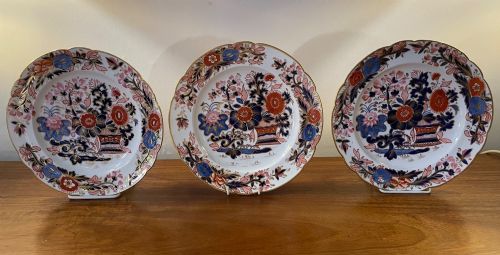
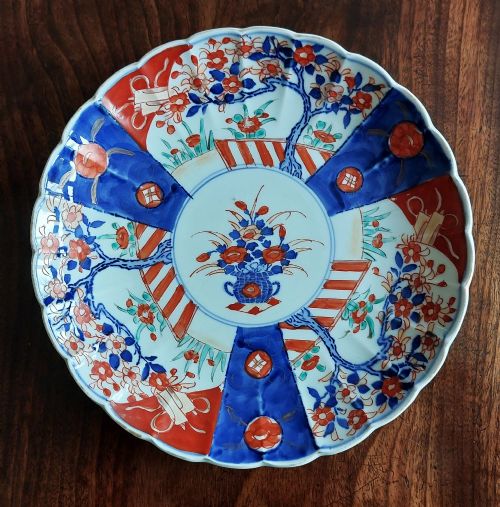
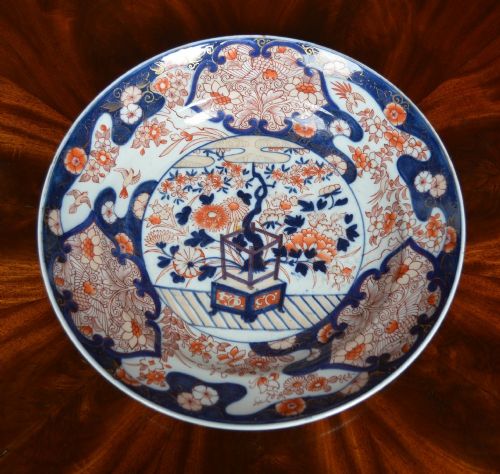
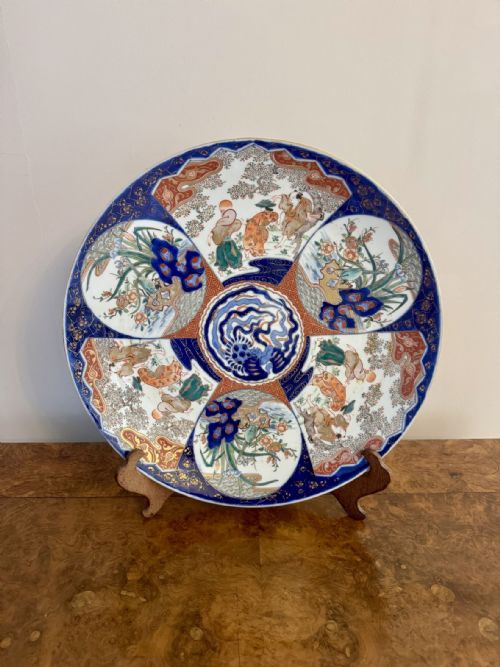
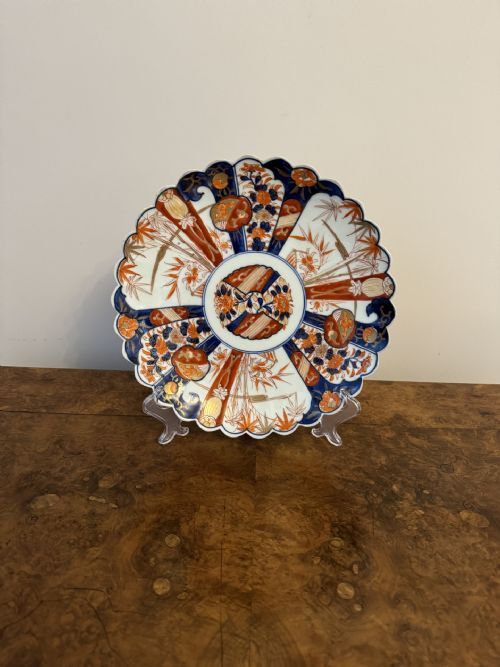
The selection centres heavily on Imari and Arita wares, which combine deep underglaze blue with iron red and gilt highlights. Buyers encounter single display dishes as well as matched pairs, sets of three, and larger collections.
The forms range from standard scalloped edge plates to large wall chargers depicting traditional motifs like the Seven Lucky Gods and exotic birds. Each piece offers a tangible link to historical ceramic traditions from Japan alongside select Staffordshire interpretations utilising the same palette.
Materials and construction
Cobalt red Japanese plates rely upon hard-paste porcelain and ceramic bodies painted underglaze with cobalt blue pigments. Artisans then applied iron-based enamel red and surface gilding to complete the characteristic palette.
Many examples incorporate gold leaf or delicate gilding alongside enamel work to accentuate painted details on scalloped edges and central motifs. The firing process locks the cobalt underglaze beneath a clear gloss while enamel and gold rest on top.
Listings feature porcelain and ceramic bodies decorated with cobalt underglaze, enamel, and gold leaf across the nineteenth century and the Meiji period.
Distinctions in standard
The division between standard and superior pieces rests on the crispness of the hand-painted brushwork and the complexity of the chosen form. Standard examples show straightforward floral or geometric layouts, whereas finer specimens employ intricate depictions of birds and figures.
Unusual structural shapes, such as fish, ribbon, or square formats, demand greater technical skill from the potter than simple round dishes. The preservation of the surface enamel and gold leaf further separates average items from exceptional ones.
The Cobalt Red Japanese Plates Glossary
- Imari
- A style of Japanese export porcelain originating from the port of Arita, traditionally decorated in underglaze blue, iron red, and gold. This aesthetic heavily influences the pieces found across these listings.
- Meiji Period
- The era in Japanese history spanning from 1868 to 1912, known for a surge in export ceramics destined for Western markets. Many decorative chargers and plates originate from this specific timeframe.
- Charger
- A large decorative plate intended primarily for display on a wall or sideboard rather than for practical dining use. These items often feature dense pictorial scenes.
- Underglaze
- A method of decorating pottery where the pigment is applied directly to the unfired ceramic body before the application of a clear glaze and subsequent kiln firing. This technique protects the blue cobalt from wear.
- Scalloped Edge
- A decorative border shaped into a series of continuous curves resembling the edge of a scallop shell. This shaping appears frequently on circular and oval dishes.
Cobalt Red Japanese Plates: Frequently Asked Questions
How do I display these plates safely?
Large chargers and decorative dishes work well mounted on walls using properly padded wire hangers designed for porcelain weight distribution. For smaller plates, sturdy tabletop stands allow the painted surfaces to face outwards at a slight angle.
Avoid placing these items in areas prone to strong direct sunlight or heavy foot traffic where vibrations might dislodge them. Regular dusting with a soft, dry cloth keeps the enamel and gilding clean without introducing moisture.
Can I use these plates for serving food?
Antique porcelain and ceramic plates with surface enamel and gold leaf are generally suited for display rather than active dining use. The historic pigments and overglaze gilding can wear down or degrade with repeated washing and cutlery contact.
Treat these items as decorative works of art or historical display pieces to preserve their surface decoration. Hand washing with mild soap is necessary if cleaning becomes unavoidable.
What is the difference between an Imari plate and a charger?
The primary distinction lies in the physical diameter and the intended purpose of the ceramic object. Plates are generally smaller and suited for set arrangements, whereas chargers measure significantly larger and serve as focal display pieces.
Both categories utilise the same distinctive cobalt blue and iron red palette, but chargers often accommodate much busier pictorial compositions due to their expansive surface area.
How do I identify Meiji period pieces?
Meiji period ceramics typically date between eighteen sixty-eight and nineteen twelve, reflecting the artistic output of that specific imperial era. Look for fine porcelain bodies combined with dense hand-painted motifs featuring birds, figures, and traditional Japanese iconography.
Many pieces from this timeframe also exhibit scalloped edges and careful integration of gold leaf overglaze details. Comparing the weight, form, and painting style helps differentiate them from earlier or later wares.