






Japanese Imari Dish Pair
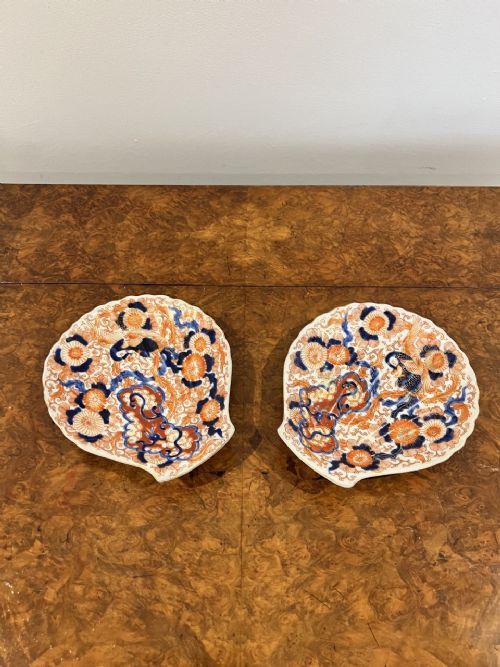
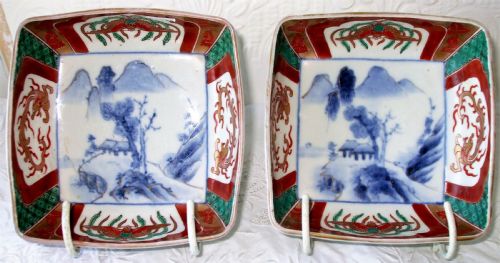
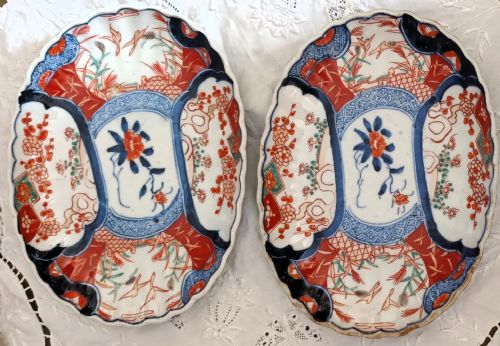
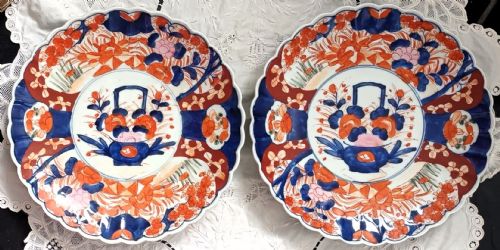
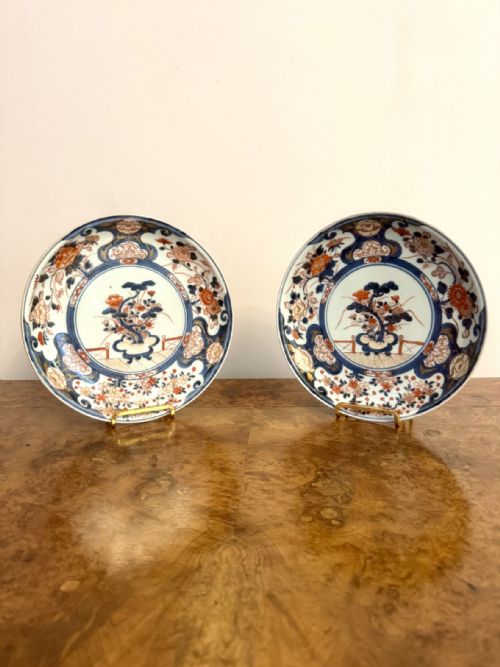
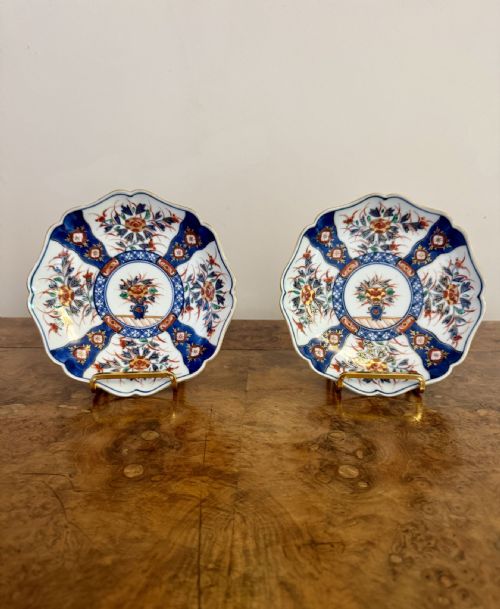
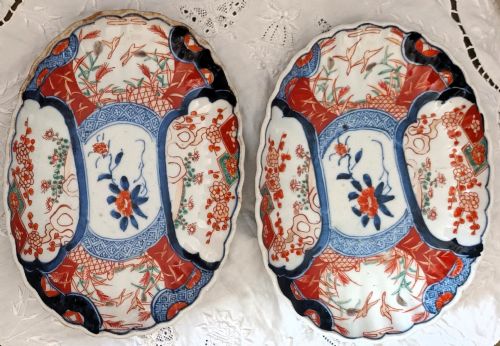
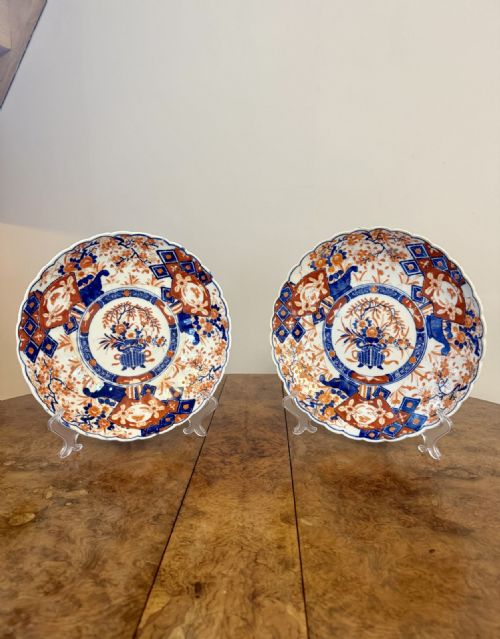
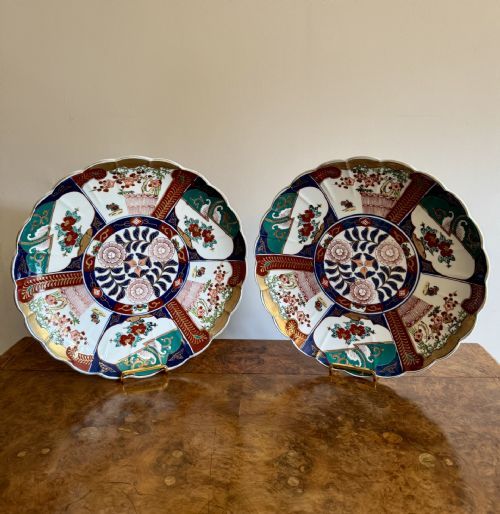
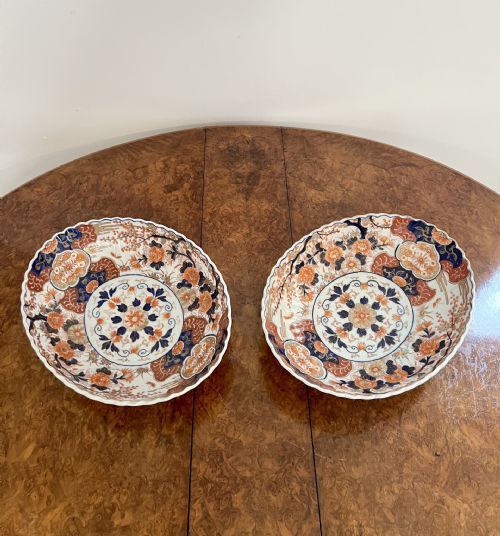
These pairs of Japanese imari dish pieces bring together traditional cobalt pigment, iron red and gold leaf on porcelain.
Japanese Imari Dish Pair
A japanese imari dish pair comprises two matched ceramic items created for display or service. You will frequently find pieces dating from the Meiji period and the nineteenth century alongside earlier examples.
The selections on this page range from standard plates to large chargers, bowls and unusual shapes such as shell, fan and hexagonal forms. Makers utilised porcelain bodies shaped into circular, oval or geometrically moulded profiles.
Many items depict traditional motifs including exotic birds and the Seven Lucky Gods. The palette relies on underglaze blue combined with iron red enamel and supplementary gilding.
How they were made
Potters formed the porcelain bodies by hand or mould before applying cobalt pigment for underglaze blue decoration. The pieces then received an initial firing to fix the blue pigment beneath a transparent glaze.
Artisans added enamel glaze colours such as iron red, alongside gold leaf and gilding, in subsequent decoration stages. A final lower temperature firing fused these surface pigments onto the glazed ceramic body.
Listings feature porcelain bodies decorated with cobalt pigment, enamel glaze and gold leaf across multiple centuries.
What varies in quality
Quality rests upon the precision of the hand painted details and the richness of the enamel and gilding work. Superior examples exhibit crisp outlines and well balanced compositions across both items in the pair.
The complexity of the form also influences standing, with moulded shapes like shells, fans and deep scalloped edges demanding greater skill from the potter. Early eighteenth century pieces display distinct potting characteristics compared to later Meiji output.
The Japanese Imari Dish Pair Glossary
- Imari
- A style of Japanese export porcelain originating from the port of Arita, traditionally decorated in underglaze blue, iron red and gold. This aesthetic became popular in European interiors from the seventeenth century onwards.
- Charger
- A large decorative plate intended for display on a wall or sideboard rather than daily dining use. These substantial pieces show the fullest scope of the potter's decorative scheme.
- Cobalt Pigment
- A mineral oxide used under the glaze to produce deep blue tones that withstand high temperature firings. It forms the structural foundation of the traditional colour palette.
- Enamel
- Opaque or translucent glass coloured with metallic oxides, applied over the fired glaze. This material provides the characteristic reds and greens seen on the surface.
- Meiji Period
- The era in Japanese history spanning from 1868 to 1912, corresponding with significant export trade in decorative arts. Many surviving ceramic pairs date from this prolific manufacturing period.
Japanese Imari Dish Pair: Frequently Asked Questions
How were these dishes used originally?
These ceramic items served primarily as decorative display pieces within interiors, or occasionally for presenting food at formal meals. Large chargers were frequently set upright on tables or mounted on walls.
Pairs were created to balance decorative schemes within a room, maintaining symmetry on mantelpieces and cabinets.
How do I tell eighteenth century pieces apart?
Earlier pieces from the eighteenth century typically feature lighter, finer porcelain bodies and softer cobalt tones under the glaze. The hand painted brushwork often shows greater spontaneity and restraint in the enamel application.
Later nineteenth and Meiji period examples generally present denser porcelain bodies with heavier, brighter enamel colours and more abundant gilding.
Can I display these plates on walls?
Many chargers and plates feature proportions suited for wall display, provided you use appropriate secure mountings that support the weight of the porcelain. Ensure the fixings distribute pressure evenly across the rim or base.
Keep displayed pairs away from direct sunlight and areas of high temperature fluctuation to protect the surface enamels and gold leaf.
What does a near pair mean?
A near pair consists of two items that match closely in size, shape and decorative motif but were not necessarily produced in the exact same kiln batch. Slight variations in hand painted details reveal their individual creation.
Collectors accept near pairs when the visual harmony on a mantelpiece or shelf remains undisturbed by the minor differences.