
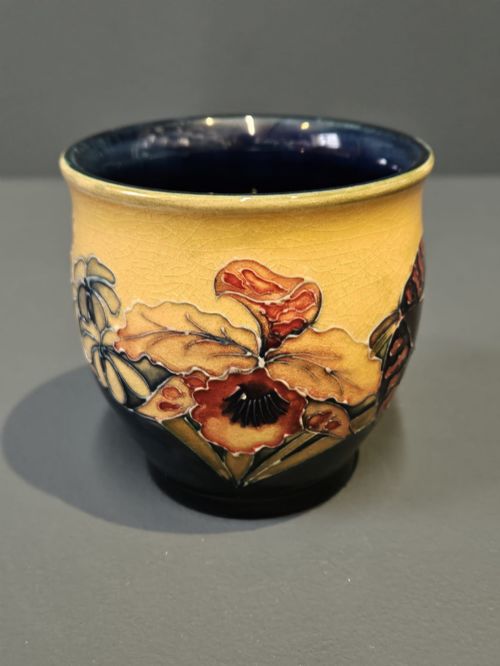
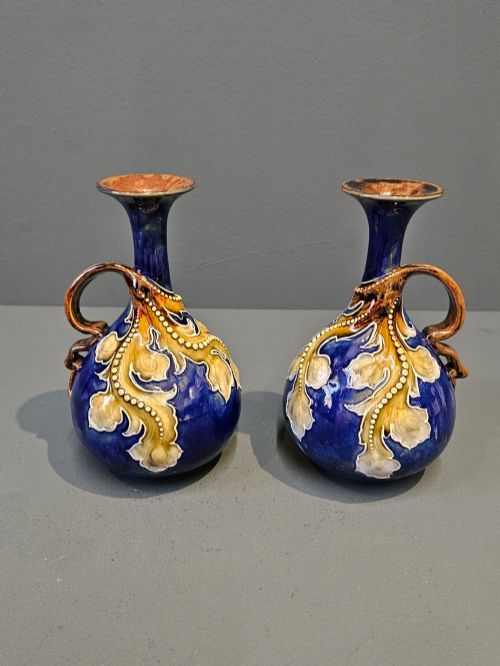
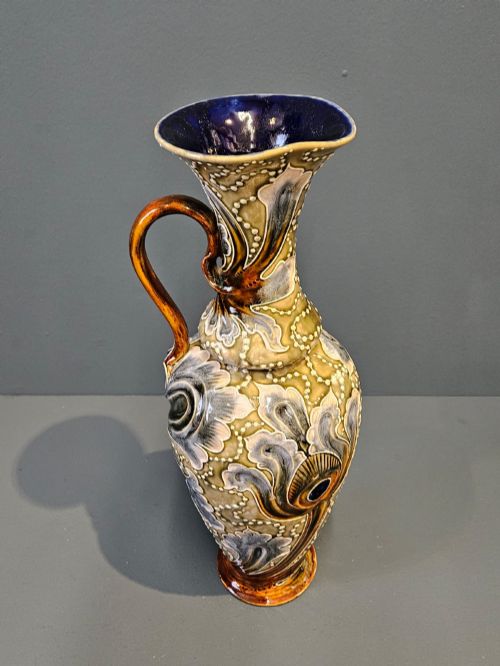


Cobalt Glaze Pottery Vase
These cobalt glaze pottery vase pieces range from eighteenth-century English Delftware to twentieth-century art pottery, offering deep blue colouration for any interior.
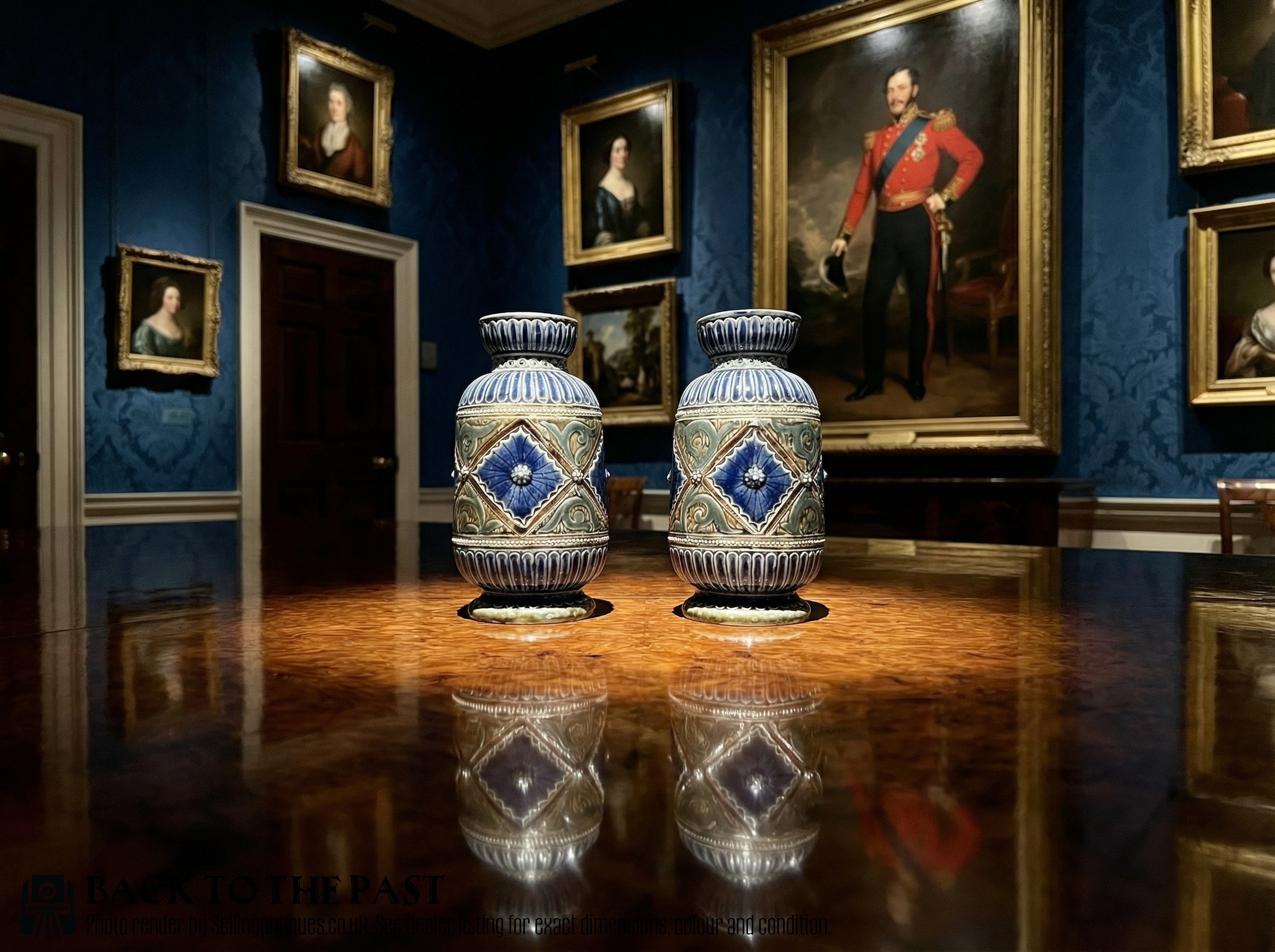
Cobalt Glaze Pottery Vase
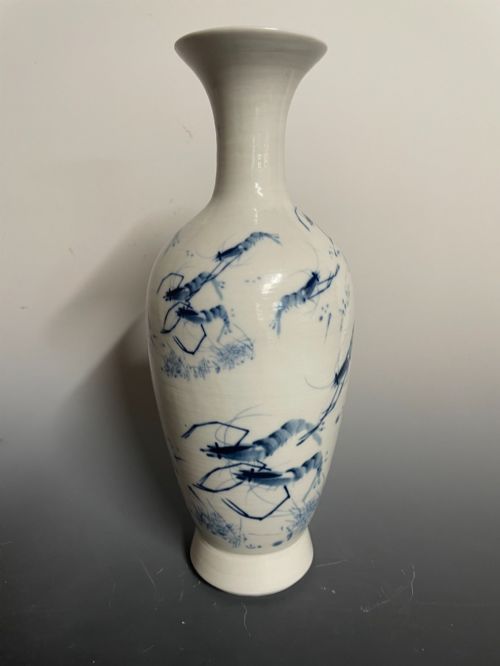
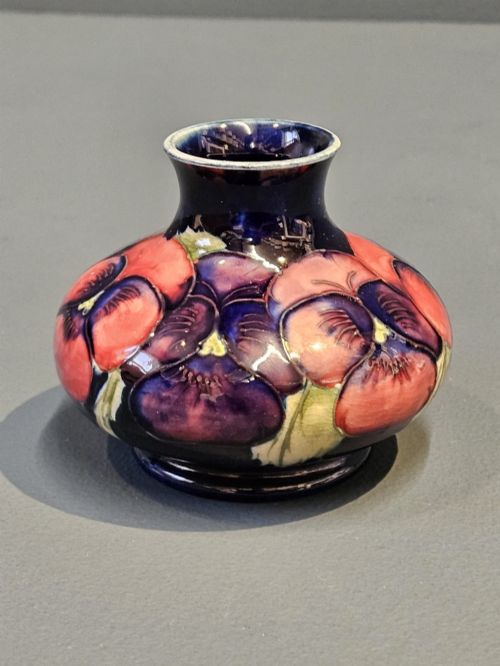
A cobalt glaze pottery vase encompasses a diverse selection of ceramic vessels spanning the eighteenth, nineteenth, and early twentieth centuries. When searching for this phrase, collectors encounter forms ranging from traditional Chinese porcelain and Japanese Satsuma to Victorian Doulton Lambeth stoneware and Moorcroft art pottery.
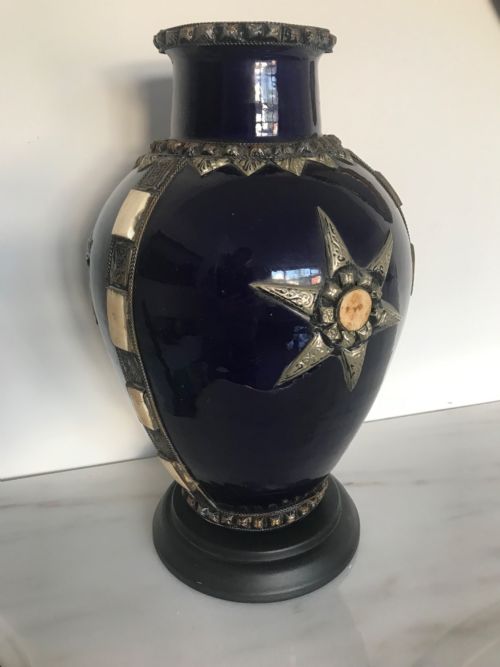
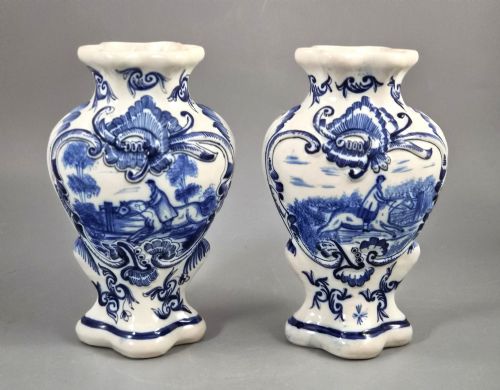
The Victorian era is particularly well represented on this page through salt-glazed stoneware ewers and vases produced by Doulton, alongside English and Dutch Delftware pieces. Buyers also find Arts and Crafts pieces, French faience, and Moroccan terracotta vessels featuring silver mounts.
The selection extends across various functional and decorative shapes, including spill vases, miniature flower vases, garnitures, and bottles. These objects derive their primary visual impact from rich blue glazes applied across earthenware, stoneware, and porcelain bodies.
How they were made
Maker workshops shape these vessels from ceramic, earthenware, stoneware, and porcelain, applying liquid metallic cobalt compounds to achieve deep blue finishes. Stoneware pieces like those from Doulton Lambeth utilise salt glazing techniques where salt is thrown into the kiln during firing to produce a textured finish.
Earthenware items often receive tin or enamel glazes, characteristic of Delftware production, while porcelain pieces display underglaze blue decoration. Certain works incorporate additional ornamentation such as gold leaf accents, enamel detailing, and applied silver cabochon mounts.
Makers ranging from large factories to individual art pottery studios shape these vessels on the wheel or in moulds before firing. The resulting pieces demonstrate the interaction between high-temperature kiln processes and metallic oxide pigments.
Some nineteenth-century Toby jugs double as spill vases, serving drinks by day and holding fire-lighters by night.
What varies in quality
Quality in a cobalt glaze pottery vase depends heavily on the crispness of the form, the depth and consistency of the blue glaze, and the precision of any hand-painted or raised decoration. Art pottery and factory pieces marked by named artists or reputable potteries generally command stronger interest from collectors.
The balance of the vessel's proportions and the control demonstrated during the firing process distinguish standard production items from superior examples. Secondary details, such as the execution of Moriage relief work on Japanese Satsuma pieces or the quality of silver mounts on Moroccan terracotta, elevate the overall standard.
Fourmaintraux-Courquin·Doulton Lambeth·Brannam·Carlton Ware·Royal Doulton·Pilkingtons Royal Lancastrian·William Moorcroft
The Cobalt Glaze Pottery Vase Glossary
- Cobalt glaze
- A metallic oxide pigment applied to ceramics to produce a deep blue colour during kiln firing. It remains stable at high temperatures.
- Delftware
- Tin-glazed earthenware produced in England and the Netherlands, typically featuring blue and white decoration inspired by imported Chinese porcelain.
- Stoneware
- A hard, dense ceramic fired at high temperatures until vitrified, making it impermeable to liquids without requiring a secondary glaze.
- Spill vase
- A small upright container historically placed on mantelpieces to hold wooden spills used for lighting candles and fires.
- Ewer
- A large jug with a wide spout and flared base, traditionally used for holding water but frequently produced as a decorative ornamental vase.
- Moriage
- A Japanese ceramic decorating technique where slip is piped onto the surface to create raised designs before glazing and firing.
Cobalt Glaze Pottery Vase: Frequently Asked Questions
How do I identify Doulton Lambeth pieces?
Doulton Lambeth items typically feature salt-glazed stoneware bodies with incised or applied decoration, often bearing specific factory stamps and artist initials to the base.
These pieces span the Victorian period and display characteristic blue and brown colour palettes achieved through specialised kiln techniques.
What is the difference between Delftware and porcelain?
Delftware utilises an earthenware body covered in a white tin glaze that accepts blue painted decoration, while porcelain is a dense, vitrified ceramic fired at higher temperatures.
English and Dutch Delft pieces often present a softer body compared to the hard-paste or soft-paste porcelain found in Chinese and European imports.
How should I display a cobalt glaze vase?
These vessels suit placement in well-lit areas where natural light can illuminate the depth of the blue glaze and any surface textures like salt-glaze or Moriage.
Pairing them with neutral backgrounds allows the rich cobalt colouration to serve as a focal point within a room.
Are these vases suitable for holding water?
Stoneware and porcelain vessels are generally watertight due to their vitrified bodies or interior glazing, making them practical for fresh flowers.
Earthenware pieces and antique spill vases may be porous or intended strictly for decorative display, so checking the interior condition is advisable.