


Twin Handled Pottery Vase
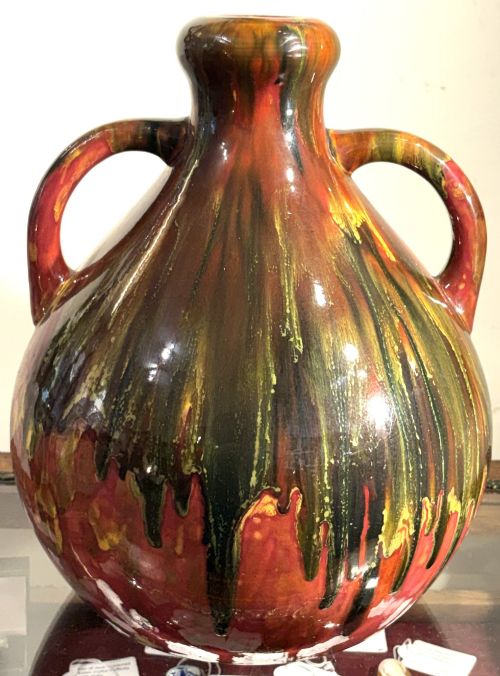
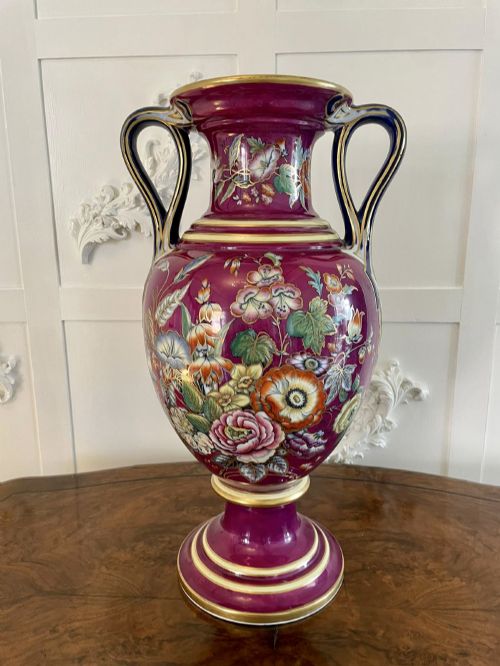
These twin handled pottery vase examples combine structural handles with diverse ceramic bodies from the Victorian era to the mid-twentieth century.
Twin Handled Pottery Vase
A twin handled pottery vase brings together classical vessel forms and regional ceramic traditions from the nineteenth and twentieth centuries. These vessels showcase dual handles that flank bodies created in earthenware, porcelain, and glazed ceramic.
Buyers browsing this selection frequently encounter pieces shaped by Arts and Crafts workshops, Art Nouveau designers, and Victorian manufacturers. The range encompasses English art pottery alongside Japanese export wares from the Meiji period.
Common forms vary from large decorative amphora shapes to floral patterned patterns bearing distinct coloured glazes and gilt accents. Each object reflects the prevailing decorative styles of its specific period of production.
Materials and production techniques
Potters shaped these vessels using earthenware and porcelaneous bodies before applying complex ceramic glazes and enamel decoration. Workshops utilised techniques ranging from standard thrown bodies to moulded forms.
Surface ornamentation often incorporates applied gold leaf, intricate gilt details, and hand-painted floral motifs under transparent or coloured glazes. Makers frequently utilised specialised firing processes to achieve distinctive matte or lustrous finishes.
The inventory includes Japanese Imari and Satsuma wares alongside British Arts and Crafts and Art Nouveau pottery.
Factors determining quality
Quality in a twin handled pottery vase rests upon the precision of the form, the depth of the glaze, and the execution of the painted or moulded decoration. Pieces designed by notable figures command attention through superior compositional balance.
The sophistication of the ceramic body and the complexity of the firing technique separate standard commercial production from ambitious studio and factory output. Finer examples display crisp handling of handles and controlled glaze effects.
Burmantofts·Brannam·Wileman·Minton·William Moorcroft·Macintyre and Co.·Royal Worcester·Roger Guerin
The Twin Handled Pottery Vase Glossary
- Earthenware
- Porous pottery fired at lower temperatures, commonly glazed to ensure it holds liquid.
- Porcelain
- A hard, fine-grained ceramic fired at high temperatures, known for its white body and vitrified finish.
- Amphora
- A two-handled jar with a narrow neck, modelled on ancient Greek and Roman vessel shapes.
- Imari
- Japanese export porcelain decorated in underglaze blue and contrasting iron red, gold, and green enamel.
- Glaze
- A glassy coating fused to ceramic surfaces through firing, providing colour, texture, and impermeability.
Twin Handled Pottery Vase: Frequently Asked Questions
How do I date a twin handled pottery vase?
Dating relies on stylistic markers such as Victorian aesthetic preferences or Art Nouveau floral motifs, alongside factory marks stamped or painted on the base. Material composition and glaze types also help anchor pieces to specific decades.
Examining registration numbers or inscribed artist ciphers provides further chronological precision for nineteenth and twentieth-century pieces.
Were these vessels used for flowers?
Many of these vessels functioned as decorative centrepieces rather than utilitarian flower holders, particularly larger exhibition pieces and heavily gilt examples.
Smaller earthenware and stoneware versions accommodated cut stems, while grand amphora shapes remained purely ornamental.
What is the difference between art pottery and factory wares?
Art pottery studios emphasised individual artistic expression, hand-thrown or modelled bodies, and experimental glazes often associated with the Arts and Crafts movement. Factory wares relied on standardised moulds and division of labour.
Both traditions produced twin handled vessels, but studio pieces show greater variation in individual execution.
How should I care for an antique pottery vase?
Keep ceramic pieces away from direct sunlight and dust them gently with a dry, soft cloth to protect delicate enamels and gilt highlights. Avoid using liquid cleaners on porous earthenware or surfaces with gold leaf.
If used for water, insert a small glass container inside to prevent moisture penetrating aged ceramic bodies.