
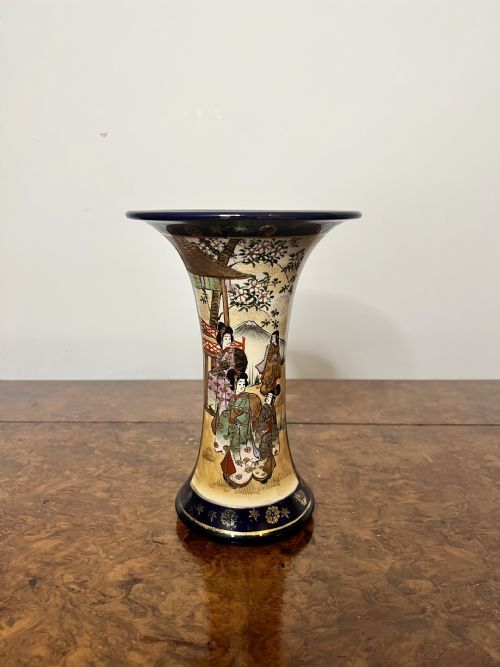


Cobalt Blue Satsuma
Cobalt blue satsuma brings together deep blue grounds and intricate gold leaf, offering collectors striking contrast and rich detail.
Cobalt Blue Satsuma
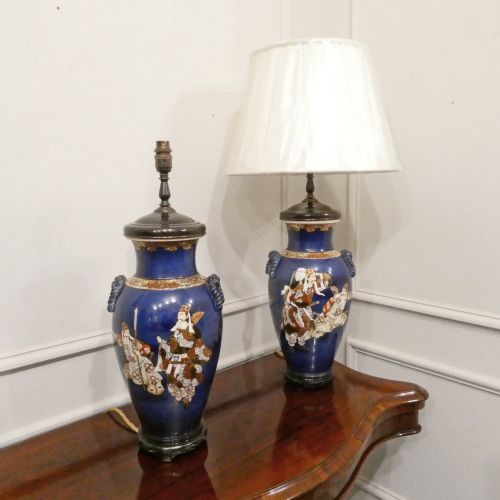
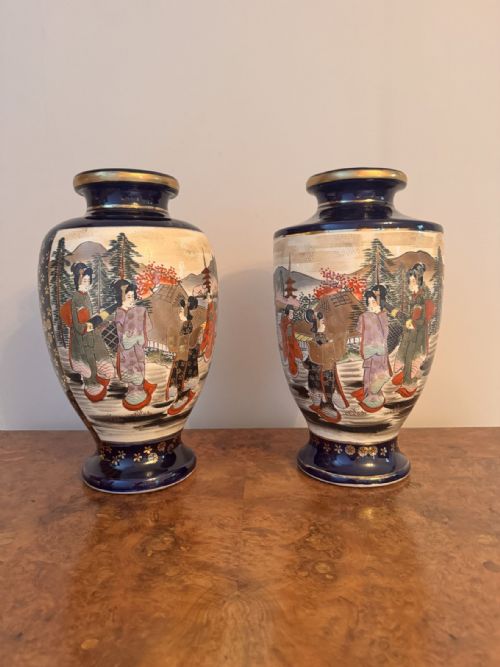
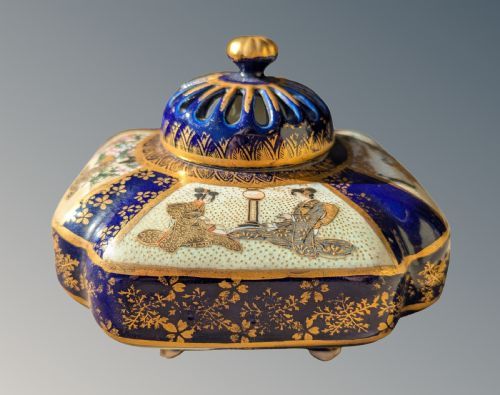
Cobalt blue satsuma encompasses decorative pieces like vases, bowls, and incense burners created during the Meiji period and the nineteenth century. These items typically feature a rich cobalt ground that sets off painted court figures, landscapes, or samurai scenes.
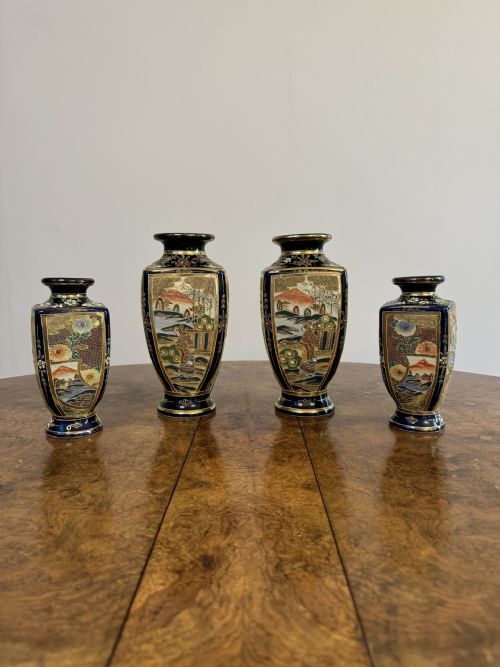
The objects appearing on this page span the late nineteenth century and around nineteen hundred, showcasing Japanese earthenware traditions adapted for export markets. Buyers encounter single vases, matched pairs, and larger garnitures bearing characteristic cobalt and gilt decoration.
Forms range from small cabinet vessels to monumental bowls and tall decorative vases. Each piece displays the distinct aesthetic associated with Kyoto workshops and prominent makers of the era.
Materials and construction
These works begin with earthenware bodies finished in specialised glazes that accept fine hand-painting and enamel decoration. Artisans apply deep cobalt blue to the ground, creating a dark field for subsequent detailing.
Gold leaf and heavy gilt are applied alongside raised moriage work to delineate figures, borders, and panels. This combination of enamel, gold, and textured paste requires multiple firings to achieve the finished surface.
Samurai battles wage across midnight-blue bowls while tiny court figures converse quietly beneath heavy layers of gold.
Assessing quality
The distinction between standard pieces and exceptional works lies in the precision of the hand-painting and the weight of the gilding. Finer examples display meticulous brushwork in the court figures and crisp definition in the moriage relief.
The depth and consistency of the cobalt ground also signal superior manufacture. Pieces associated with notable Kyoto makers or specific marks often demonstrate a higher degree of artistic control across the entire surface.
Kinkozan·Nanzan
The Cobalt Blue Satsuma Glossary
- Satsuma
- A type of Japanese earthenware originating in Satsuma Province, later produced extensively in Kyoto and other centres for export. It is known for its ivory crackle-glaze and overglaze enamel decoration.
- Moriage
- A decorative technique using slip trailing to build up raised patterns and textures on ceramic surfaces. This method creates a tactile, three-dimensional effect often highlighted with gold.
- Gilt
- A thin layer of gold applied to the surface of the ceramic to accent panels, borders, and motifs. Heavy gilt denotes a more substantial application of gold leaf.
- Koro
- A traditional Japanese incense burner typically featuring a pierced lid and three or more feet. These vessels often form part of a decorative garniture.
- Garniture
- A matched set of ceramic vases or vessels designed to be displayed together on a mantelpiece or sideboard. They share common decorative schemes and proportions.
Cobalt Blue Satsuma: Frequently Asked Questions
How do I identify cobalt blue satsuma?
Look for a deep blue ceramic ground combined with intricate enamel painting, gold leaf, and raised moriage details. Most pieces originate from the Meiji period and feature Japanese motifs such as court figures or landscapes.
Examination of the base often reveals signature marks or workshop stamps, particularly associated with Kyoto production from the nineteenth and early twentieth centuries.
How should I display a garniture?
A garniture of vases or vessels works best when arranged symmetrically on a sideboard, mantel, or dedicated display table. The matching forms and shared cobalt and gold schemes create a strong visual focal point in a room.
Ensure the pieces are placed on stable, level surfaces away from heavy traffic to protect the raised moriage and delicate gilt work from accidental knocks.
What is Shimazu mon?
The Shimazu mon is a crest featuring a cross within a circle, representing the Shimazu clan who ruled the Satsuma domain. This heraldic badge frequently appears on satsuma ceramics as a mark of heritage or regional association.
Its presence connects the decorative object to the historical lineage of Satsuma province pottery production.