


Gold Leaf Satsuma
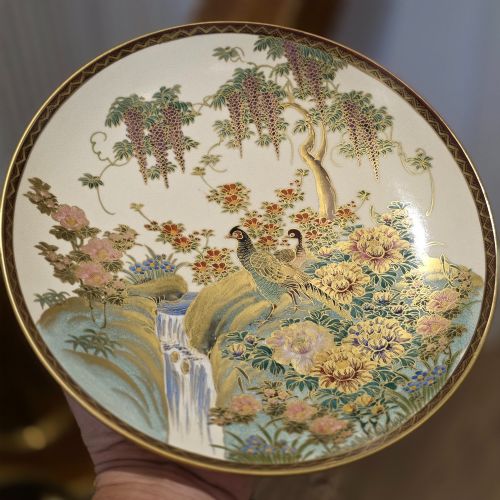
These gold leaf satsuma pieces are richly decorated Japanese earthenware items that bring striking hand-painted figures and elaborate gilt details to any interior.
Gold Leaf Satsuma
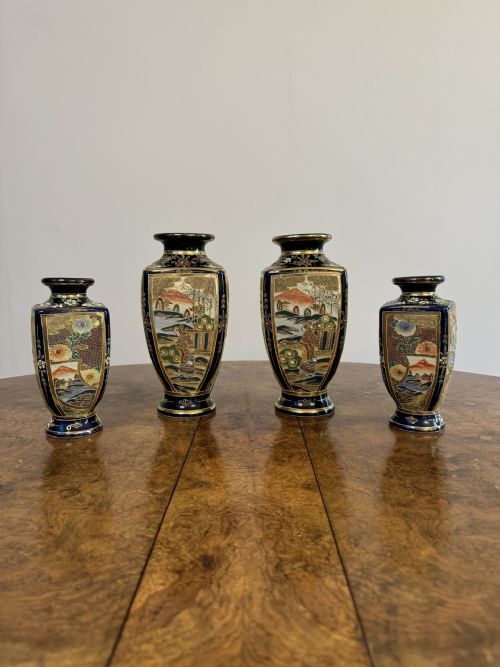
Gold leaf satsuma items encompass a variety of decorative forms, ranging from pairs of vases and garnitures to large bowls, jardiniere planters, plates, and figural okimono. These objects originate predominantly from the Meiji and Taisho periods, spanning the late nineteenth and early twentieth centuries, though some date to the Victorian and Edwardian eras.
The objects frequently display intricate scenes featuring traditional figures such as arhats, samurai, and bijin, often set against rich cobalt backgrounds or detailed millefleur patterns. On this page, buyers are most likely to encounter vases and bowls decorated with lavish gilt work, showcasing the distinct aesthetic of Kyoto workshops.
Materials and construction
The foundation of these pieces is earthenware, finished with a fine glaze that often displays a characteristic network of fine crackles across the surface. Artisans then applied detailed enamel colours and extensive gold leaf or gilt ceramic highlights to build up complex pictorial scenes.
Specialised techniques such as moriage were utilised to create raised enamel and gilt decoration, adding a distinct tactile dimension to the surface. Certain forms, such as bamboo-handle vases, required skilled moulding of the clay body before the intricate painting and gilding took place.
Listings span from the 1870s through the Edwardian era, featuring earthenwares with glaze, enamel, wood, and gilt ceramic components.
Assessing quality
The distinction between standard and superior pieces rests largely on the precision and density of the hand-painting, particularly in the rendering of facial expressions on figures and the complexity of background motifs like millefleur. Finely executed moriage work and the crispness of the applied gold leaf indicate a higher level of workshop output.
Provenance and workshop attribution also play a role, as pieces bearing discernible artist signatures or marks from renowned Kyoto makers like Kinkozan or Nanzan generally command greater attention. The overall scale and ambition of the form, from standard vases to monumental bowls and garniture sets, further define the upper tier of the range.
Koshida·Nanzan·Kinkozan
The Gold Leaf Satsuma Glossary
- Satsuma
- A type of Japanese earthenware originating from Satsuma Province, traditionally characterised by an ivory-coloured, crackled glaze. This ceramic body served as the canvas for elaborate enamel and gilt painting during the Meiji period.
- Moriage
- A decorative technique where clay is applied in raised dots or lines before glazing and firing, creating a textured surface. This method was frequently highlighted with gold leaf to emphasise intricate patterns.
- Okimono
- A Japanese freestanding decorative figurine designed for display on a shelf or in a tokonoma alcove. These sculptures often depict figures such as bijin or historical personalities.
- Millefleur
- A dense pattern composed of countless small flowers covering the entire surface of the ceramic body. This intricate style requires immense patience and precision from the artist.
- Garniture
- A matching set of ornamental vessels, typically comprising three or more pieces designed to be displayed together on a mantelpiece or sideboard. In these listings, garnitures usually consist of four matching vases.
- Mon
- A Japanese heraldic badge or crest used to identify families or clans. The Shimazu mon frequently appears on Satsuma wares associated with the ruling clan of the Satsuma Domain.
Gold Leaf Satsuma: Frequently Asked Questions
What is gold leaf satsuma?
Gold leaf satsuma refers to Japanese earthenware ceramics decorated with intricate enamel paintings and extensive gilt highlights. These items were produced primarily during the Meiji period for both domestic use and export.
The pottery is known for its distinctive crackled glaze, which provides a textured backdrop for elaborate scenes of samurai, arhats, and traditional court figures.
How do I date a piece?
Dating these ceramics relies heavily on stylistic markers, historical periods, and specific workshop marks. Pieces marked with Meiji period association typically date from the late nineteenth to the early twentieth century.
Changes in the complexity of the moriage work and the presence of specific family crests or maker signatures help narrow down the decade of production.
Where were these pieces made?
While the style originates from Satsuma Province in southern Kyushu, many of the finest decorated wares were produced in Kyoto workshops. Master artisans in Kyoto adapted the technique for the Western export market.
Prominent studios in Kyoto, such as those run by Kinkozan, produced many of the large bowls, vases, and garniture sets seen today.
How should I display them?
These decorative objects work best when placed in well-lit areas where the reflective qualities of the gold leaf can be appreciated. Garniture sets and large vases suit stable mantelpieces, sideboards, or dedicated display cabinets.
Due to the delicate nature of the earthenware and surface gilding, items should be kept away from direct sunlight and areas of high humidity.