


Decorative Satsuma Vases
These decorative satsuma vases bring intricate earthenware and gilded detail to interiors, spanning Meiji and Showa periods with hand-painted character.
Decorative Satsuma Vases
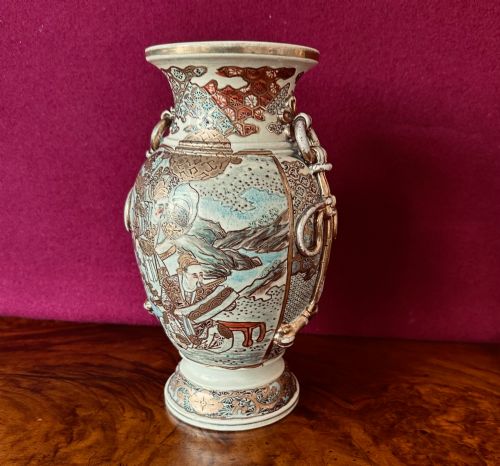
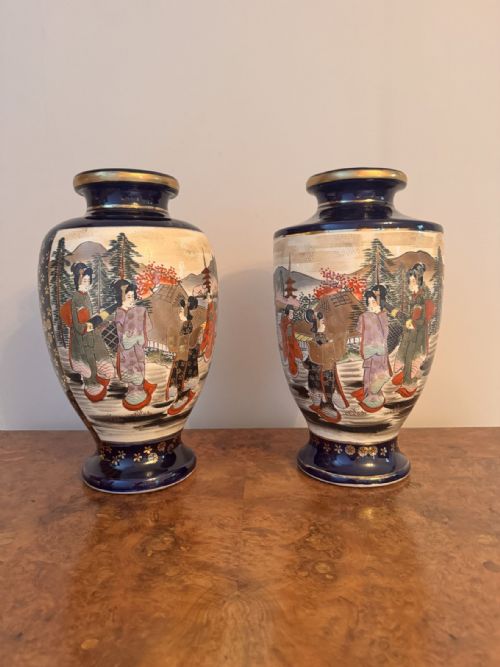
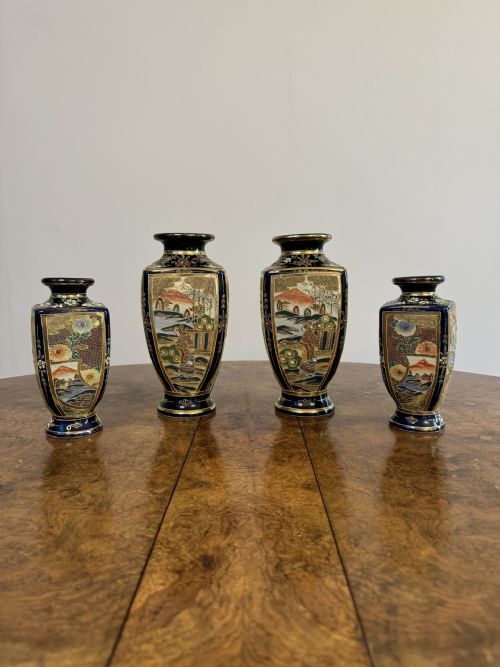
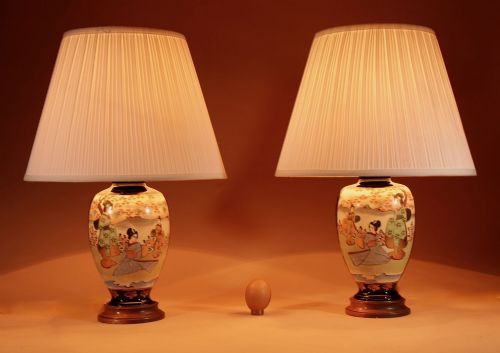
Decorative satsuma vases span multiple eras, most frequently appearing from the Meiji period through to the early decades of the twentieth century. Buyers encounter forms ranging from miniature vessels and baluster shapes to large garnitures and table lamps converted from ceramics. Originating as Japanese ceramic ware, these pieces often feature traditional scenes such as landscapes, family gatherings, and religious panels.
The selection includes matched pairs and individual statement pieces, alongside occasional jardinieres and lidded vessels. Pieces from the late nineteenth century sit alongside later Showa period examples, demonstrating continuity in traditional Japanese ceramic artistry. Collectors find both diminutive cabinet items and substantial exhibition-quality pieces carrying imperial or maker marks.
How they were made
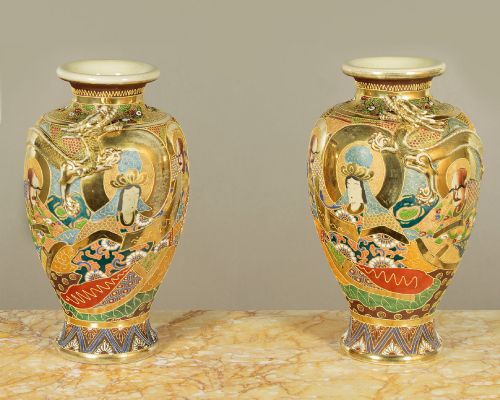
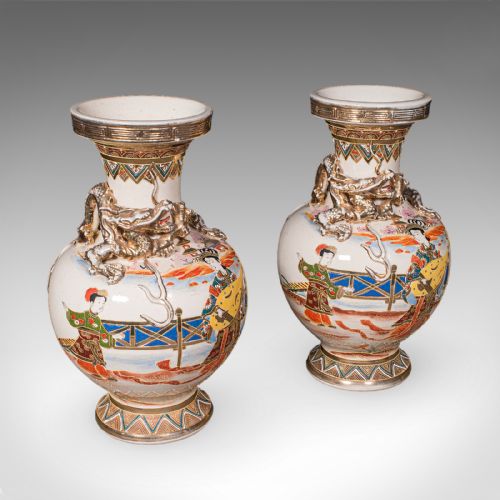
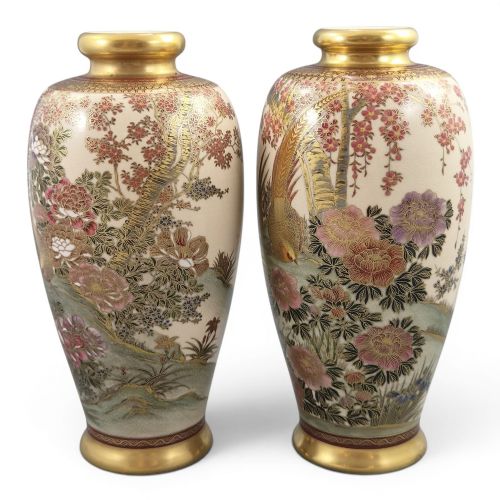
These vessels utilise ceramic and earthenware bodies coated in characteristic crackle-glaze finishes. Artisans applied rich enamel pigments, gold leaf, and gilt detailing by hand to build up complex pictorial surfaces. Raised paste work, known as moriage, added tactile relief to floral and geometric borders.
Makers incorporated specialised techniques in workshops across Kyoto and Kobe, utilising cobalt blue grounds alongside intricate polychrome decoration. Many objects bear signatures or mon symbols, indicating specific kiln circles and master craftsmen who oversaw the detailed hand-painting process.
Some pieces feature bamboo-handle forms, blending ceramic vessels with simulated woodwork to trick the eye.
What varies in quality
Quality rests upon the precision of the hand-painting, the complexity of the figural or landscape composition, and the density of the gilding. Superior examples display finely controlled brushwork in the facial expressions and textiles of depicted figures, whereas lesser pieces rely on repetitive, mass-applied motifs.
The application of moriage and the integration of cobalt blue grounds also distinguish standard production from exhibition pieces. Finer pots exhibit crisp detail in the crackle-glaze and robust application of gold leaf that remains intact across complex baluster or globular forms.
Manpei, Kobe·Kinkozan Circle·Chosei, Kyoto·Nanzan·Kinkozan·Hakusan·Hododa
The Decorative Satsuma Vases Glossary
- Moriage
- A decorative technique using raised clay applied in dots or lines under the glaze or enamel. This creates a textured, three-dimensional effect often highlighted with gold leaf.
- Meiji Period
- The era in Japanese history lasting from 1868 to 1912. Pieces from this time frequently demonstrate exceptional detail and traditional craftsmanship.
- Garniture
- A set of matching vases or ornamental jars designed to be displayed together on a mantelpiece or sideboard. These sets often comprise three, four, or five coordinated pieces.
- Baluster
- A vase shape featuring a rounded body that tapers toward the base and flares at the neck. This form provides a balanced canvas for expansive landscape scenes.
- Mon
- A Japanese emblem or crest used to identify families, clans, or imperial lineage. Satsuma pieces often incorporate these heraldic badges into their decorative borders.
Decorative Satsuma Vases: Frequently Asked Questions
How do I identify a Meiji period vase?
Meiji period pieces typically display dense, intricate hand-painting, subtle crackle-glazes, and refined figural or landscape scenes. Many carry artist signatures or workshop marks from notable production centres like Kyoto.
Examining the weight of the earthenware and the precision of the moriage work helps separate late nineteenth-century examples from later twentieth-century reproductions.
What is moriage decoration?
Moriage refers to raised slip decoration applied to the ceramic surface before firing and painting. Artisans used this technique to build textured floral patterns, dragons, and ceremonial robes.
This tactile element is a hallmark of finer Satsuma ware, catching the light alongside heavy gilding.
How should I display these vases at home?
These vessels suit prominent placement on mantelpieces, sideboards, or dedicated display cabinets where adequate lighting highlights the gold leaf and enamel details. Paired items work well balanced across a surface, while single large baluster vases function as focal points.
Avoid placing them in direct sunlight to protect the polychrome pigments over time.
What do workshop marks signify?
Workshop marks and signatures identify the studio, kiln, or master artisan responsible for the piece's decoration. Names such as Kinkozan or Hakusan indicate specific Kyoto traditions and higher standards of artistry.
Finding a mon symbol or imperial mark further connects the vessel to exhibition-grade production.