








Cobalt Blue Japanese Plates
Cobalt blue japanese plates bring rich colour and intricate pattern to a room, ranging from small dishes to large decorative chargers.
Cobalt Blue Japanese Plates
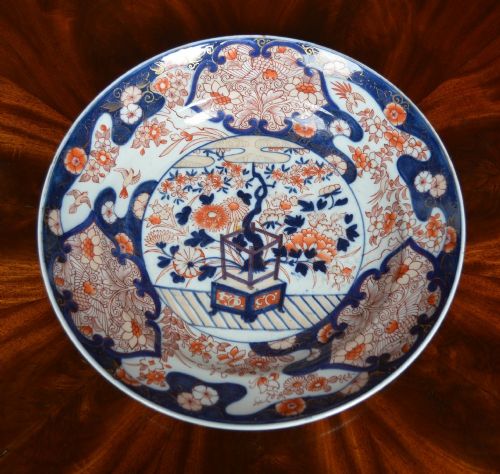
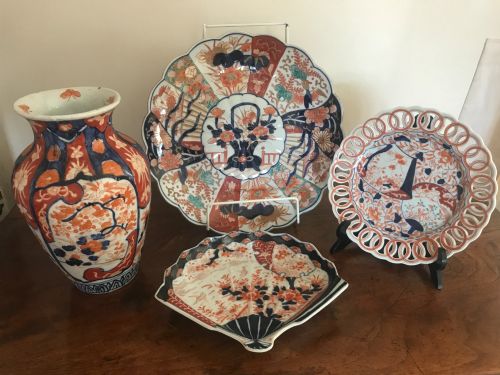
When you search for cobalt blue japanese plates, you encounter porcelain and ceramic tableware created during the Edo and Meiji periods, alongside nineteenth-century Staffordshire interpretations. The selection leans heavily towards Japanese Imari and Arita wares fashioned into decorative plates, dishes, and large chargers.
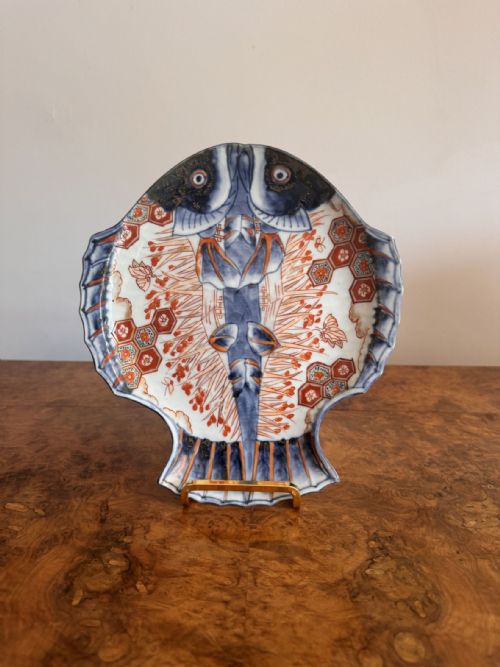
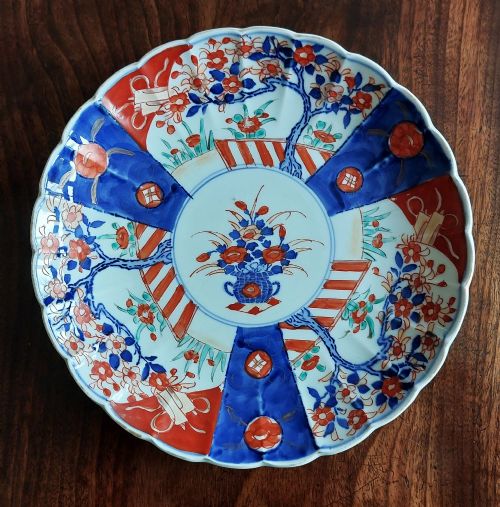
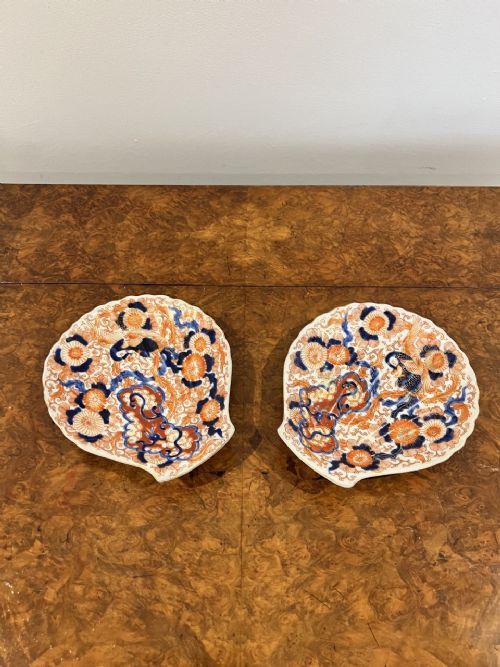
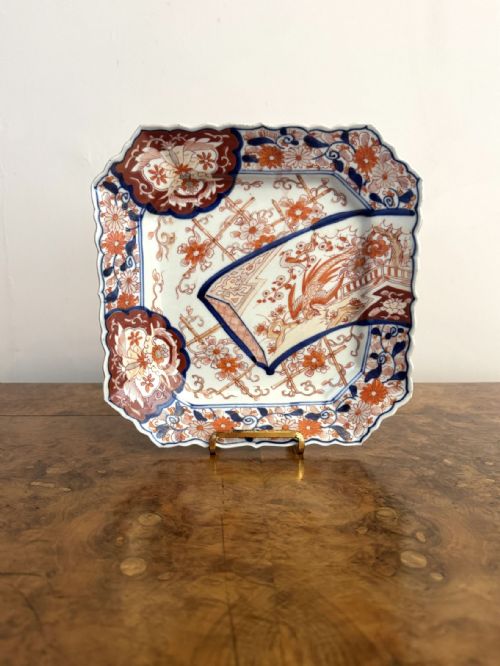
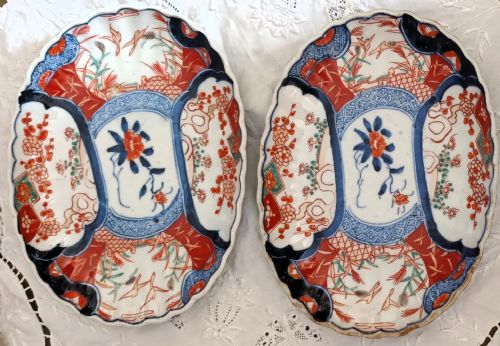
Most items on this page hail from the late nineteenth century and the Meiji period, featuring traditional forms such as scalloped edges, fish shapes, shells, and hexagons. These surfaces display characteristic blue underglazes paired with iron red and gilt details.
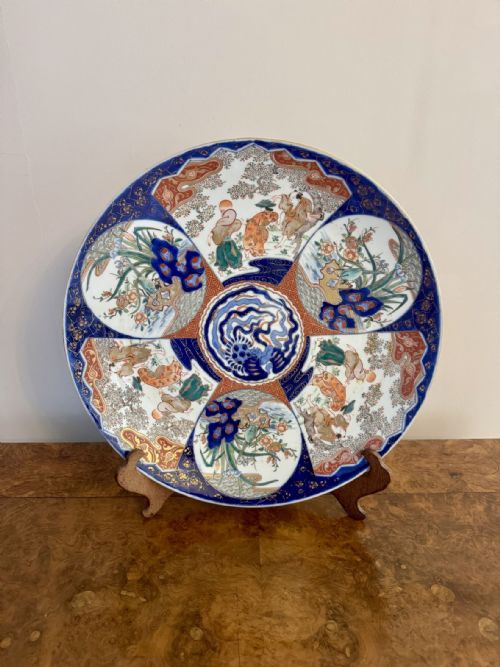
Collectors also encounter larger display chargers depicting subjects like the Seven Lucky Gods or exotic birds, alongside sets of plates intended for display rather than daily dining.
How they were made
Potters shaped porcelain and earthenware clay bodies by hand or mould, applying cobalt glaze beneath a clear glossy coat before firing. Artisans then added enamel colours and gold leaf highlights in secondary low-temperature firings.
The distinct palette relies on cobalt blue underglaze paired with contrasting enamel pigments and gilt accents. Potters utilised local ceramic materials in Japan, while Staffordshire makers in Britain produced earthenwares adopting the same Imari palette.
Materials recorded across the inventory include porcelain, earthenware, cobalt glaze, enamel, and gold leaf.
What varies in quality
Execution of the hand-painted motifs defines the grade of a piece, separating precise, detailed brushwork from hurried or formulaic decoration. The richness and preservation of the cobalt glaze and gold leaf highlights also distinguish finer examples.
Unusual structural forms, such as fish, shell, and hexagonal shapes, demand greater skill from the potter than standard round plates. Condition of the enamel pigments and the crispness of the porcelain body further separate ordinary items from exceptional ones.
The Cobalt Blue Japanese Plates Glossary
- Imari
- A style of Japanese porcelain featuring a palette of cobalt blue, iron red, and gold, originating from the town of Arita. These wares were heavily exported to Europe from the seventeenth century onwards.
- Charger
- A large decorative plate or dish, traditionally used for formal service or display on a sideboard rather than individual dining. They measure substantially larger than standard dinner plates.
- Meiji Period
- A span of Japanese history lasting from 1868 to 1912, characterised by opening trade with the West and prolific production of decorative arts for export. Pieces from this era often display great technical refinement.
- Underglaze
- Pigment applied to the ceramic body before the application of a clear glaze and the final high-temperature firing. Cobalt blue is particularly stable and withstands this intense heat without fading.
- Earthenware
- A porous, lower-fired ceramic body that requires glazing to become waterproof. British makers utilised this material alongside porcelain to create pieces decorated in the Imari palette.
Cobalt Blue Japanese Plates: Frequently Asked Questions
How do I hang a large charger on the wall?
Wall plates and chargers require specialised spring-loaded brass hangers that grip the rim securely without causing damage to the ceramic body. Ensure the fixing on the wall anchors directly into a stud or uses a proper masonry plug.
Position display plates at eye level to appreciate the intricate cobalt blue patterns and gilt details fully. Avoid hanging them in direct sunlight or above active heat sources to protect the enamel colours.
How do I distinguish Japanese Imari from Staffordshire Imari?
Japanese examples utilise a hard-paste porcelain body that feels dense and rings slightly when tapped, often showing spur marks on the base from the kiln. The cobalt blue underglaze sits deep beneath a glassy, sometimes slightly uneven glaze.
Staffordshire pieces typically employ a softer earthenware or ironstone body that feels heavier and warmer to the touch. The transfer-printed or hand-painted Imari palette sits on a whiter, more uniform European ceramic paste.
What is the difference between Edo and Meiji period pieces?
The Edo period represents an earlier era of strict national isolation in Japan, where ceramics were made primarily for domestic use and elite patronage. Pieces from this time tend to show robust forms and traditional motifs.
The Meiji period marked an era of international trade, leading to an explosion of decorative arts tailored for Western export markets. These later items frequently display highly intricate detailing, complex shapes, and ambitious scale.