
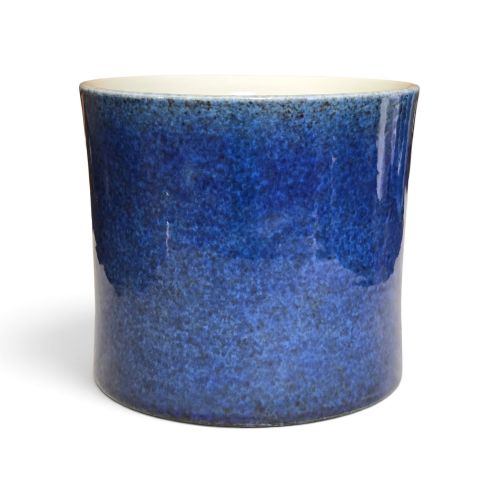
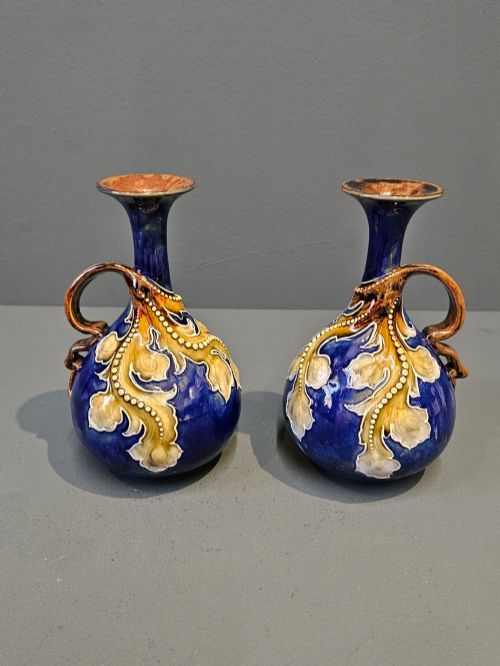
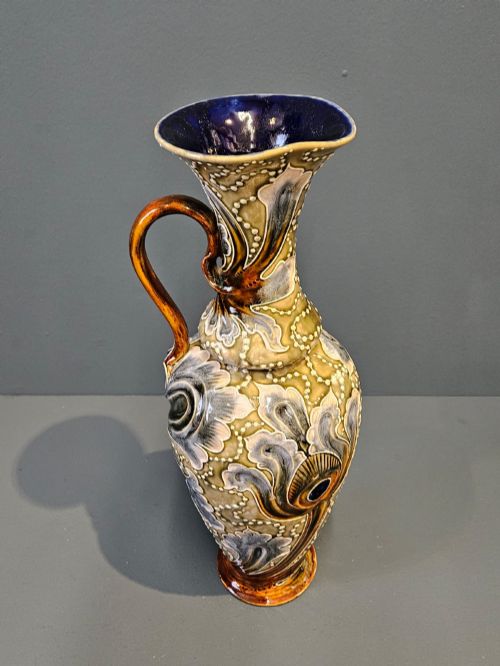
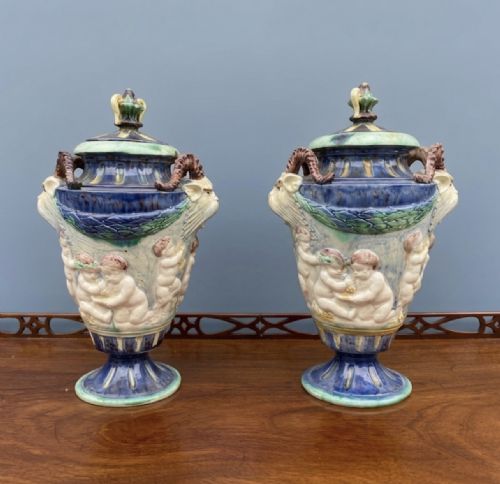


Cobalt Blue Glazed Vase
A cobalt blue glazed vase brings depth and intensity to a room, showing rich mineral pigments across earthenware, stoneware, and porcelain.
Cobalt Blue Glazed Vase
A cobalt blue glazed vase spans centuries of production, appearing in British pottery from the seventeenth to the twentieth century alongside continental earthenware and Asian porcelain. Collectors encounter forms ranging from traditional bottles and jars to ewers and brush pots.
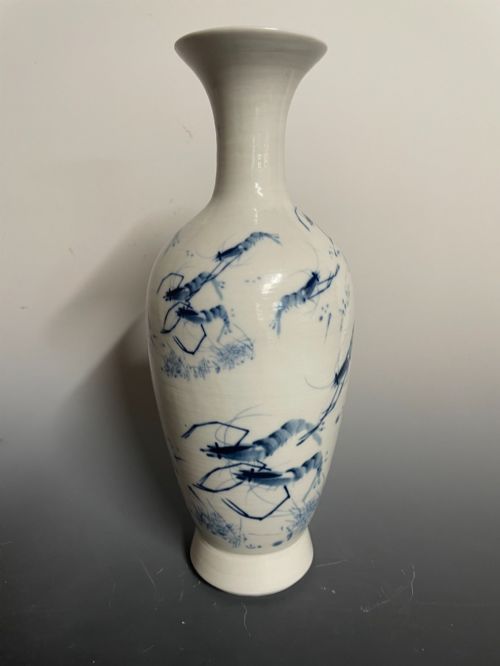
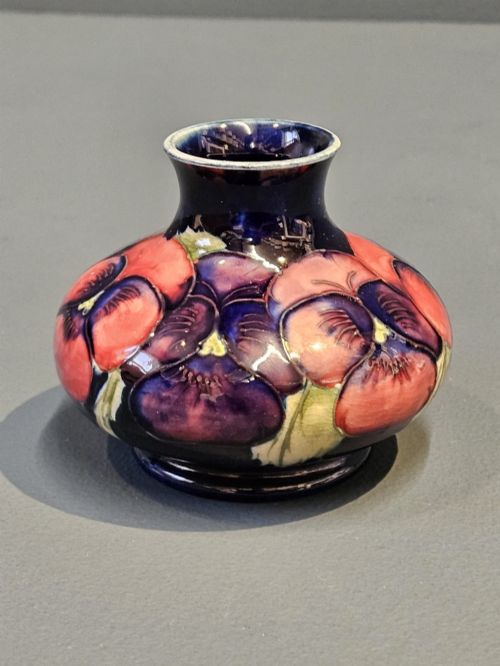
Victorian examples dominate the selection, particularly salt-glazed stoneware from makers like Doulton, alongside delicate twentieth-century art pottery and blue-and-white Chinese porcelain vessels.
Materials and Technique
Potters shape bodies from earthenware, heavy stoneware, or fine porcelain, applying metallic cobalt oxides beneath or directly into the glaze layer. Firing at high temperatures fuses the colour into a permanent, glossy or matte finish.
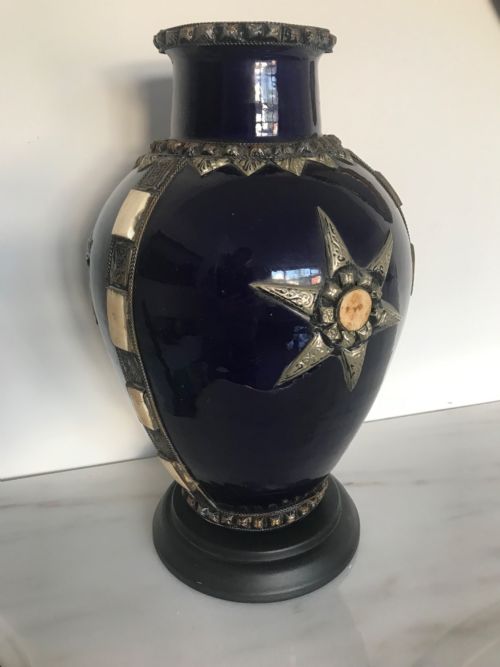
Certain pieces incorporate additional surface treatments, combining the deep blue glaze with gold leaf, enamel decoration, silver mounts, or raised moriage figures.
Several Victorian ewers and jars secretly double as Toby jugs, giving domestic interiors a slightly grumpy historical companion.
Evaluating Quality
Quality rests in the depth and consistency of the blue pigment, the crispness of any painted or moulded detail, and the balance of the vessel form. Controlled kiln conditions produce a smooth, even finish without clouding or surface blemishes.
The precision of the potting, the clarity of factory marks, and the skill involved in decorative additions such as hand-painted motifs or applied mounts distinguish standard production items from masterworks.
Fourmaintraux-Courquin·Doulton Lambeth·Brannam·Carlton Ware·Pilkingtons Royal Lancastrian·William Moorcroft
The Cobalt Blue Glazed Vase Glossary
- Earthenware
- Porous ceramic pottery fired at lower temperatures, typically glazed to ensure it holds liquids.
- Stoneware
- Dense, vitreous pottery fired at high temperatures until semi-vitrified, offering robust durability and resistance to water.
- Porcelain
- A fine, hard ceramic fired at extreme heat, made from kaolin and petuntse to produce a translucent, resonant body.
- Delftware
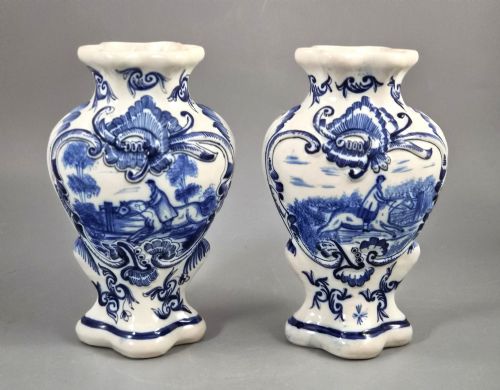
- Tin-glazed earthenware produced in England and the Netherlands, notable for its absorbent white surface beneath painted blue designs.
- Moriage
- A Japanese ceramic technique using piped slip to create raised, textured decorative patterns on a glazed ground.
Cobalt Blue Glazed Vase: Frequently Asked Questions
How do I identify a genuine cobalt glaze?
A genuine cobalt glaze sinks slightly into the surrounding ceramic body during high-temperature firing, creating depth and subtle variations in tone rather than sitting as a flat, painted layer on top.
Under magnification, the blue colour appears integrated with the glossy vitreous surface, often showing natural pooling around incised lines or handles.
Can I use these vases for fresh flowers?
Most glazed stoneware and porcelain vessels hold water safely, but porous earthenware or antique pieces with hairline fractures require a protective glass insert to prevent moisture damage.
Hand washing in lukewarm water preserves the historic glaze and prevents accidental thermal shock to fragile ceramic bodies.
What is the difference between Delftware and porcelain?
Delftware uses a tin glaze over a softer earthenware body, resulting in an opaque white surface that often shows minor crazing or flake chips along the rims.
Porcelain is a vitrified, non-porous material that rings when tapped and maintains a completely impervious, glassy structure from the initial firing.
How do I date an antique ceramic vase?
Dating relies on a combination of factory backstamps, potting characteristics, glaze chemistry, and stylistic markers associated with specific manufacturing periods.
Comparing the base construction, foot ring wear, and signature styles against established reference archives provides an accurate window of production.