
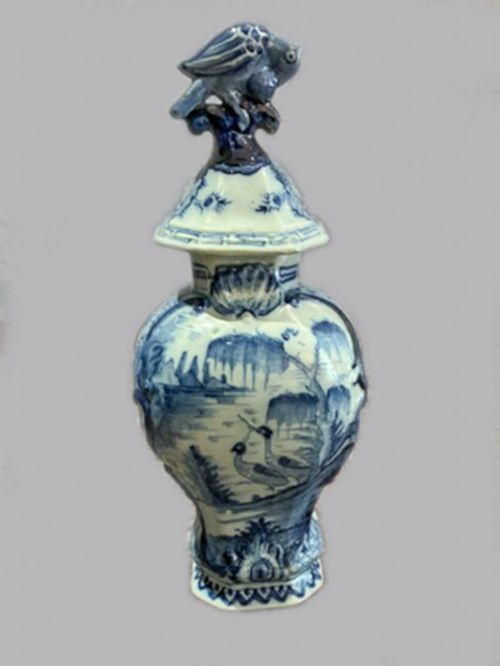
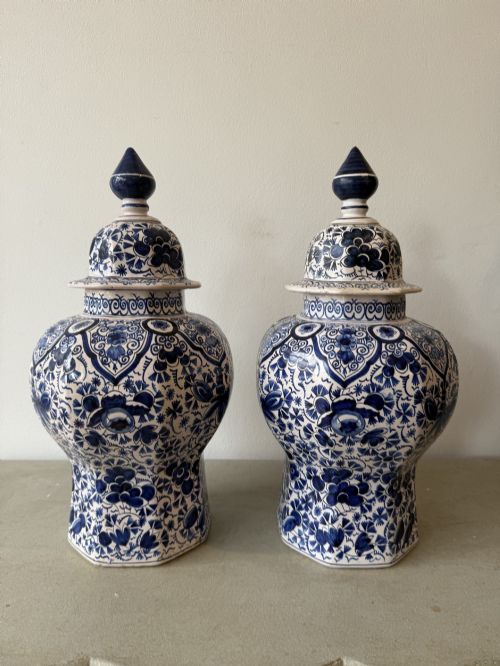


Blue White Delftware Urns
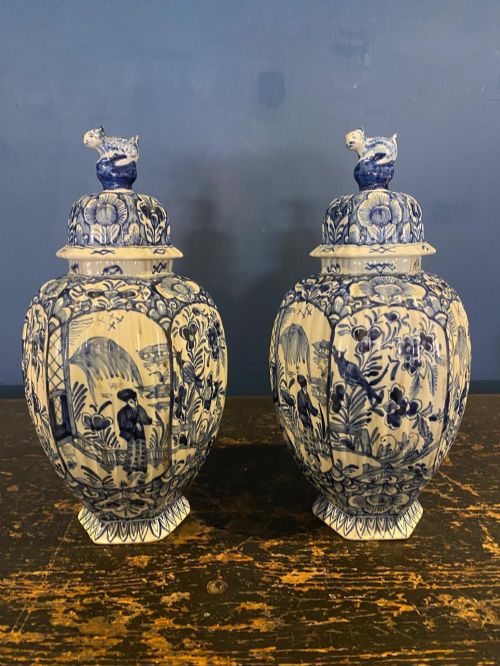
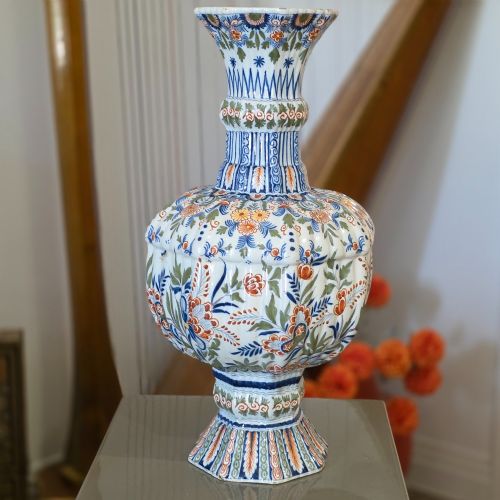
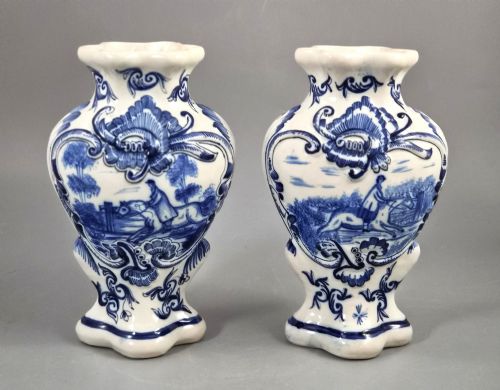
Blue white delftware urns bring tin-glazed earthenware into a room, offering the blue and white patterns of seventeenth, eighteenth, and nineteenth century production.
Blue White Delftware Urns
Blue white delftware urns encompass lidded vases, garden urns, baluster vases, and tobacco jars spanning the seventeenth century to the twentieth century. Buyers seeking these vessels encounter forms ranging from large eighteenth century garden examples to nineteenth century pairs and table lamps.
The objects derive from Dutch and French workshops, utilising styles that include Dutch Baroque, French Rococo Revival, and Chinoiserie. Many pieces originate from Dutch Delft production alongside French faience equivalents made at Desvres.
Vessels take the shape of ribbed beaker vases, jars with lids, and handled urns. Examples appear adapted for modern interiors as wired table lamps set on gilt bases alongside traditional decorative urn forms.
What varies in quality
The precision and detail of the hand-painted blue and white decoration distinguish individual vessels, with botanical and bird motifs showing varying degrees of draughtsmanship. The clarity and coverage of the tin glaze across the ceramic body also influence the visual result.
Scale and proportion separate standard jars from substantial garden urns or large baluster vases. The survival of matching lids and original pairs determines the integrity of surviving sets.
Several eighteenth century delft jars once held tobacco, quietly hiding pipe smoke behind birds and flowers.
Fourmaintraux-Courquin
The Blue White Delftware Urns Glossary
- Tin-Glaze
- Earthenware coated with a glaze containing tin oxide to produce an opaque white finish. This layer provides the white ground for blue painted decoration.
- Baluster
- A vase form with a rounded lower body that tapers towards the top. This silhouette appears frequently among large eighteenth century jars.
- Faience
- European tin-glazed earthenware produced in France and other regions outside Italy and the Netherlands. French examples from Desvres imitate Dutch delft styles.
- Chinoiserie
- European artistic styles reflecting Chinese motifs. This aesthetic appears on seventeenth and eighteenth century vessels decorated with birds and flowers.
- Tobacco Jar
- A jar form used historically for storing tobacco leaves. These pieces often feature fitted lids and specific period labelling.
Blue White Delftware Urns: Frequently Asked Questions
How do I date a delft urn?
Dating relies on stylistic indicators such as seventeenth century Chinoiserie motifs, eighteenth century baluster proportions, and nineteenth century revival characteristics. Material examination of the ceramic body and glaze thickness further assists in placing pieces within their respective centuries.
Changes in palette, from early dark blue tones to later brighter pigments, also help determine the period of manufacture.
Are these urns waterproof?
Most historic tin-glazed earthenware vessels function primarily as decorative objects, lidded jars, or garden urns rather than water-holding vases. The porous nature of the underlying earthenware body means prolonged exposure to moisture can affect the glaze.
Using internal liners protects the ceramic fabric if the vessels hold fresh floral displays.
How should I clean my delftware?
Dusting with a dry, soft cloth maintains the surface without risking the tin glaze. Harsh cleaning agents or soaking should be avoided to prevent damage to the painted blue decoration.
Gentle wiping with a slightly damp cloth suffices for removing more stubborn surface dirt.
Can I use wired delft lamps safely?
Many antique urns have been converted into table lamps with modern wiring, often mounted on bases. Professional electrical testing ensures these pieces meet current safety standards for home use.
Checking the cord and bulb fitting preserves both the lamp and the surrounding furniture.