

Tin Glazed Ceramic Urn
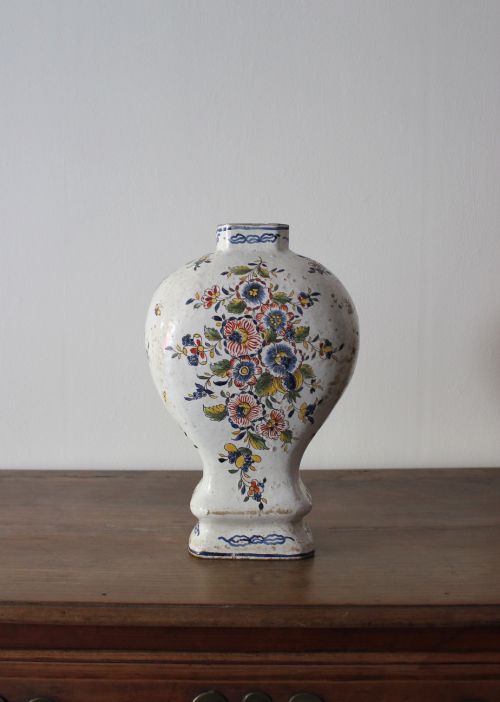
A tin glazed ceramic urn brings centuries of European earthenware tradition into a room through hand-painted tin-glaze surfaces.
Tin Glazed Ceramic Urn
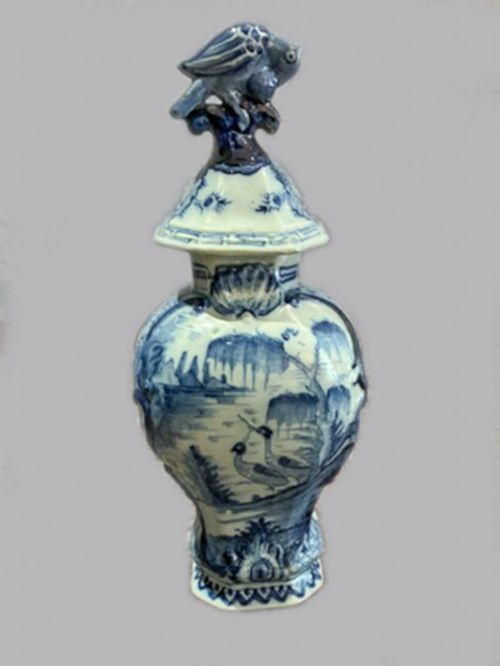
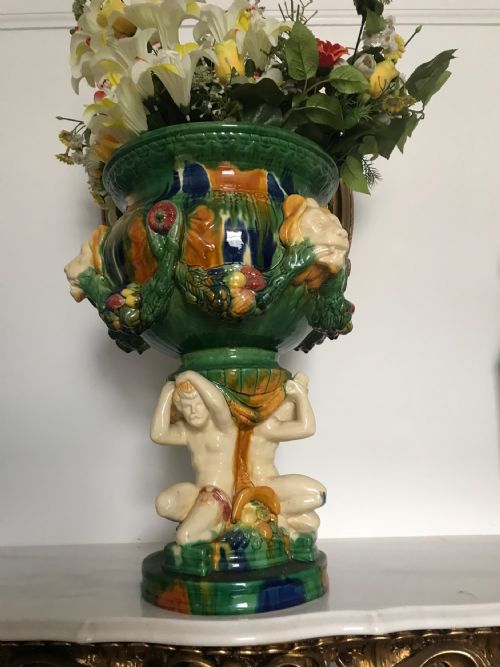
When you search for a tin glazed ceramic urn, you encounter vessels produced across several centuries in workshops spanning England, Holland, France, and Italy. These objects take the form of lidded jars, garden vessels, baluster vases, and monumental planters supported by figural bases.
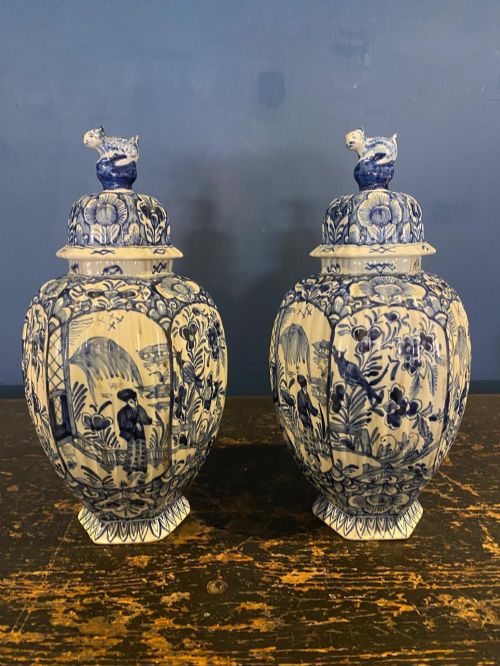
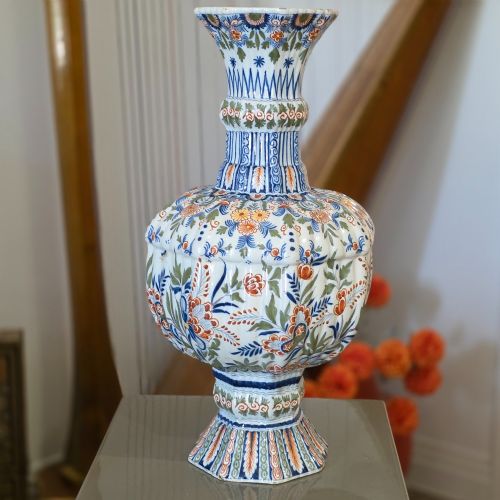
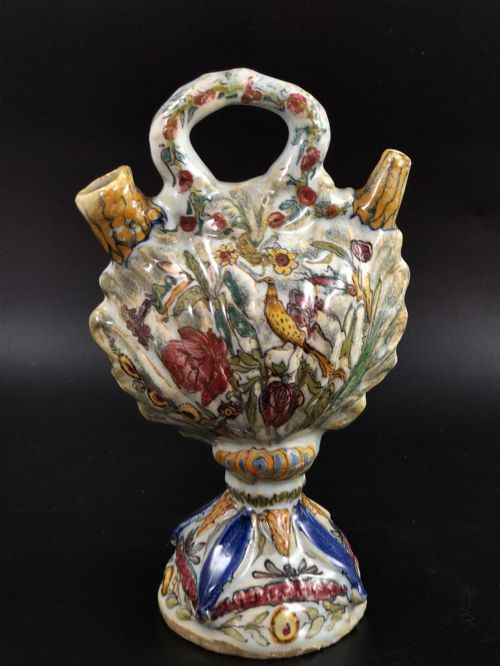
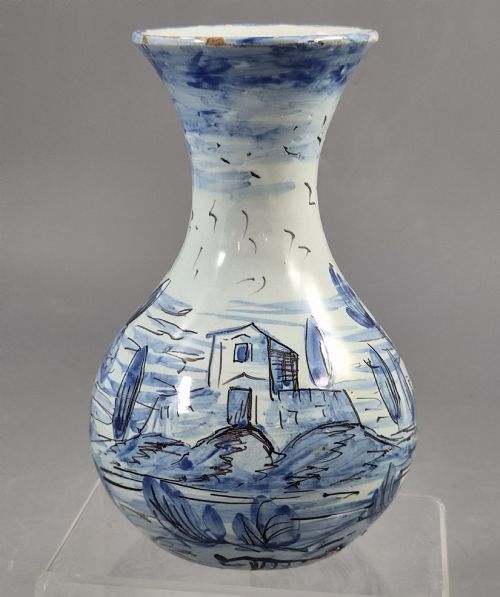
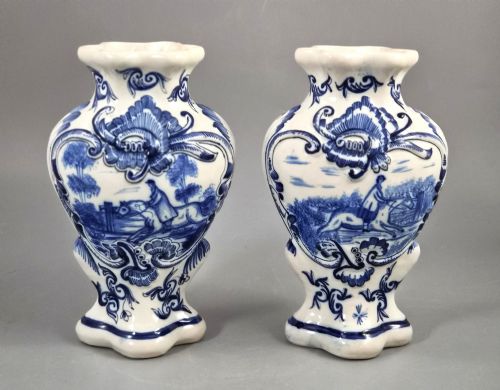
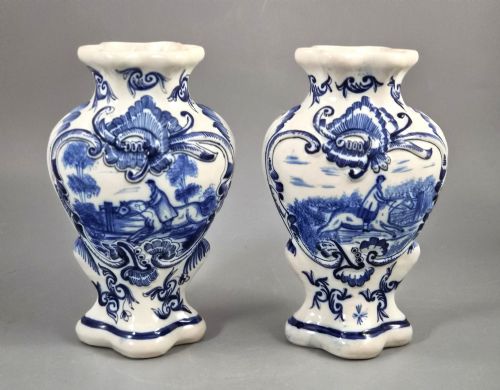
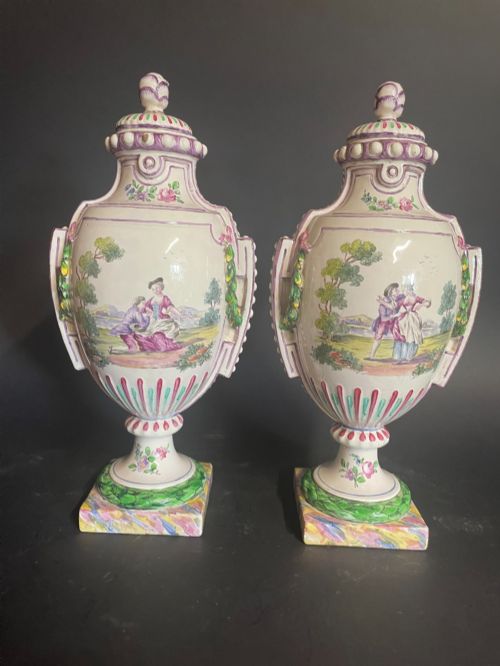
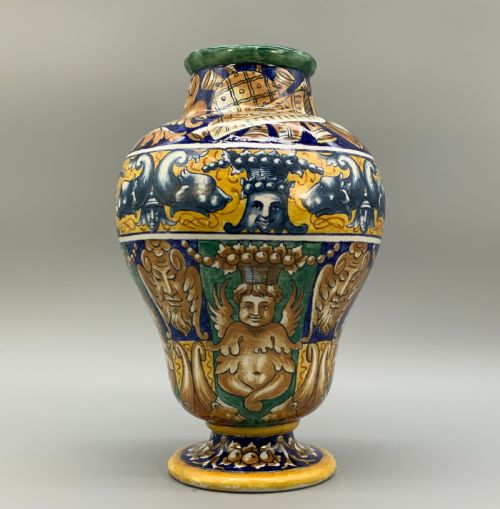
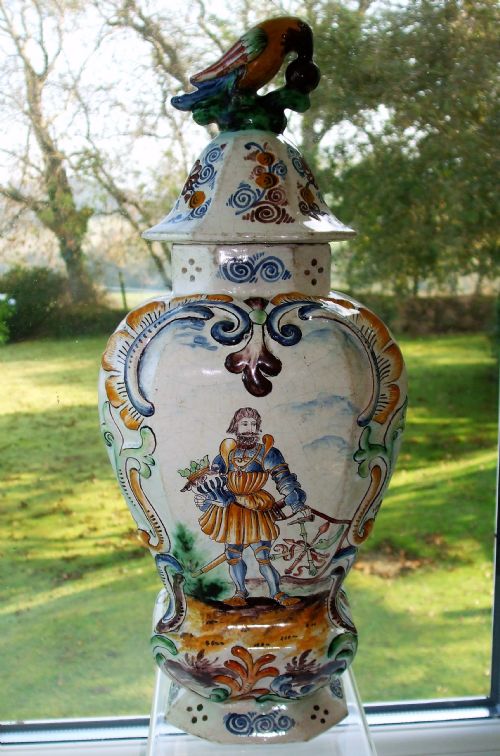
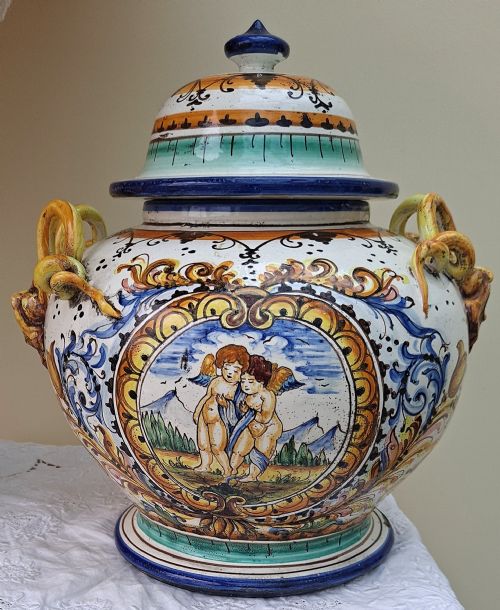
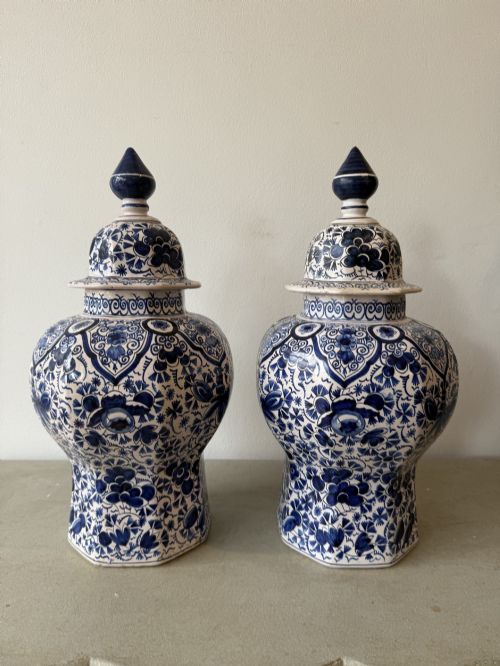
The pieces on this page lean heavily toward 18th-century Dutch Delftware and Italian majolica alongside 19th-century French faience revivals. You will regularly find pairs of blue and white baluster vases and lidded urns originating from traditional European pottery centres.
Many forms serve ornamental purposes, though certain jars and vessels originally held dry goods like tobacco before transitioning to decorative display. Some examples incorporate later adaptations, such as electrical wiring to function as table lamps.
Materials and Technique
Makers shaped these items from common earthenware clay before coating the bisquewares in an opaque white tin glaze that created a smooth canvas for pigments. Cobalt blue and manganese purple dominated the painted decoration, particularly within Dutch and French traditions.
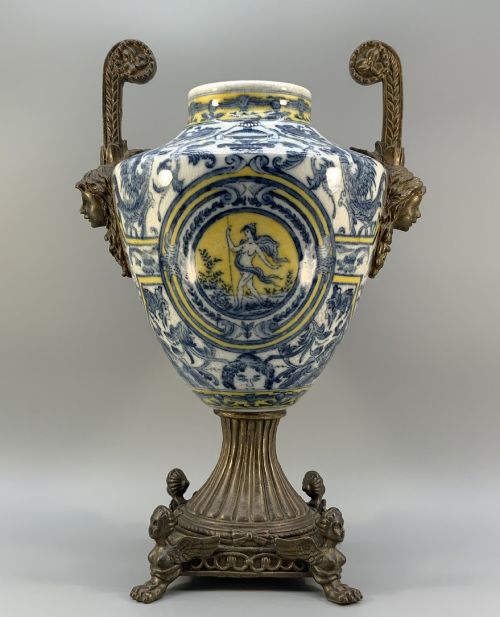
Potters applied metallic oxides directly onto the unfired tin glaze so that the colours absorbed permanently into the surface during kiln firing. Selected specimens also incorporate applied bronze or brass mounts secured around the ceramic body.
Listings feature 17th-century revival urns alongside genuine 18th-century Delft jars and 19th-century French faience pieces.
Quality and Execution
Quality rests upon the precision of the hand-painted brushwork and the depth of the tin glaze, which can appear chalky or rich depending on the kiln temperature and mineral mix. Pieces decorated with complex polychrome or detailed Chinoiserie motifs demonstrate greater artisan skill than simple monochrome bands.
The survival of matching covers on lidded jars and urns elevates the integrity of the piece. Proportion, potting symmetry, and the crispness of moulded details such as lion head decorations or ribbed panels distinguish standard production wares from superior workshop outputs.
Fourmaintraux-Courquin·Cantagalli
The Tin Glazed Ceramic Urn Glossary
- Tin-Glaze
- Earthenware pottery coated with a lead glaze made opaque by the addition of tin oxide. This white surface provides the absorbent ground for painted decoration.
- Majolica
- Italian tin-glazed earthenware decorated with opaque colours, often featuring Renaissance or Baroque revival motifs. The term also encompasses later 19th-century revival wares produced across Europe.
- Faience
- French or European tin-glazed pottery produced in imitation of Italian majolica or Oriental porcelain. Workshops in centres like Desvres and Sceaux specialised in this technique.
- Chinoiserie
- European decorative style reflecting Chinese artistic influences, commonly seen in blue and white painted motifs of landscapes, birds, and flowers.
- Baluster
- A vase form with a rounded body that tapers toward the base and neck, frequently seen among 18th-century earthenware jars.
Tin Glazed Ceramic Urn: Frequently Asked Questions
What is a tin glazed ceramic urn used for?
These vessels served primarily as decorative ornaments, garniture sets on mantelpieces, or containers for dry goods in domestic interiors. Today they function as standalone decorative focal points or converted table lamps.
Larger garden urns and planters were designed to hold substantial plants or stand on architectural pedestals within courtyards and reception rooms.
How do I tell Dutch Delft from Italian majolica?
Dutch Delft traditionally relies on a tin glaze painted with cobalt blue or manganese, often drawing heavily on Chinese porcelain designs or European landscapes. Italian majolica frequently employs a wider polychrome palette with historical or Renaissance revival imagery.
Body thickness and glaze texture also offer clues, as majolica can display a heavier earthenware fabric with opaque coloured enamels.
Are these urns waterproof?
Historic tin-glazed earthenware is porous and generally not reliably waterproof due to micro-fissures in the glaze and soft clay bodies. Using them for fresh cut flowers requires a hidden inner container to prevent moisture damage.
Displaying them dry preserves the structural integrity of the historic ceramic fabric.