
Cobalt Blue Gilt Porcelain
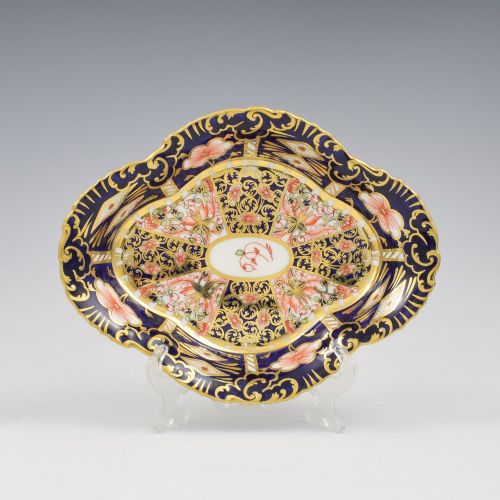
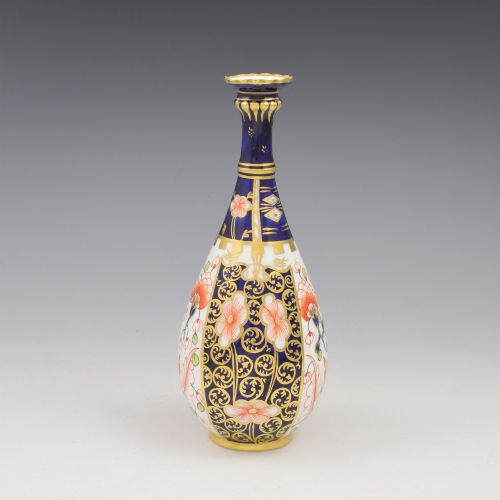
Cobalt blue gilt porcelain brings rich cobalt grounds and gleaming gold leaf together across fine cabinet plates, vases, and teapots.
Cobalt Blue Gilt Porcelain
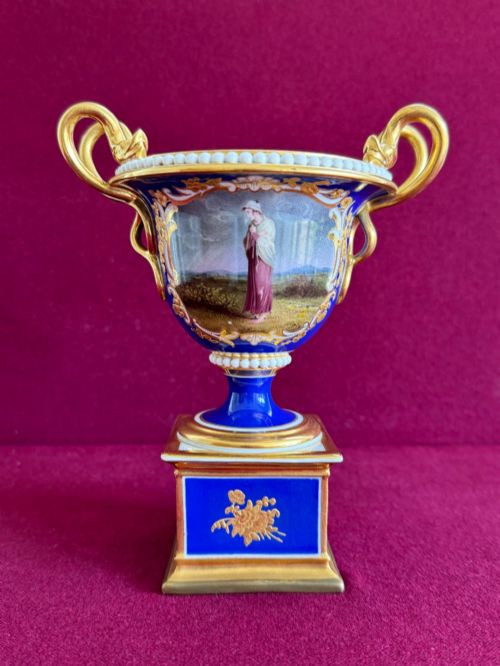
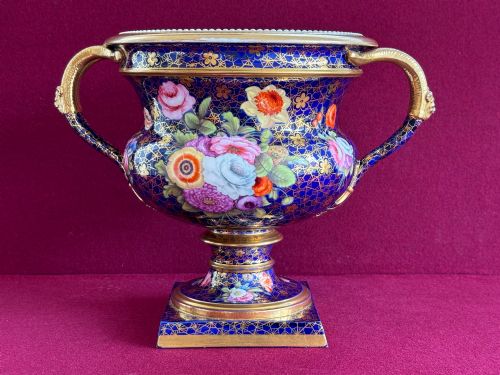
Cobalt blue gilt porcelain encompasses an array of decorative and utilitarian ceramic objects defined by deep blue underglaze decoration paired with applied gold leaf or gilding. When searching for cobalt blue gilt porcelain, buyers encounter everything from Georgian teapots and Regency sauce tureens to Victorian cabinet plates and table lamps.
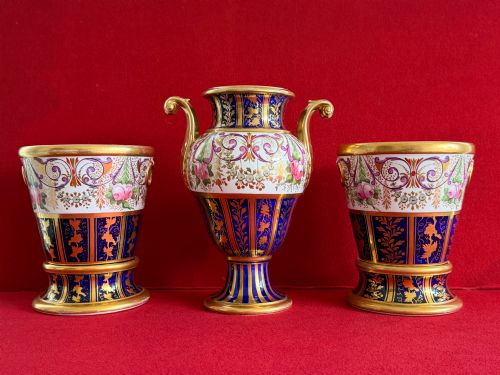
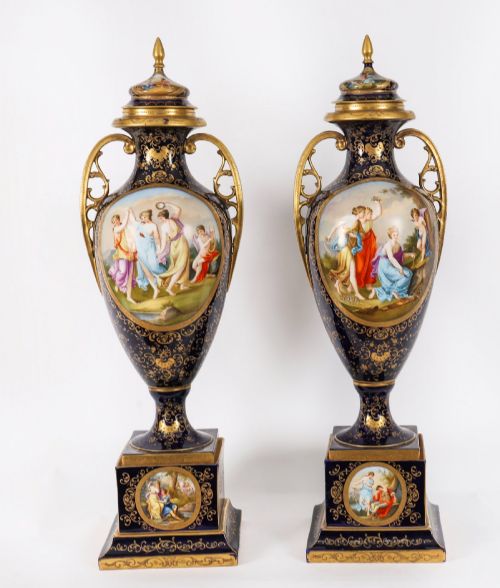
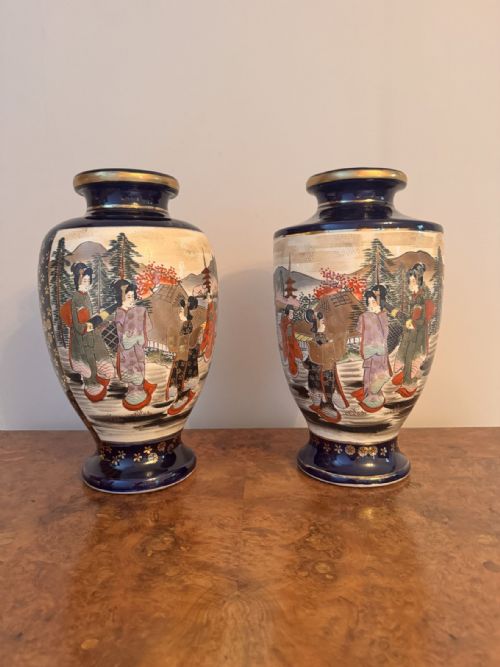
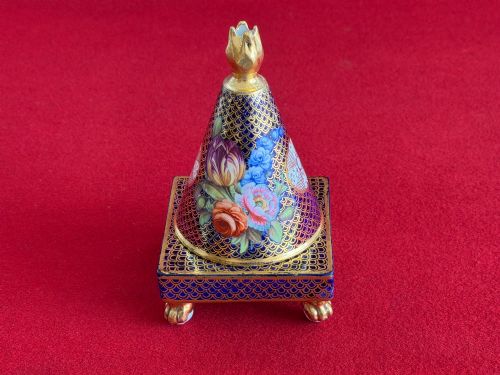
The pieces on this page span several centuries, reaching back to eighteenth-century Georgian and First Period Worcester productions, passing through nineteenth-century Victorian and French Sèvres-style works, and extending into twentieth-century Royal Crown Derby and Royal Worcester creations. Formats range widely from serving dishes, jugs, and pastille burners to monumental vases and miniature twin-handled vessels.
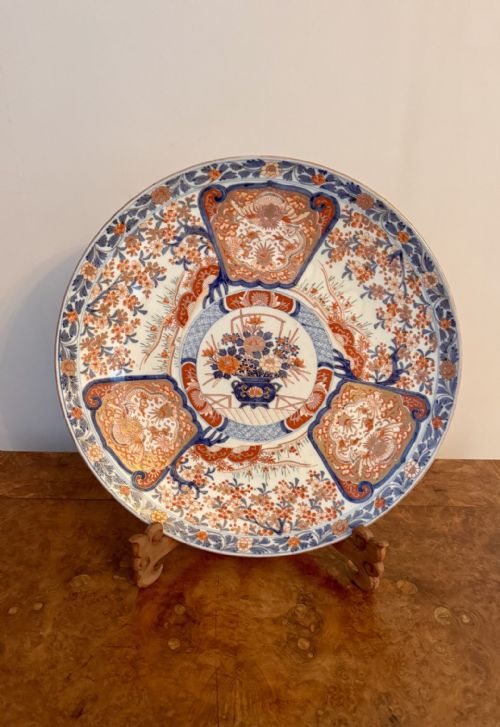
Makers and regional styles reflected in these listings include English factories like Spode, Coalport, and Mason's alongside Japanese Imari wares and French ceramic pieces. Buyers typically select these items for display in cabinets, on mantelpieces, or as functional tableware representing distinct historical decorative periods.
How they were made
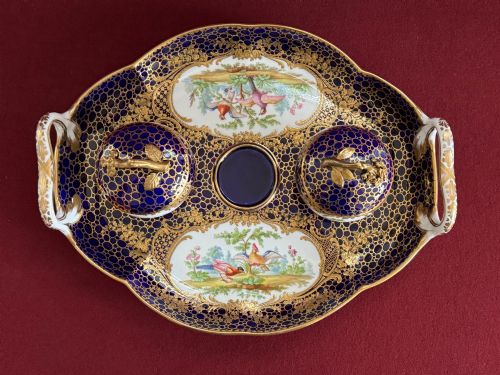
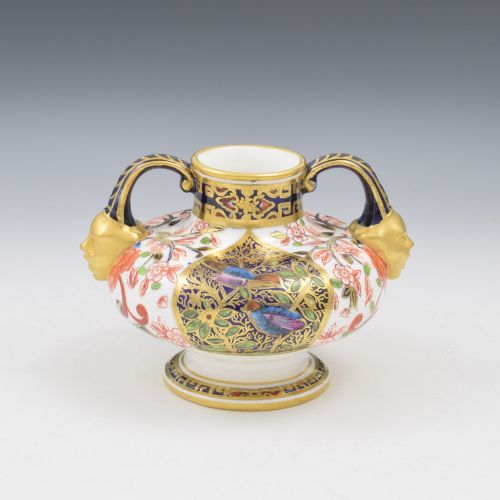
Manufacturing these objects involved shaping fine ceramic materials such as porcelain, bone china, ironstone, and glazed earthenware before applying deep cobalt blue pigments and rich gold leaf or metallic gilding. Artisans frequently combined hand-painting techniques with moulded relief forms, as seen on rococo revival teapots, pierced serving trays, and twin-handled mask vases.
The application of gold leaf required meticulous hand-detailing over fired glazes, often returning the piece to the kiln to bond the metallic elements securely to the cobalt ground. Enamel colours and intricate patterns were layered alongside the gilding, utilising specialised techniques practiced in English and continental European factories.
Listings feature porcelain, bone china, ironstone, and glazed ceramic objects decorated with enamel and gold leaf across multiple historic periods.
What varies in quality
Quality in these ceramics rests primarily on the precision of the hand-painted detailing and the crispness of the applied gilding over the cobalt blue ground. Superior examples demonstrate finely executed botanical or pictorial panels, balanced proportions, and careful registration of patterns such as Imari motifs.
The depth and consistency of the cobalt glaze itself also distinguish finer items, alongside the clarity of factory marks and the finesse of moulded elements like handles and pierced borders. Pieces bearing signed artist work or commissioned provenance display a higher tier of craftsmanship compared to standard factory output.
Royal Crown Derby·Chamberlain Worcester·Royal Worcester·Mason's Ironstone·Coalport
The Cobalt Blue Gilt Porcelain Glossary
- Cobalt blue
- A deep blue metallic oxide pigment used under the glaze to create rich, intense background colours on porcelain and earthenware.
- Gilding
- The application of gold leaf, gold dust, or gold paint onto the surface of ceramic pieces to highlight rims, handles, and decorative motifs.
- Imari palette
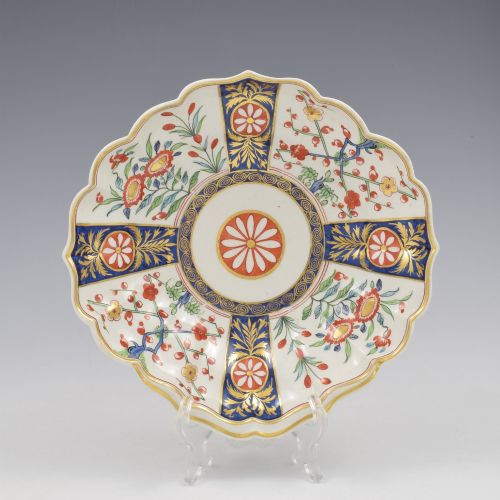
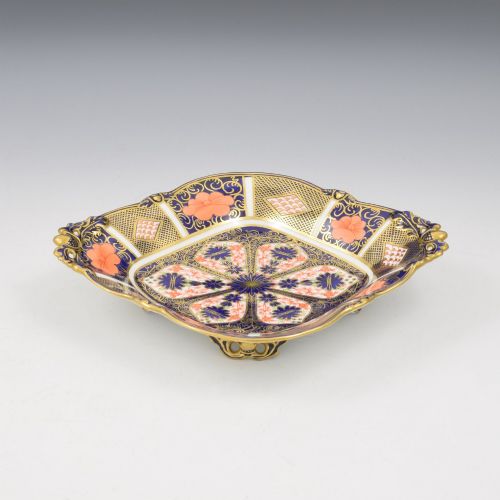
- A decorative style inspired by Japanese export wares featuring a distinctive colour combination of cobalt blue, iron red, and gilt highlights.
- Cabinet plate
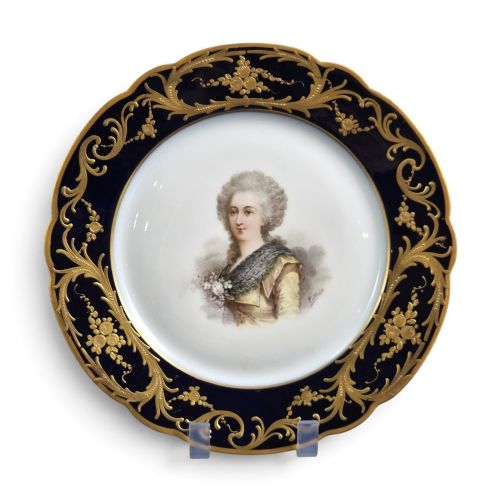
- A decorative ceramic plate intended primarily for display in a cabinet or on a wall rather than for everyday dining use.
- Pastille burner
- A small ceramic vessel designed to diffuse scented smoke from burning aromatic pastilles through a pierced cover.
- Paste
- The specific ceramic body composition used to form a piece, varying between soft-paste, hard-paste porcelain, and bone china.
Cobalt Blue Gilt Porcelain: Frequently Asked Questions
How are cobalt blue gilt porcelain items cleaned?
These delicate ceramic and gilded items require gentle cleaning with lukewarm water and a mild detergent using a soft cloth. Harsh abrasives and scrubbing brushes must be avoided to protect the fragile gold leaf and enamel overglaze decorations.
After washing, pieces should be thoroughly dried with a lint-free towel. Submerging antique pieces in water for extended periods is discouraged, particularly if they feature hairline fractures or porous earthenware bodies.
Can these antique plates be used for dining?
Most antique cabinet plates and decorative vessels are intended for display rather than active service at the dining table. Age-related wear, delicate hand-painted gilt borders, and historical glazes mean modern cutlery can easily scratch or mar the surfaces.
Using them strictly for decorative presentation preserves the integrity of the cobalt blue grounds and metallic details. If utilised for serving dry foods occasionally, hand washing without soaking remains essential.
How do I identify a Regency period piece?
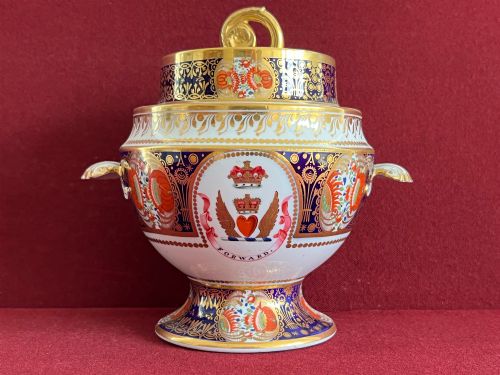
Regency era ceramics often feature neoclassical or early revival shapes such as sauce tureens, inkstands, and tub-shaped tea canisters. Factory patterns from this time frequently incorporate cobalt grounds paired with burnished gilding and distinctive handle designs.
Examining the base for historical handwritten pattern numbers or early factory marks helps confirm the date. Comparing the form against known documented examples from factories like Spode or Chamberlain Worcester provides further verification.
What does Imari style mean on porcelain?
The Imari style refers to decorative schemes inspired by traditional Japanese export wares featuring deep cobalt blue underglaze combined with iron red and abundant gold leaf. English factories readily adopted this vibrant aesthetic during the Georgian and Victorian periods.
Pieces decorated in this palette display complex geometric and floral panels across surfaces like serving dishes, vases, and tea services. Recognising the signature blue, red, and gold combination instantly separates these works from monochrome cobalt wares.