
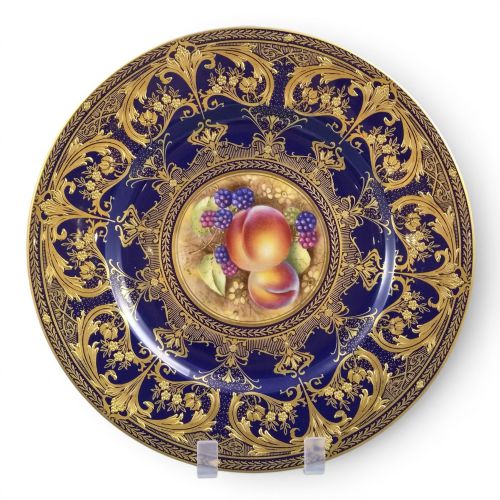
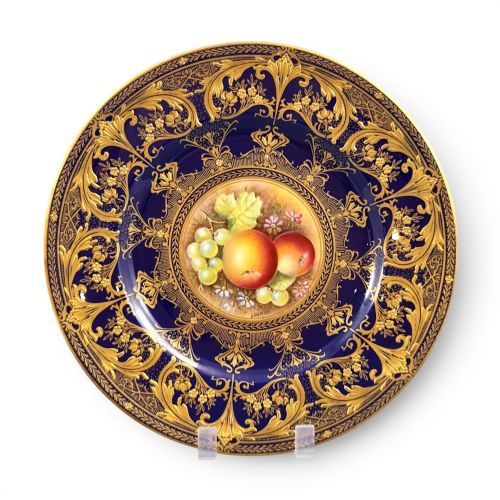
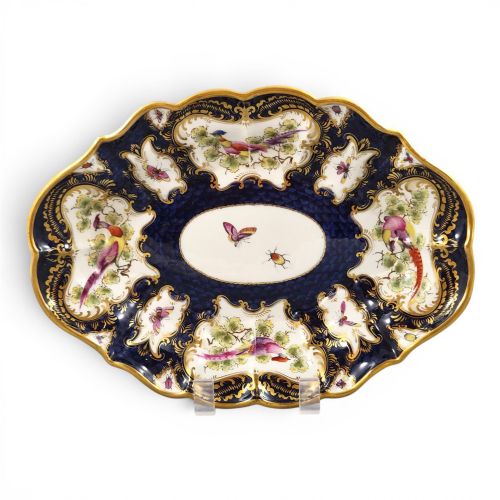


Blue Gold Cabinet Plate
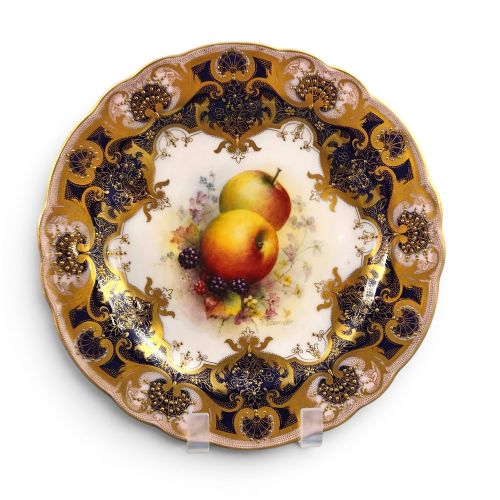
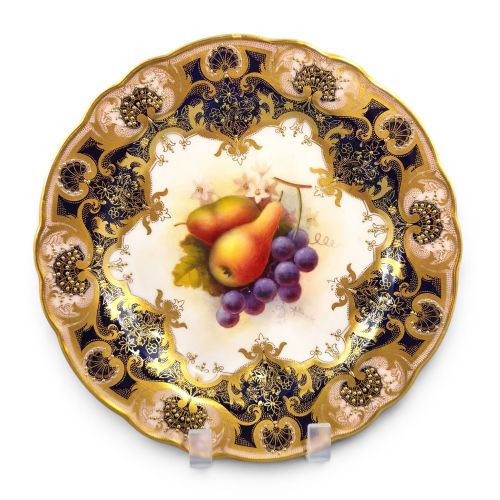
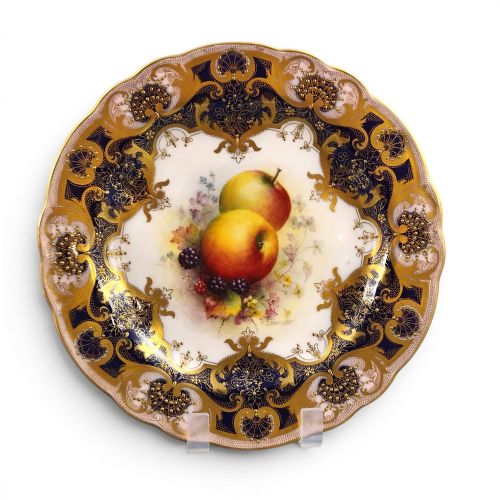
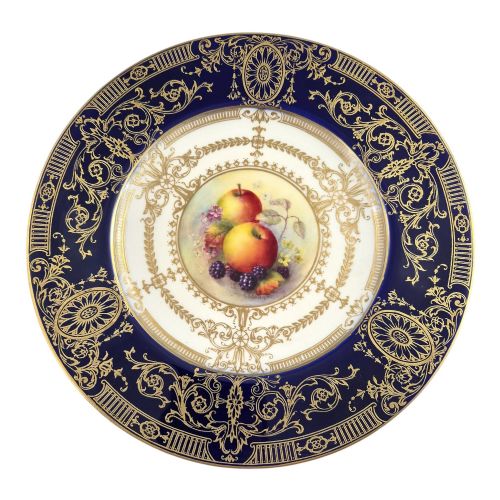
A blue gold cabinet plate brings together rich cobalt grounds and heavy gilded detail to turn functional ceramics into pure display pieces.
Blue Gold Cabinet Plate
A blue gold cabinet plate is primarily designed for display rather than dining, emerging frequently in the nineteenth and early twentieth centuries across English and continental factories. These items take the form of cabinet plates, decorative plates, dessert dishes, serving dishes, and wall chargers.
The pieces appearing on this page span several distinct periods, including Victorian, Edwardian, and Art Deco eras, alongside earlier nineteenth-century examples. Buyers will frequently encounter works originating from prominent English potteries like Royal Worcester and Royal Crown Derby, as well as continental makers.
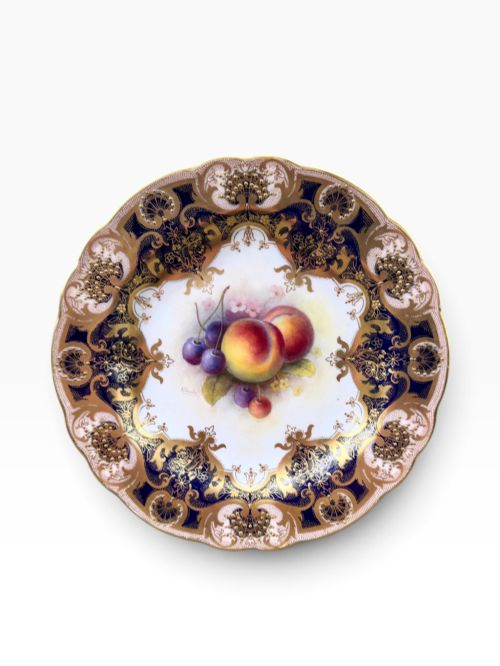
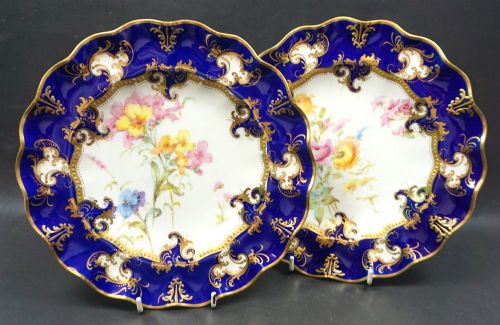
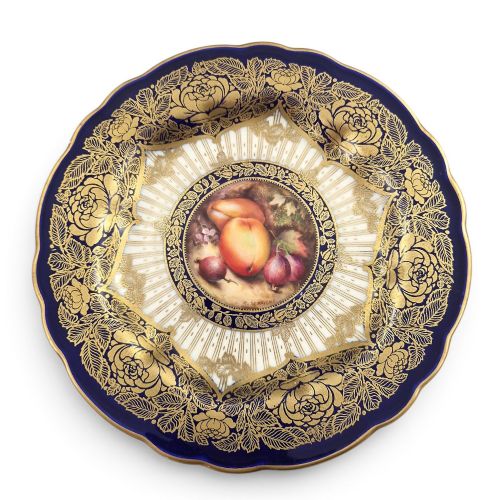
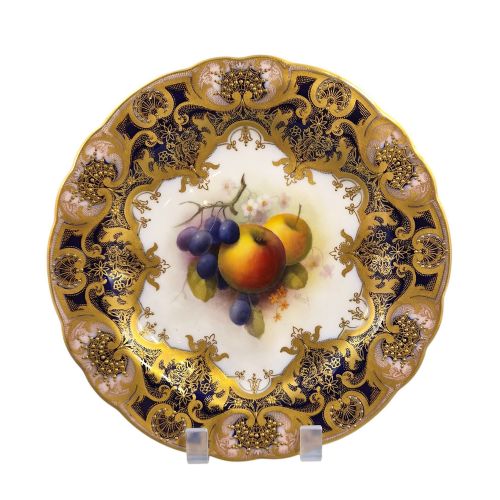
Stylistic influences range from Neoclassical and Rococo Revival motifs to traditional English botanical and fruit painting. Many examples feature deep cobalt blue borders paired with elaborate gilding, framing central hand-painted scenes of fruit, flowers, or figural subjects.
Materials and production techniques
The foundation of these objects relies on hard-paste porcelain, bone china, and specialised ceramic bodies shaped into plates and chargers. Manufacturers applied white glazes to create smooth surfaces suitable for subsequent artistic decoration.
Artisans utilised hand-painting techniques with enamel colours and fine brushwork to render botanical studies, game birds, and mythological scenes. Gold leaf and liquid gilding were applied by hand, often featuring tooled or raised patterns that caught the light against the dark blue backgrounds.
The object types span cabinet plates, dessert dishes, serving dishes, and wall chargers created in styles from Regency to Art Deco.
Distinctions in quality and execution
The standard of a blue gold cabinet plate rests heavily on the skill of the painter and the depth of the gilding. Hand-painted fruit or figural scenes executed by known artists command greater attention than standard transfer-printed patterns.
The application of gold leaf also dictates the tier of the piece, with heavy, burnished, and tooled gilding representing superior craftsmanship compared to flat, painted-on gold washes. Additionally, the crispness of the cobalt blue glaze and the precision of any pierced or moulded porcelain borders define the upper range of these ceramics.
Royal Worcester·Royal Crown Derby·Coalport·Meissen·New Hall·Aynsley
The Blue Gold Cabinet Plate Glossary
- Cabinet plate
- A decorative ceramic plate intended solely for display in a cabinet or on a wall rather than for practical table use. These pieces often feature elaborate painted subjects and heavy gilding.
- Gilding
- The application of gold leaf or gold powder to ceramic surfaces for decorative effect. Tooled gilding involves engraving the gold surface to create texture and reflect light.
- Cobalt blue
- A deep, rich blue pigment derived from cobalt oxide, frequently used as a dominant background colour on nineteenth-century porcelain. It provides a strong contrast to bright gilding.
- Bone china
- A type of soft-paste porcelain that incorporates animal bone ash, resulting in a strong, milky-white body. It was widely utilised by English manufacturers for fine decorative wares.
- Enamel
- Opaque or translucent glass-like paints fused to the surface of fired porcelain during a secondary kiln firing. These colours provide vibrant hues for painted floral and figural designs.
Blue Gold Cabinet Plate: Frequently Asked Questions
What is a blue gold cabinet plate?
A blue gold cabinet plate is a decorative ceramic dish featuring a prominent blue ground, often cobalt, combined with extensive gilding and hand-painted artwork.
These items were produced primarily for display in Victorian and Edwardian drawing rooms rather than for serving food.
How were these decorative plates used?
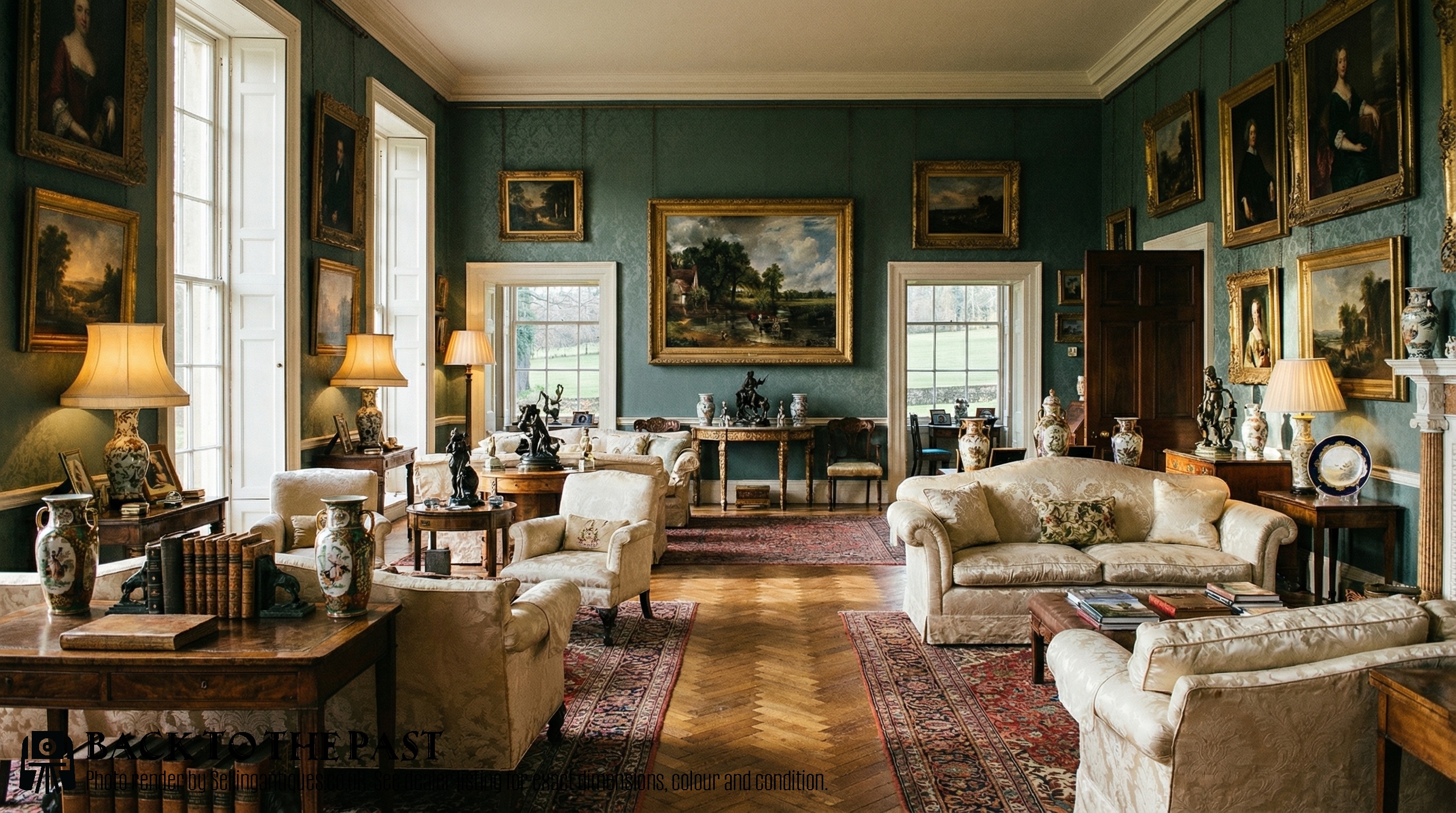
Owners displayed these ceramics in glass-fronted cabinets, on mantelpieces, or mounted directly onto walls using specialised hanging wires.
They served as status symbols and artistic focal points in formal domestic interiors.
How do I identify the maker?
Makers usually marked their porcelain on the underside using stamped factory ciphers, painted pattern numbers, or impressed seals.
Reference books and factory date codes help match these marks to specific decades of production.
Are painted fruit plates signed?
Many high-quality fruit and floral plates feature the signature of the artist who painted the central motif.
Renowned porcelain painters often initialled or signed their work near the edge of the central image.