


19th C Sevres Porcelain
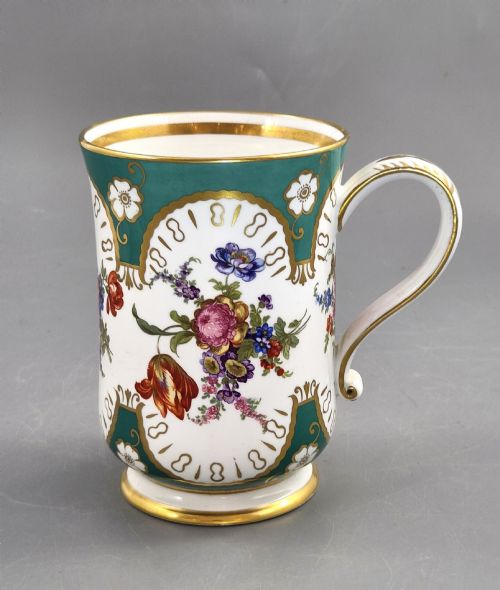
These pieces of 19th c sevres porcelain bring decorative French elegance to an interior through painted ceramic panels combined with gilt metal mounts.
19th C Sevres Porcelain
When exploring 19th c sevres porcelain, buyers encounter a distinct category of decorative works that span mantel clocks, vases, jardinieres, cabinet plates, and mounted furniture. These items originate predominantly from nineteenth-century France, reflecting periods such as the Victorian era, Napoleon III, and revivals of Louis styles.
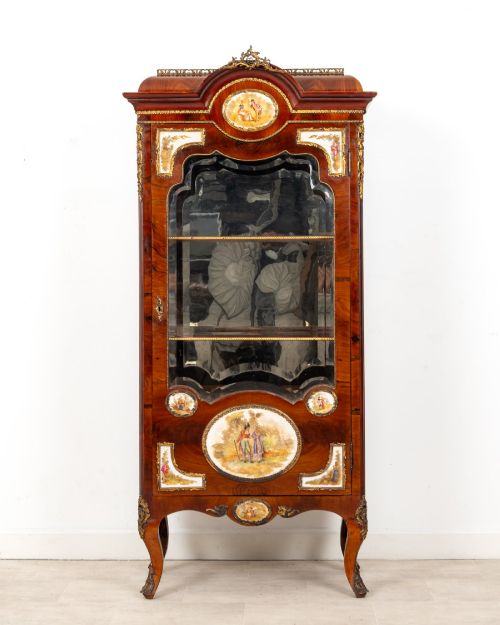
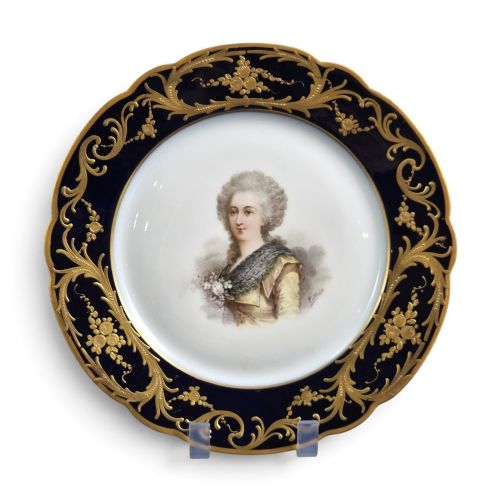
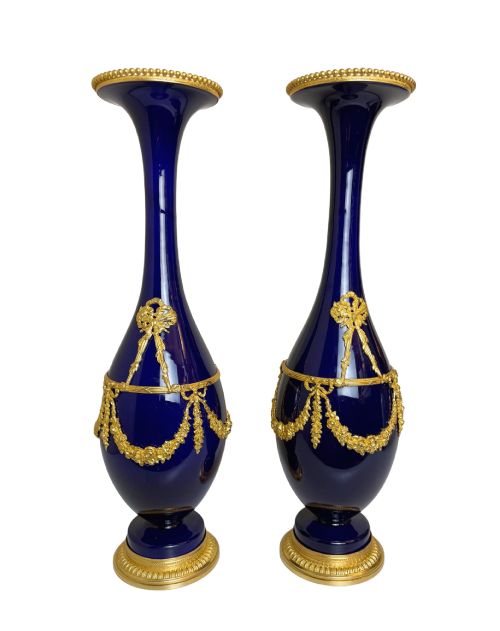
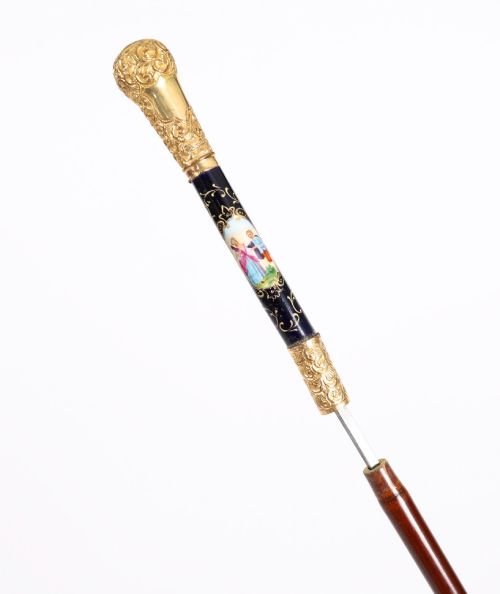
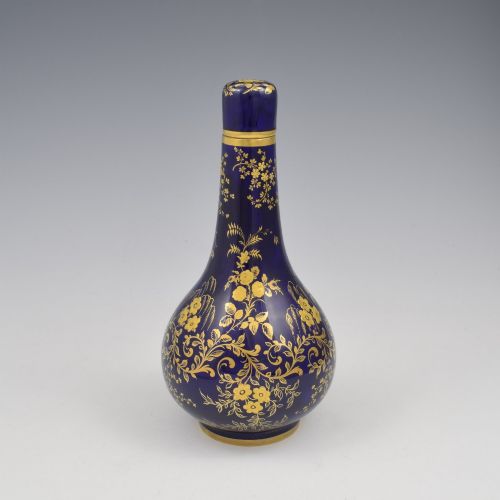
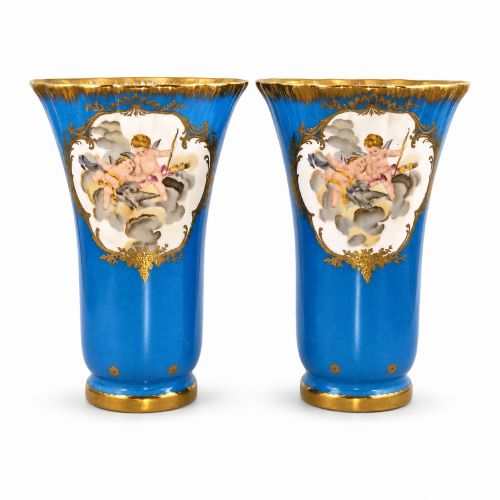
The objects available range from small desk accessories, jewellery caskets, and walking stick handles to large clock sets, credenzas, and display cabinets inset with ceramic plaques. Cobalt blue and bleu celeste grounds dominate the selection, frequently paired with hand-painted portraits or pastoral scenes framed by gilded detailing.
Materials and Construction
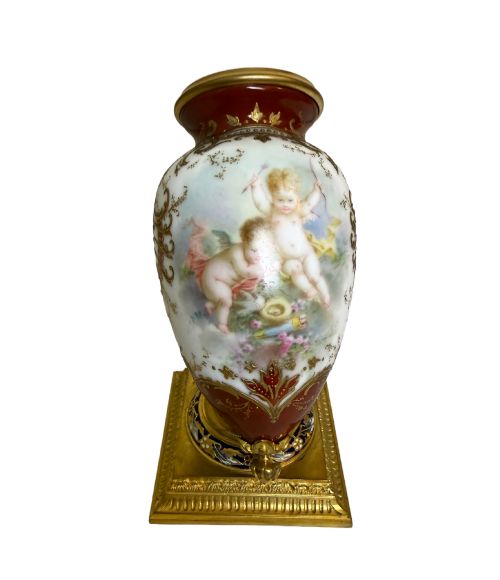
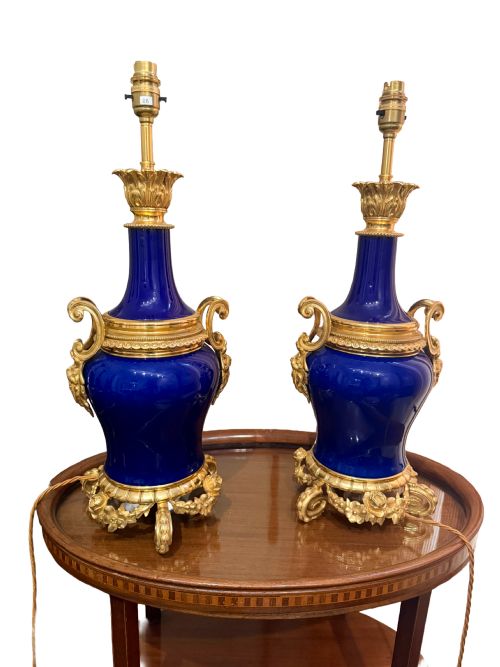
The physical construction relies on the union of hard-paste ceramic bodies with cast metal elements, primarily ormolu and gilt bronze. Artisans shaped these components into vases, urns, and vessel bodies before applying enamel colours, gold leaf, and hand-painted motifs.
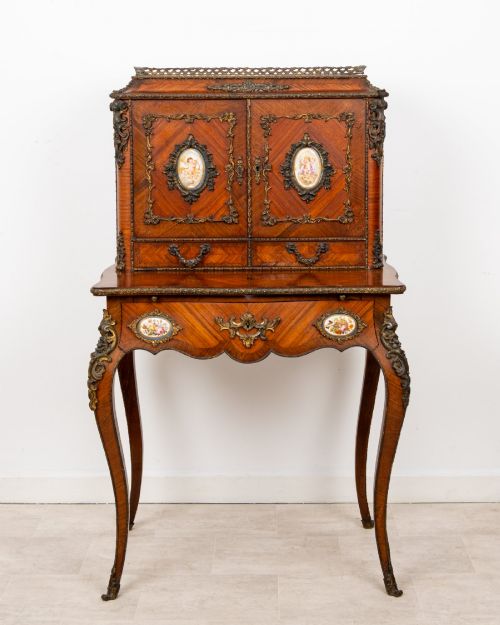
Support structures and housings often utilise fine timbers including walnut, kingwood, rosewood, and satinwood. Metal mounts, cast with rococo or neoclassical revival foliage and scrollwork, are secured directly to the porcelain surfaces and wooden cabinetry.
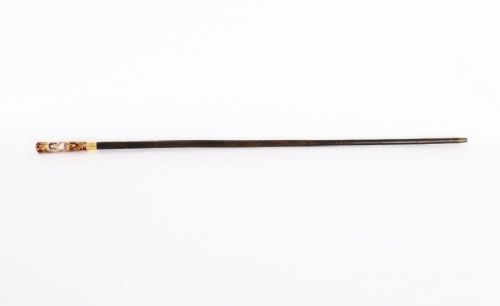
Several walking canes conceal slender swords beneath handles formed from hand-painted ceramic.
Distinctions in Execution
Quality rests upon the precision of the hand-painted ceramic decoration and the crispness of the surrounding metalwork. Finer examples display meticulous brushwork in portrait medallions and landscape scenes, set against evenly saturated ground colours like cobalt or turquoise.
The standard of the ormolu mounts dictates much of the overall merit. Heavier, deeply chased bronze mounts with sharp relief work separate superior decorative objects and mounted furniture from simpler production pieces.
Jean-Baptiste Delettrez·Achille Brocot·Japy Freres·Henry Marc
The 19th C Sevres Porcelain Glossary
- Ormolu
- A gilt bronze finish applied to decorative metal mounts and hardware. This technique involves coating cast bronze with a layer of gold amalgam to achieve a rich metallic sheen.
- Bleu Celeste
- A bright turquoise blue ceramic ground colour popular on nineteenth-century decorative wares. The shade was frequently utilised to frame floral reserves and gilt scrollwork.
- Jardiere
- A decorative container or planter designed for holding plants or floral arrangements. These pieces frequently feature ceramic bodies mounted in gilded bronze frames.
- Vitrine
- A glass-fronted display cabinet used for showcasing porcelain plates, caskets, and small objects. Such furniture often incorporates inset ceramic plaques matching the displayed contents.
- Cartonnier
- A decorative desktop cabinet fitted with compartments for papers and documents. These pieces frequently feature leather-bound storage files alongside gilt metal mounts and ceramic panels.
19th C Sevres Porcelain: Frequently Asked Questions
What is sevres style porcelain?
The term describes ceramic items produced in the manner of the famous French factory, encompassing both direct nineteenth-century works and later pieces created in the same aesthetic.
These objects adopt the characteristic colours, hand-painted subjects, and rich gilding associated with the historic French establishment.
How were these porcelain plaques used?
Ceramic plaques served primarily as decorative inserts for furniture, clocks, and jewellery caskets during the nineteenth century. Cabinet makers embedded them into surfaces of walnut, kingwood, and satinwood to enhance the visual richness of desks and cabinets.
They also appeared on the faces of mantel clocks and as standalone cabinet plates displayed on walls or within glass-fronted vitrines.
How do I identify the period of a piece?
Dating relies on examining the style of the metal mounts, the wood types in associated cabinetry, and the specific shades of the ceramic grounds. Nineteenth-century pieces frequently exhibit revival aesthetics such as Louis XVI or Rococo Revival motifs.
Maker signatures stamped on clock movements or bronze mounts provide definitive temporal markers for items produced by established French workshops.
How do I care for mounted porcelain?
Maintenance requires gentle dusting with a soft, dry cloth to protect the painted ceramic surfaces and the delicate gilding. Moisture and harsh cleaning agents should be avoided entirely to prevent damage to the enamel and metal finishes.
Ormolu mounts benefit from occasional light dusting without abrasive metal polishes that can strip the historic gold finish.