

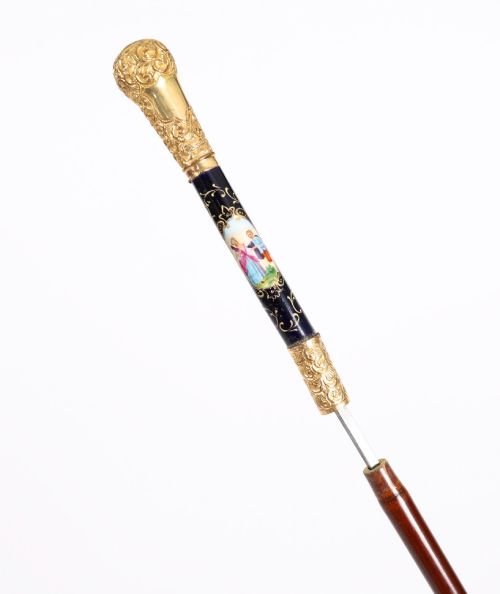
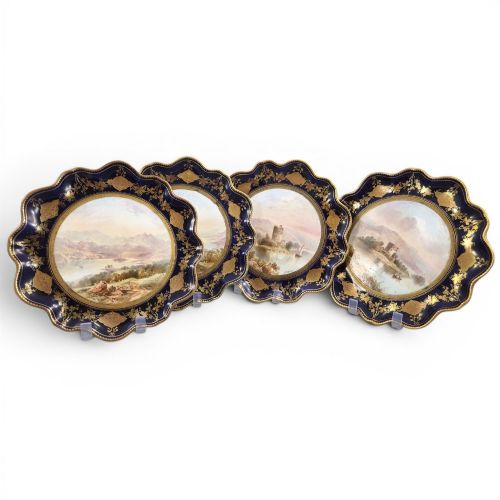
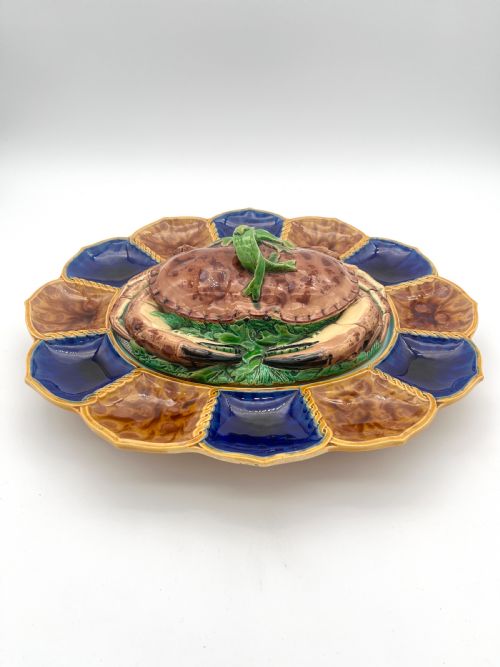
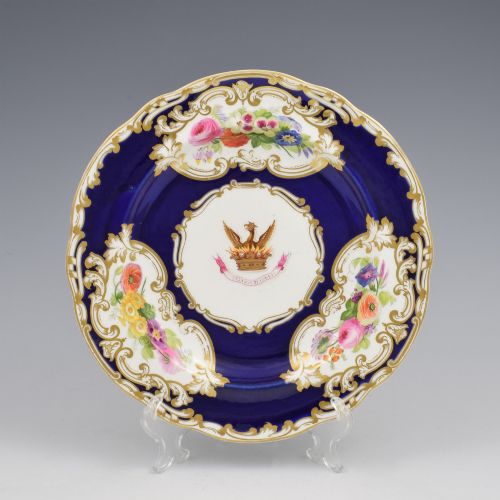


Victorian Cobalt Blue Plates
Victorian cobalt blue plates bring rich nineteenth-century colour and hand-painted detail to the table, offering a striking display for any collector.
Victorian Cobalt Blue Plates
Victorian cobalt blue plates encompass a variety of ceramic, porcelain, and earthenware pieces produced during the nineteenth century, including cabinet plates, decorative dishes, and serving wares.
The selections on this page predominantly reflect the Victorian era alongside related nineteenth-century production periods, featuring styles from traditional British earthenware to continental porcelain and Imari influences.
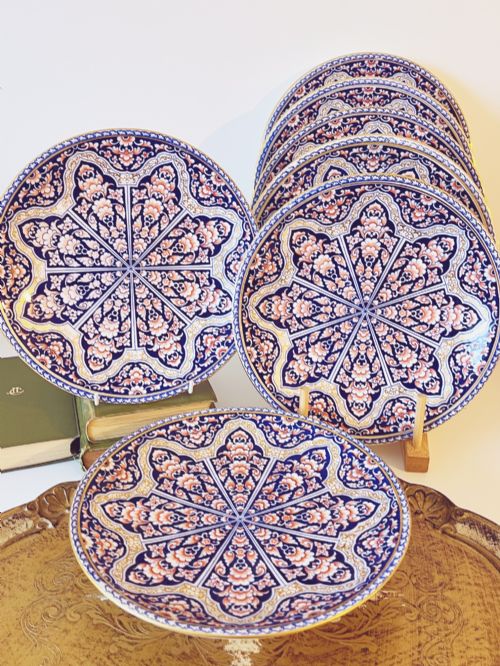
Buyers will encounter formal cabinet plates designed for display alongside robust ironstone and ceramic meat plates intended for nineteenth-century dining.
Materials and Manufacture
Potters utilised durable ceramic, ironstone, and fine porcelain bodies, applying deep blue glazes and cobalt pigments before firing.
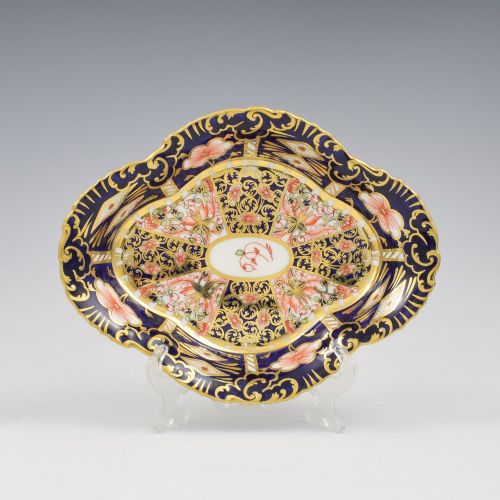
Many examples incorporate hand-painted details, enamel work, and applied gold leaf to highlight intricate motifs and hand-painted scenes.
Skilled artisans combined traditional throwing and moulding techniques with transfer-printing and hand-finishing, often sealing the rich pigments beneath a glossy protective glaze.
Listings feature nineteenth-century porcelain, ironstone, and ceramic pieces incorporating rich cobalt blue glazes and hand-painted enamel details.
Evaluating Quality
Quality rests upon the precision of the hand-painted decoration, the crispness of the cobalt transfer, and the preservation of any applied gold leaf or enamel detailing.
The refinement of the ceramic body itself separates standard utilitarian ironstone from delicate porcelain cabinet plates meant purely for visual appreciation.
The complexity of the design, whether an intricate named view, a mythological scene, or a detailed Imari pattern, dictates the overall sophistication of the piece.
Royal Crown Derby·Aynsley·Minton·Coalport·John Ridgway·Wedgwood·Sevres·Meissen·Dresden
The Victorian Cobalt Blue Plates Glossary
- Cobalt blue
- A deep, stable blue pigment derived from cobalt oxide that remains vibrant through high-temperature firing. It provides the characteristic rich tone seen across nineteenth-century ceramics.
- Cabinet plate
- A decorative ceramic plate intended for display in a cabinet or on a wall rather than for practical dining use. These often feature elaborate hand-painted scenes or gilded borders.
- Ironstone
- A heavy, durable type of earthenware patented in the nineteenth century to imitate Chinese porcelain. It offers exceptional strength for daily service and large platters.
- Imari
- A style of Japanese export porcelain characterised by underglaze blue and overglaze iron red, gold, and green. British potteries frequently imitated these vibrant decorative schemes during the Victorian period.
- Majolica
- A type of earthenware covered with an opaque tin-lead glaze and brightly coloured enamel paints. It gained immense popularity in the nineteenth century for moulded wares like cheese dishes and servers.
Victorian Cobalt Blue Plates: Frequently Asked Questions
How do I identify a Victorian plate?
Victorian plates often display nineteenth-century registry marks, factory ciphers, or specific maker stamps on the underside. Stylistic cues such as heavy gilding, Imari palettes, or transfer-printed scenes also point to this period.
Examining the foot ring and the wear on the ceramic base helps confirm the age and manufacturing origin of the piece.
Can I use these plates for dining?
While robust ironstone plates and ceramic meat dishes were originally made for functional household use, delicate porcelain cabinet plates with gold leaf are strictly intended for display.
Hand-washing is strongly recommended for antique ceramics to protect the fragile enamels and metallic gilding from modern detergents.
What is Imari style?
Imari style refers to decorative patterns inspired by Japanese porcelain exports, featuring a distinct combination of cobalt blue, iron red, and gold. Victorian potteries adopted these bold motifs for chargers and serving dishes.
This aesthetic brought rich, contrasting colours and intricate symmetrical borders into nineteenth-century British dining rooms.
How should I display cabinet plates?
Cabinet plates look striking mounted on walls using secure, coated wire hangers or arranged upright on sturdy plate stands within a glass-fronted cabinet.
Keeping them away from direct sunlight protects the enamel colours and gold leaf from fading over time.