


Coastal Canvas Painting
When you search for a coastal canvas painting, you are looking at marine and seaside oil works spanning the nineteenth to mid-twentieth centuries.
Coastal Canvas Painting
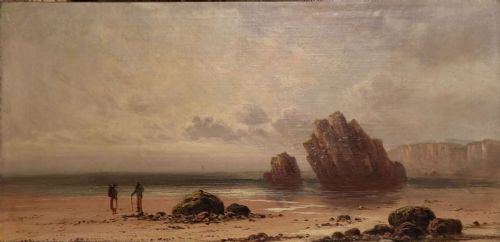
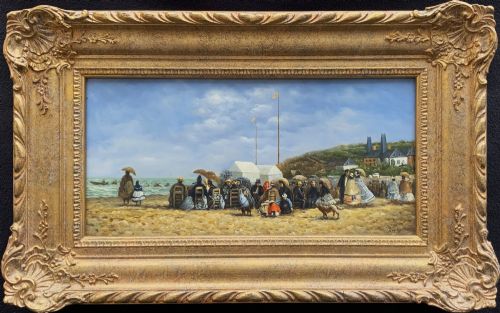
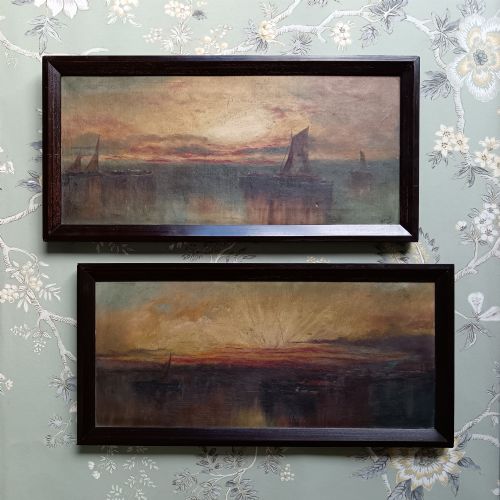
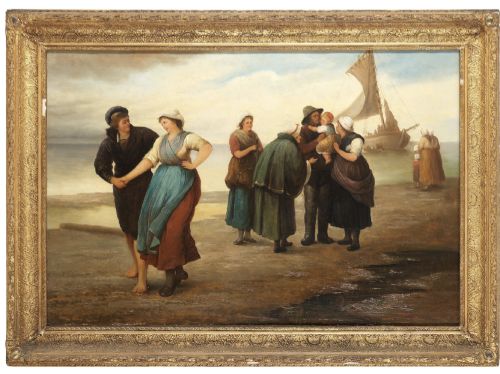
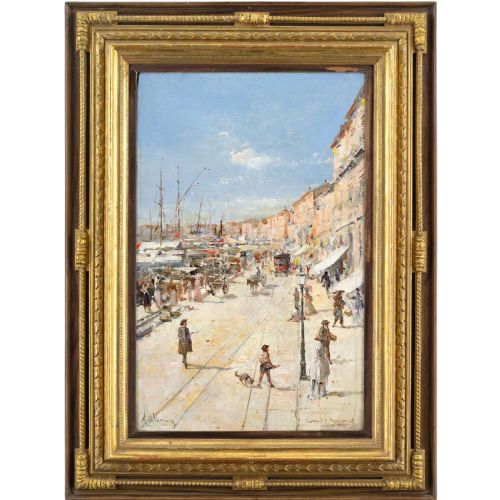
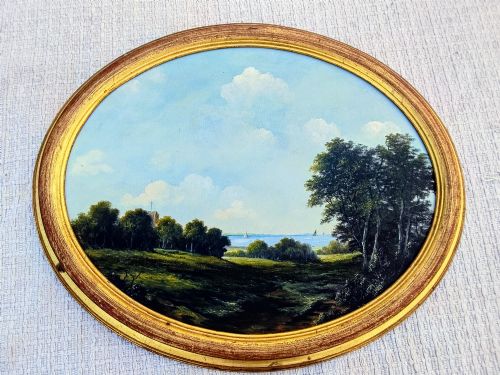
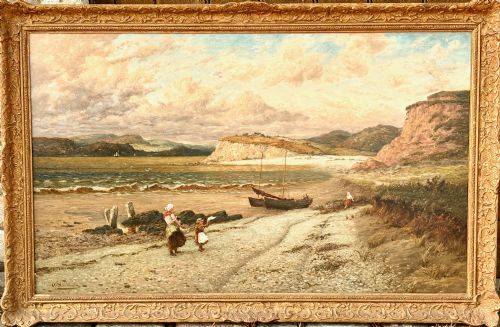
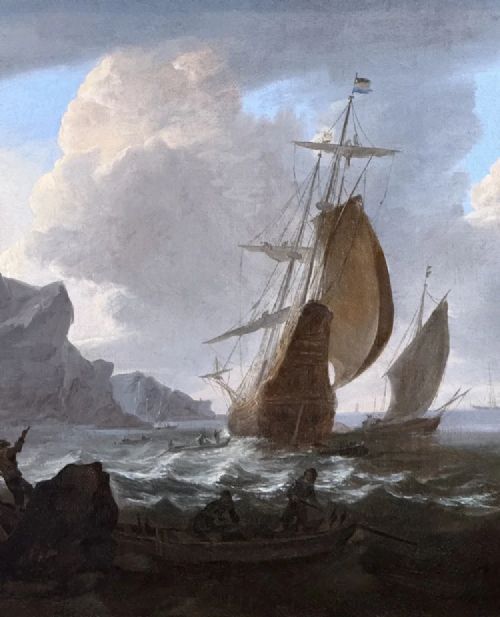
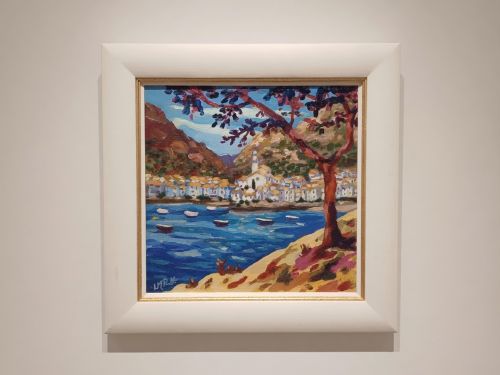
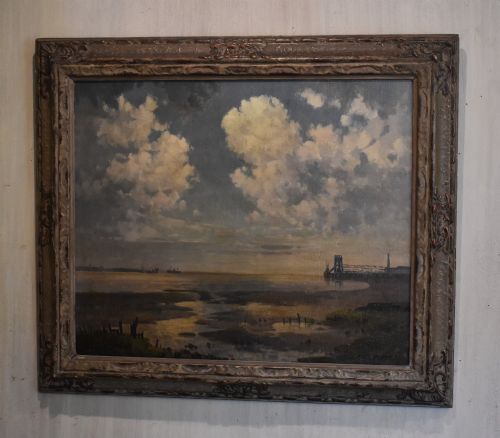
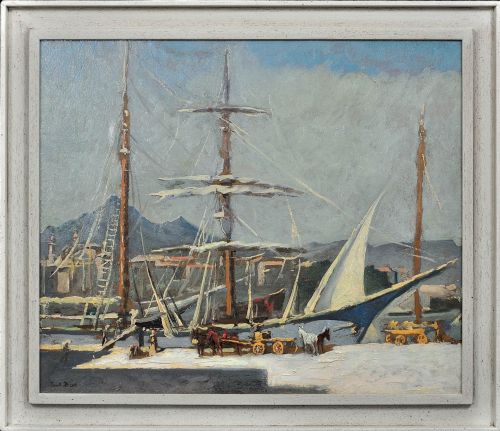
A coastal canvas painting captures harbours, sailing vessels, rocky shores and seaside gatherings across British and continental European scenes. You will frequently encounter works from the nineteenth century alongside mid-twentieth-century interpretations.
The subjects range from busy fishing ports and merchant shipping in gales to quiet beach scenes and sunlit cliffs. Many bear the signatures of named artists or emerge from regional schools.
These works document maritime life, coastal trade and changing leisure habits by the sea over several generations. They serve as historical records of shores, shipping lanes and coastal communities.
Materials and construction
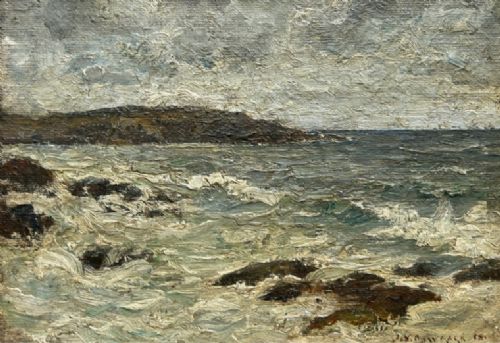
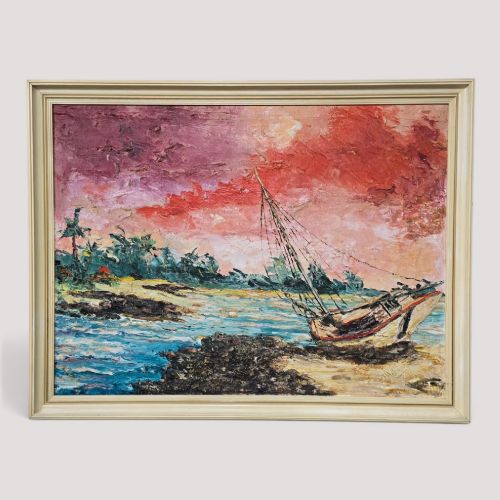
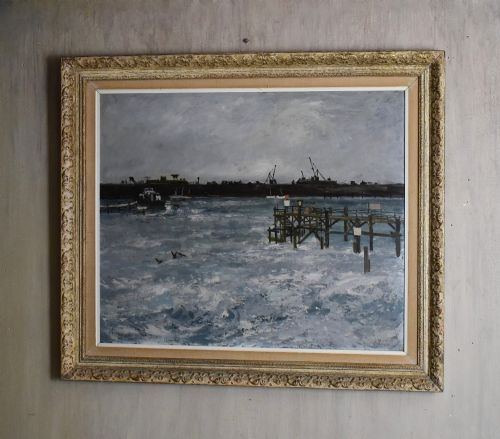
Artists painted primarily with oil pigments spread across woven canvas supports, sometimes utilising wooden boards or stretchers. The heavy body of oil paint allowed for textured impasto effects, particularly when capturing churning waves or rough seas.
Many surviving works retain their period wood frames, often finished in gilt details that complement the maritime subject matter. The combination of durable linen or cotton canvas and stable oil binders accounts for the survival of these coastal scenes.
Listings feature works spanning the nineteenth century through the mid-twentieth century, executed in oil paint upon canvas and wood panels.
What determines quality
Quality rests in the artist's handling of light, atmospheric perspective and the movement of water. Stronger examples demonstrate confident brushwork and accurate nautical detail rather than stiff mechanical reproduction.
The condition of the pigment layer and the integrity of the original canvas stretchers influence overall merit. Preserved original framing matching the period of creation further elevates the piece.
Kenneth Cozens·Clifford Hanney·B. Nash·Augusto Alberici·Bonaventura Peeters·Lucy Pratt·Clive Browne·Peter Brannan·Paul Bret·Bernard Benedict Hemy·Thomas Creswick·Charles Euphraisie Kuasseg·John Wilson Carmichael·Abraham Cooper·Joseph Farquharson·William Henry Williamson·John Holland·Walter Goodin·Abraham Hulk·Raymond Moritz·Joseph Edward Hennah·G.W. Butland·F Legge·Patrick Nasmyth·Emily Ledbrook
The Coastal Canvas Painting Glossary
- Impasto
- Paint applied thickly to a canvas, standing out in relief from the surface. This technique creates a textured appearance that mimics the roughness of waves or coastal cliffs.
- Stretcher
- A wooden frame that keeps tension on a painted canvas. Older works often feature keyed wooden corners designed to retighten the fabric over time.
- Marine art
- Painting that focuses primarily on the sea, ships, harbours and coastal views. This genre encompasses both calm coastal inlets and dramatic maritime gales.
- Provenance
- The documented history of ownership surrounding a work of art. Clear provenance helps verify the attribution and age of nineteenth and twentieth-century paintings.
Coastal Canvas Painting: Frequently Asked Questions
How do I identify the age of a coastal canvas painting?
Look closely at the preparation of the canvas, the composition style, and any artist signatures or dates recorded on the front or reverse. Framing methods and stretcher construction also offer reliable clues to the decade of creation.
Comparison with documented works by similar regional schools helps narrow down the active period of the painter.
Where should I hang a marine oil painting?
Choose a wall with stable ambient temperature away from direct sunlight to protect the oil pigments and canvas substrate. Good natural or directional picture lighting helps bring out the atmospheric depth of coastal scenes.
Ensure the weight of the frame is properly supported by appropriate wall fixings suited to older wooden mouldings.
What is the difference between nineteenth and twentieth-century maritime works?
Nineteenth-century pieces often emphasise precise rigging, dramatic weather conditions and detailed vessel architecture within academic traditions. Twentieth-century examples frequently experiment with looser brushwork, post-impressionist palettes and modernist interpretations of light.
Both periods document the enduring human fascination with the sea and coastal trade.
How do I care for an antique oil painting on canvas?
Keep the piece away from damp environments and extreme humidity changes that could cause the canvas to slacken or the paint to crack. Dust the surface gently with a dry, soft brush without applying liquid cleaners.
Consult a professional conservator if the canvas requires cleaning or structural repair.