

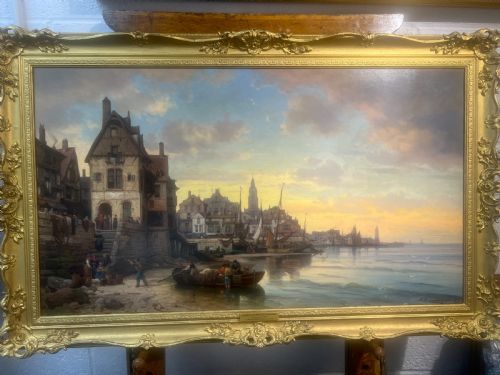


Nineteenth Century Marine Landscape
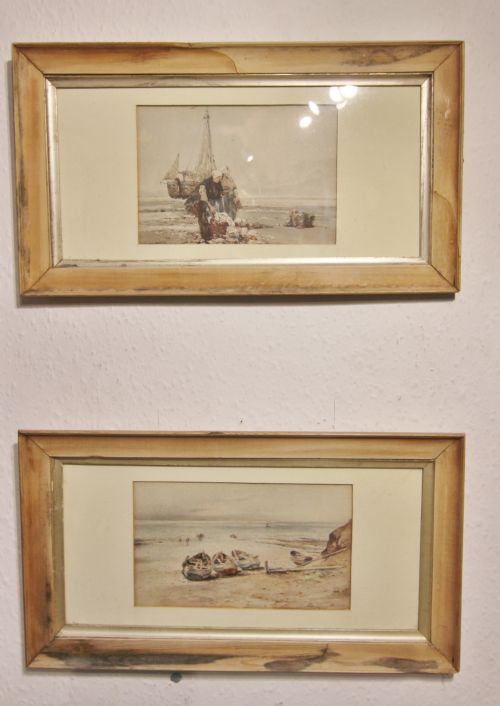
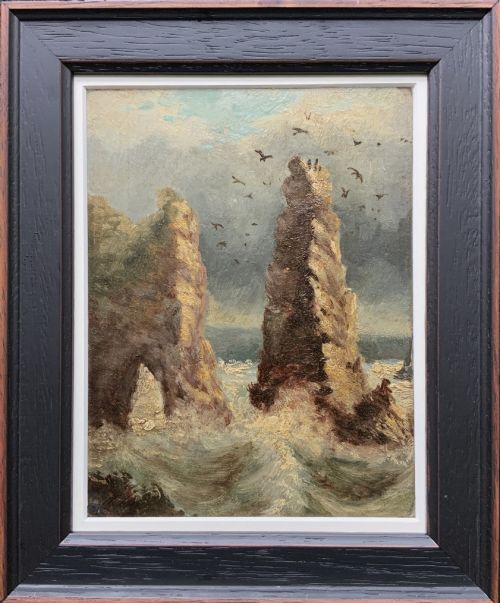
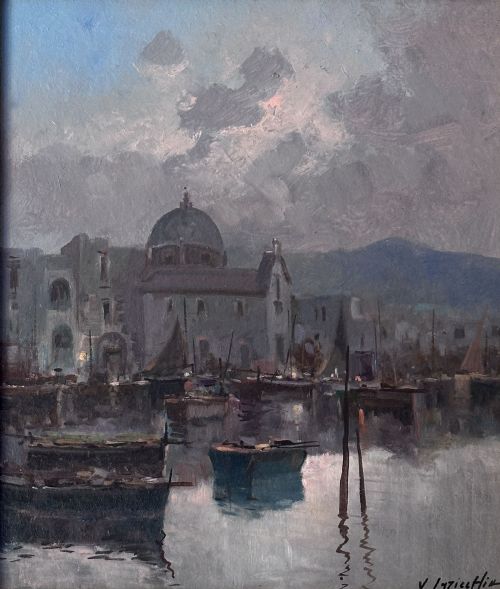
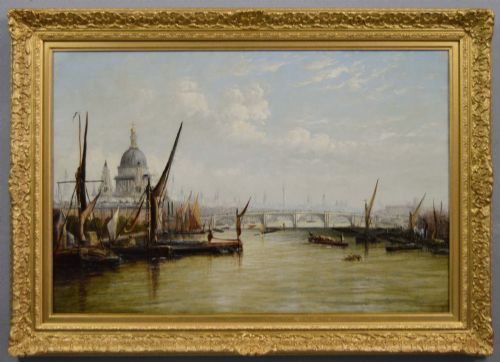
These nineteenth century marine landscape works capture coastal views, harbours and rivers in oil and watercolour.
Nineteenth Century Marine Landscape
A nineteenth century marine landscape brings together coastal views, river scenes, harbours and shipping portrayed during the Victorian and Edwardian eras. Buyers searching this phrase encounter painted records of maritime life, ranging from bustling city waterscapes along the Thames to quiet northern beaches and Venetian lagoons.
The works on this page appear principally as oil paintings on canvas alongside occasional watercolours, housed frequently in gesso or giltwood frames. Artists record specific locations from the Isle of Wight and Whitby to Rotterdam and Venice, capturing the shifting light upon water.
The selection encompasses British and continental European views from the nineteenth and early twentieth centuries, reflecting diverse regional painting traditions. These pictures offer a direct window into historical maritime activity and coastal topography through the eyes of contemporary painters.
How they were made
Artists painted primarily in oil on canvas or applied watercolour to paper, employing oil paint to build texture and depth in sky and water. Canvases are stretched over wooden supports and secured within decorative gilt wood, gesso and gold leaf frames that complement the painting.
The technical approach combines brushwork with pigment layering to represent the luminosity of sunrise, sunset and open coastal air. Painters balanced precise architectural or shipping details with looser handling of water and atmospheric vapour.
Nineteenth Century Marine Landscape Retail Price Guide 2026
Typical asking prices for nineteenth century marine landscape among the pieces listed under this phrase on Sellingantiques today, from the lower quarter to the upper quarter. They describe what is for sale here now, not the wider market.
The listings feature works spanning the nineteenth century up to the nineteen-twenties, executed in oil and watercolour on canvas and paper.
What varies in quality
Quality rests upon the artist's command of light, atmosphere and spatial depth, distinguishing accomplished compositions from standard topographical records. Stronger pieces reveal confident brushwork and a coherent management of water surface reflections and coastal weather.
The preservation of the original painted surface and its contemporary or period frame influences the character of the piece. Masterpieces demonstrate distinct tonal control and a sophisticated palette, whether rendering a Venetian lagoon or a busy British harbour.
Francis Moltino·Charles Euphraisie Kuasseg·William Greaves·Charles Malfroy·George Dodgson Callow·Frederick William Hattersley·Jane Vivian·Thomas Rose Miles·H Hadfield Cubley·Henri Ottman·Alfred Pollentine·Frank Myers Boggs·William Edward Webb·Hubert Thornley·Samuel Bough
The Nineteenth Century Marine Landscape Glossary
- Marine painting
- Artwork depicting ships, sea, and coastal views. This genre encompasses both calm waterscapes and turbulent maritime scenes.
- Oil on canvas
- Pigment mixed with drying oil applied to a woven fabric stretched on a wooden frame. This medium allowed artists to build rich textures.
- Watercolour
- Paint consisting of water-soluble pigments applied to paper. It produces translucent washes suited to delicate coastal atmospheres.
- Giltwood
- Wood carved and covered with a thin layer of gold leaf or metal powder. These frames provide ornate borders for period paintings.
- Gesso
- A plaster mix applied as a smooth base before gilding or painting. It supports intricate moulded details on picture frames.
Nineteenth Century Marine Landscape: Frequently Asked Questions
What is a marine landscape?
A marine landscape depicts coastal scenery, beaches, harbours, rivers and shipping activities. These works focus primarily on the interaction between land, sky and water.
Artists during the nineteenth century recorded both commercial ports and quiet shores, providing historical views of maritime life.
How do I hang these paintings?
These works require secure wall fixings suited to the weight of the wooden stretcher and heavy gilt frame. Hang them away from direct sunlight and damp conditions to protect the oil paint and canvas.
Position paintings at eye level where adequate ambient light can illuminate the details of the water and sky.
Are these works original?
The selections shown are period original paintings and watercolours created during the nineteenth and early twentieth centuries. Each piece reflects the individual hand and technique of the artist who painted it.
Signatures, framing and materials correspond to the documented period of production.
Where were these scenes painted?
Artists painted locations across Britain and continental Europe, including Venetian canals, Dutch harbours and coastal towns in Yorkshire and Norfolk. Many works capture specific named sites such as the Thames, Whitby and the Isle of Wight.
Topographical accuracy varies according to whether the artist worked en plein air or composed the view in a studio.