



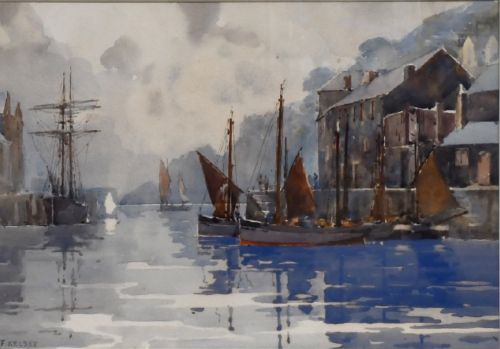
Coastal Harbour Scene
A coastal harbour scene captures the salty air and working water of maritime life through the observant eyes of painters working across two centuries.
Coastal Harbour Scene
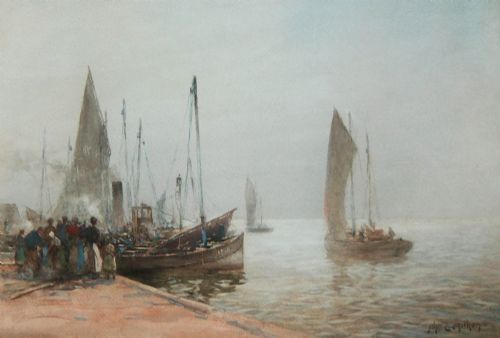
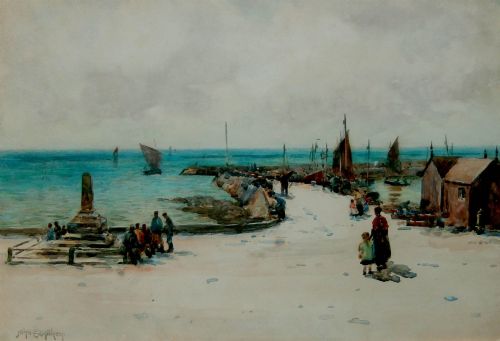
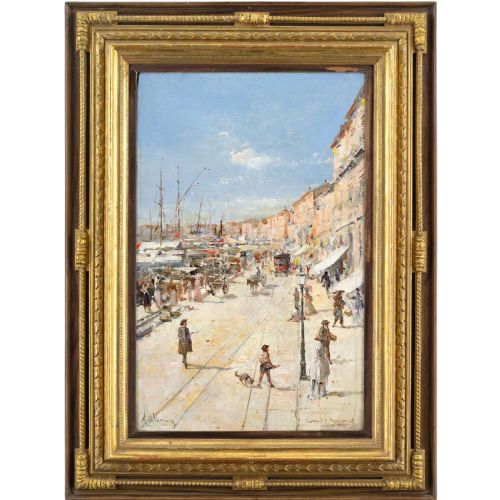
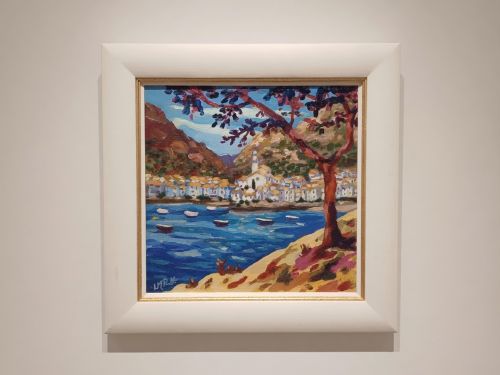
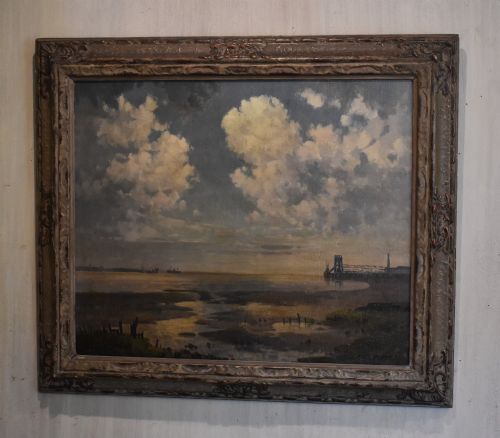
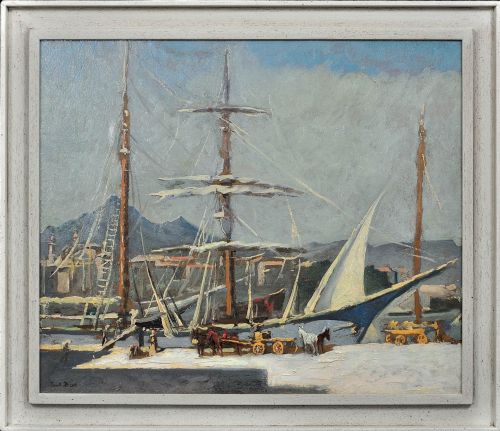
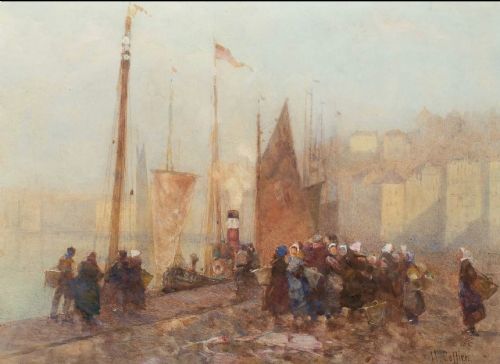
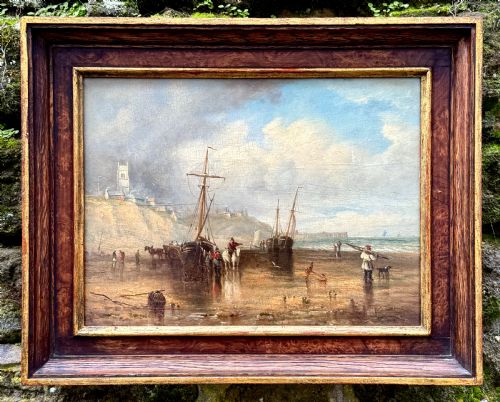
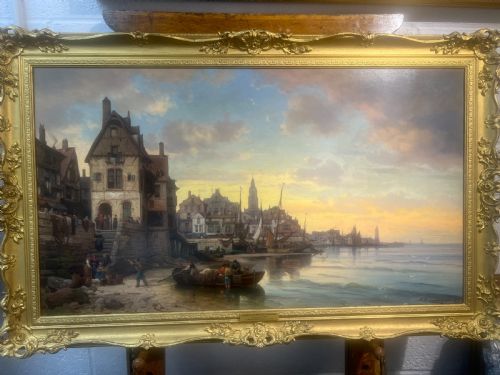
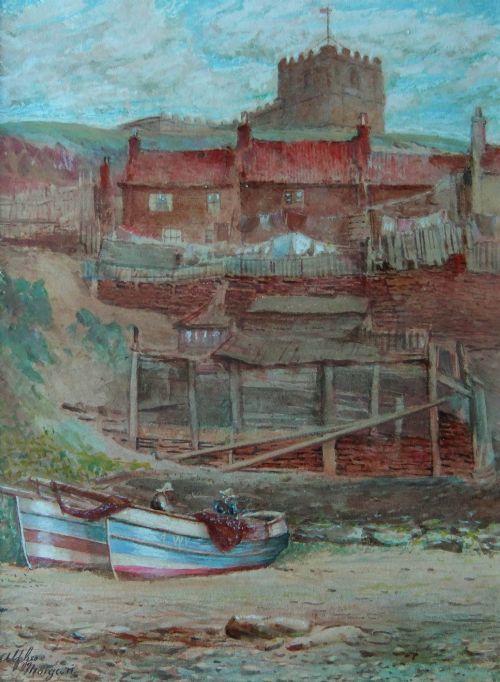
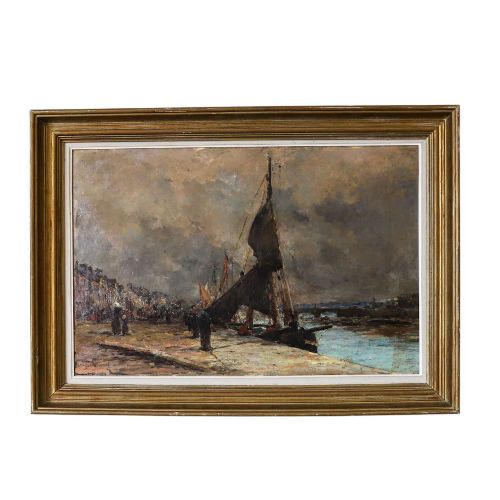
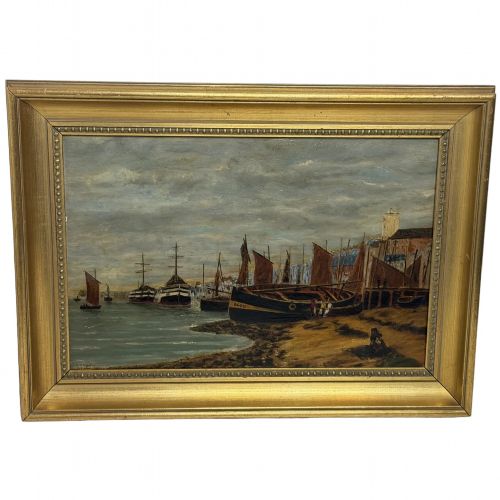
A coastal harbour scene brings together working boats, quaysides and tidal waters in framed artworks that span from the Georgian period through to the mid-century modern era. Buyers searching for a coastal harbour scene encounter depictions of British fishing ports like St Ives and Whitby alongside continental havens in France, Italy and the Netherlands. These works capture the changing light on hulls, rigging and stone piers using traditional media.
The pieces on this page appear predominantly as watercolours on paper or oil paintings on canvas and board, reflecting the preferred methods of 19th-century and early 20th-century artists. Many are housed in their original gilt wood frames, preserving the historical context of the view. The subjects range from bustling commercial docks with unloading ships to quiet tidal inlets and drying sails.
Materials and technique
Artists rendering a coastal harbour scene relied on oil paint or watercolour applied to canvas, wood panels or heavy paper. Oil paint allowed for thick impasto to build the texture of churning water and weathered timber, while watercolour offered translucent washes suited to bright skies and reflective harbours.
Framing played an integral role in presentation, with many works set into carved and gilded wood frames that complemented the maritime subject matter. Support boards and canvases were frequently prepared with gesso grounds to receive the pigments.
Factors of quality
Quality in a coastal harbour scene rests on the artist's command of light, atmosphere and maritime architecture rather than the mere presence of ships. Stronger works demonstrate confident brushwork that conveys the movement of water and the solid structure of quays without relying on excessive detail.
The relationship between the pigments and the support determines longevity, with stable oils on canvas and well-preserved watercolours holding their original tonal values. Provenance and original framing also separate standard topographical records from accomplished artistic interpretations.
James E. Aitken·William Banks Fortescue·Hector Caffieri·Thomas Creswick·Paul Delvaux
The Coastal Harbour Scene Glossary
- Impasto
- Paint applied thickly to a canvas or board, standing out from the surface to create a textured effect that catches the light. This technique frequently renders the churn of water or the rough planks of a fishing boat.
- Gilt Wood
- Wood that has been coated with a thin layer of gold leaf or gilt finish, commonly used for traditional picture frames. These frames enhance the visual depth of marine paintings.
- Provenance
- The documented history of ownership of an artwork, tracing its origin and lineage. A clear provenance adds historical weight to a maritime painting.
- Watercolour
- A paint consisting of pigment suspended in a water-soluble binder, traditionally applied to paper. It achieves luminous, transparent washes ideal for capturing coastal atmospheres.
Coastal Harbour Scene: Frequently Asked Questions
What periods do these paintings come from?
The available works span from the Georgian and Victorian eras through the Edwardian period and into the mid-20th century. This provides a broad chronological spread of maritime art.
Most pieces date from the 19th century and the early decades of the 20th century, reflecting the peak of British and European plein air marine painting.
What mediums were used for these scenes?
Artists utilised oil paint on canvas and board alongside watercolour on paper to capture these marine views. Each medium offers a distinct textural quality suited to harbour life.
Oils provide depth and heavy impasto for stormy seas, whereas watercolours deliver bright, translucent light for coastal air.
How do I identify different coastal locations?
Many titles and signatures indicate specific ports, ranging from Cornish fishing villages like St Ives and Looe to northern harbours on the River Tyne. Local architectural details and shipping types often provide further clues.
Researching the documented travels and sketchbooks of listed artists helps confirm the exact geographic origin of a depicted scene.