




British Coastal Scene
A british coastal scene captures the shifting light and maritime life of shores from Cornwall to Norfolk, offering a direct window into historical coastal communities.
British Coastal Scene
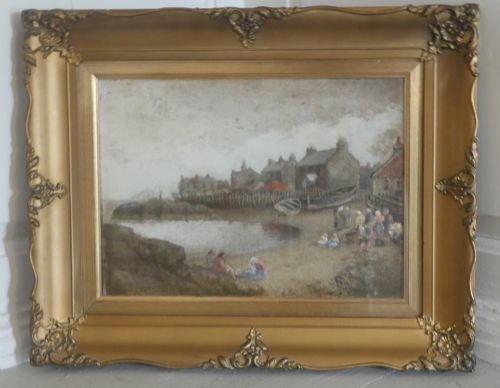
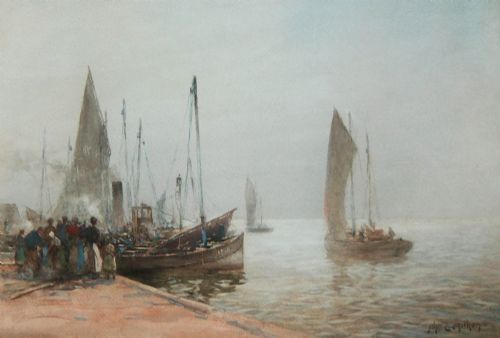
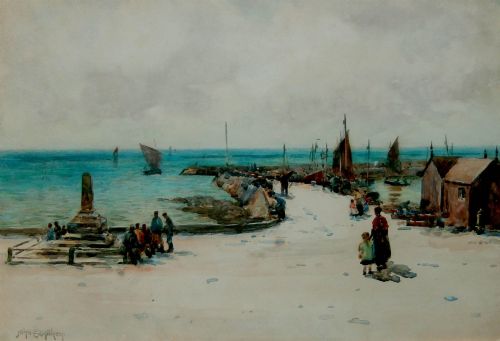
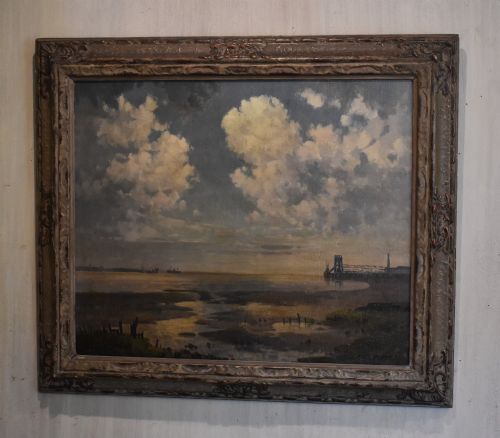
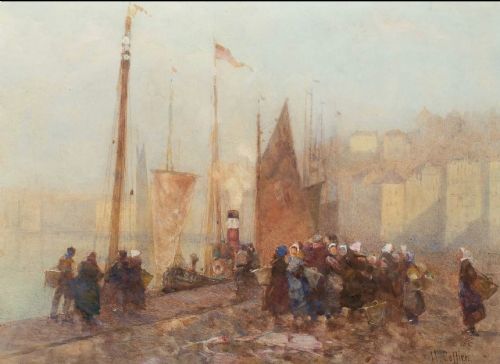
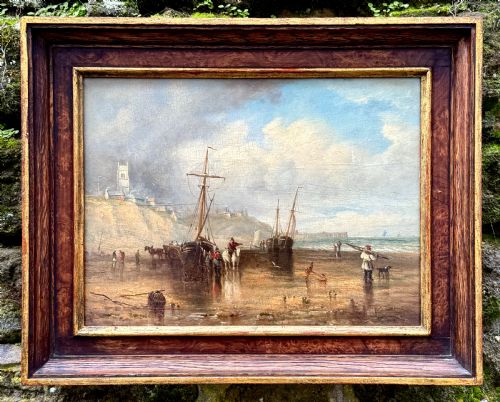
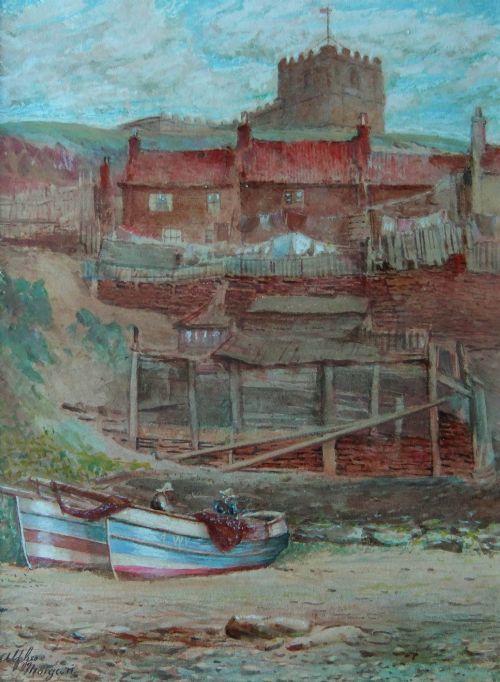
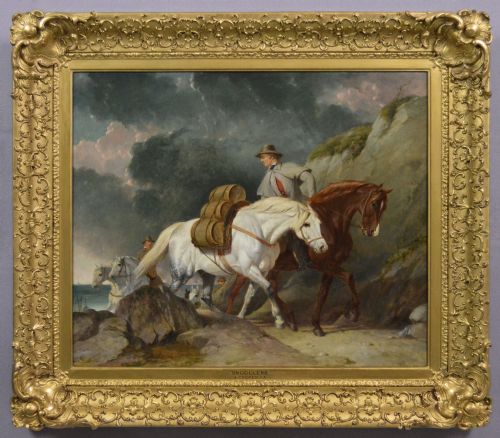
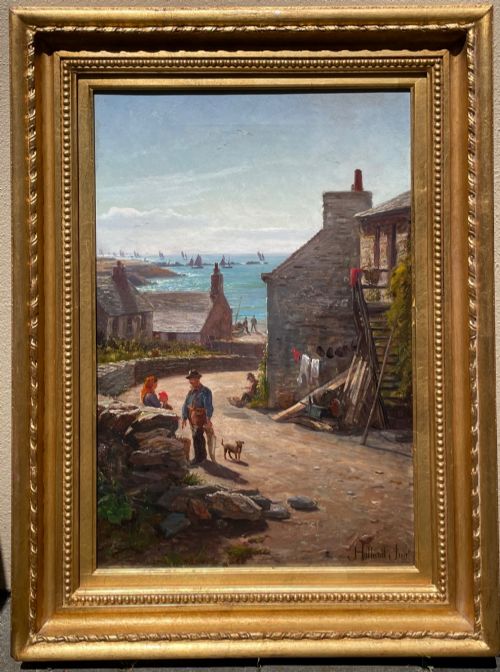
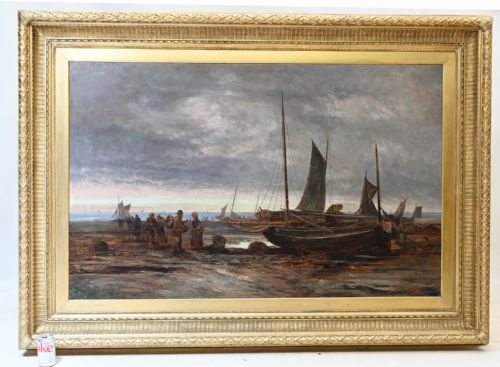
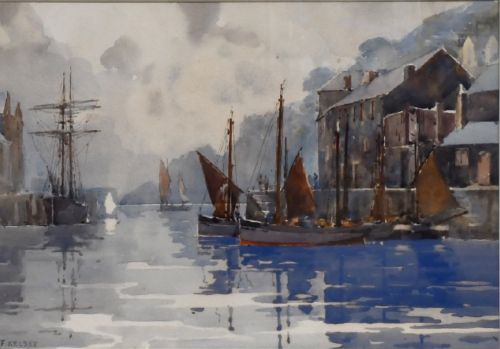
A british coastal scene depicts maritime activities, fishing harbours, and shorelines rendered by painters working across various decades. These works record historic ports such as St Ives, Whitby, and Anstruther through changing artistic movements.
The pieces appearing here range from Victorian watercolours of fishing boats to mid-century oil paintings of harbour walls. Buyers frequently encounter nineteenth-century watercolours and early twentieth-century depictions of English and Scottish havens.
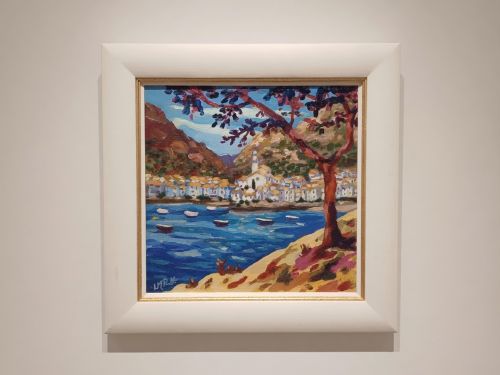
Represented styles span from traditional Victorian fine art and the Newlyn School to British Impressionism and modern interpretations. Each canvas or paper surface records the topography and maritime industry of past eras.
Materials and Technique
Artists relied primarily on watercolour pigment applied to paper or oil paint laid upon canvas, panel, or board. These mediums allowed painters to capture both the translucent spray of breaking waves and the heavy textures of wooden fishing vessels.
Support materials vary from stretched canvas and treated card to wood panels housed behind glass within original frames. Pigments were manipulated to render the distinct atmospheric conditions of North Sea ports and Atlantic shores.
Several artists clearly braved howling North Sea gales just to paint wet sand and stubborn fishing boats.
Assessing Quality and Execution
Quality rests upon the artist's handling of light, atmosphere, and spatial depth within the marine environment. Superior works demonstrate confident brushwork and precise observation of maritime architecture and rigging.
The retention of original framing and clear provenance regarding specific locations like Fife or Cornwall enhances historical value. Weaker examples often rely on formulaic compositions with less attention to the specific character of the coastline.
Kenneth Cozens·James Orrock·Edward Mills·James E. Aitken·John E. Aitken·William Banks Fortescue·Lucy Pratt·Clive Browne·Hector Caffieri·Thomas Creswick·Alfred G. Morgan·Abraham Cooper·John Holland·Frank Kelsey·George F Pennington·William Lee Hankey·George Turland Goosey·Cecil Rochfort D'Oyly-John·James Kyd·Arthur Tucker·Colin H Greenwood·James Watson·Donald McIntyre·George Hamilton Constantine·William Pitt
The British Coastal Scene Glossary
- Watercolour pigment
- A colour medium suspended in a water-soluble binder, frequently utilised for luminous marine sketches and detailed harbour views.
- Newlyn School
- An art colony based in Cornwall that focused on plein-air painting of local fisherfolk and coastal life.
- Oil paint
- A slow-drying paint made from pigment particles suspended in a drying oil, allowing for rich textures on canvas or board.
- British Impressionism
- A painting style influenced by French movements that prioritised natural light, loose brushwork, and outdoor subjects.
- Provenance
- The documented history and ownership trail of a work of art, confirming its origin and authenticity.
British Coastal Scene: Frequently Asked Questions
What subjects appear in these paintings?
The works typically depict fishing boats, harbour docks, stormy seas, and rural coastal paths around Britain.
Specific locations range from Yorkshire fishing ports to Cornish inlets and Scottish havens.
How are watercolours and oils best displayed?
Watercolours require framing behind glass to protect the paper pigment from atmospheric moisture and direct sunlight.
Oil paintings on canvas or board are sturdier but benefit from stable indoor humidity away from heat sources.
How do I identify the period of a piece?
Dating relies on stylistic clues, framing methods, artist lifespan records, and written inscriptions on the reverse.
Victorian pieces often feature heavy gilt frames and detailed narrative realism, while later works adopt looser impressionistic strokes.
Where were most of these scenes painted?
Painters concentrated heavily around established fishing communities and artist colonies in Cornwall, Yorkshire, and Norfolk.
Popular destinations included St Ives, Whitby, and various Scottish coastal villages.