



Coal Hod Bucket
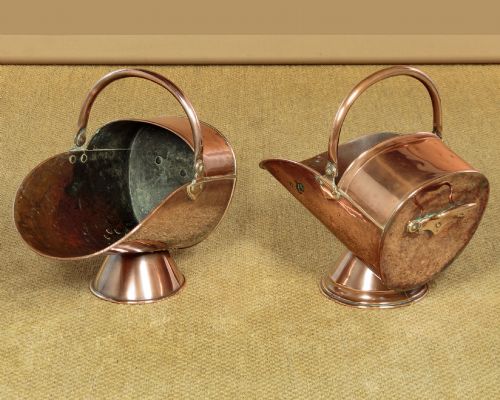
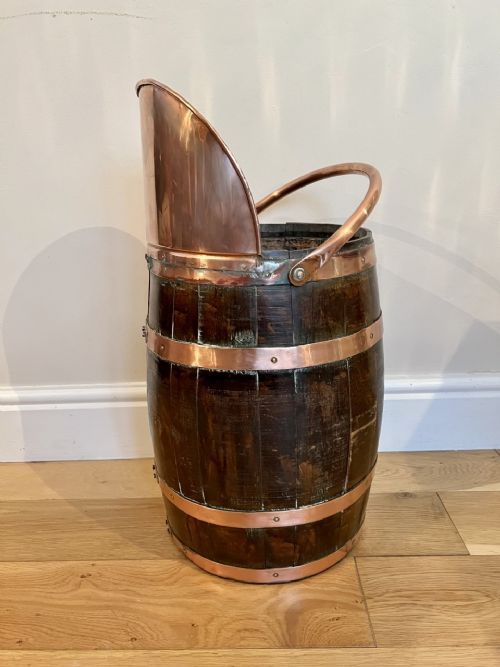
These coal hod buckets are fireside accessories designed to hold solid fuel, bringing period metalwork and timber into domestic hearths.
Coal Hod Bucket
A coal hod bucket is a utilitarian fireside accessory designed to store and transport solid fuel to the hearth. When you search for a coal hod bucket, you encounter pieces that served a daily domestic purpose in formal drawing rooms and modest parlours alike.
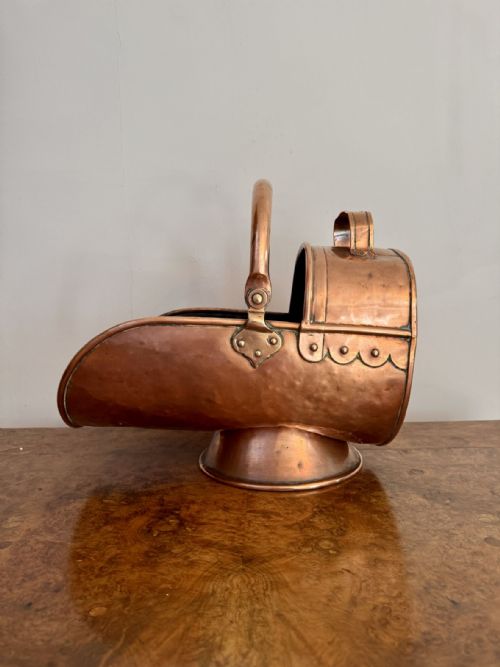
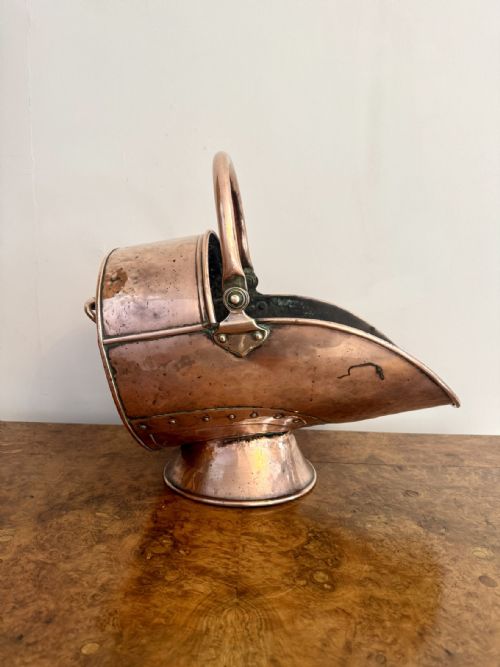
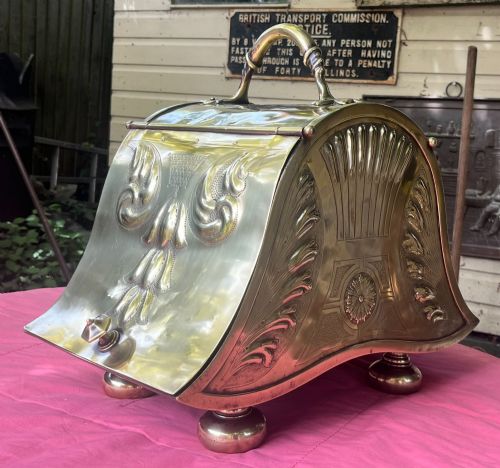
The examples on this page are predominantly British in origin, spanning the Georgian, Regency, Victorian, and Edwardian eras. You will frequently meet helmet-shaped vessels and cylindrical buckets that combine robust metal bodies with practical carrying handles.
Makers shaped these containers from durable materials to withstand the heavy wear of daily coal handling beside open fires. They survive today as decorative hearth furnishings that retain their original functional forms.
Materials and construction
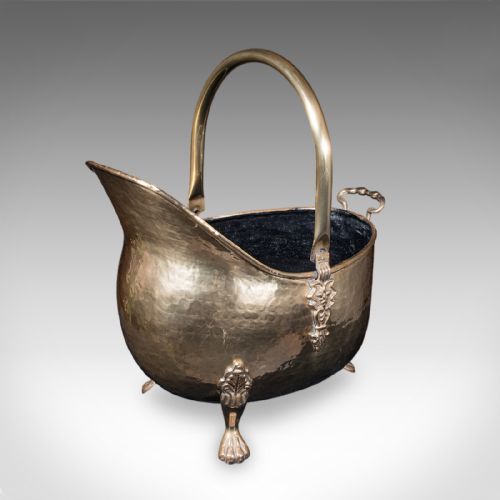
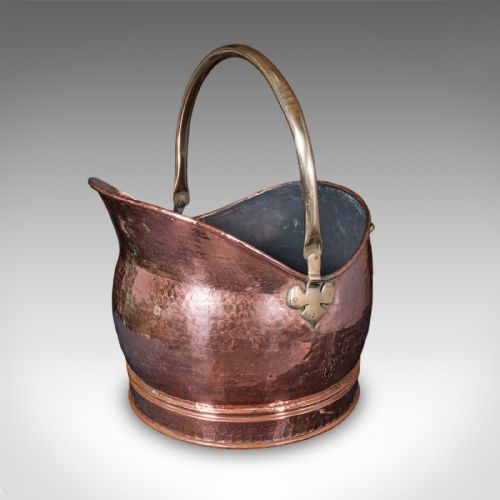
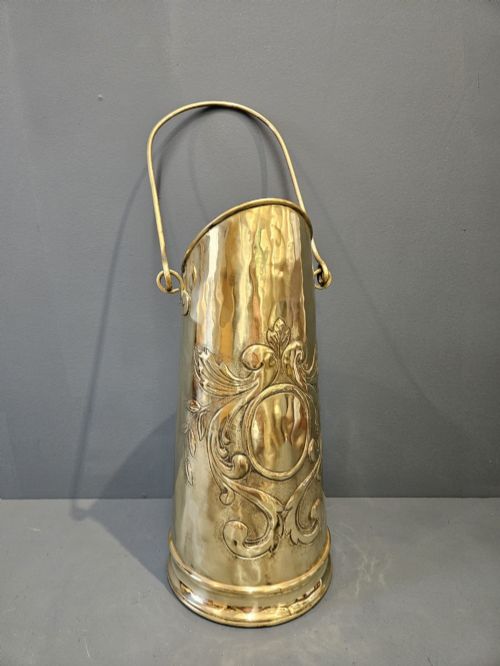
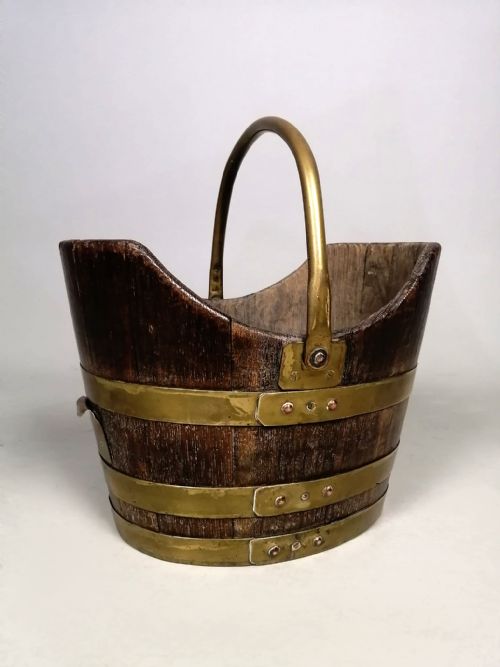
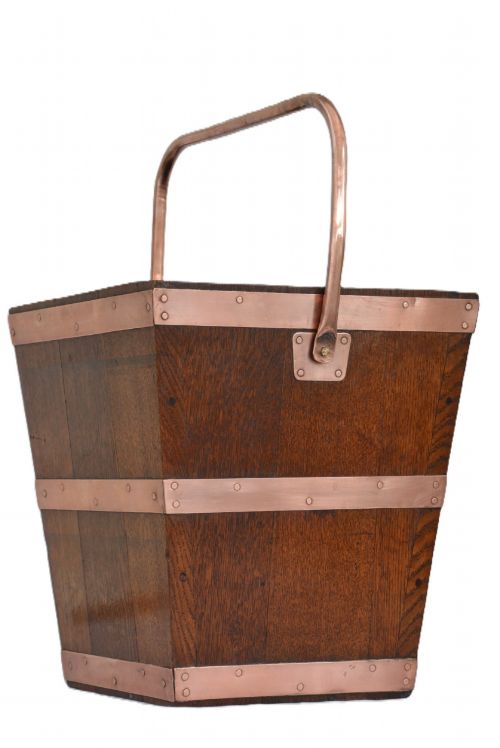
Craftsmen built these containers primarily from sheet copper and brass, often raised by hand or beaten with hammers to achieve a rigid form. Iron and wrought iron appeared in structural mounts, drop handles, and liners, while oak provided sturdy timber staves for wooden buckets.
Makers finished metal surfaces with polished sheens or textured hammer marks, pairing copper bodies with contrasting brass fittings and swing handles. Wooden vessels received tight metal banding, sometimes utilising copper hoops to secure the oak staves around a central cavity.
Listings feature pieces spanning the Georgian, Regency, Victorian, and Edwardian periods, constructed from copper, brass, oak, and iron.
Judging quality and manufacture
Quality in a coal hod bucket rests upon the weight of the metal gauge and the integrity of the construction. Heavier brass and thicker copper sheets denote superior vessels that resisted dents and sustained decades of heavy loading.
The refinement of the hand-finishing marks, the secure dovetailing or riveting of seams, and the retention of original matching shovels separate standard utilitarian pieces from exceptional examples. Fine specimens also display well-turned wooden grips and harmonious contrasts between brass bands and oak bodies.
BENHAM AND FROUD
The Coal Hod Bucket Glossary
- Helmet scuttle
- A traditional coal container featuring an elevated back and a spouted front lip designed for pouring fuel. This shape became particularly popular during the Victorian period.
- Coal hod
- A deep cylindrical or bucket-shaped vessel used for carrying coal. They often include a swing handle and flat base for stable placement beside the fireplace.
- Wrought iron
- Iron worked by hand while hot, yielding a fibrous and tough material. It frequently forms the rugged handles and decorative mounts on Arts and Crafts pieces.
- Brass banding
- Metal strips used to bind and reinforce wooden buckets. They hold the staves tightly together while providing decorative contrast against oak.
- Coal receiver
- An alternative term for a fireside storage bin or bucket. These items collected fuel close to the hearth for easy access.
Coal Hod Bucket: Frequently Asked Questions
How were coal hod buckets used?
These vessels transported coal from outdoor storage coal bunkers directly to the fireplace inside the home. Servants or homeowners filled them and carried them by the swing handle to replenish domestic fires.
They sat permanently beside the hearth as decorative accessories while keeping fuel within arm's reach. Many included matching shovels stored in side brackets for convenient stoking.
What materials are most common?
Copper and brass dominate the surviving examples, prized for their bright metallic sheen and resistance to corrosion near the hearth. Artisans shaped sheet metal into helmet and bucket forms, often adding contrasting brass rims and handles.
Oak and other woods also appear, bound with metal hoops to create durable wooden hods. Wrought iron and iron frequently provided the internal frames and structural reinforcement.
How do I date a coal hod bucket?
Stylistic details and manufacturing techniques provide the clearest indication of age. George III and Regency examples tend to feature clean classical lines and hand-beaten copper construction, while Victorian pieces often embrace ornate brass work or helmet shapes.
Edwardian and Arts and Crafts variations introduce hammered surfaces and simpler geometric forms. Examining the construction of the seams and handles helps distinguish eighteenth-century vessels from later nineteenth-century reproductions.
Can I still use an antique coal bucket?
While these vessels were built for heavy utilitarian tasks, many owners now repurpose them for modern display. They function effectively as umbrella stands, log holders, or planters when fitted with a protective liner.
Using them for wet items like firewood or plants requires caution to protect historic metal or timber. Careful placement ensures the antique finishes remain undamaged by moisture.