





Brass Fuel Bucket
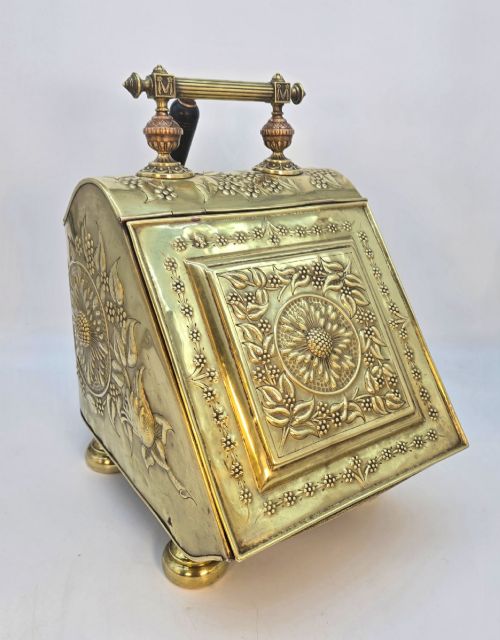
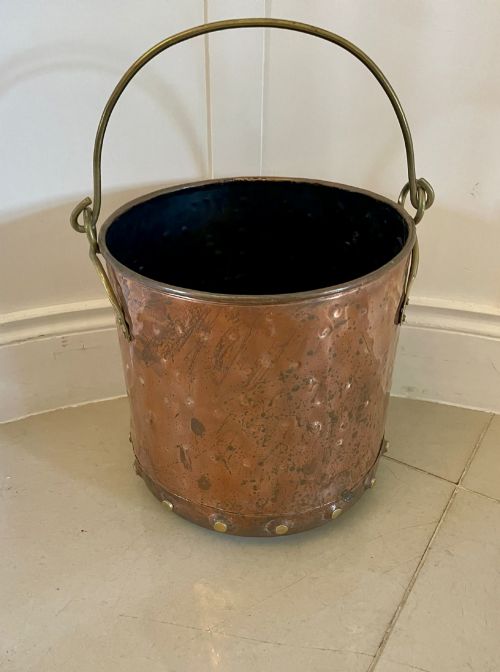
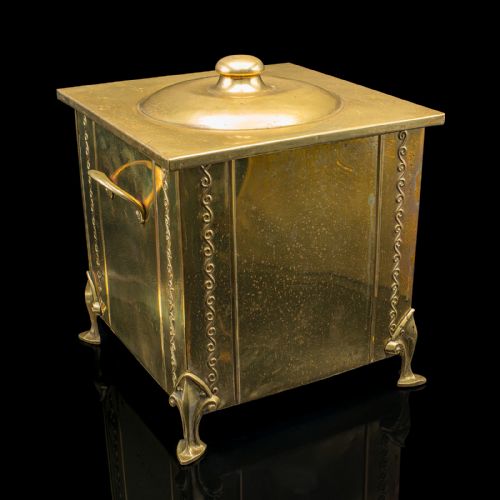
A brass fuel bucket brings hearthside utility and polished warmth to a fireplace, offering a sturdy vessel for coal, logs, or peat.
Brass Fuel Bucket
A brass fuel bucket provides essential fireside storage, holding logs, coal, or peat close to the hearth. When exploring this selection, buyers encounter practical containers designed to keep fuel tidy beside the fire.
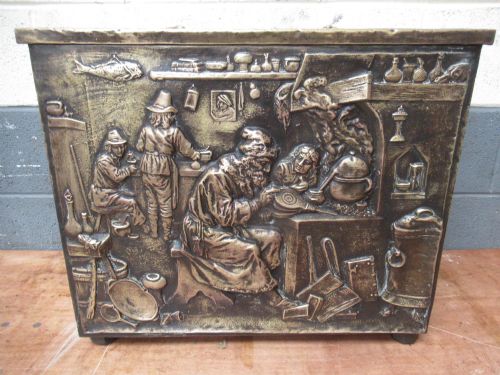
The objects on this page span the Victorian and Edwardian eras, alongside pieces dated around 1800 and 1900. Forms range from lidded coal scuttles and purdoniums to open bins and coopered peat buckets.
Makers and origins vary across English, French, and Scottish traditions. The most common forms are robust brass and copper buckets, often paired with wooden elements like oak, mahogany, or walnut.
How they were made
Construction relies heavily on durable metals combined with timber framing. Craftsmen utilised sheet brass and copper, frequently joining edges with visible rivets or decorative embossing.
Wooden components involve traditional joinery, including coopered staves bound with metal hoops and carved panels of oak, mahogany, and walnut. Ebonised wood and iron details also appear to strengthen and finish the vessels.
Brass Fuel Bucket Retail Price Guide 2026
Typical asking prices for brass fuel bucket among the pieces listed under this phrase on Sellingantiques today, from the lower quarter to the upper quarter. They describe what is for sale here now, not the wider market.
Materials across the listings include brass, copper, oak, mahogany, walnut, ebonised wood, and iron.
What varies in quality
Quality rests upon the crispness of metalwork and the integrity of the materials. Superior pieces display deep hand-embossing, secure riveting, and substantial gauge metal that resists everyday denting.
Refinement in secondary materials distinguishes finer examples, such as tightly fitted coopered staves, finely carved oak, or precise marquetry inlay on lidded boxes. The reputation of the maker, like Benham and Froud, also elevates the standing of a piece.
Petrus Ramus·Benham and Froud
The Brass Fuel Bucket Glossary
- Coal Purdonium
- A specialised fireside box designed to hold coal, typically featuring a sloping front or a hinged lid for easy access. These boxes often incorporate a removable metal liner.
- Coopered
- A method of construction where tapered wooden staves are joined side by side and bound with metal hoops, much like a traditional barrel.
- Embossed
- A decorative technique where metal is hammered or pressed from the reverse side to create a raised pattern on the surface.
- Riveted
- A method of fastening metal plates together using short metal pins whose ends are beaten flat to create a permanent, industrial join.
Brass Fuel Bucket: Frequently Asked Questions
What is a coal purdonium?
A coal purdonium is a dedicated fireside container built to store coal neatly near the hearth. It usually includes a sloping front or lid and a removable interior metal liner for carrying fuel.
These items became common in finer Victorian and Edwardian homes to keep coal dust contained while maintaining a tidy appearance by the fireplace.
How do I choose between brass and copper?
Choosing between brass and copper depends primarily on the visual warmth you prefer for your hearth. Brass offers a brighter, golden metallic sheen, whereas copper tends to display a richer, deeper reddish hue.
Both metals were used interchangeably across the Victorian and Edwardian periods, often combined with iron or wood for structural support.
Were these buckets used for coal or logs?
These vessels served multiple hearthside purposes depending on their specific construction. Open buckets and coopered bins typically held logs, peat, or general fuel, while lidded scuttles and purdoniums managed smaller coal.
Makers tailored the shape of each container to the type of fuel it needed to hold and carry.
How do I date a fireside bucket?
Dating relies on stylistic clues, materials, and construction techniques associated with particular eras. Pieces from the Victorian period often feature heavy embossing or walnut purdonium construction, while Edwardian examples occasionally show inlaid wood details.
Makers' marks stamped into the metal can also help pinpoint the origin and period of manufacture.