

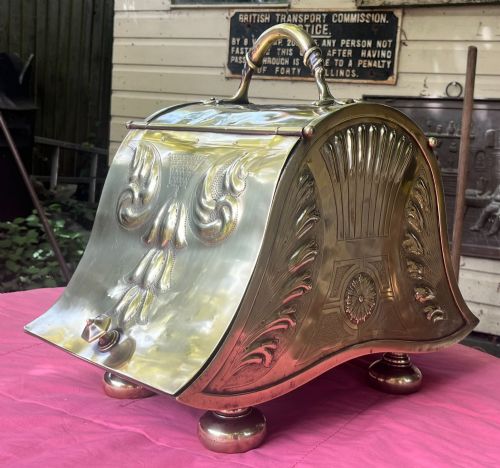
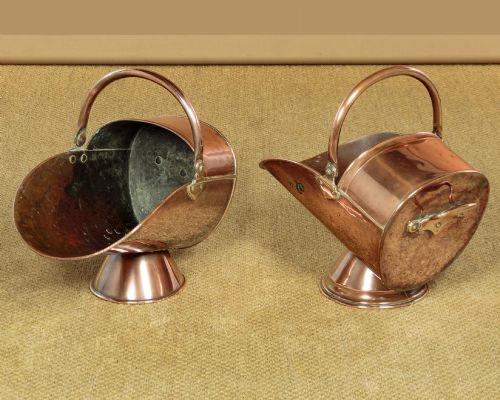

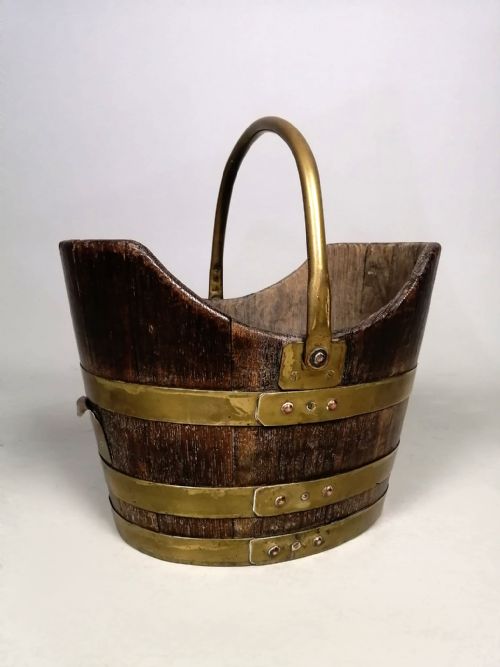


Brass Coal Hod
Brass coal hod designs range from George III to Edwardian pieces, offering robust fireside utility in polished metal.
Brass Coal Hod
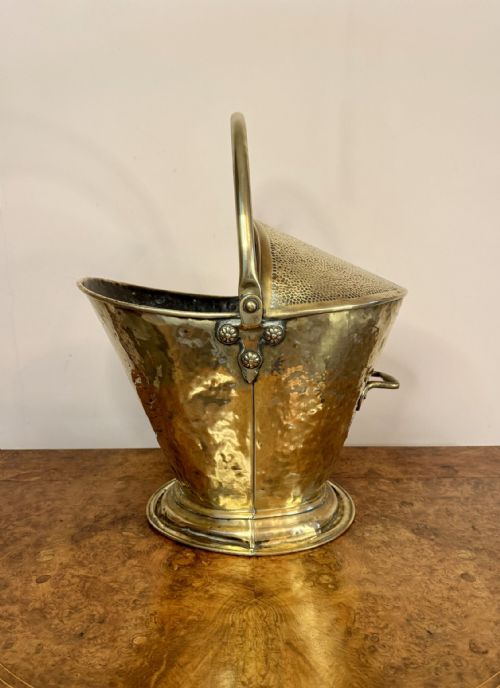
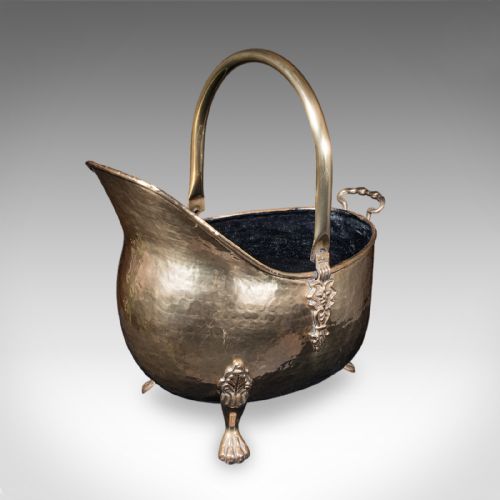
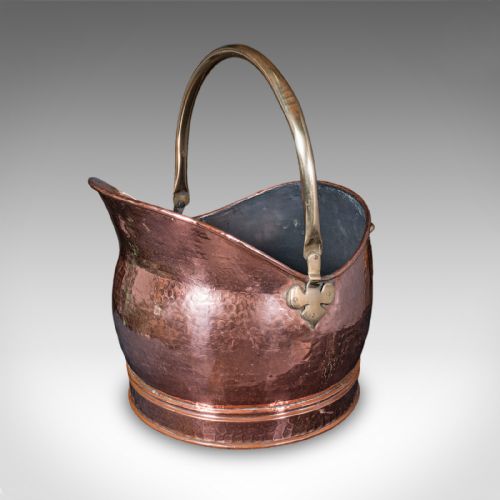
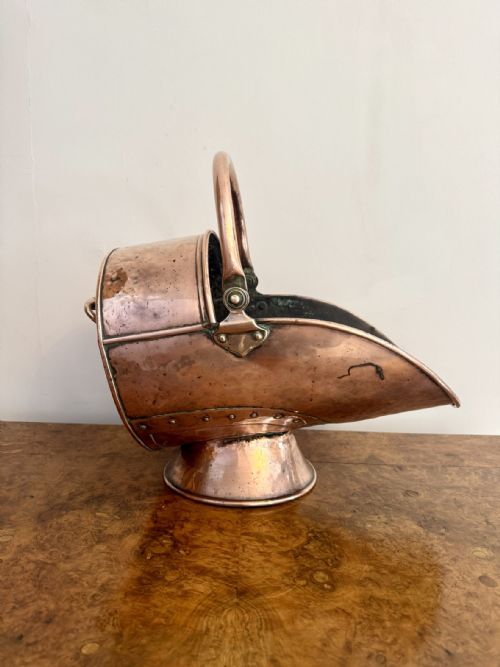
A brass coal hod serves as a sturdy domestic container for hearth fuel, combining practical storage with decorative metalwork. When searching for a brass coal hod, buyers encounter various forms including traditional scuttles, helmet shapes, and lidded buckets designed to sit beside a fireplace.
The pieces appearing on this page span several eras, with Victorian examples appearing most frequently alongside George III, Regency, and Edwardian specimens. Makers utilised diverse timber bodies alongside metal work, creating vessels that doubled as coal purdoniums or simple bins.
How they were made
Craftsmen shaped these fireside containers primarily from sheet brass and copper, often mounting them on wooden bases of oak, walnut, or mahogany. Iron components frequently provided internal structural support, while metal bodies received hand-finished hammering and polished surfaces.
Many items incorporate matching brass shovels, original metal liners, and decorative banding secured with rivets. Late nineteenth-century workshops adopted Arts & Crafts and Art Nouveau motifs, incorporating stylised handles and repoussé panels into the standard helmet and bucket forms.
Brass Coal Hod Retail Price Guide 2026
Typical asking prices for brass coal hod among the pieces listed under this phrase on Sellingantiques today, from the lower quarter to the upper quarter. They describe what is for sale here now, not the wider market.
Materials paired with brass and copper include oak, walnut, mahogany, and iron, often complemented by original metal liners and shovels.
What varies in quality
Quality rests upon the gauge of the metal, the integrity of the joins, and the survival of original components like liners and shovels. Heavier gauge brass and solid timber framing separate standard utility items from superior workshop productions.
Design execution also defines the hierarchy, distinguishing plain utilitarian buckets from sophisticated helmet scuttles featuring detailed brass banding or hand-finished decoration. The presence of maker marks, such as those from Benham and Froud, elevates specific pieces.
BENHAM AND FROUD
The Brass Coal Hod Glossary
- Coal hod
- A container designed specifically for holding and transporting coal to a fireplace. These vessels often feature a sloping body and a sturdy carrying handle.
- Coal scuttle
- A traditional fireside bucket with a wide mouth and a hinged handle for pouring fuel. They frequently take a helmet shape to direct coal cleanly into the grate.
- Coal purdonium
- A box-like Victorian fuel store with a hinged front flap and an internal metal liner. They often incorporate wooden cabinets made of walnut or oak.
- Helmet coal scuttle
- A metal bucket featuring a high, flared rim resembling a medieval helmet. This specific silhouette aids the controlled pouring of coal.
- Repoussé
- A metalworking technique where the artisan hammers designs from the reverse side to form raised patterns. This ornamentation appears on decorative Arts & Crafts and Art Nouveau examples.
Brass Coal Hod: Frequently Asked Questions
What is a coal hod used for?
A coal hod acts as a dedicated container for holding solid fuel beside an open hearth. It allows householders to store coal cleanly in the living space and transport it easily to the fire.
Historically, these vessels sat on hearths or near coal bunkers to replenish fires throughout the day. Many included bespoke shovels to assist with transferring fuel into the grate without creating mess.
How do I date a brass coal bucket?
Dating relies on observing manufacturing techniques, material combinations, and stylistic motifs present in the piece. George III and Regency examples often display hand-beaten copper with heavy brass banding, while Victorian items frequently utilise stamped brass and iron frames.
Later Edwardian and Arts & Crafts pieces introduce distinct aesthetic movements through stylised handles and graphic surface decoration. Comparing the construction methods of the body and liner helps narrow the production era.
Are original liners important?
Original metal or wooden liners help preserve the structural integrity of the outer brass or copper body. They contain coal dust and moisture, preventing the base from corroding or rotting over decades of use.
Finding a piece with its original liner and matching shovel adds completeness to historical items. Replacements are common, so surviving original components indicate careful preservation.
How do I clean antique brass?
Antique brass typically benefits from gentle dusting and minimal intervention to preserve its historic patina. Harsh chemical polishes strip away the aged surface that collectors value.
Light cleaning with a soft cloth removes everyday grime without erasing the character accumulated over centuries. Heavy polishing can diminish the subtle textures left by original hand-finishing techniques.