


Fireplace Log Container
A fireplace log container keeps fuel dry and tidy by the hearth, combining practical heavy metal or timber construction with decorative domestic metalwork.
Fireplace Log Container
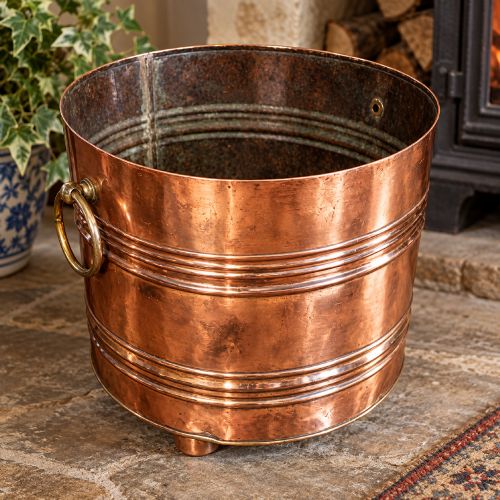
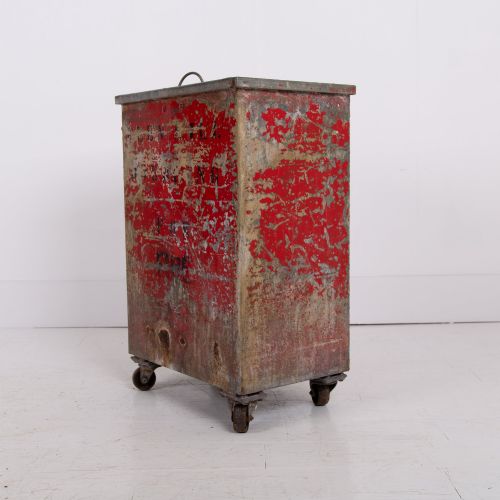
When you search for a fireplace log container, you encounter heavy metal and timber vessels designed to hold fuel beside the hearth. These objects appear as coal boxes, buckets, scuttles, and bins dating from the nineteenth and early twentieth centuries.
The Victorian period supplies the majority of these pieces, alongside Edwardian examples and later twentieth-century items. Workshops produced these containers primarily to store coal or logs, utilising durable materials intended to withstand daily domestic use.
Materials span brass, copper, iron, wrought iron, oak, and other woods. Many items originate from nineteenth-century British workshops, with occasional pieces reflecting broader European or Anglo-Indian production.
Materials and construction methods
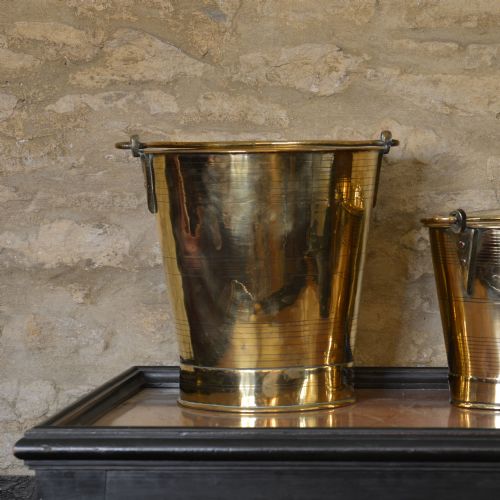
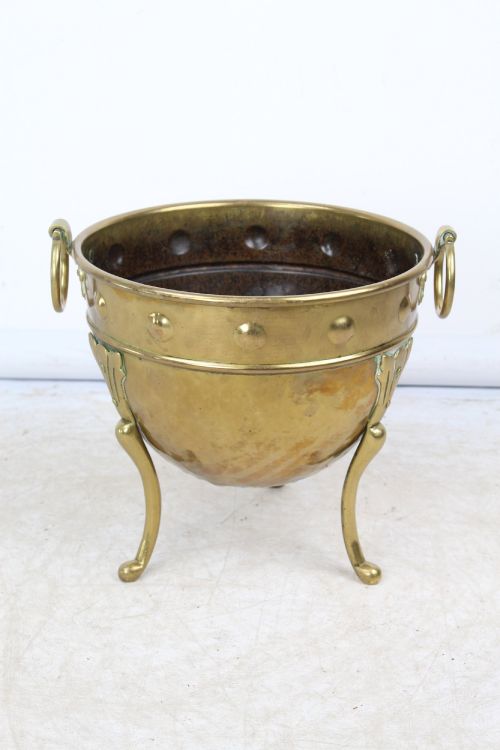
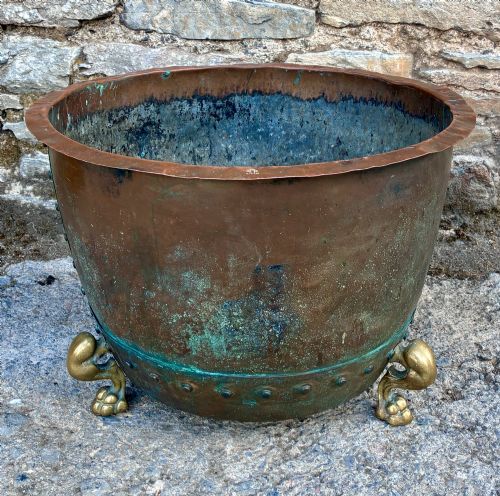
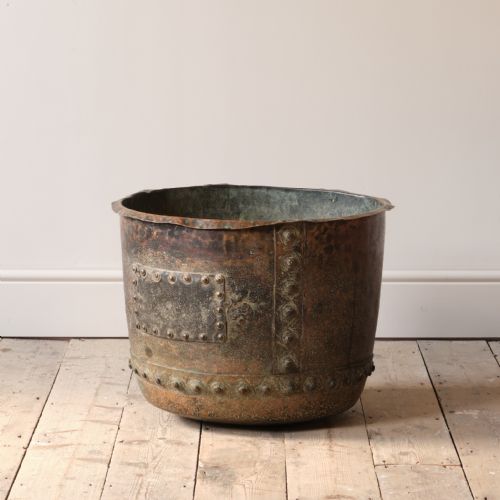
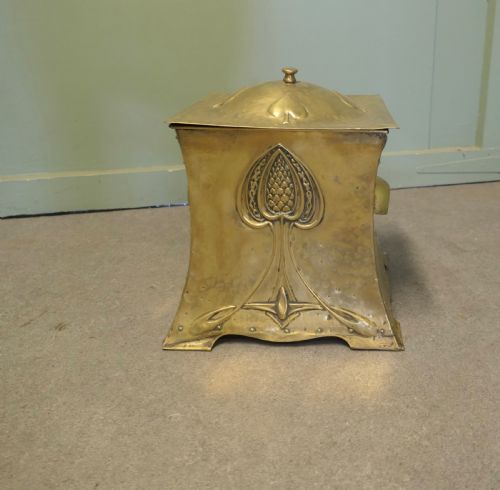
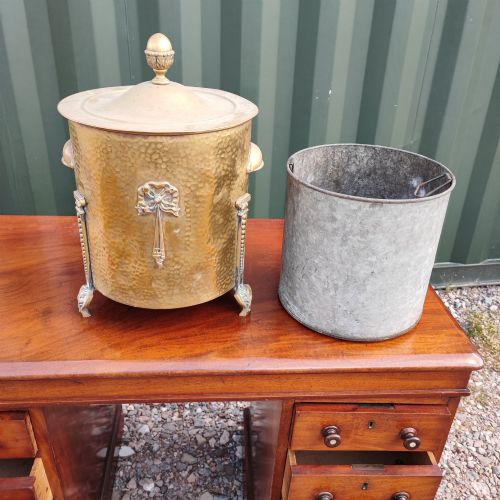
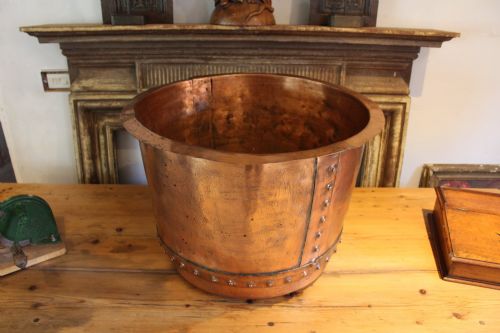
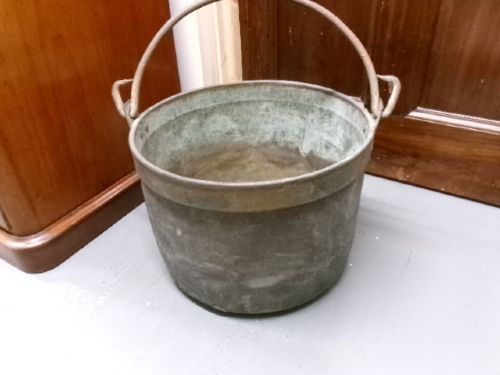
Metal containers rely heavily on sheet brass and copper, frequently joined by visible rivets or shaped with hammered surfaces. Smiths and metalworkers often incorporated swing handles in iron or brass, secured by sturdy brackets.
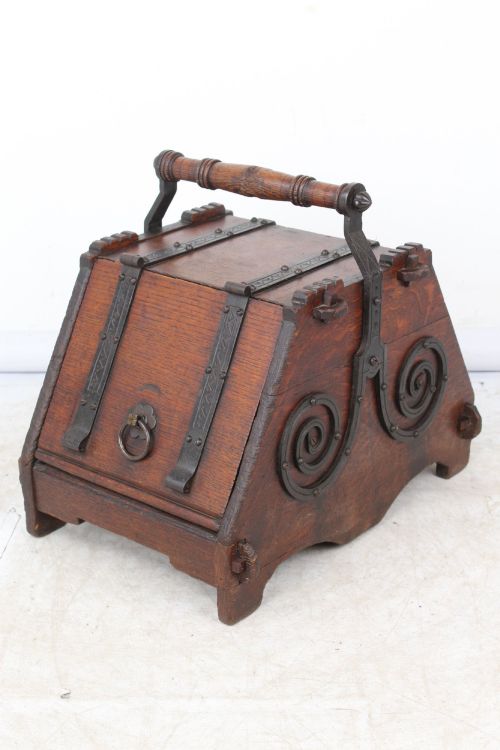
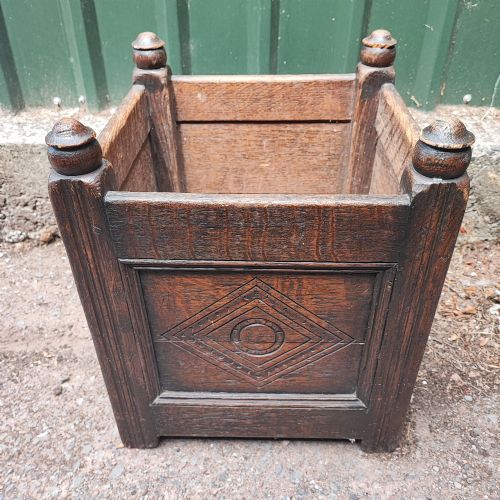
Wooden examples utilise solid oak and rosewood, sometimes featuring carved details or inlaid decorative panels. Makers frequently lined these timber boxes or fitted interior metal containers to hold damp fuel without damaging the wood.
Listings demonstrate a strong prevalence of nineteenth-century copper and brass vessels alongside Edwardian oak coal boxes.
Distinguishing quality and execution
The standard of a fireplace log container depends on the weight of the metal and the integrity of its construction. Thicker gauge copper and solid brass retain their structural rigidity better over generations of hearthside service.
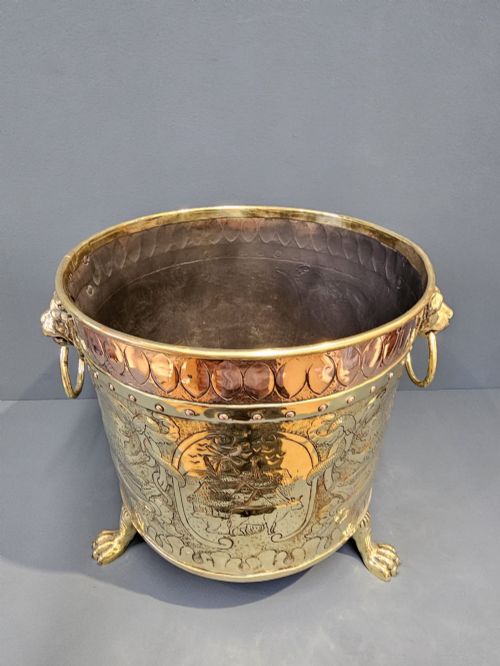
Execution of decorative details, such as embossed tavern scenes, repoussé plant motifs, or fitted shovels, marks the distinction between standard utilitarian items and finer workshop productions. Original liners, handles, and fixings further elevate the integrity of a piece.
Henry Loveridge·Christopher Dresser·Richard Arkwright Masson Mills·Petrus Ramus
The Fireplace Log Container Glossary
- Coal scuttle
- A vessel designed for carrying and storing coal, often featuring a sloping body and a hinged handle for pouring fuel onto the fire.
- Repoussé
- A metalworking technique where the artisan hammers the metal from the reverse side to form a raised design on the front.
- Planter
- An alternative domestic vessel form often adapted from or utilised as a log bin due to its robust waterproof container properties.
- Riveted
- Joined with metal pins that are hammered flat at the ends, common in heavy copper and iron construction.
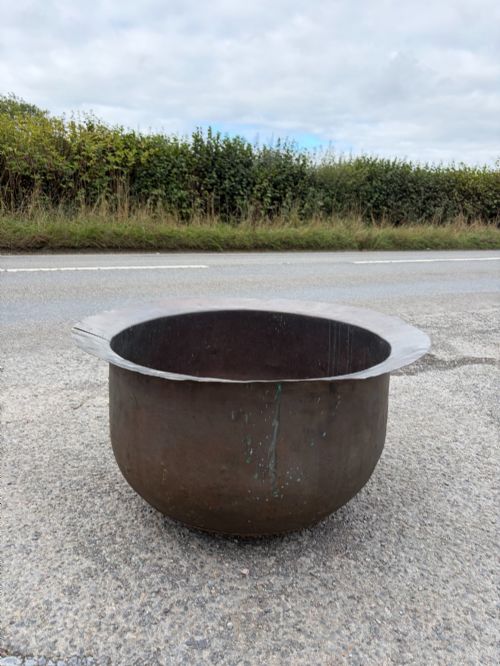
- Cauldron
- A rounded metal pot with a large bail handle, occasionally utilised for fireside fuel storage.
Fireplace Log Container: Frequently Asked Questions
How do I identify a Victorian log container?
Victorian examples frequently employ heavy hand-riveted copper, polished brass, or carved oak. Stylistic markers often include Gothic Revival shapes or Arts and Crafts decorative motifs.
Many pieces from this era incorporate sturdy swing handles, brass lion paw feet, or embossed body panels. Makers frequently paired them with matching brass shovels designed to rest in side brackets.
Are these containers waterproof?
Many metal bins and buckets safely hold logs without issue, though older items may show minor weeping if exposed to standing moisture. Wooden coal boxes typically feature interior metal linings to protect the surrounding timber.
Checking the internal condition reveals whether a liner remains intact. Untreated timber boxes should not hold damp wood directly against the baseboards.
How do I care for antique brass and copper?
Maintenance involves dusting with a soft cloth to prevent particulate buildup on hammered or polished surfaces. Excessive cleaning removes desirable historic patina accumulated over generations of domestic use.
Avoiding harsh chemical abrasives preserves crisp details on embossed panels and stamped decoration. A dry cloth generally suffices to keep the metal stable in a dry room.