



Clear Glass Coupes
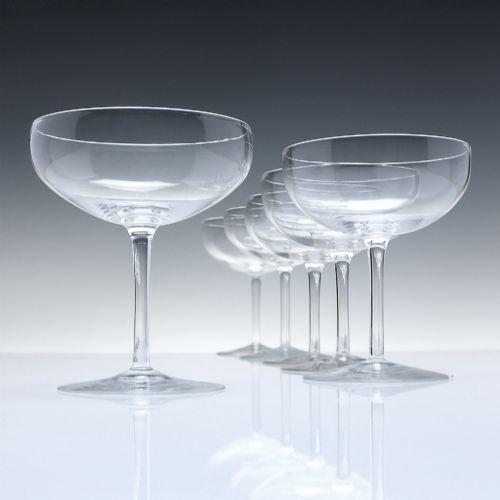
Clear glass coupes bring historic sparkle to the table, offering shallow bowls designed for champagne or dessert that catch the light at every turn.
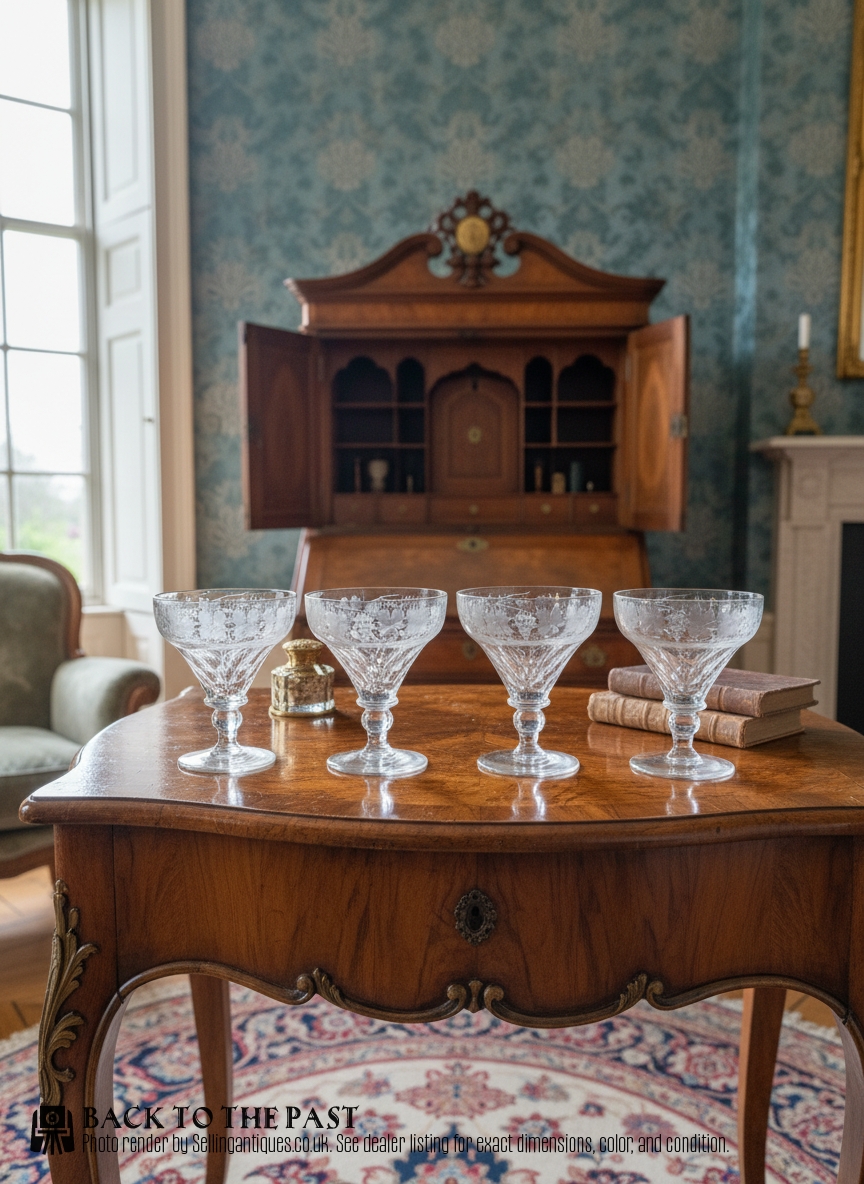
Clear Glass Coupes
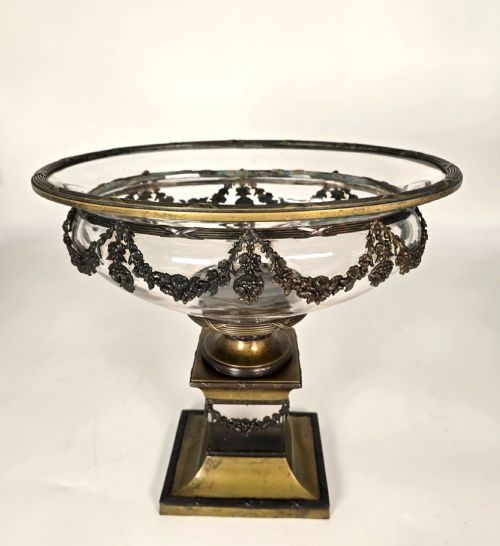
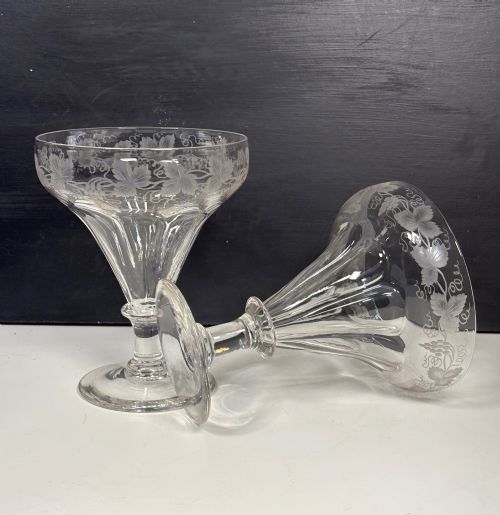
Clear glass coupes encompass shallow champagne glasses, decorative bowls, and pedestal centrepieces spanning the Georgian, Victorian, Edwardian, and Art Deco periods.
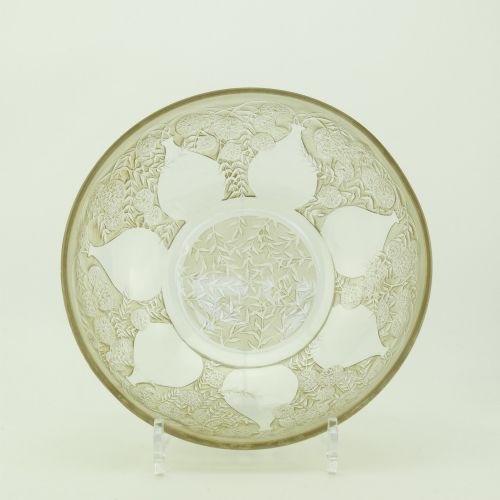
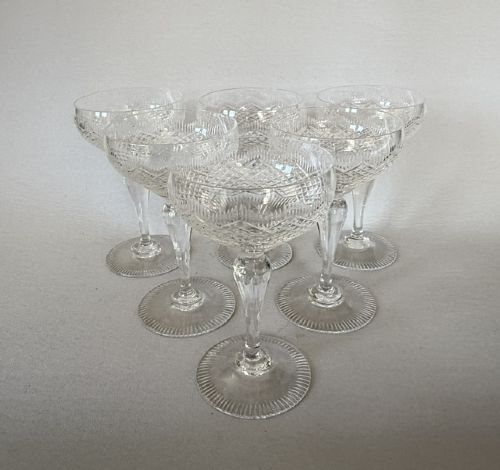
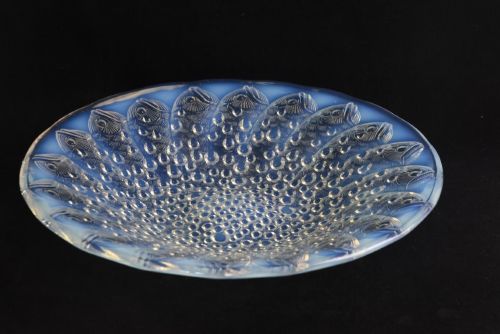
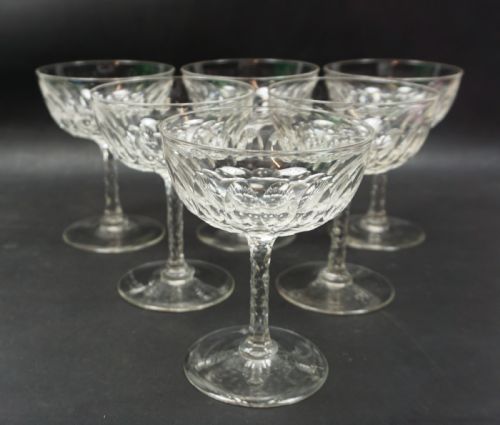
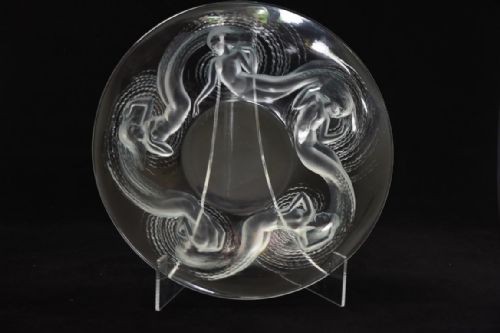
The version most commonly encountered on this page is the Victorian or Edwardian cut glass champagne bowl, alongside striking opalescent pieces from the 1930s.
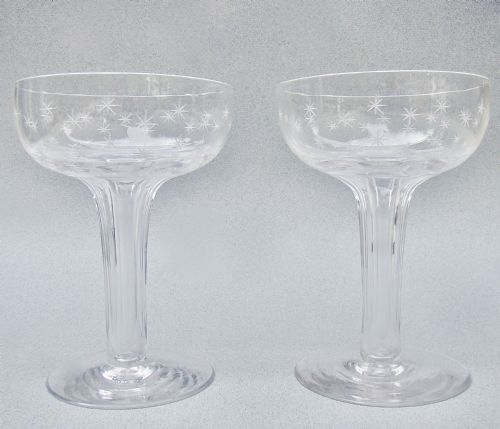
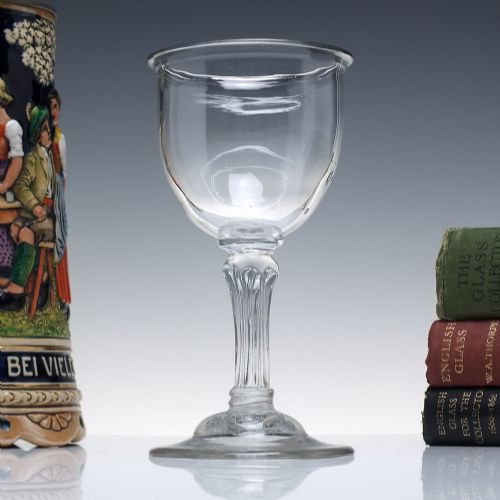
Makers and manufacturers utilised various forms, from simple hollow stems to elaborate facet cutting, creating functional tableware and decorative centrepieces.
Materials and production
Items were formed from lead glass, lead crystal, or standard glass, often relying on hand-blowing and moulding techniques.
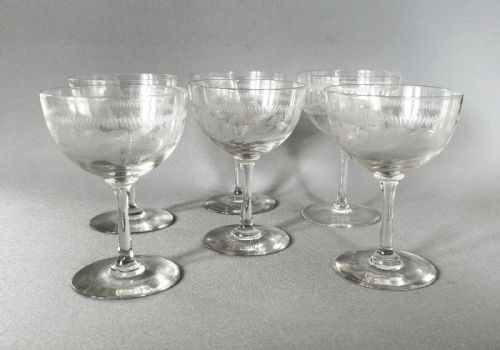
Decoration involved intricate methods such as star-etching, facet cutting, and engraving to alter the clear surface.
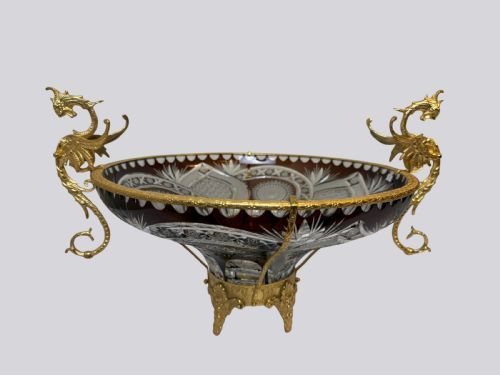
Certain decorative vessels integrated gilt bronze mounts or featured frosted and opalescent finishes to enhance their visual depth.
Listings feature clear glass coupes spanning the 18th century, Regency, Victorian, Edwardian, and 1930s Art Deco periods.
Assessing quality
The clarity and weight of the material separate standard pieces from superior examples, particularly where dense lead crystal is utilised.
Precision in hand-cut facets, deep wheel engraving, and clean wheel-polished rims indicate skilled craftsmanship.
Consistency across a set of matching bowls elevates the desirability compared to mismatched or single survivals.
Rene Lalique
The Clear Glass Coupes Glossary
- Coupe
- A shallow, broad-bowled glass originally intended for champagne or sparkling wine. It sits on a short stem above a stable foot.
- Lead Crystal
- Glass containing a high proportion of lead oxide, which increases the weight, refractive index, and overall brilliance of the piece.
- Opalescent Glass
- Glass that displays a milky, iridescent quality, often shifting in tone under different lighting conditions. This technique became prominent in early twentieth-century French production.
- Facet Cut
- A decorative technique involving flat, polished planes ground into the surface of the glass. It creates sharp geometric reflections across stems and bowls.
- Sweetmeat Glass
- An antique glass vessel used for serving small confectioneries, sweetmeats, or nuts. They share similar shallow bowl forms with early champagne glasses.
Clear Glass Coupes: Frequently Asked Questions
What were clear glass coupes used for?
These shallow vessels served sparkling wines and champagne during historic dining services, allowing the bubbles to disperse quickly.
They also functioned as dessert or sweetmeat dishes, holding custards, fruits, and small confections on the formal table.
How do I care for antique glass?
Hand wash each piece gently in warm, soapy water without using harsh abrasive sponges or scouring powders.
Avoid sudden temperature changes by keeping hot water away from antique glass to prevent thermal shock and cracking.
Are these glasses safe for modern champagne?
While historic coupes were designed for sparkling wine, the shallow bowl shape causes modern carbonation to dissipate rapidly.
They remain perfectly functional for serving vintage champagne, cocktails, or desserts if handled with care.
How can I tell Victorian from Edwardian glass?
Victorian pieces often feature heavy, deep star-etching, dense cutting, and robust proportions associated with the nineteenth century.
Edwardian examples tend towards lighter, more refined Greek key patterns and crisp Edwardian silhouettes reflecting changing tastes.