




Cut Glass Coupes
Cut glass coupes are distinct drinking vessels and table bowls shaped for celebration, prized for how deeply their facets catch the light.
Cut Glass Coupes
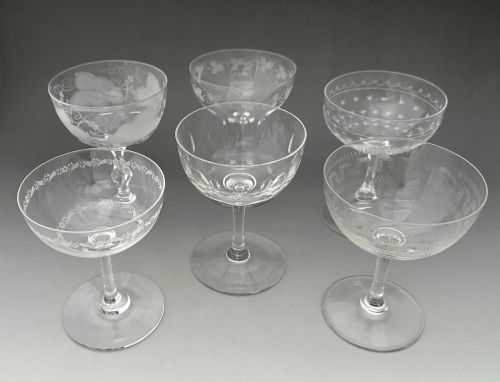
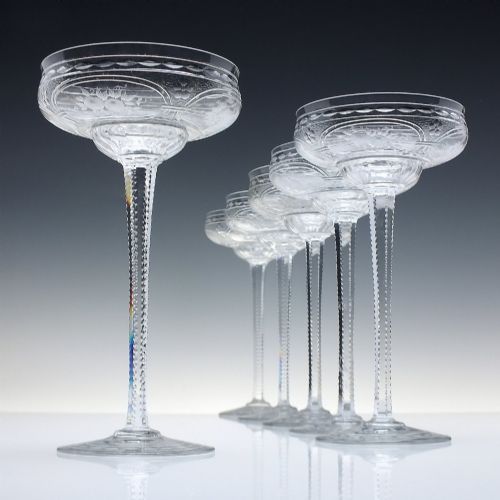
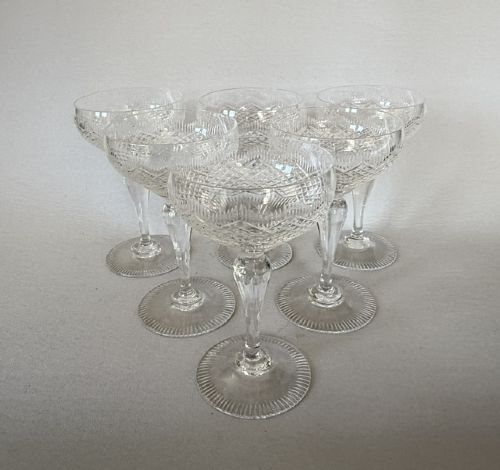
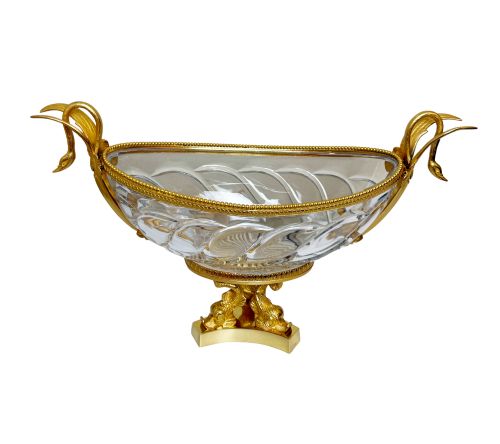
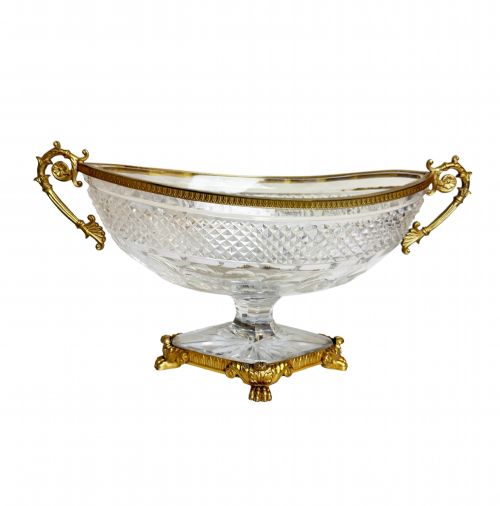
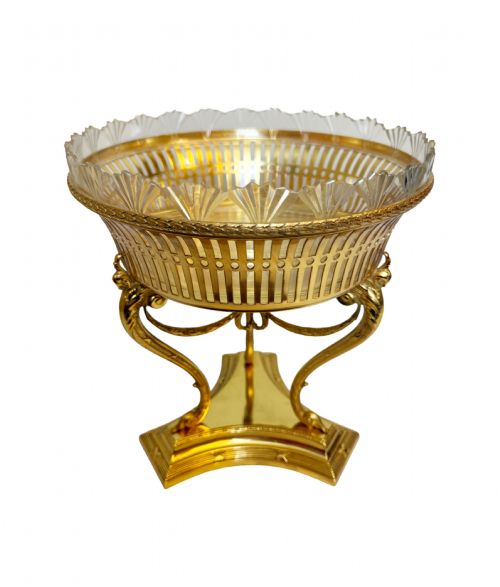
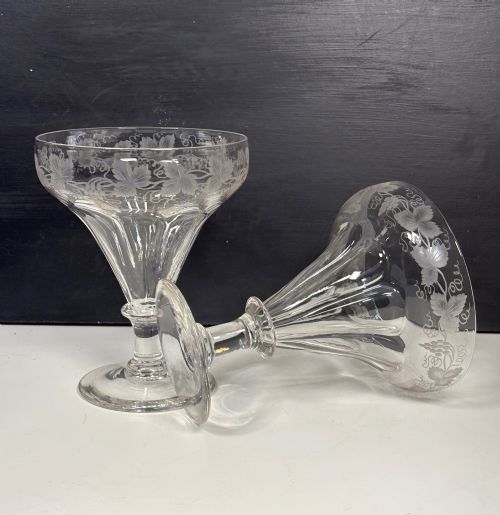
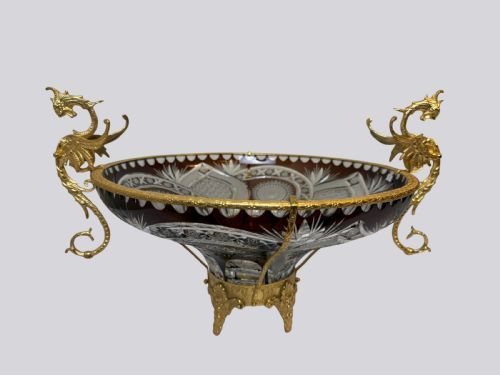
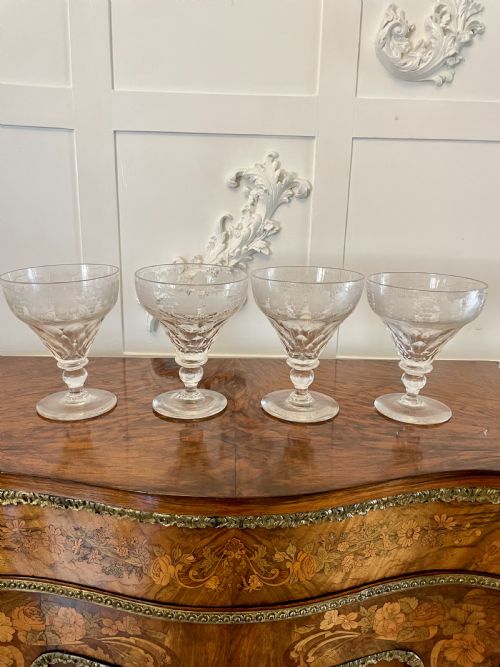
When buyers search for cut glass coupes, they encounter drinking vessels and centrepieces spanning the Victorian, Edwardian, and Art Deco periods, alongside French nineteenth-century examples. The selection includes sets of champagne glasses and bowls alongside individual centrepieces mounted in gilt bronze.
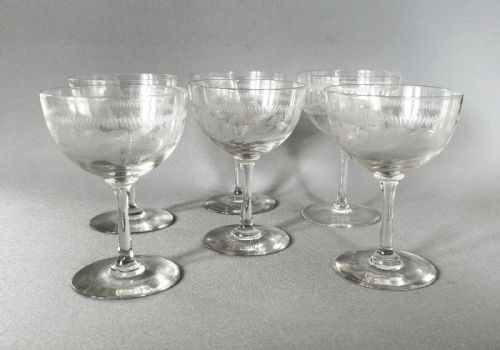
The most common forms on this page are sets of six champagne glasses, followed by pairs of coloured over crystal coupes and large nineteenth-century centrepiece bowls. These pieces range from clear lead crystal to cranberry and green over crystal variants featuring engraved or etched motifs.
How they were made
The pieces listed here combine heavy lead crystal or clear glass with labour-intensive cutting, wheel engraving, and etching techniques. Coloured vessels utilise layers of cranberry or green glass over clear crystal.
Mounts and centrepiece frames incorporate gilt bronze and ormolu, physically securing glass inserts with cast metalwork characteristic of French nineteenth-century workshops and Empire style design.
Cut Glass Coupes Retail Price Guide 2026
Typical asking prices for cut glass coupes among the pieces listed under this phrase on Sellingantiques today, from the lower quarter to the upper quarter. They describe what is for sale here now, not the wider market.
Listings feature lead crystal, coloured over crystal, and gilt bronze spanning the Victorian, Edwardian, Art Deco, and Empire periods.
What varies in quality
Quality rests upon the crispness of the cutting and the depth of the wheel engraving, where sharper facets refract light more brilliantly. Weight and clarity of the lead crystal distinguish finer examples from standard commercial glass.
The integration of metalwork dictates the tier of decorative centrepieces, with chased gilt bronze mounts showing superior casting definition compared to simpler frames.
Baccarat
The Cut Glass Coupes Glossary
- Cut glass
- Glass shaped and patterned by abrasive wheels, leaving sharp, geometric facets across the surface. This technique maximises the refractive qualities of lead crystal.
- Champagne coupe
- A shallow, broad-bowled glass originally designed for sparkling wine, featuring a short stem and wide rim. They appear frequently in sets dating from the Victorian and Edwardian eras.
- Gilt bronze
- Copper alloy coated with a thin layer of gold, providing a durable metallic mount for glass centrepieces. It is often found on nineteenth-century French decorative items.
- Cranberry over crystal
- A dual-layer glass technique where a thin ruby-red exterior casing is cut away to reveal the clear crystal beneath. This creates high-contrast patterns when engraved.
- Etched glass
- Glass decorated by applying acid to eat away exposed areas, producing fine surface patterns. It differs from deep wheel-cutting by creating shallow, matte designs.
Cut Glass Coupes: Frequently Asked Questions
What are cut glass coupes?
Cut glass coupes are shallow, broad-bowled drinking vessels characterised by geometric facet cutting, wheel engraving, or surface etching. They date primarily from the nineteenth and early twentieth centuries.
Buyers encounter them singly or in matching sets intended for champagne and sparkling wines, often accompanied by related centrepieces and bowls.
How do I date a coupe?
Dating relies on stylistic markers such as Victorian floral engravings, Edwardian geometric Greek key patterns, and heavy Art Nouveau or Empire bronze mounts. The weight and tint of the crystal also provide clues to the manufacturing era.
Comparing the depth of the glass cutting and the specific motifs helps narrow down whether a piece originates from the mid-nineteenth century or the early twentieth century.
Were these used for champagne?
These shallow bowls were traditionally shaped for sparkling wines and champagne during the Victorian and Edwardian periods. Their wide aperture allowed the bubbles to dissipate quickly compared to modern flutes.
Beyond beverages, larger examples and footed bowls functioned as table centrepieces for fruit or floral arrangements.
How do I care for antique glass?
Antique glass requires gentle hand washing in lukewarm water with mild detergent, avoiding sudden temperature changes that can crack old crystal. Metal mounts such as gilt bronze should be kept dry to prevent tarnishing.
Storing pieces safely on stable surfaces prevents chipping along the delicate rims and cut facets.