


Classical Wall Plaque
A classical wall plaque brings mythological figures, imperial portraits, and ancient architectural motifs directly into an interior scheme.
Classical Wall Plaque
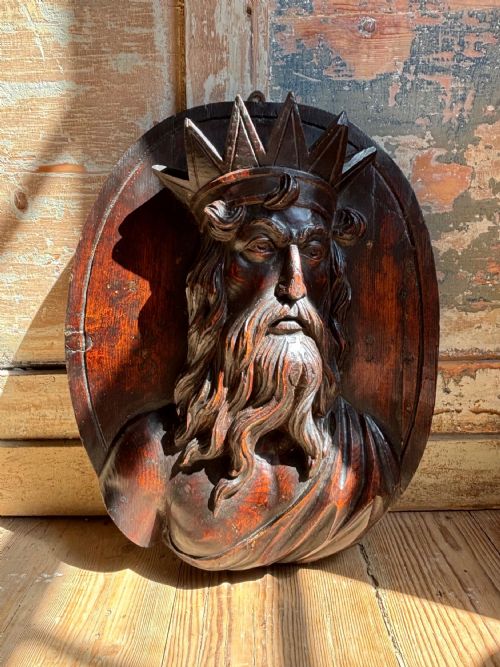
A classical wall plaque encompasses framed reliefs, carved wooden panels, metal chargers, and ceramic wall art drawing inspiration from ancient Greece and Rome. These objects span periods from the eighteenth century through the Victorian era and into the early twentieth century, reflecting enduring European fascination with classical antiquity.
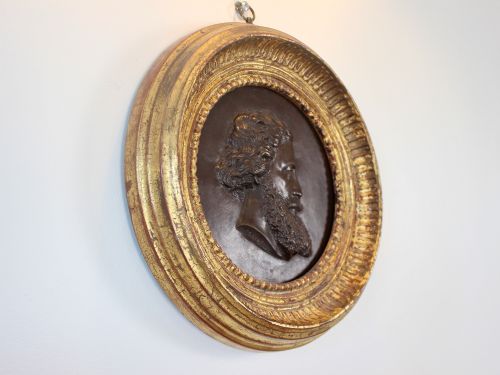
The most frequent examples on this page are nineteenth-century bronze, porcelain, and plaster reliefs, alongside grand tour souvenirs and carved wooden panels. Buyers often encounter porcelain chargers depicting mythological scenes or cast metal plaques bearing the likenesses of poets, philosophers, and classical deities.
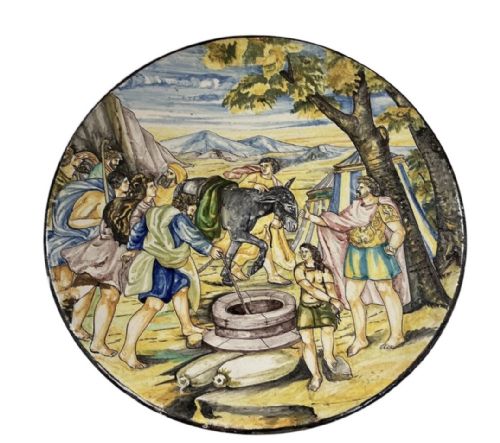
Makers and schools from France, Italy, Germany, and Britain produced these works across diverse mediums, ranging from monumental maiolica chargers to small ivory portrait plaques. Their common thread lies in the depiction of historical narratives, allegorical figures, and ornamental motifs borrowed directly from classical sculpture.
Materials and methods of construction
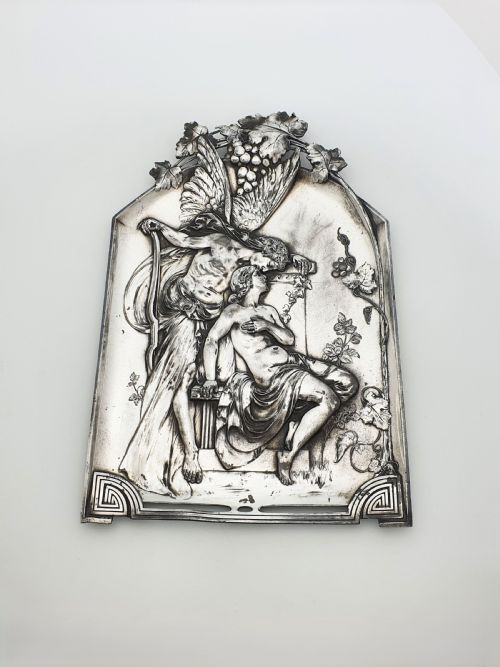
Makers utilised traditional casting, carving, and moulding techniques to achieve crisp detail in bronze, marble, plaster, and wood. Metal plaques often employ electrotyping or repoussé methods on copper, brass, and silver-plated bases to create high-relief classical imagery.
Ceramic and porcelain examples relied on intricate hand-painting, particularly seen in maiolica chargers and Vienna porcelain plates depicting historical or mythological narratives. Wood and ivory pieces display precise hand-carving, while plaster casts captured the likenesses of ancient reliefs for collectors travelling the grand tour.
The listings on this page span the eighteenth, nineteenth, and early twentieth centuries, incorporating materials from carved wood and marble to porcelain and bronze.
What separates the finest pieces
Quality rests upon the crispness of the modelled detail and the fidelity of the classical proportions, whether in the musculature of a bronze figure or the facial expression on a carved ivory portrait. Finer pieces demonstrate confident handling of the medium, avoiding the softness or blurring often found in secondary commercial casts.
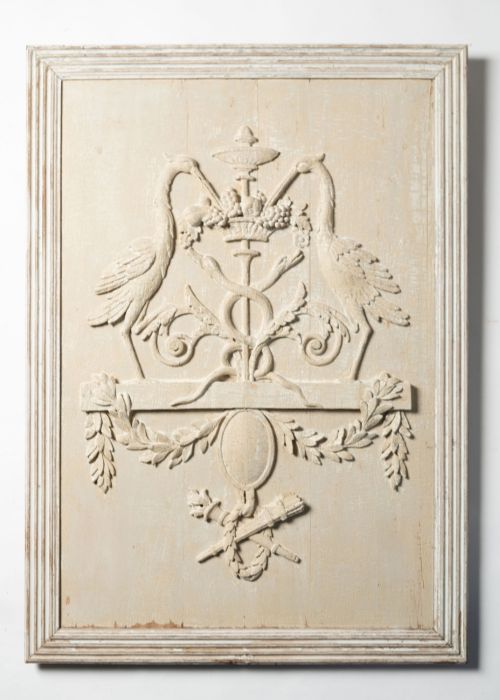
The depth of the relief and the sophistication of the composition dictate distinction within this category. Superior examples exhibit careful chasing on metals, refined pigment application on porcelain chargers, and distinct depth in carved wooden panels.
Smith Beck And Beck·Carlhian And Corbiere·Elkington And Co·Kasper Hendrik Roskam·Johann Maresch
The Classical Wall Plaque Glossary
- Grand Tour
- A traditional educational trip undertaken by wealthy young Europeans to see the art and architecture of Italy and Greece. Pieces acquired on these journeys frequently included plaster casts, bronzes, and carved plaques depicting classical antiquities.
- Maiolica
- Tin-glazed Italian earthenware, often richly painted with historical or mythological scenes in bright colours. Large chargers in this technique frequently served as decorative wall art.
- Repoussé
- A metalworking technique where a flat sheet of metal is hammered from the reverse side to create a raised design in relief. This method was widely used for decorative shields and brass wall plaques.
- Istoriato
- A style of pottery decoration featuring narrative scenes that cover the entire surface of the ceramic. These detailed illustrations typically depict classical history or mythology.
- Putto
- A plump, naked male child figure frequently depicted in classical and Renaissance art. They appear often as winged attendants on bronze plaques and plaster wall friezes.
Classical Wall Plaque: Frequently Asked Questions
What periods do these wall plaques come from?
The listings span from the eighteenth century through the nineteenth century and into the early twentieth century. Many pieces date from the Victorian era and the height of the grand tour in nineteenth-century Europe.
Earlier eighteenth-century examples lean towards carved wood and plaster friezes, while later nineteenth-century items introduce industrial techniques such as silver plating and electrotyping alongside traditional ceramics.
How were these wall plaques originally displayed?
Larger chargers and plaques were typically hung directly on walls as decorative focal points in drawing rooms, studies, and libraries. Metal shields and heavy wood panels often anchored expansive wall arrangements.
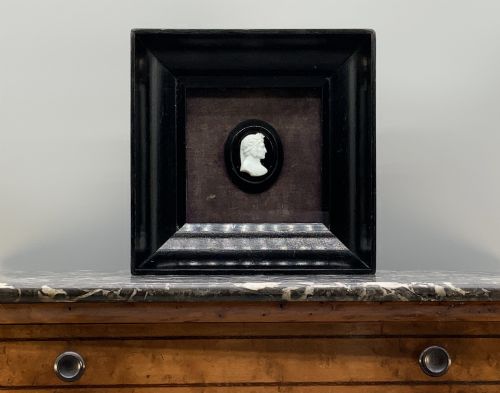
Smaller portrait reliefs, ivory carvings, and porcelain plates were frequently displayed within cabinets or mounted on velvet-lined backings to highlight their detailed carving and painted narratives.
What subjects appear most frequently?
Mythological narratives dominate the imagery, including figures such as Neptune, Diana the Huntress, Bacchus, and Adonis. Historical scenes and portraits of classical thinkers like Virgil and Dante also recur across various mediums.
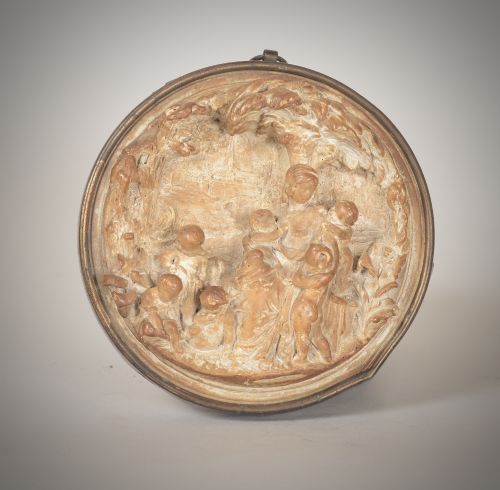
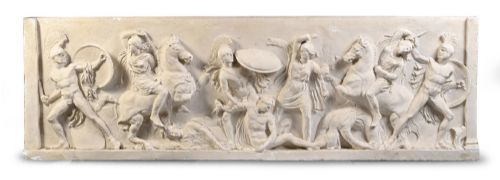
Allegorical subjects, battles such as the Amazonmachy, and depictions of muses accompanied by putto are standard motifs derived from antique sculpture and Renaissance revival aesthetics.
How do I care for bronze and metal plaques?
Metal plaques require minimal intervention, generally needing only gentle dusting with a soft, dry cloth to prevent the accumulation of grime. Avoid chemical cleaners or aggressive polishes that strip original patination.
Stable indoor humidity and protection from direct sunlight help preserve silver-plated, bronzed copper, and brass surfaces over time.
How can I tell a grand tour souvenir from an older piece?
Grand tour items, produced largely during the nineteenth century, often replicated famous classical sculptures, reliefs, and medals for travelling collectors. These pieces frequently utilise materials like plaster, carved ivory, or brass.
Examining the manufacturing marks, wear patterns, and the specific casting or carving technique helps contextualize whether a piece is a nineteenth-century interpretation or an eighteenth-century original.