



Antique Bronze Plaque
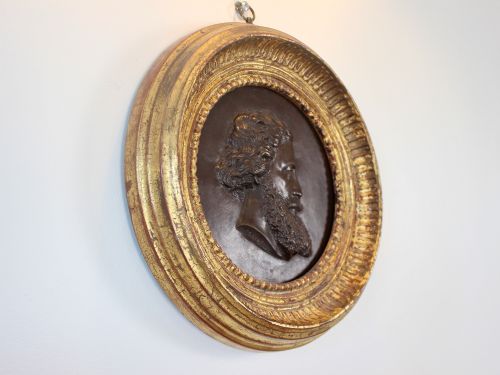
An antique bronze plaque brings cast metal relief sculpture straight to the wall, offering centuries of classical, religious and heraldic imagery.
Understanding the selection
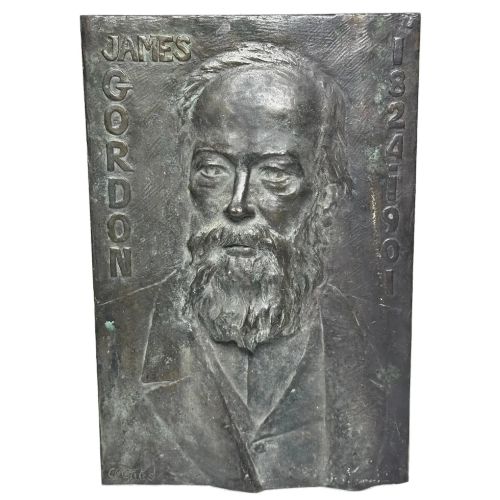
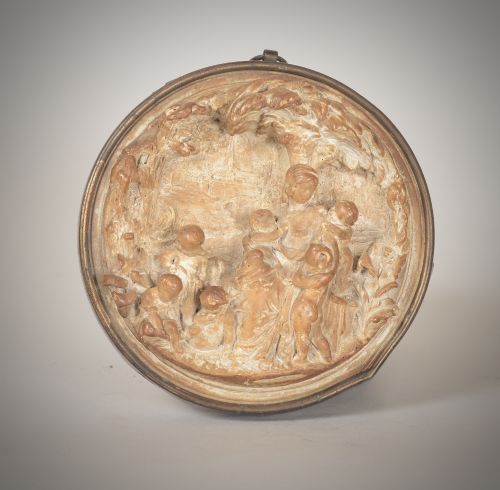
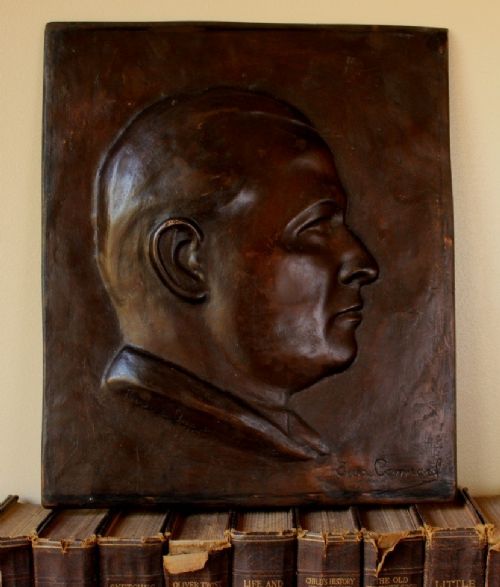
Every antique bronze plaque in this selection represents cast or patinated metal relief work, spanning wall plaques, architectural salvage and sculptural fragments. The forms range from classical female heads and religious scenes to heraldic crests and allegorical fireplace friezes.
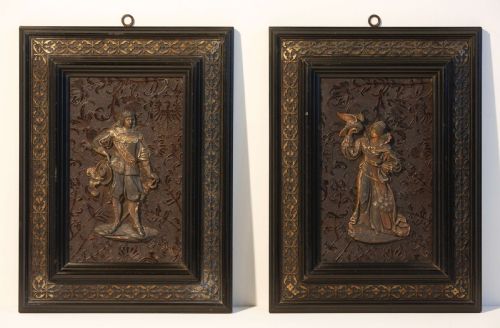
The periods represented stretch from the eighteenth century through the nineteenth century, capturing distinct stylistic revivals such as Neoclassical, Renaissance Revival and Victorian Heraldic. Pieces appear singly or in pairs, sometimes mounted within timber or silk surrounds.
Buyers seeking an antique bronze plaque encounter works attributed to known sculptors or medallists alongside unsigned foundry casts. The subjects draw heavily on mythology, historical events, religious iconography and family heraldry.
Materials and construction
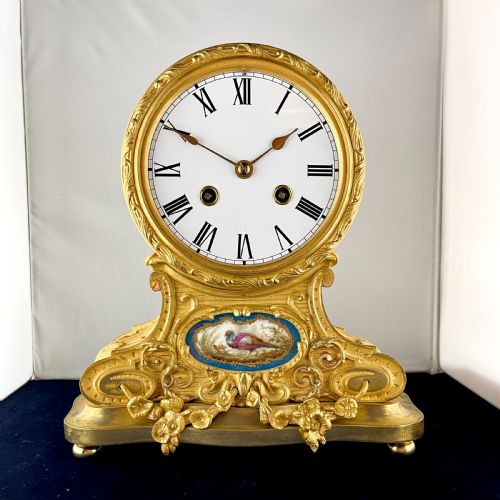
The primary medium is cast bronze, frequently complemented by patinated metal, polished brass, iron, gilt surfaces and timber mounts. Some items incorporate secondary elements such as porcelain plaques or silk backings.
Foundries utilised traditional lost-wax or sand-casting techniques to achieve sharp detail in high or low relief. Finishing work involved hand-chasing, polishing or applying chemical patinas to enhance the depth of the metal.
Retail Price Guide 2026
Typical UK retail prices for bronze plaque, calculated from the Sellingantiques database of over a million retail prices indexed since 2003. This retail price guide relies exclusively on Sellingantiques data; no external sources or auction records are used, so the figures do not describe the wider market.
One historical prize plaque commemorated horticultural achievement, proving that even giant cabbages once deserved bronze immortality.
Assessing quality
Quality rests upon the crispness of the cast and the sensitivity of the hand-chasing applied after the metal left the mould. Superior examples retain fine anatomical details, sharp lettering and deep undercutting in the relief.
The character of the patina contributes significantly to the visual weight of the piece, with stable, aged surfaces outperforming dull or harshly cleaned metal. Signatures from documented sculptors or founders elevate the historical interest of a casting.
F George·J Lavergne·Gian Federigo Bonzagna·Edward William Wyon·Rollin A Paris·Hamo Thornycroft·Nogawa
The Antique Bronze Plaque Glossary
- Patina
- The surface sheen and coloration developed by bronze through age and chemical treatment. A stable patina protects the underlying metal and indicates genuine age.
- Relief
- A sculptural technique where the figures project from a flat background. High relief stands out boldly, while low relief remains closer to the plane.
- Maquette
- A preliminary scale model or sketch for a larger sculpture. These small bronze casts reveal the direct hand of the artist before final production.
- Chasing
- The manual finishing of a metal casting using small punches and hammers. This process refines details and removes casting flaws.
- Heraldic
- Pertaining to coats of arms and armorial bearings. Heraldic bronze plaques display specific family crests, mottos or symbols.
Frequently Asked Questions
How do I hang a heavy bronze plaque?
Most wall plaques feature integrated hanging loops, screw holes or rear mounts designed to support the substantial weight of cast metal. It is essential to fix directly into wall studs or use appropriate heavy-duty wall anchors.
For pieces mounted in timber frames or velvet backings, check the integrity of the surrounding structure before hanging. Ensure the hanging wire or brackets are rated for solid bronze rather than lighter decorative items.
What is the difference between a plaque and a fireback?
While both involve cast metal relief work, firebacks are specifically designed to sit at the back of an open hearth to reflect heat and protect the masonry. They are typically much heavier and cast in iron or robust bronze alloys.
Wall plaques are purely decorative or commemorative items meant for interior display at eye level. They often display finer chasing and delicate patination that would be ruined by direct exposure to fireplace soot and intense heat.
Should I polish my antique bronze plaque?
Polishing antique bronze is generally discouraged because it removes the historic patina that collectors value. Aggressive cleaning strips away centuries of natural oxidation and can erase delicate hand-chasing details.
Maintenance should be limited to gentle dusting with a soft, dry cloth to prevent dirt accumulation. If a piece requires conservation due to active corrosion, consult a professional metal conservator rather than applying domestic metal polish.
How can I tell an eighteenth-century casting from a nineteenth-century revival?
Eighteenth-century bronze plaques often reflect strict Neoclassical or Baroque proportions with hand-finished surfaces that show individual tool marks from the chasing bench. The composition and subject matter frequently tie directly to contemporary architectural schemes or grand tour souvenirs.
Nineteenth-century revival pieces tend to exhibit the technical precision of industrial foundry work and often carry legible signatures, dates or foundry stamps. Stylistically, they draw on earlier periods with enthusiastic historicism, matching the Victorian taste for heraldry and Renaissance motifs.