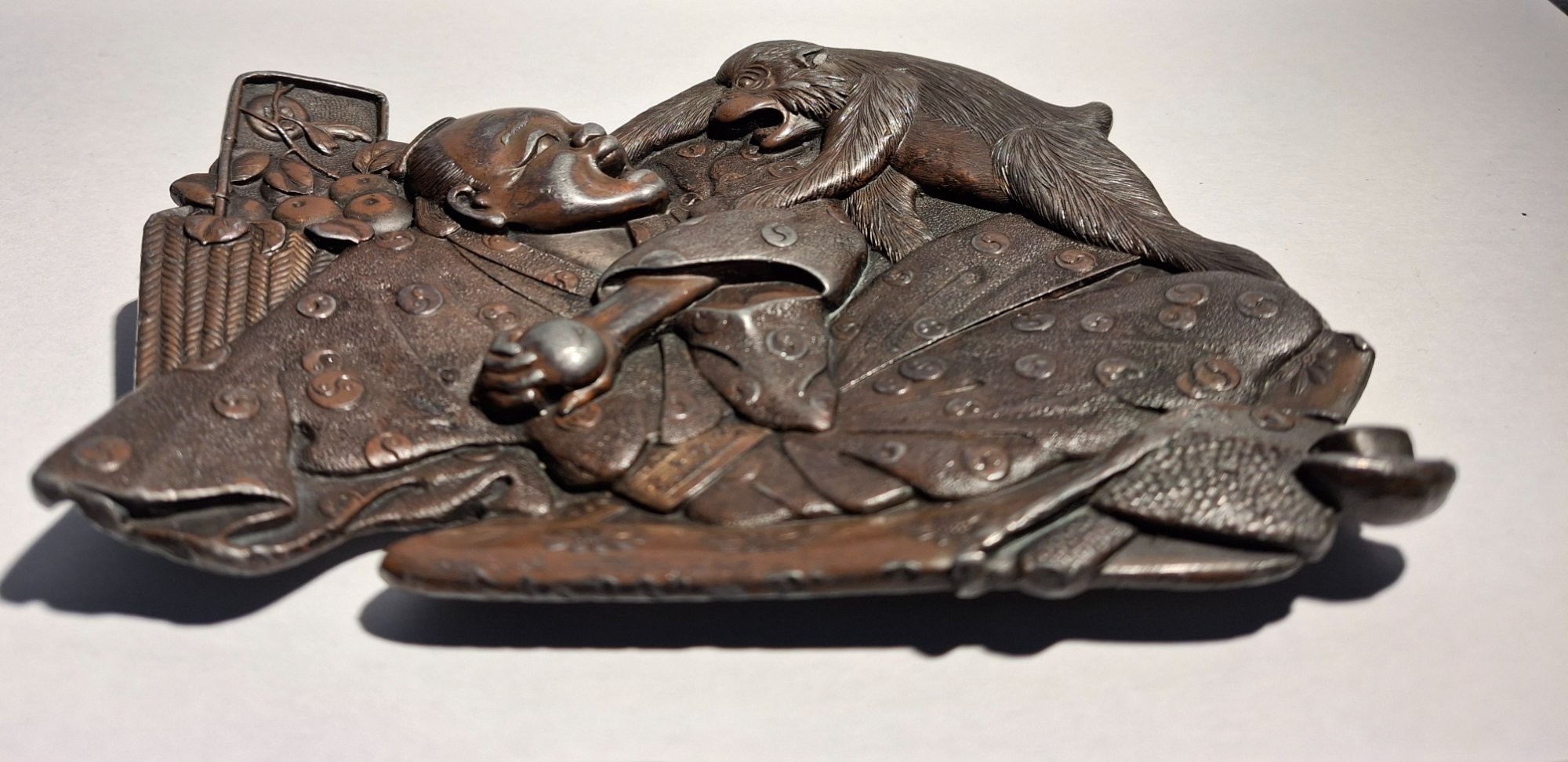
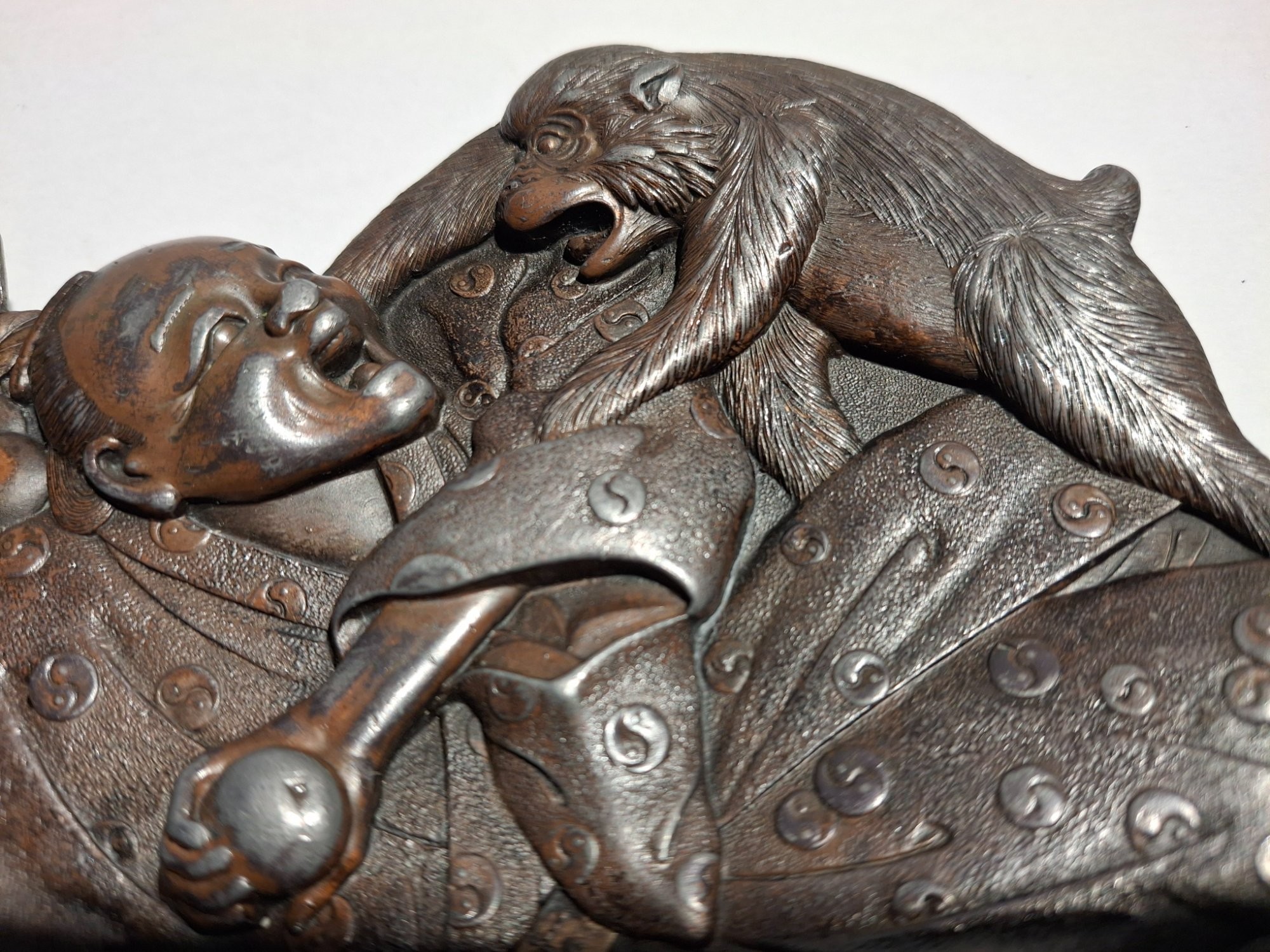
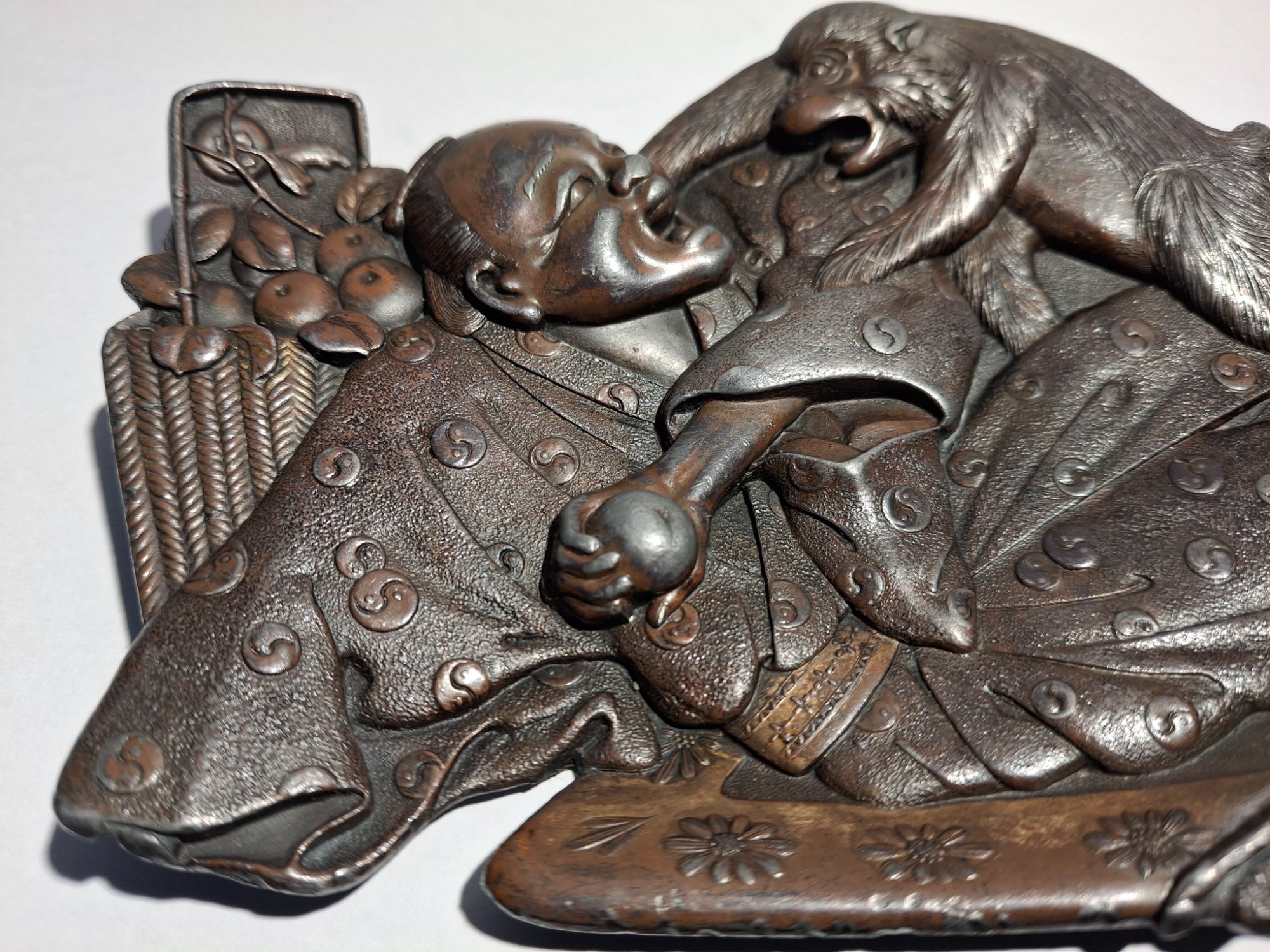
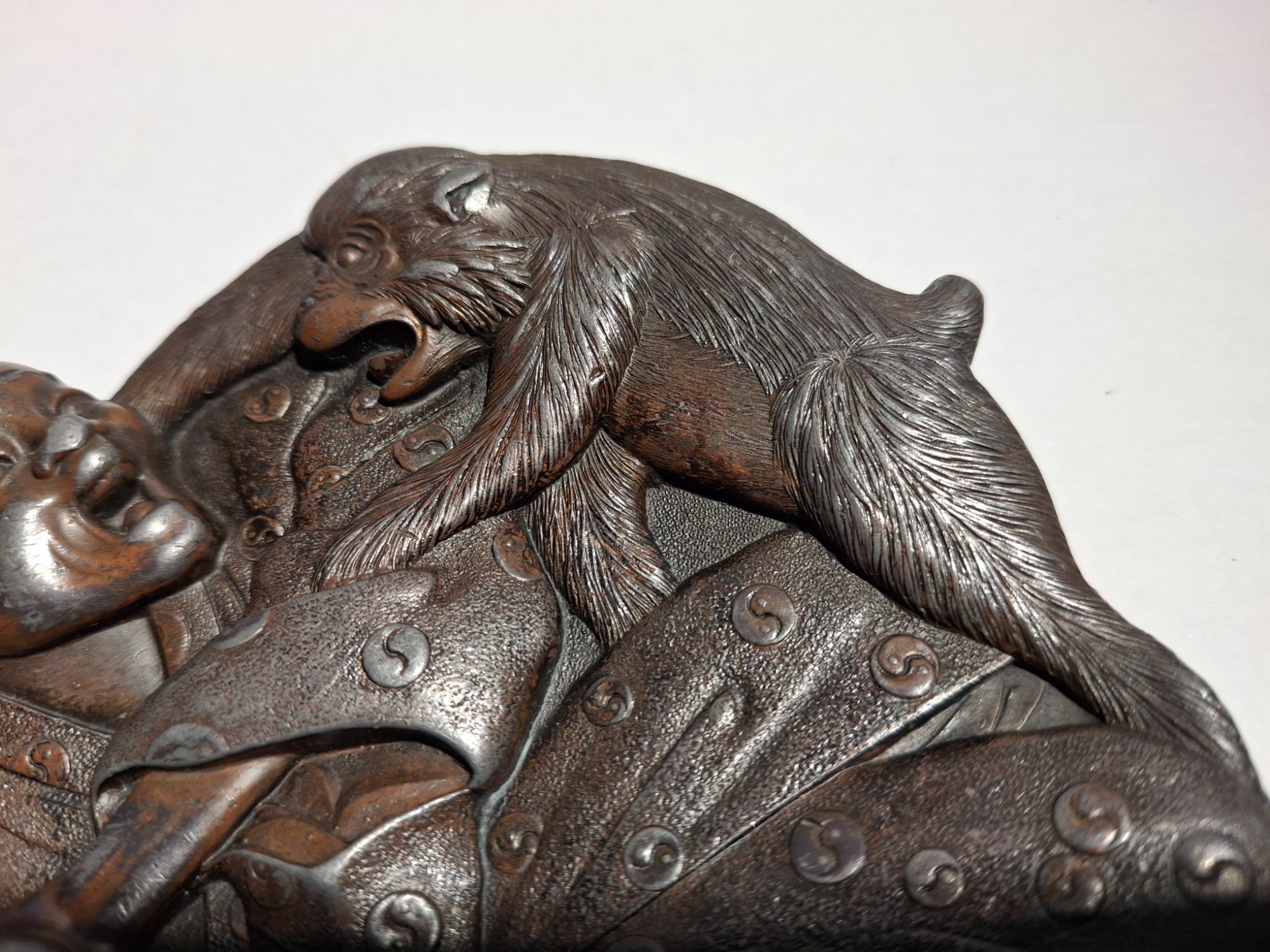
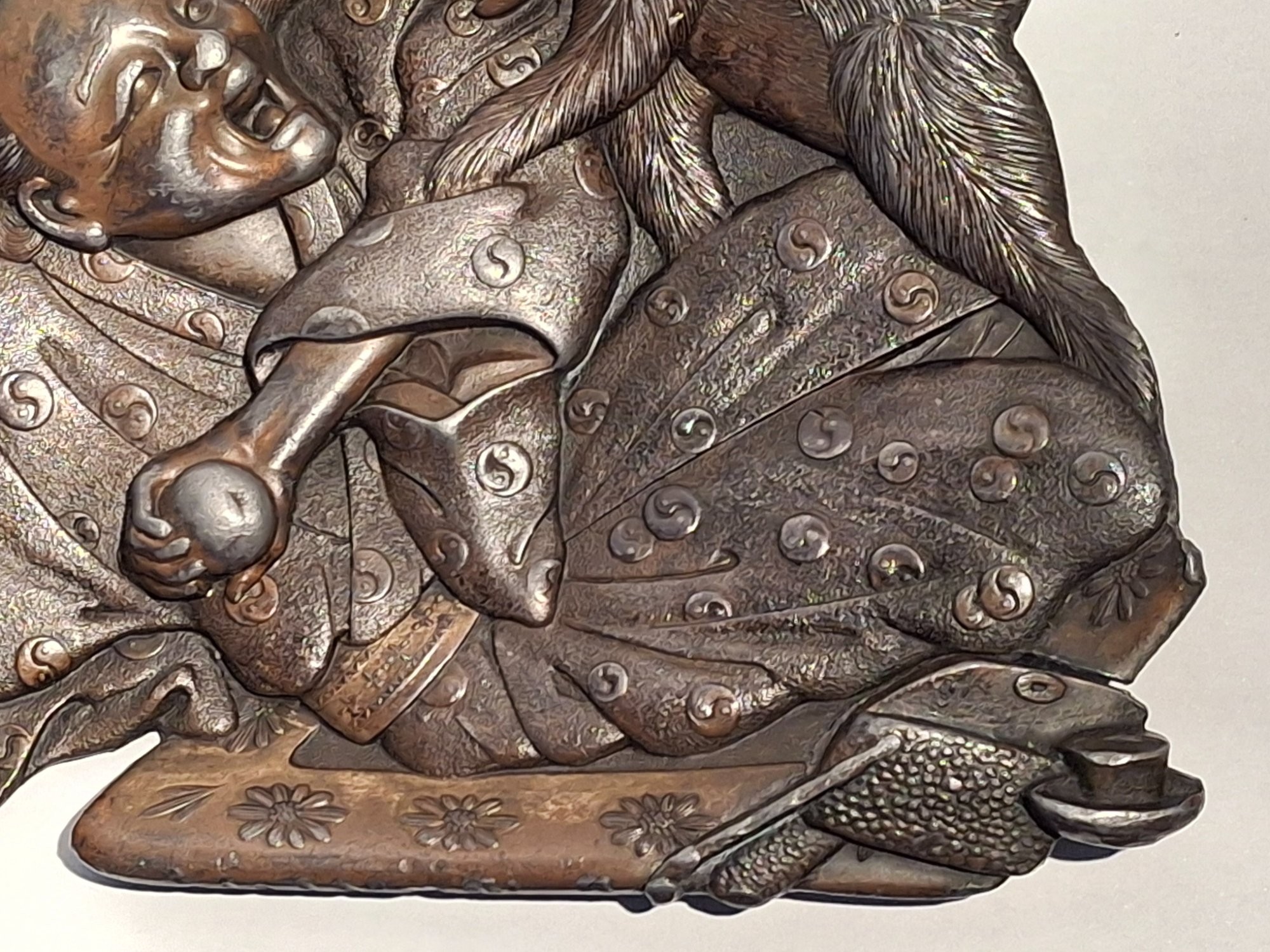
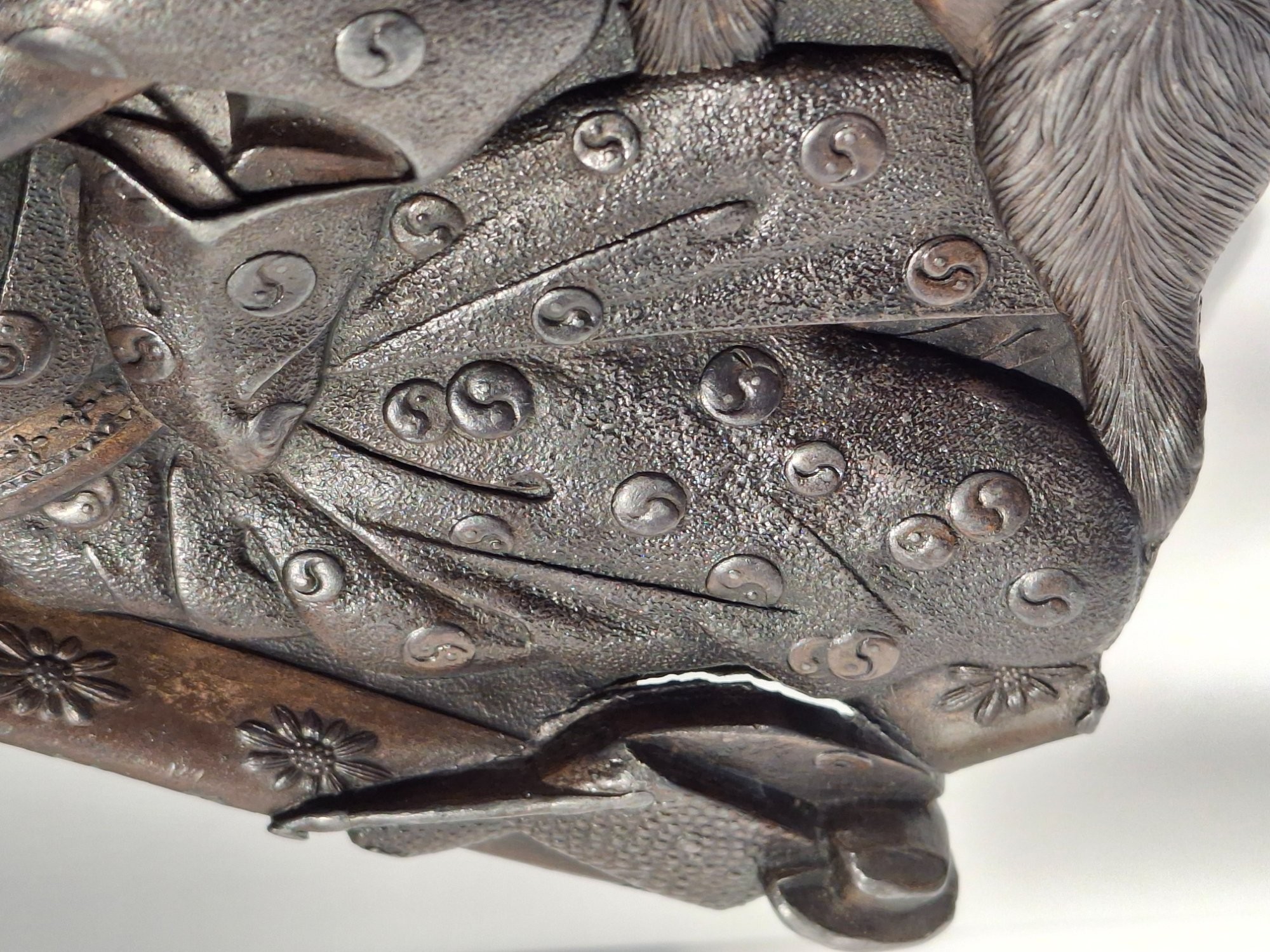
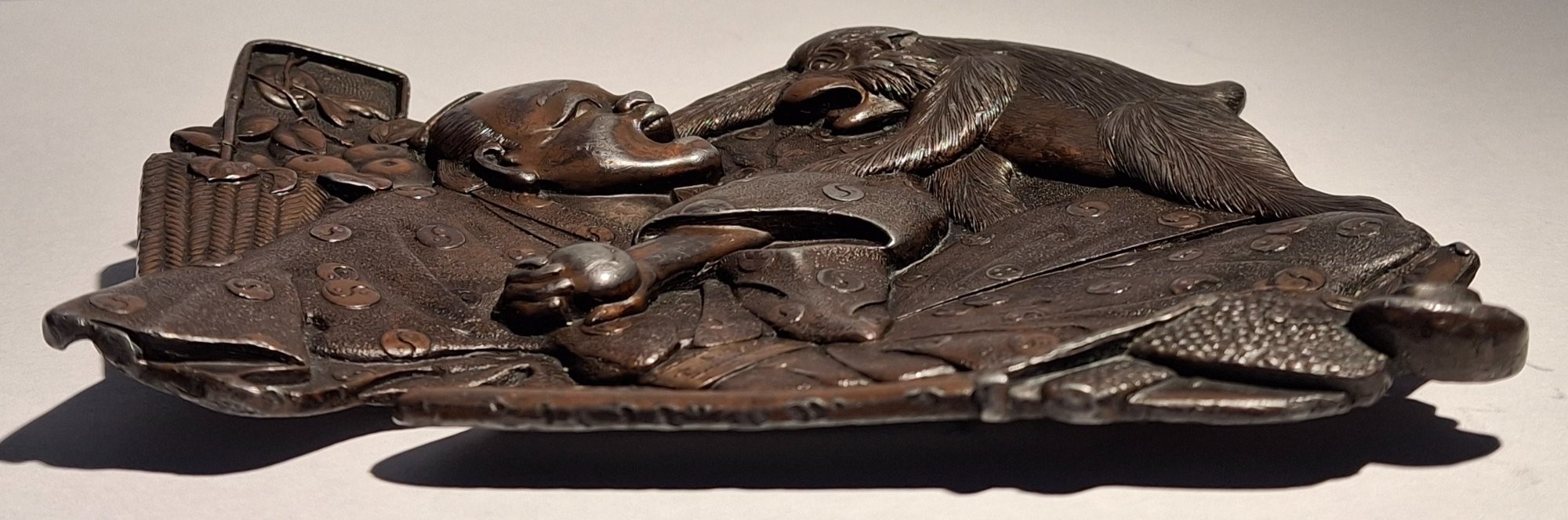
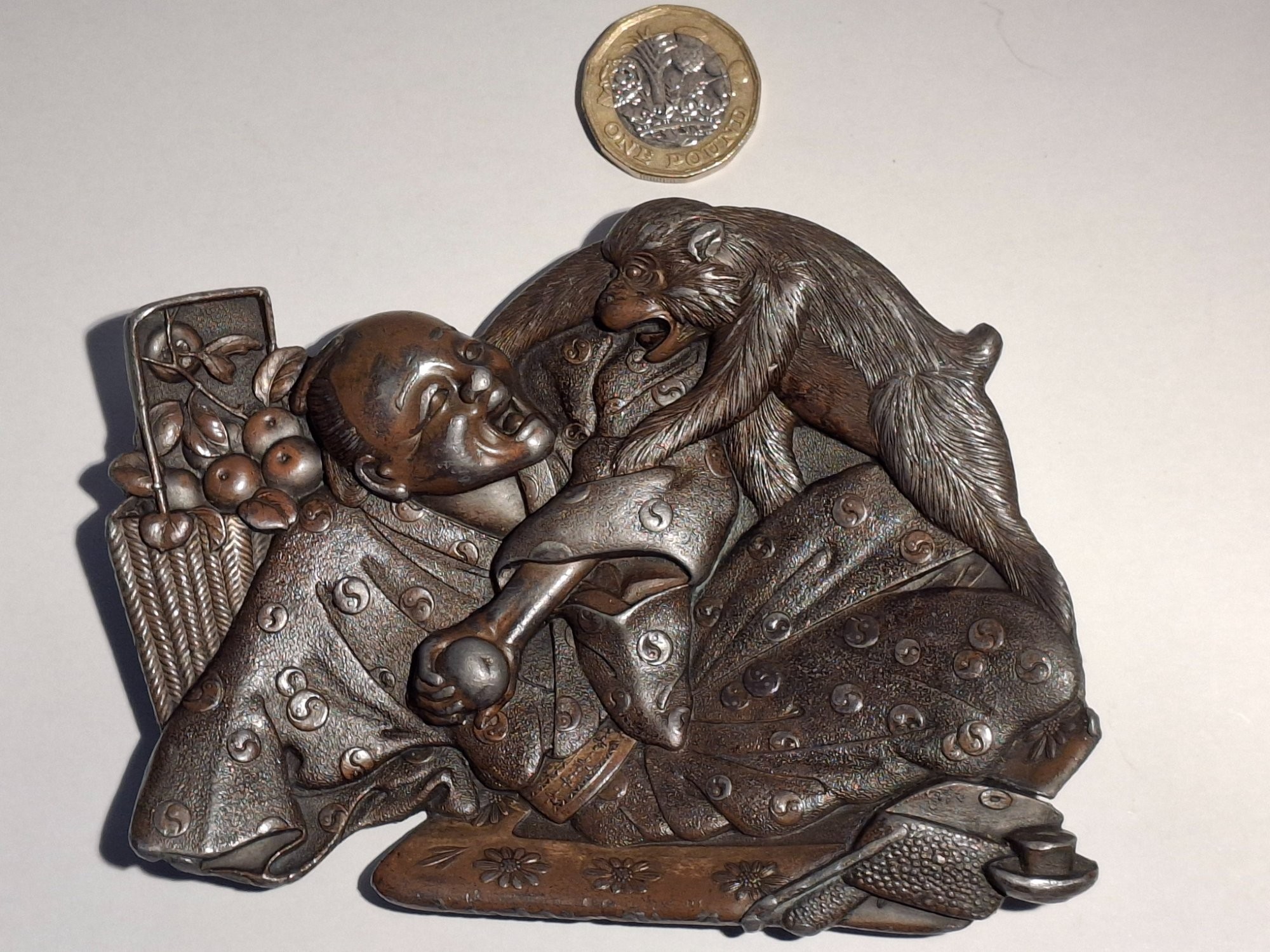
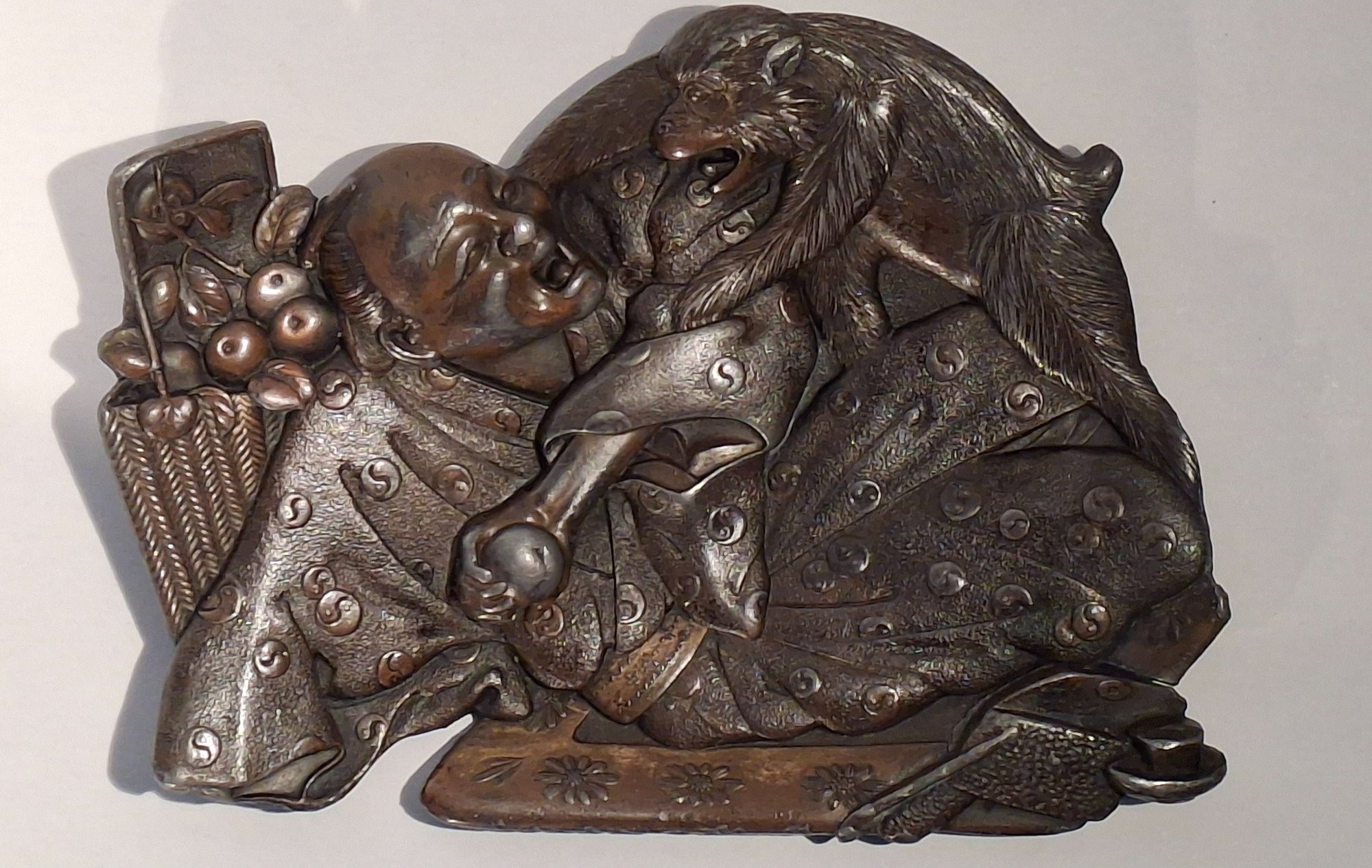
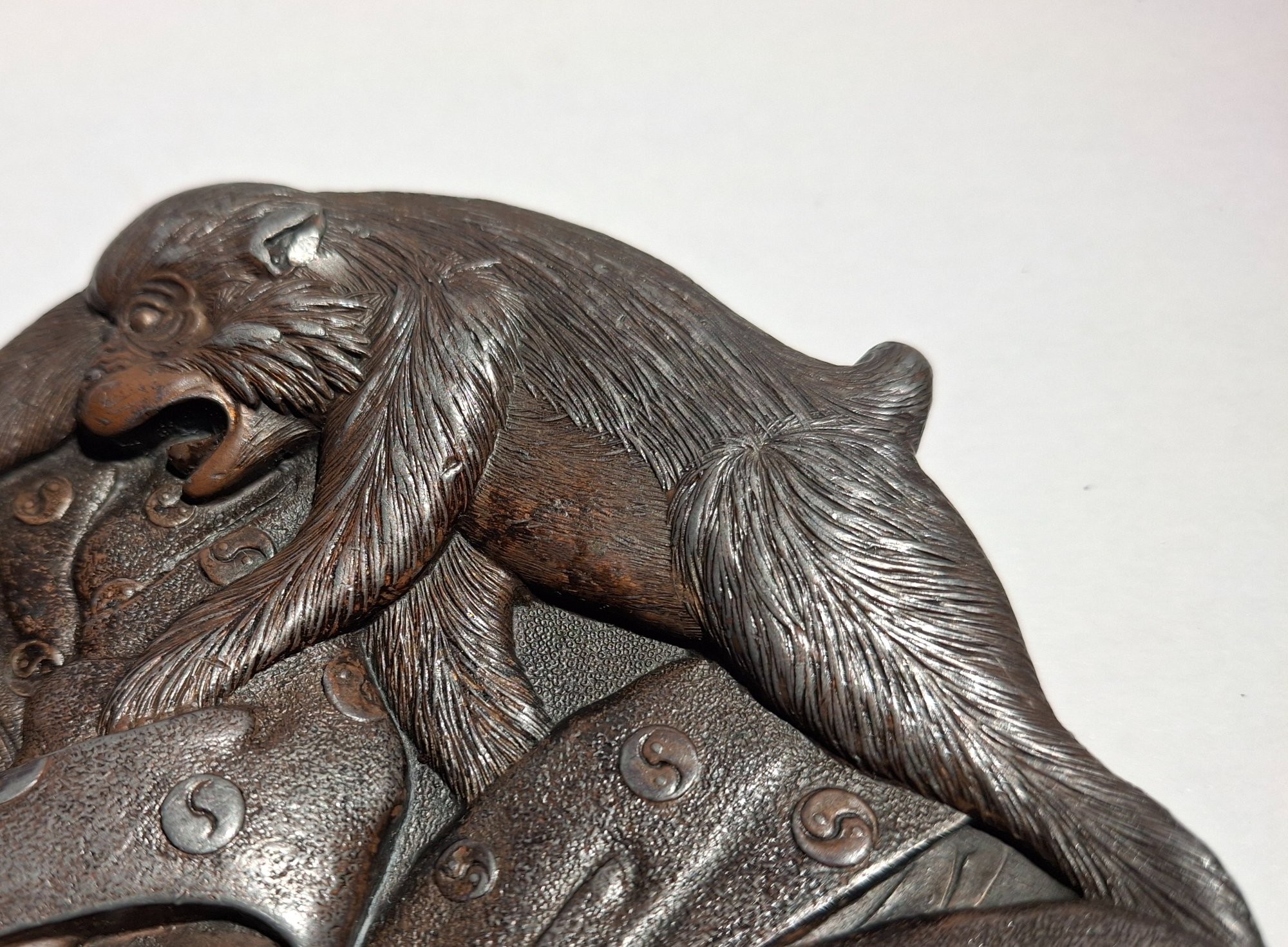
Dragoncharger Antiques has dated this Japanese Takazogan Bronze Ashtray to the 1890s.
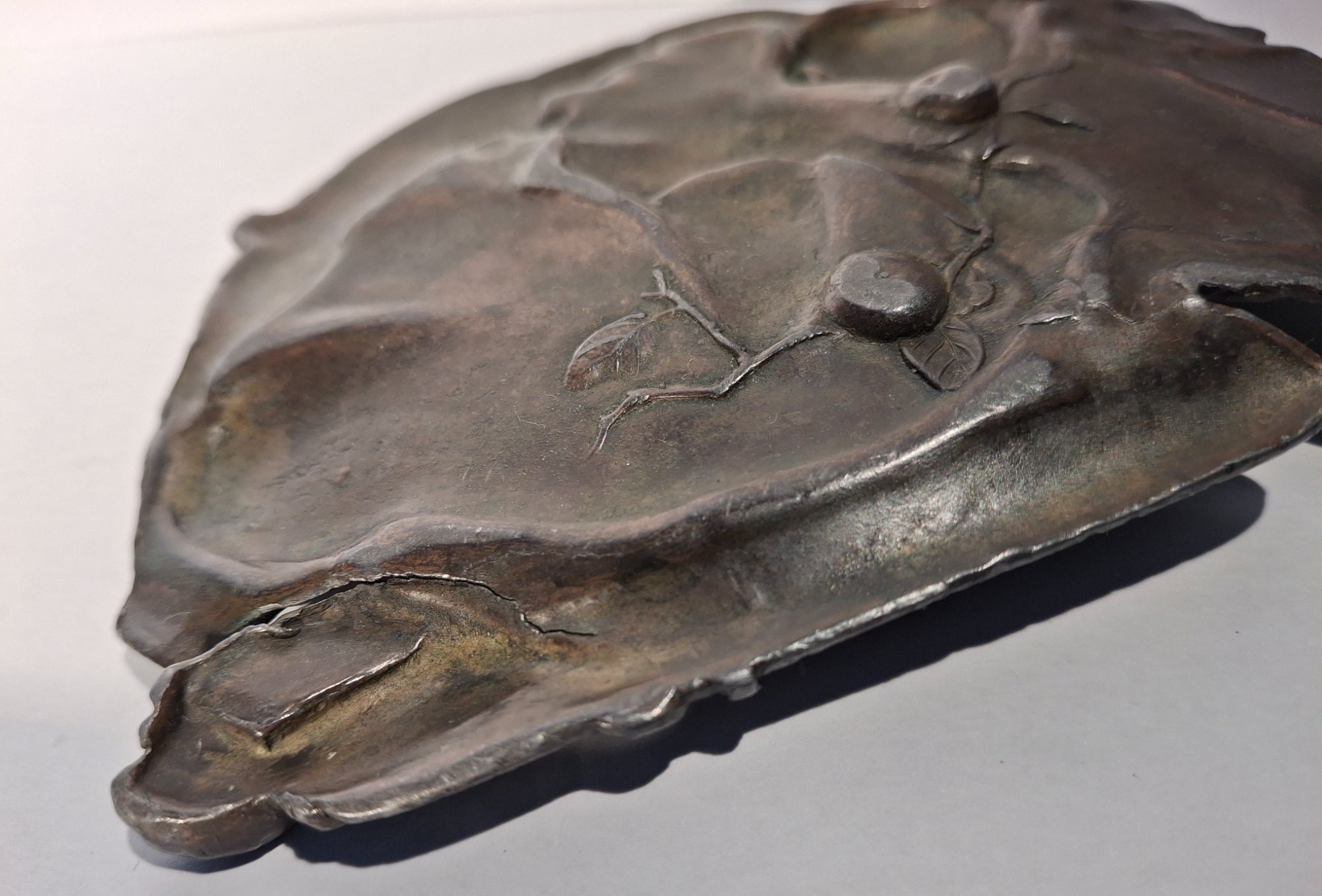
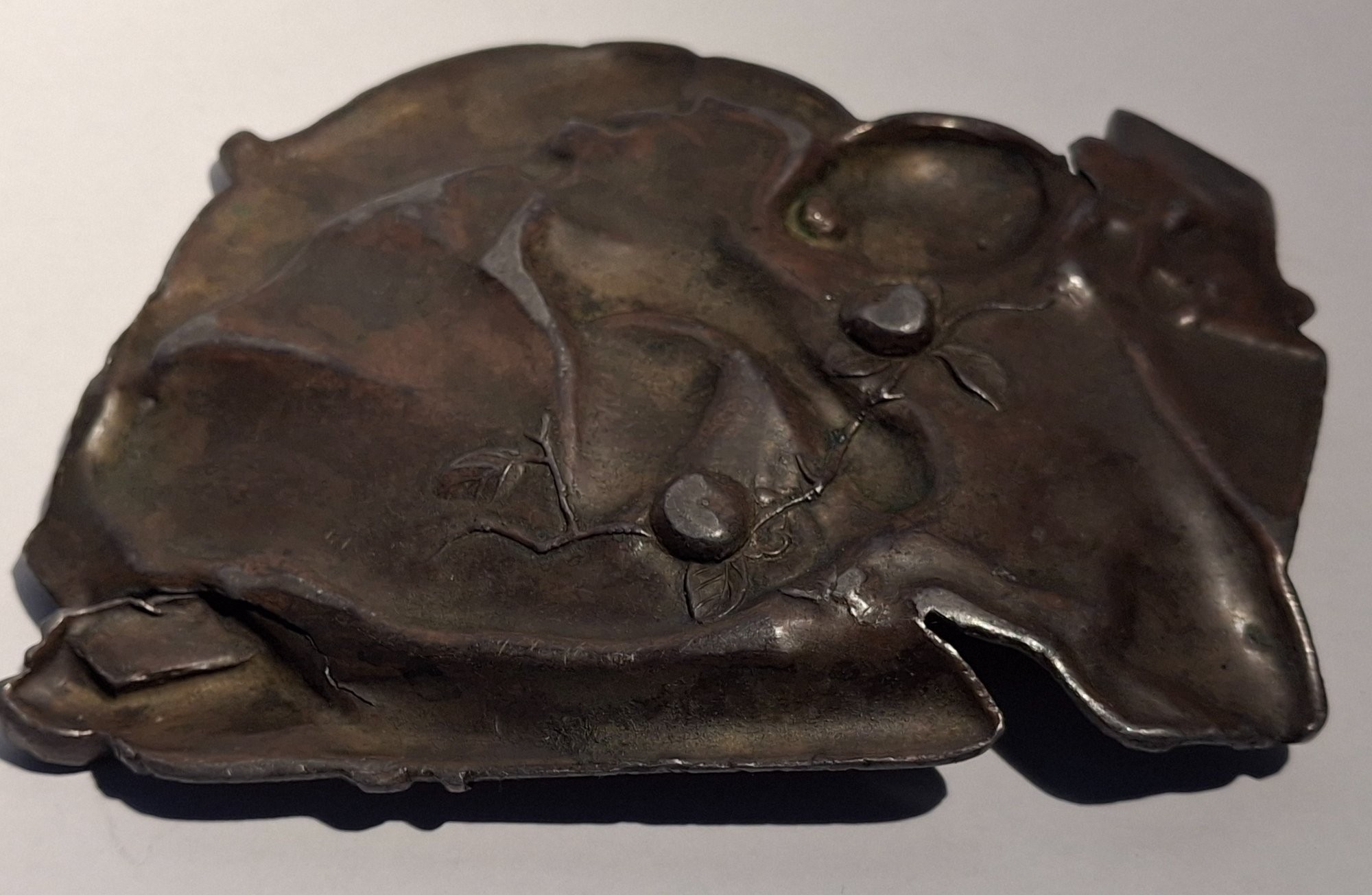
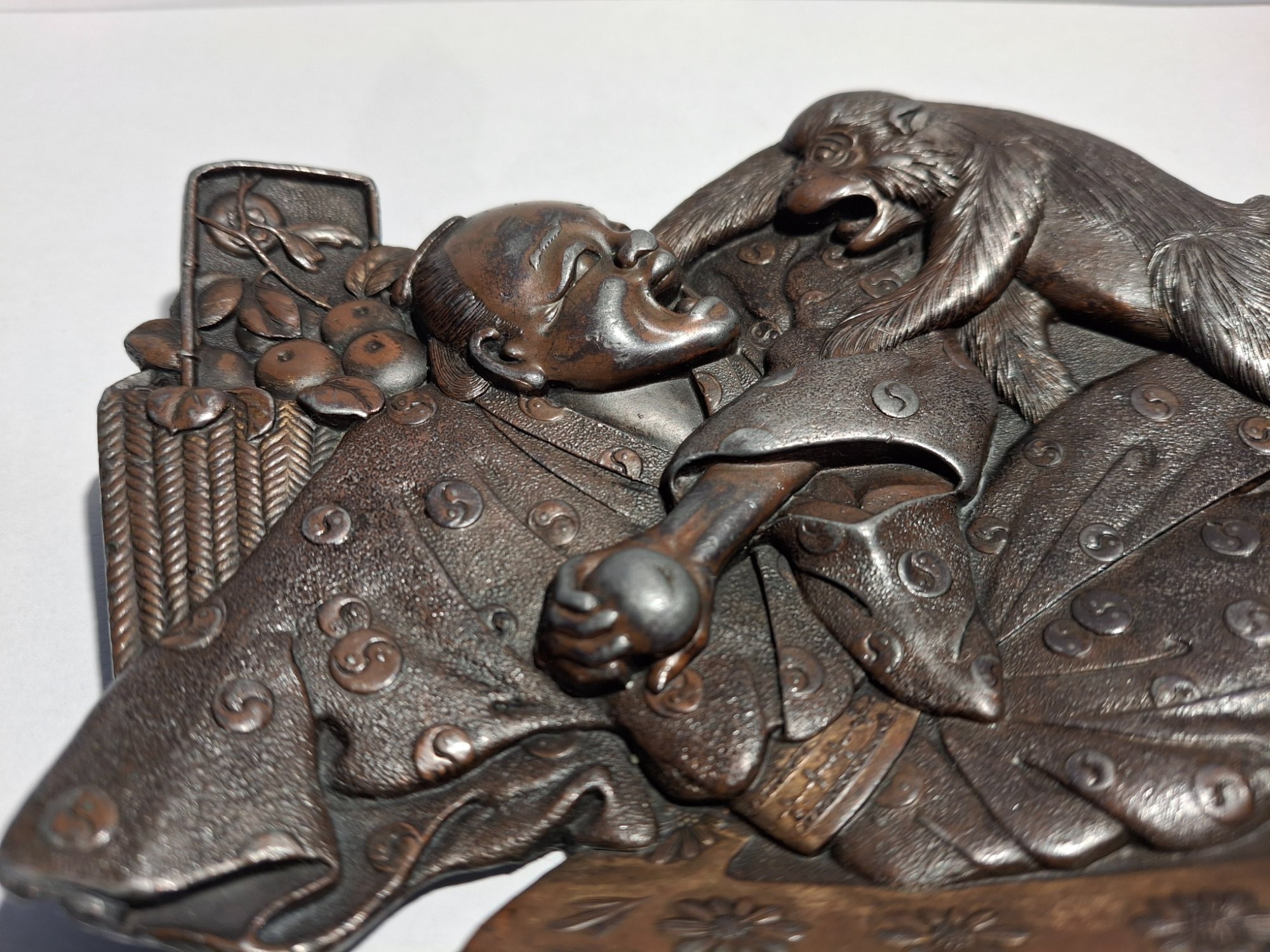
Japanese craftsmen mastered the art of Takazōgan (high-relief inlay) to affix highly sculpted dimensional figures onto base plates made of iron, bronze, or unique alloys. Seemingly, this applique not having been affixed, re-purposed and used as an ashtray. Interestingly the reverse shows two lugs in the form of fruits (with vine leaf detail) that enables the metal appliqué to sit flat and stable to be used as an ashtray.
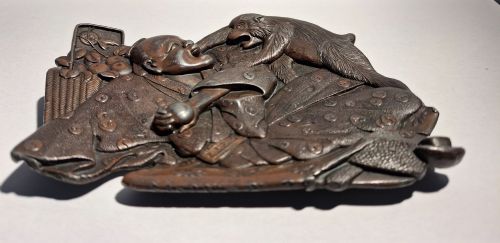
In general terms, bronze appliqué refers to a decorative bronze motif or cast piece attached to the surface of a larger base metal plate, furniture mount, or architectural element. They create high-relief dimensional contrast against flat metal plates, frequently seen in antique furnishings, decorative plaques, mixed metal plates / chargers and architectural hardware. Cast bronze usually refers to copper-alloy castings often used for decorative art in this form of Japanese craftsmanship.
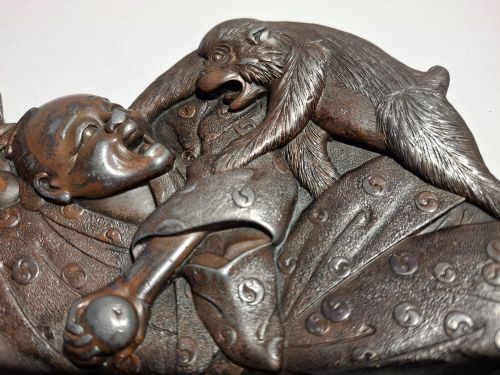
Takazōgan (High-Relief Inlay):
Instead of simply gluing or surface-soldering, Japanese artisan metal-smiths chiseled undercuts directly into the base metal plate. The base of the cast bronze appliqué was then set into the groove, and the surrounding metal walls were hammered down down over the edges of the appliqué to lock it mechanically into place forever.
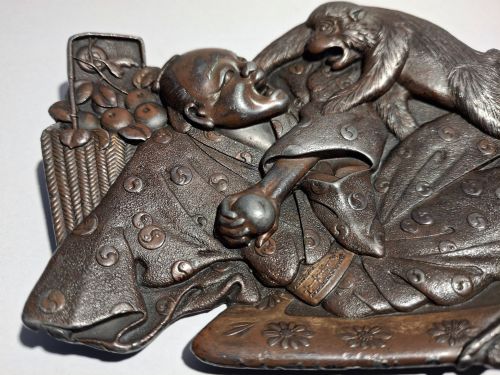
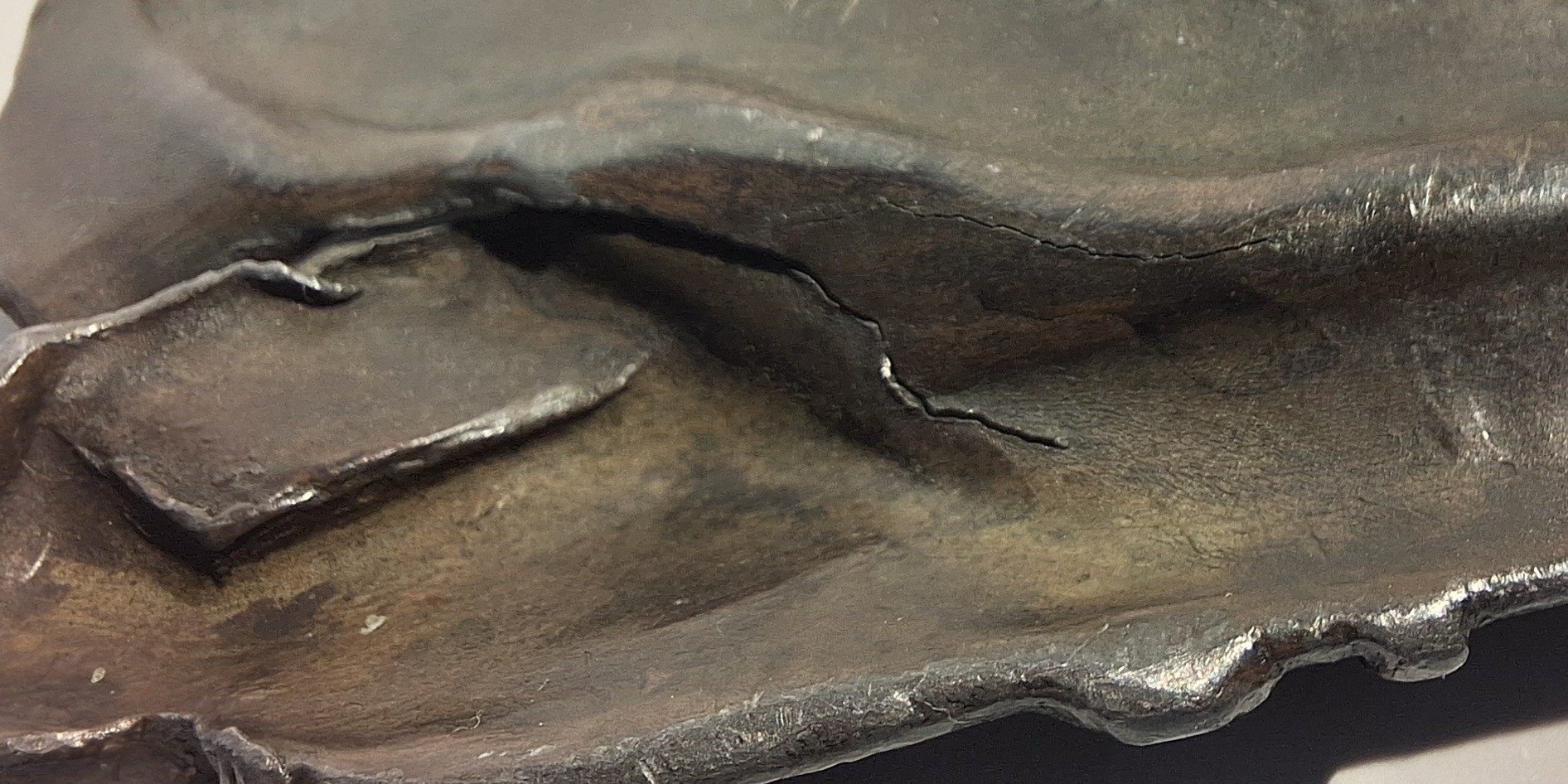
Condition: Excellent condition with lovely patina. Some rubbing to highest points and a small tear in the bottom left of the appliqué (see photos). Weight = 162g. Superb rare survivor.
Dimensions: Widest points:
Height = 9 cm
Width = 12 cm
Depth = 1 cm
Dragoncharger Antiques has dated this Japanese Takazogan Bronze Ashtray to the 1890s.
Specialising in early japanese cloisonne, edo enamel artisan period.
You can view the stock and full dealer information on the Dragoncharger Antiques Profile Page
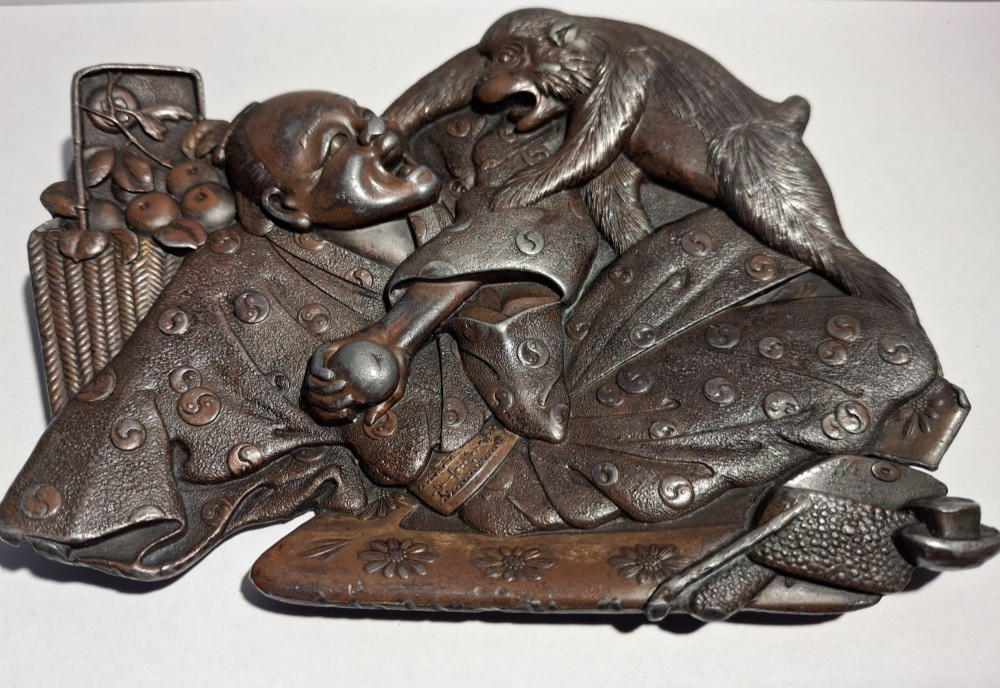
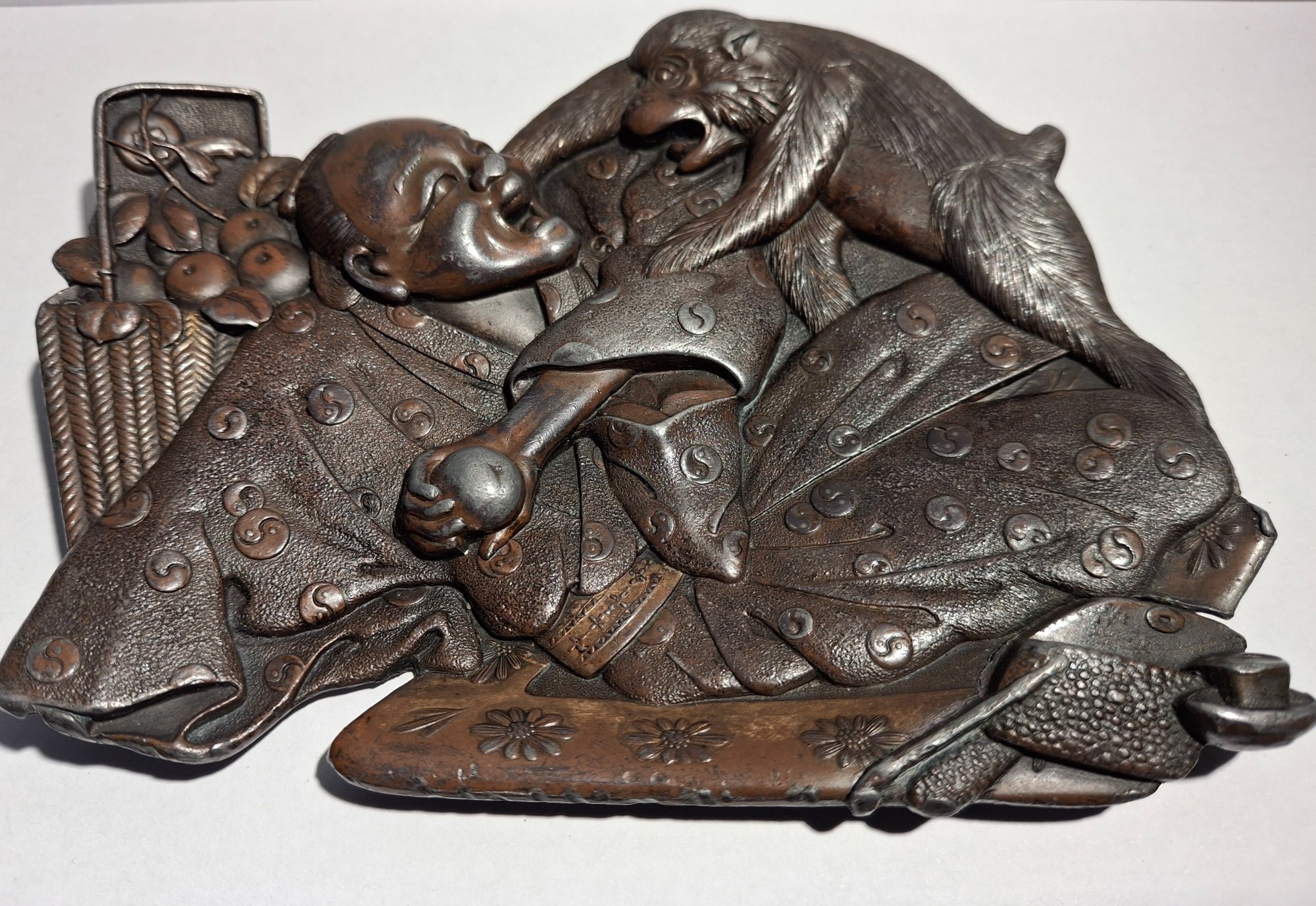
Rare Japanese Metal Takazōgan Appliqué / Ashtray. Circa 1890.