




Decorative Bronze Relief
When you search for decorative bronze relief, you are looking at cast metal works carrying chased or raised ornamentation from the nineteenth century.
Decorative Bronze Relief
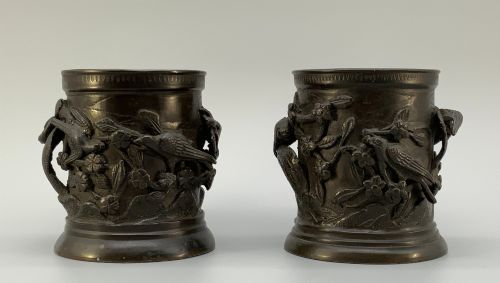
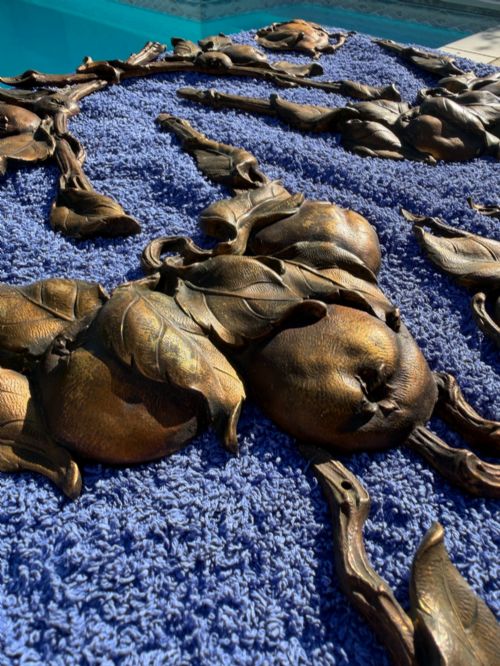
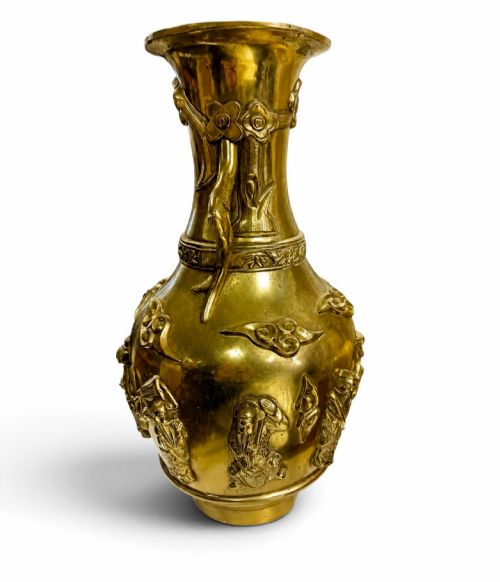
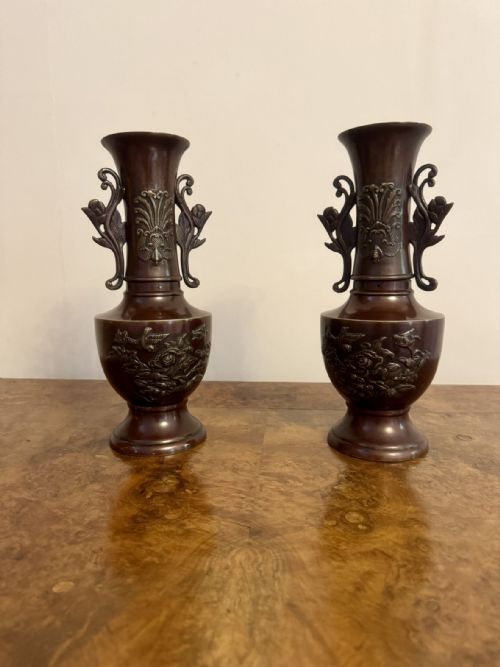
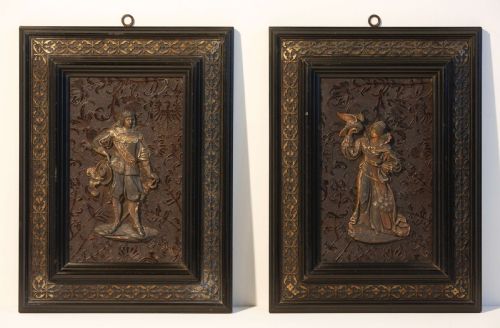
Decorative bronze relief items span wall plaques, vases, urns, and vessels originating from British, French, Italian, Japanese, and Chinese workshops.
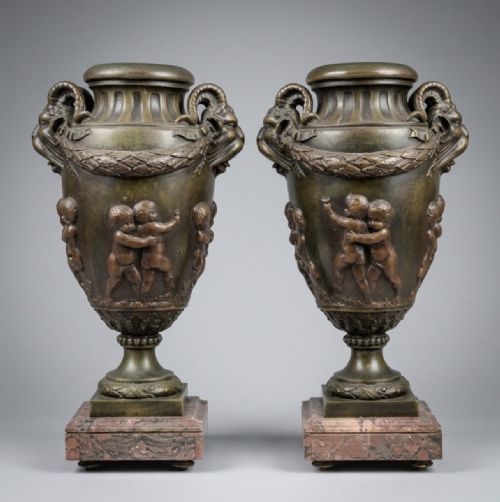
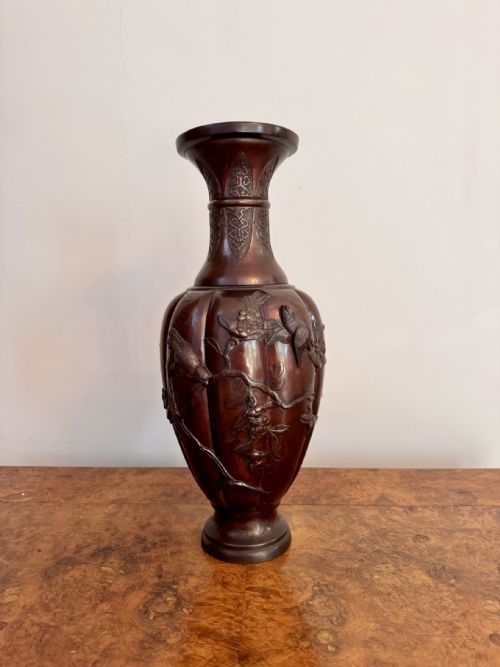
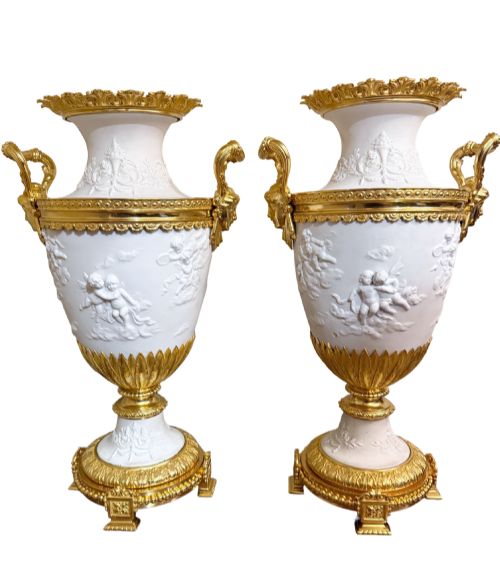
The objects appearing in this selection frequently take the form of Japanese Meiji period baluster vases, French Grand Tour urns, and cast wall plaques depicting classical or rural scenes.
Buyers encountering these works will find them grouped alongside related pieces in brass, copper alloy, terracotta, and marble bases from the Victorian era onwards.
Materials and Technique
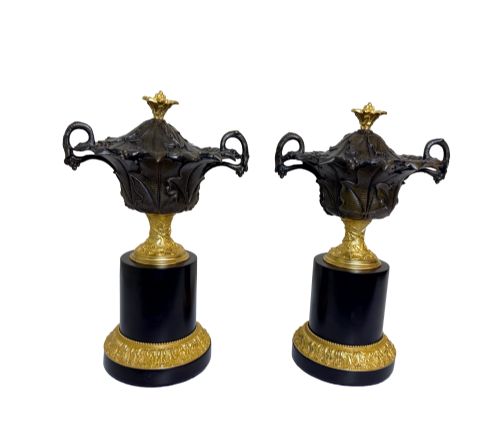
These pieces utilise cast bronze, brass, and copper-alloy metals, often enhanced with gilt finishes, patination, or silver plating.
Many items incorporate contrasting elements such as marble pedestals, ebonised wood, or terracotta plaques, uniting cast metalwork with carved stone and fired clay.
One wall plaque records a refugee monkey family in America, bringing an unexpected satirical twist to nineteenth-century terracotta relief.
Craftsmanship and Detail
Quality rests upon the crispness of the cast ornamentation and the depth of the chased surface detail, distinguishing finely rendered figural scenes from simpler mouldings.
The weight of the metal and the integrity of applied patination or gilding dictate the standing of individual vessels and wall plaques.
Poix Blin·Ernst Wahliss·Paul Dachsel·Coalbrookdale
The Decorative Bronze Relief Glossary
- Relief
- Sculptural ornamentation where figures or patterns project from a flat background. This technique defines the surface decoration of plaques and vessels.
- Patination
- The natural or chemical surface colouring acquired by bronze over time or applied by the maker. It adds depth and tone to the metal.
- Gilt Bronze
- Bronze that has been coated with a thin layer of gold or gold amalgam. This finish provides a bright metallic lustre.
- Grand Tour
- A period of European travel undertaken by upper-class scholars, inspiring the production of classical souvenir bronzes. These objects mirror antique sculpture.
- Jardiniere
- An ornamental pot or receptacle designed to hold plants or flowers. They often feature cast relief panels around the exterior body.
Decorative Bronze Relief: Frequently Asked Questions
What is decorative bronze relief?
Decorative bronze relief covers metalwork items featuring raised designs, figures, or patterns cast directly into the surface or applied subsequently.
These pieces include wall plaques, vessels, and vases produced across various international workshops during the nineteenth century.
How were these bronzes used?
Many of these items served as ornamental vessels, planters, or table centerpieces within nineteenth-century interiors.
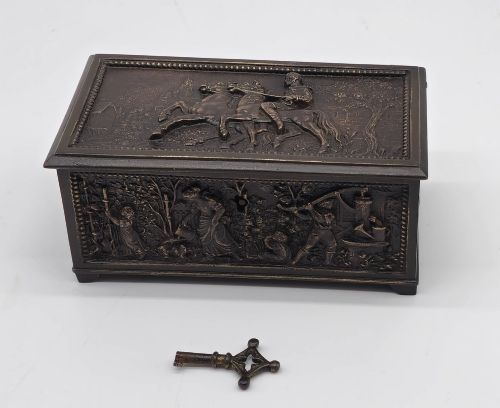
Wall plaques and appliques were designed specifically for interior display, while caskets and jewellery boxes combined utility with detailed surface ornamentation.
How do I identify a Grand Tour piece?
Grand Tour pieces typically replicate classical antiquities, architecture, or mythological figures encountered by travellers in Italy.
They frequently employ gilt bronze or patinated bronze mounted on marble bases or pedestals.
What is the difference between bronze and spelter?
Bronze is an alloy primarily composed of copper combined with tin, offering considerable weight and durability for fine casting.
Spelter is a softer zinc-based metal alloy often utilised as a substitute for bronze in decorative urns and figures.