


Classical Mythology Sculpture
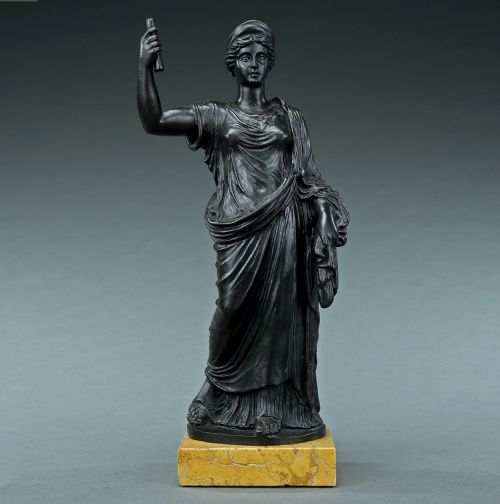
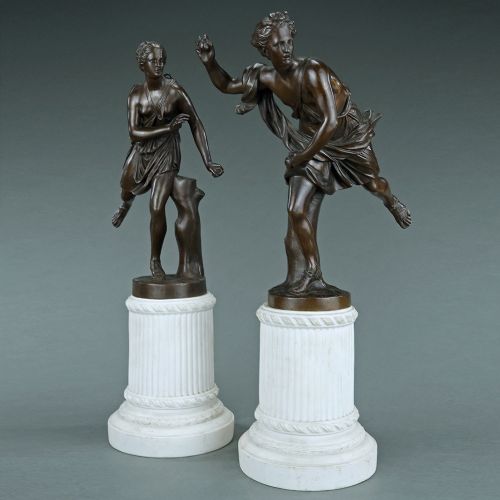
Classical mythology sculpture brings antiquity into the room through bronze figures of gods, goddesses and literary heroes.
Classical Mythology Sculpture
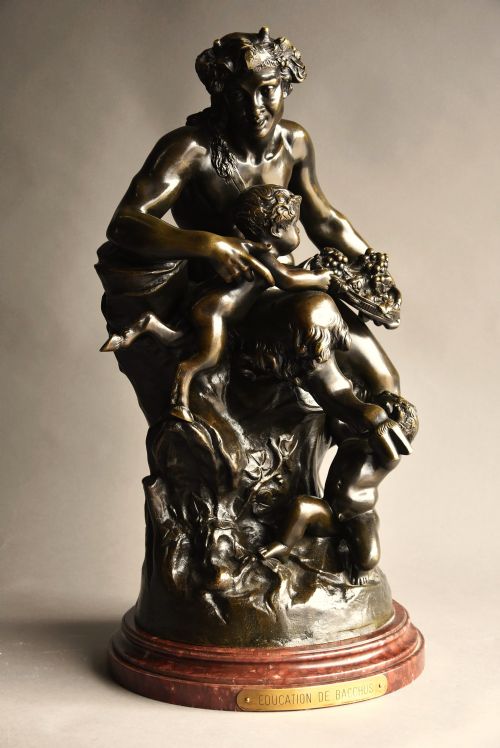
A classical mythology sculpture depicts figures from Greek and Roman pantheons, including deities such as Bacchus, Diana, and Zeus, alongside legendary heroes and mortals. These works draw directly on classical antiquity, translating ancient sculptural forms into portable pieces intended for display in studies, libraries, and drawing rooms.
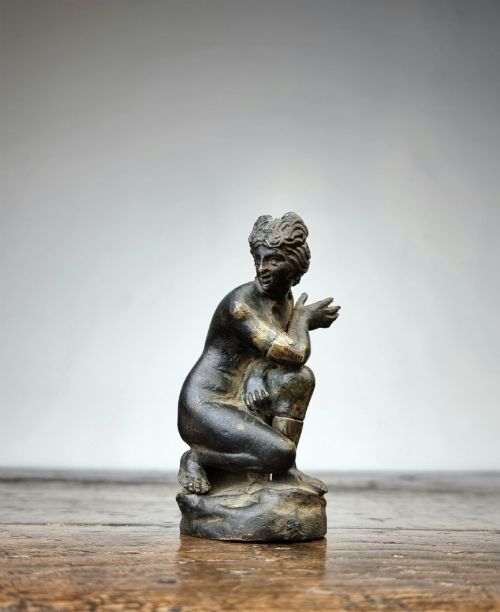
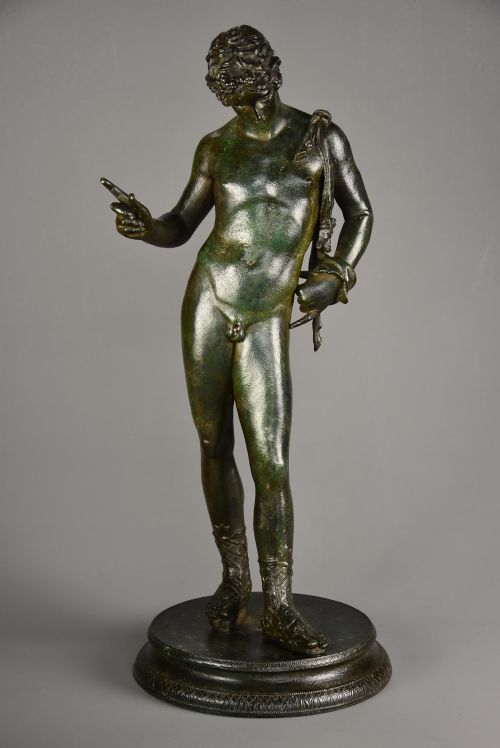
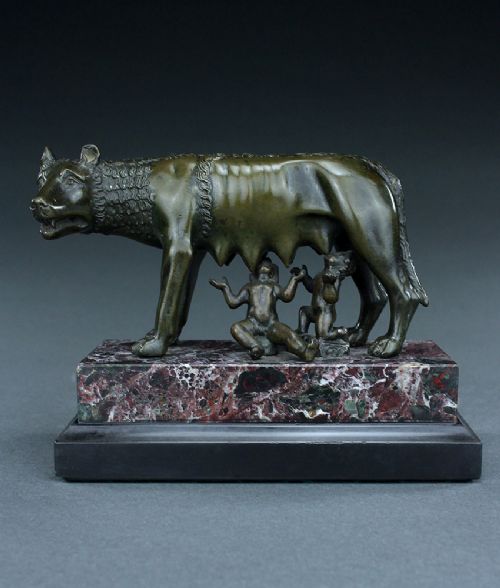
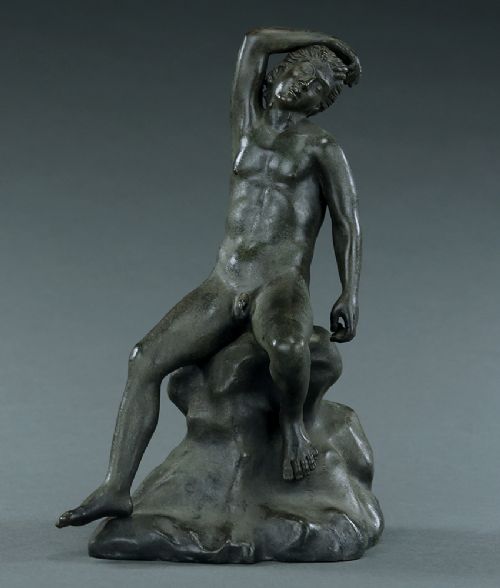
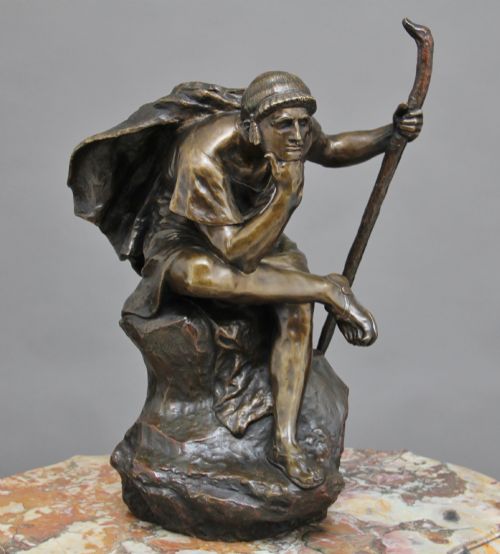
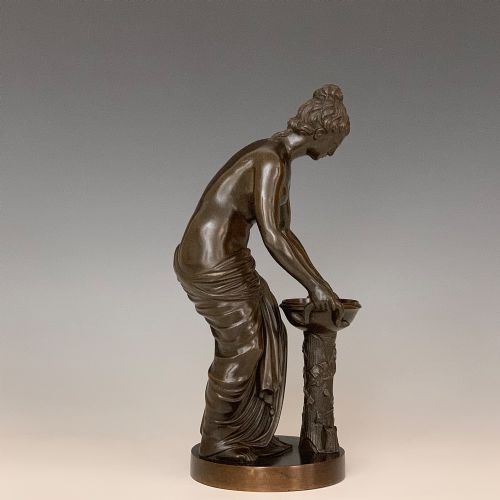
The version most commonly encountered on this page is the nineteenth-century bronze statuette or Grand Tour souvenir. These metal castings capture celebrated museum marbles and archaeological finds from Italian excavations, reduced in scale for collectors and travellers.
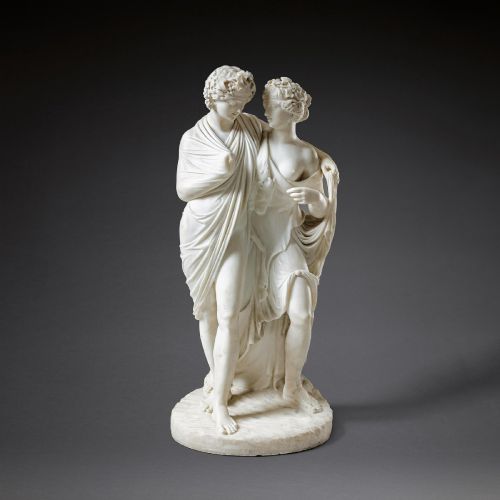
Beyond bronze, the selection encompasses white marble carvings, biscuit porcelain figures, and ormolu busts. Subjects range from singular deities like Venus and Narcissus to complex mythological groups involving multiple figures.
Materials and casting methods
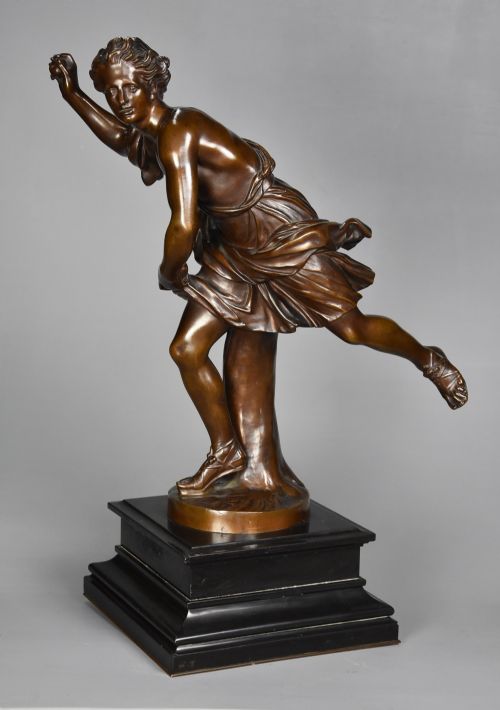
Metal pieces rely on bronze cast via the lost-wax method or sand casting, which allows intricate musculature, drapery, and attributes like bows or sickles to emerge sharply from the mould. Chemical patination processes produce tones ranging from deep chocolate brown to verdigris green, mimicking the surface oxidation of ancient artefacts buried for centuries.
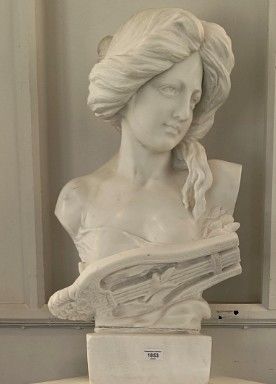
Marble works utilise fine-grained Italian stone carved by hand, often following famous antique prototypes housed in European galleries. Porcelain examples employ biscuit figures left unglazed to resemble marble, sometimes accented with hand-painted gilt highlights on ebonised wood or porcelain bases.
Materials span patinated bronze, white marble, ormolu, and biscuit porcelain mounted on stone or wood.
Judging execution and finish
Quality rests upon the crispness of the chasing and the fidelity of the reduction from the original source. Superior metal castings retain sharp facial expressions, clean fingernails, and distinct textures in hair and fabric, whereas lesser examples show smoothed details from worn moulds.
Surface patination distinguishes workshop standards, with deliberate chemical ageing offering depth and variation rather than flat, uniform dark paint. The integration of the figure with its marble plinth or mount similarly marks the care taken during assembly.
Barbedienne·Carlo Albacini·Coustou·Claude Michel Clodian·R. Mattei·Augusto Rivalta·Antonio Frilli·Albert Hussmann·Aug. Moreau·R Henn·Franz Iffland
The Classical Mythology Sculpture Glossary
- Grand Tour
- A traditional trip through Europe undertaken by upper-class young men to absorb classical culture. Souvenirs purchased along the route frequently included small bronzes and marbles after the antique.
- Patinated bronze
- Metal sculpture treated with acids or heat to alter the surface colour. This technique creates intentional shades of green, brown, or black.
- Biscuit porcelain
- Unglazed ceramic fired to a matte, porous finish that resembles carved white marble. It was widely utilised by eighteenth-century factories for mythological figure groups.
- Ormolu
- Gilt bronze created by applying finely ground gold mercury amalgam to a bronze base. The process yields a rich, golden surface finish popular in decorative mounts and busts.
- Neoclassical
- A cultural movement spanning the eighteenth and nineteenth centuries that revived the styles and subjects of ancient Greece and Rome. It prioritised balance, proportion, and mythological narrative.
Classical Mythology Sculpture: Frequently Asked Questions
What is a Grand Tour bronze?
A Grand Tour bronze is a nineteenth-century reduction of a famous classical sculpture, purchased by travellers visiting Italy.
These pieces served as portable reminders of museum collections in Rome, Naples, and Florence.
How do I identify the mythological figure?
Figures are identified by their traditional attributes, such as Diana holding a bow or Bacchus accompanied by grapes.
Inscriptions on the base or comparisons with known antique prototypes often confirm the subject.
Where should I place these sculptures?
These sculptures suit studies, mantelpieces, and dedicated display cabinets where they can be viewed closely.
They pair effectively with wood surfaces and period interiors that complement their metallic or marble finishes.
Are patinated bronzes painted?
Patinated bronzes are not painted with standard pigments; instead, chemical solutions react with the metal surface.
This process creates stable colourations that simulate natural ageing and excavation wear.