
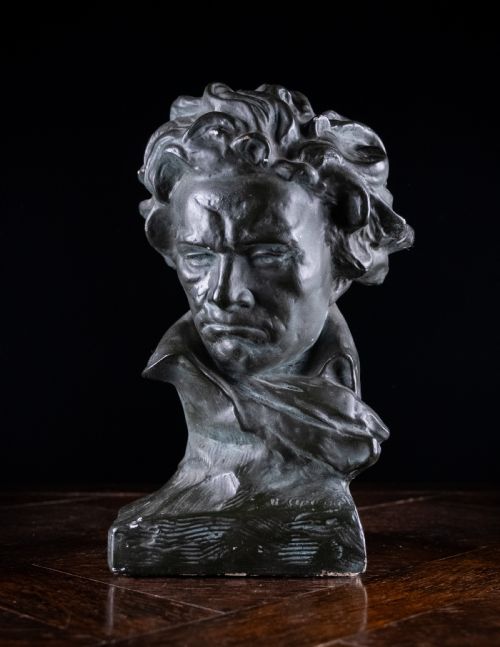


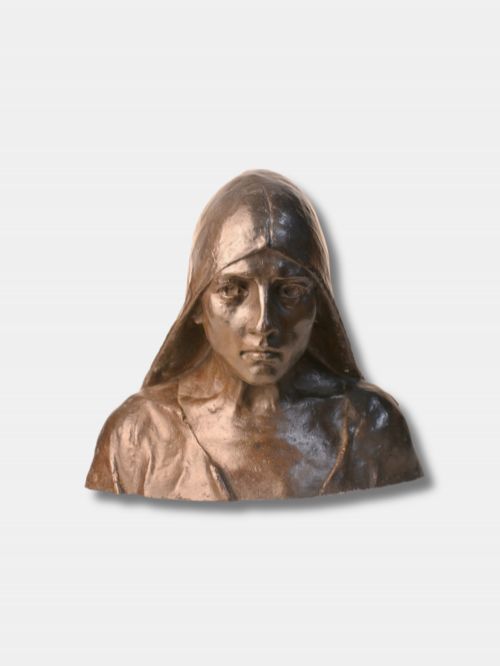


Bronze Head Sculpture
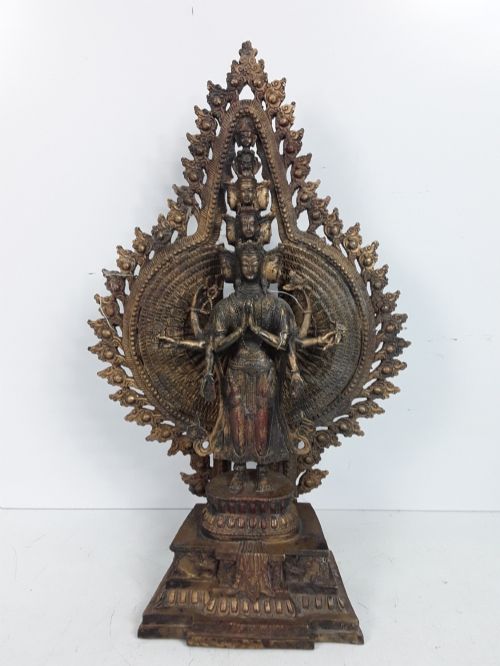
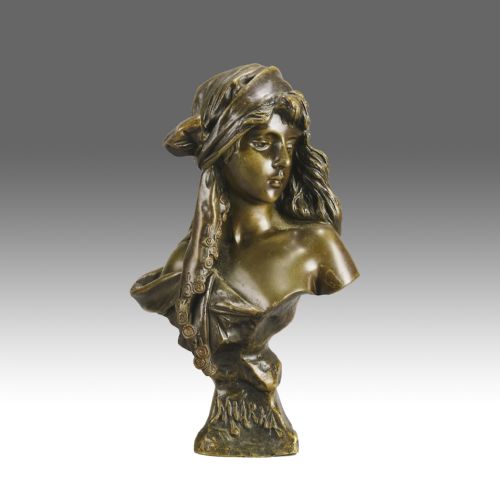
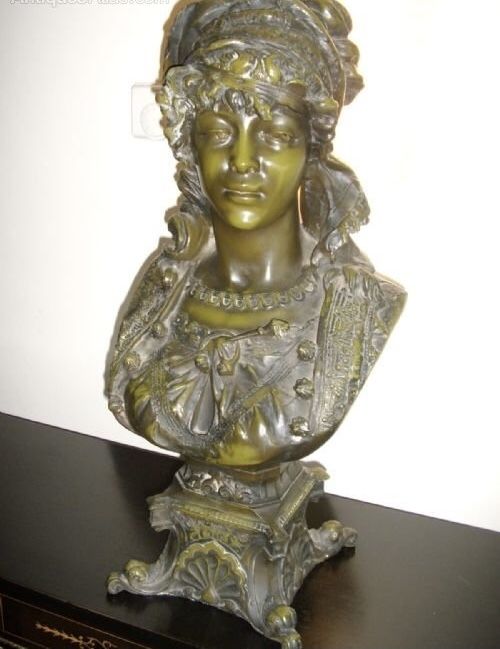
These pieces range from Grand Tour classical figures to Art Nouveau portraits, offering the weighty presence of a bronze head sculpture for any study or mantelpiece.
Bronze Head Sculpture
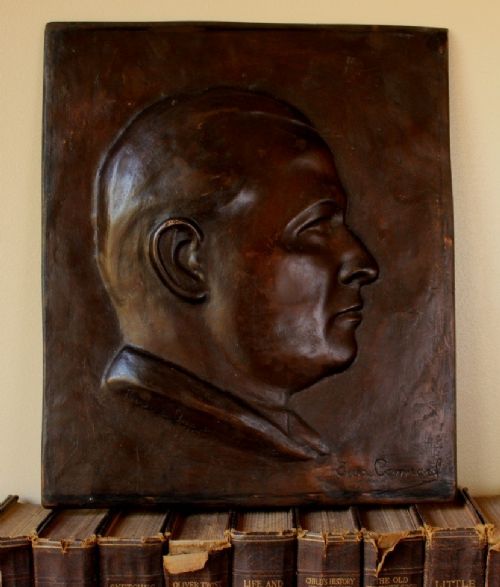
When searching for a bronze head sculpture, a buyer encounters a diverse array of portrait busts, mythological figures, and historical subjects produced across the nineteenth and early twentieth centuries. These works span Classical Revival, Neoclassical, and Art Nouveau aesthetics, often taking the form of library busts, wall plaques, and fountain spouts.
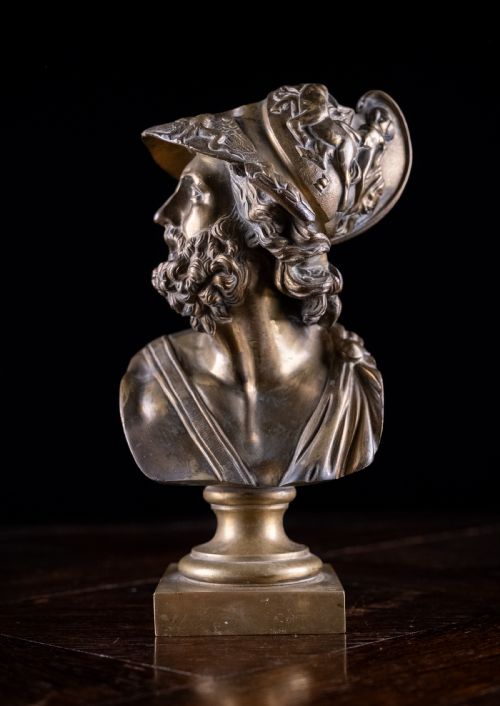
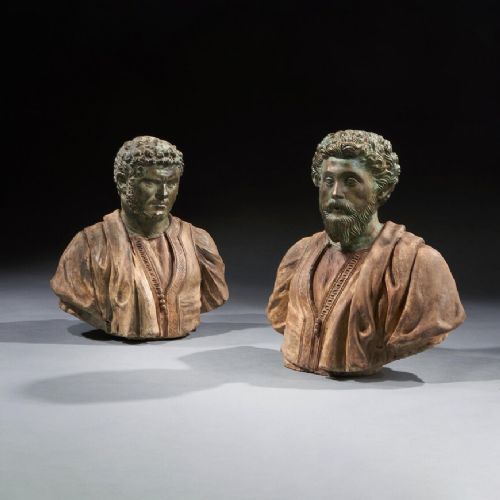
The selections on this page lean heavily towards nineteenth-century Grand Tour souvenirs, French foundry casts, and early twentieth-century portraits. Subjects range from Roman emperors and Greek deities like Apollo and Hypnos to literary figures, historical rulers, and contemporary citizens.
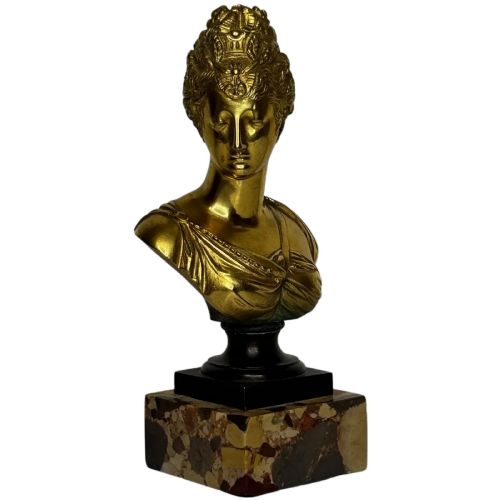
Materials extend beyond solid metal to include patinated bronze, gilt bronze, ormolu, bronzed metal, terracotta, and plaster, frequently mounted upon turned marble bases. Forms include standalone desk busts, large gallery sculptures, and architectural wall masks.
How they were made
Many sculptures incorporate mixed media elements, pairing cast metal heads with carved marble plinths, wooden mounts, or terracotta bodies. Plaster versions relied on detailed mould-taking from original clay models, capturing fine textures before receiving surface paint.
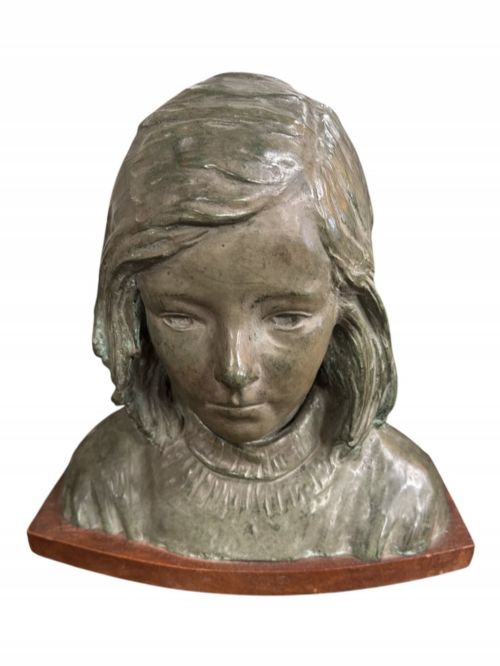
The selection includes classical deities, Roman emperors, historical figures, and domestic sitters produced during the Neoclassical, Art Nouveau, and Art Deco movements.
What varies in quality
The distinction between ordinary foundry output and superior work rests upon the crispness of the chasing and the subtlety of the final patination. Finer casts retain sharp definition in hair, eyes, and facial expressions without obscuring details beneath heavy coatings.
Signatures of known sculptors or foundry stamps elevate a piece, alongside the quality of the supporting marble base and the integrity of the metal alloy used during the casting process.
Eugene Canneel·Emmanuel Villanis·Henry Wissen Senior·Emile Jespers·A. Mercie·George Minne·Sir Thomas Brock·Alajos Strobl·Mathurin Moreau·J Camus·Adolphe Jean Lavergne·Giuseppe Moretti
The Bronze Head Sculpture Glossary
- Grand Tour
- A nineteenth-century tradition where travellers collected classical antiquities and smaller bronze souvenirs across Italy. These cabinet bronzes replicated famous sculptures seen in Roman and Greek collections.
- Ormolu
- Gilt bronze created by applying a finely ground high-carat gold-mercury amalgam to a bronze object. The piece is then heated to bind the gold to the metal surface.
- Terracotta
- A porous, fired clay body used for portrait busts either left in its natural reddish-earth state or painted. It offered an economical yet expressive alternative to cast metal.
- Verdigris
- A green patina that forms naturally on copper, brass, or bronze through atmospheric oxidation. Nineteenth-century founders often replicated this aged finish artificially on classical souvenir bronzes.
Bronze Head Sculpture: Frequently Asked Questions
What is a Grand Tour bronze?
Grand Tour bronzes are small-scale souvenir sculptures produced during the nineteenth century for travellers touring classical sites in Italy. They replicate ancient Greek and Roman masterpieces, such as imperial busts or mythological figures.
These pieces served as scholarly ornaments for libraries and drawing rooms, allowing collectors to display their classical education and travel experiences at home.
Are these busts solid metal?
Most bronze busts produced in the nineteenth and twentieth centuries are hollow casts rather than solid metal. Hollow casting saved expensive material and reduced the overall weight of the sculpture.
Foundries used sand-casting or lost-wax methods to pour molten bronze into a thin layer around an internal core, often mounting the finished hollow head onto a heavy marble base for stability.
Where were these sculptures displayed?
Historical portrait busts and classical heads were traditionally displayed upon mantelpieces, library bookshelves, architectural pedestals, or dedicated desks. Wall plaques and fountain spouts were mounted directly onto vertical surfaces outdoors or in interior halls.
Today, collectors place them similarly in studies, hallways, and living spaces to anchor interior schemes with historical weight.