
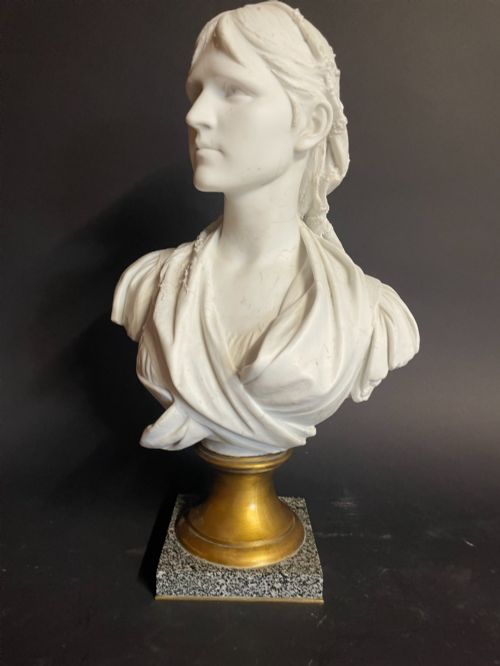
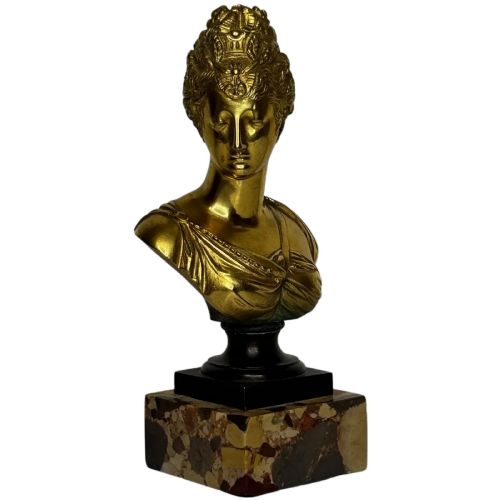
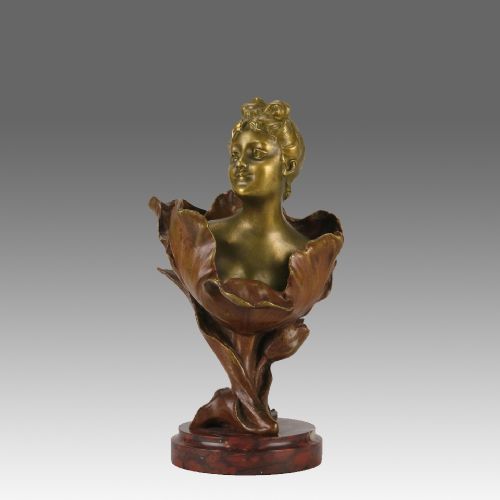


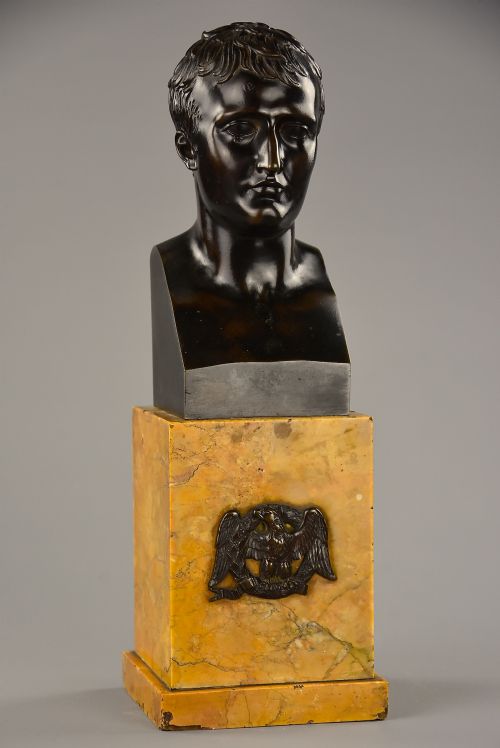


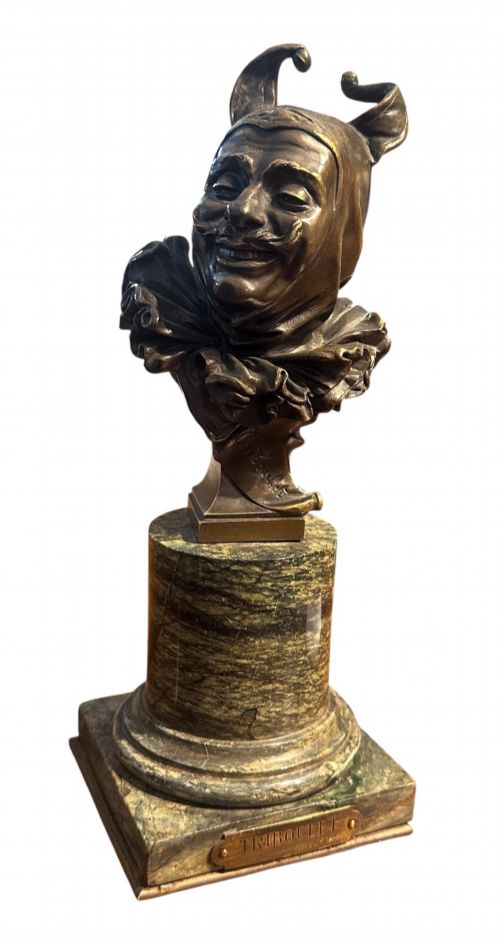

Marble Base Bust
These marble base bust sculptures combine cast metals and carved stone into striking portraits, offering collectors enduring character and historical presence.
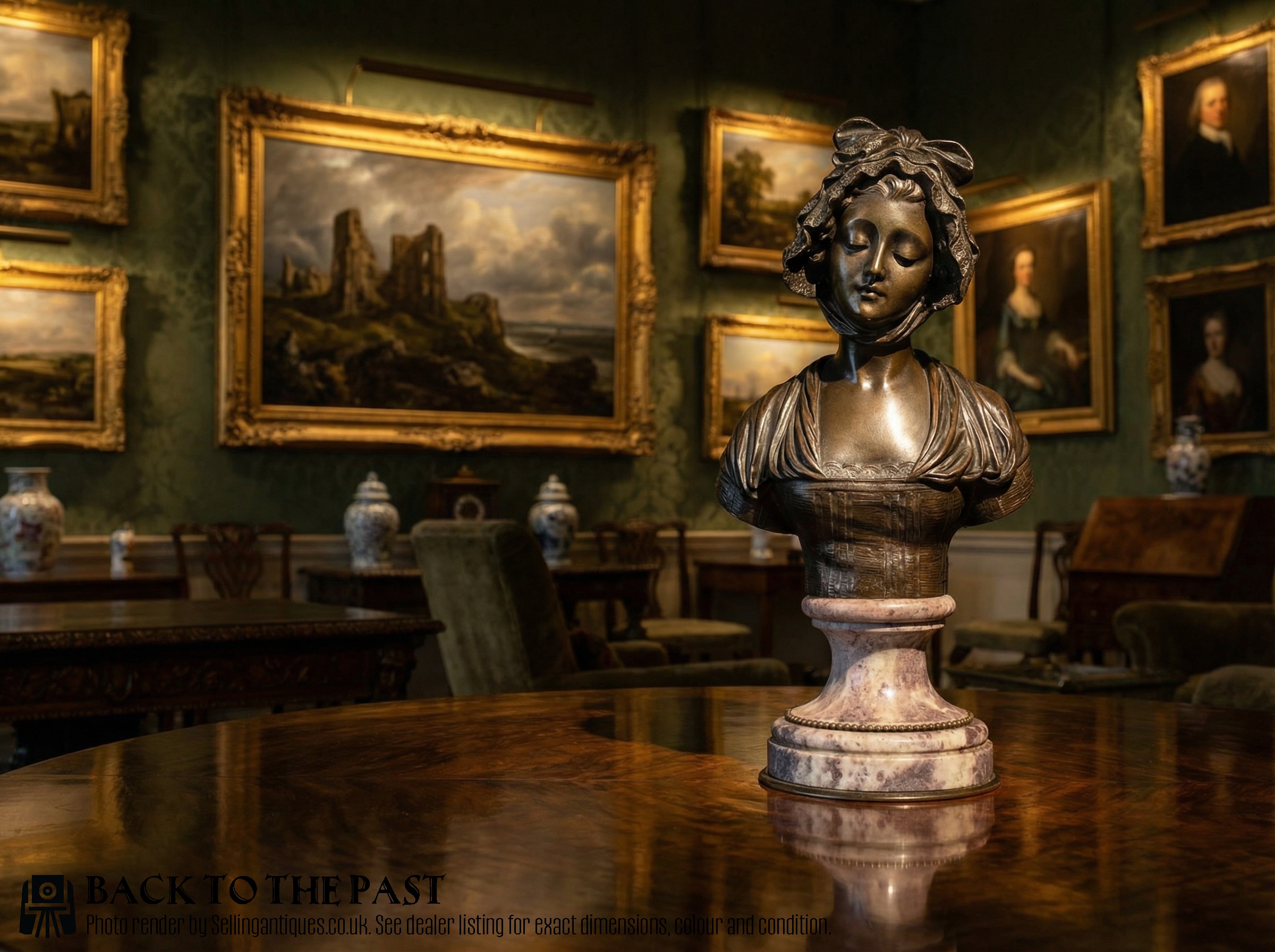
Identifying marble base bust pieces
A marble base bust brings together a figural portrait sculpture and a distinct supporting plinth, creating a balanced display object for interior settings. When you search for marble base bust items, you encounter pieces originating from the nineteenth century through to the early decades of the twentieth century. These sculptures draw upon Classical Revival, Art Nouveau, and Academic Realism traditions, ranging from Italian literary figures to French female allegories.
The sculptural forms on this page frequently pair cast bronze, gilt bronze, or spelter with contrasting mineral plinths. Subjects include historical writers, noblewomen, and mythological or fictional characters such as Thaïs and the fairy of flowers. Both single portrait studies and paired literary figures appear across the inventory records.
Materials and construction methods
The upper portrait portions utilise traditional foundry and carving techniques, employing bronze, gilt bronze, ormulu, spelter, Parian ware, and solid Carrara marble. Metal elements are cast, chased, and finished with patination or gilding, while stone portions are hand-carved and polished to form stable plinths.
Makers integrate the upper sculptural bust with its stone support using mechanical fixings or integrated mounting pins. Bases vary in geological composition, incorporating plain white marble, polychrome varieties, and stylised green or rouge marble blocks.
Retail Price Guide 2026
Typical UK retail prices for marble base bust, calculated from the Sellingantiques database of over a million retail prices indexed since 2003. This retail price guide relies exclusively on Sellingantiques data; no external sources or auction records are used, so the figures do not describe the wider market.
Some literary figures stare down room occupants with permanent Victorian disapproval.
Distinctions in craftsmanship
Superior examples demonstrate meticulous chasing in the metalwork and nuanced facial modeling that captures individual likeness or expression. Finer castings preserve crisp details in hair, drapery, and lettering, whereas weaker pieces show softened contours and minimal surface finishing.
The selection and treatment of the stone plinth also dictate overall merit, with dense, harmoniously coloured bases enhancing the visual weight of the sculpture. Signed works by recognised sculptors carry distinct artistic authority compared to anonymous foundry productions.
Henri Godet·Alajos Strobl·Emmanuel Villanis·Eugene Laurent
The Marble Base Bust Glossary
- Patina
- The surface sheen or colour achieved through age, chemical treatment, or handling on metal and stone. This layer provides visual depth and protects the underlying material.
- Spelter
- A zinc alloy frequently utilised as a cost-effective alternative to bronze in nineteenth-century sculptural casting. It accepts metallic finishes that mimic bronze closely.
- Ormolu
- Finely ground high-carat gold applied to a bronze base through a mercury amalgamation process or electroplating. This technique creates a rich, durable golden surface.
- Parian ware
- A fine-grained white bisquefine porcelain resembling marble, developed in the nineteenth century for portrait busts and statuary. It offers a smooth, matte finish ideal for classical subjects.
Frequently Asked Questions
How are these busts mounted?
The upper sculptural figure secures directly into a drilled or channeled stone plinth using threaded rods or pins.
This mounting method ensures stability while allowing different mineral bases to complement various metal patinas.
Where should I display my bust?
These sculptures suit stable, level surfaces such as mantelpieces, heavy sideboards, or dedicated pedestals where their weight is safely supported.
Keep them away from direct heat sources and strong sunlight to preserve the patination of both the metal and stone.
How do I clean the marble base?
Dust the stone regularly with a soft, dry cloth to prevent particulate buildup on polished surfaces.
Avoid abrasive cleaners or excessive moisture, which can penetrate porous mineral structures and alter the finish.
What subjects are most common?
Portraits frequently depict literary figures, historical personages, and idealized female allegories drawn from classical and nineteenth-century themes.
Signed works often name specific historical characters or theatrical heroines popular during the period.