



Emmanuel Villanis Bronze
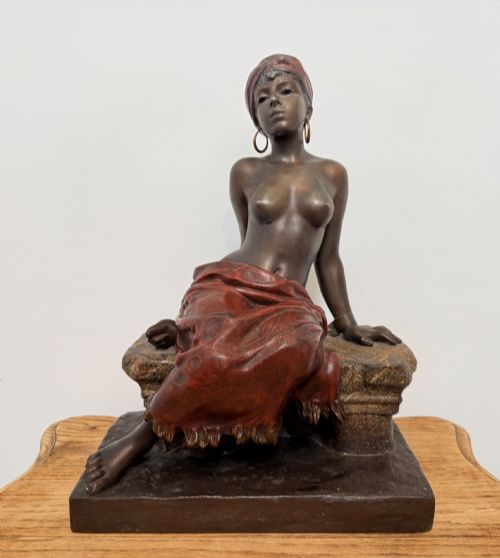
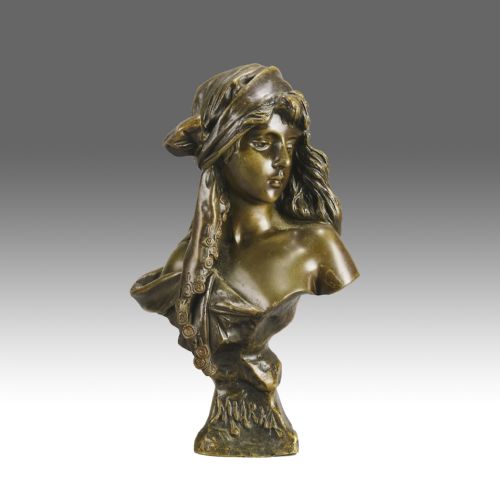
These patinated bronze busts and figures capture the sinuous grace of the Art Nouveau period through the hand of a master.
What an emmanuel villanis bronze is
An emmanuel villanis bronze comprises nineteenth century figural sculptures and portrait busts produced during the height of the Art Nouveau movement. Buyers encounter named female subjects and allegorical figures such as L'Esclave, Captue, Miarka, Thaïs, Cinderella, Ida, and Saphia.
Most examples date from the late nineteenth century and around eighteen ninety, spanning small cabinet pieces measuring just over ten centimetres to larger gallery works. These pieces frequently integrate carved marble or alabaster plinths beneath cast metal forms.
The style draws heavily upon Orientalist themes alongside classical female portraiture characteristic of French foundry production from this era. Each sculpture displays the distinct aesthetic associated with the sculptor's signature modelling of hair, drapery, and expression.
How they were made
Many of the portrait busts incorporate contrasting mineral components, mounted upon bases or integral pedestals carved from marble or alabaster. These natural stone elements provide structural weight and a contrasting tactile finish to the warm metallic surfaces.
Retail Price Guide 2026
Typical UK retail prices for emmanuel villanis bronze, calculated from the Sellingantiques database of over a million retail prices indexed since 2003. This retail price guide relies exclusively on Sellingantiques data; no external sources or auction records are used, so the figures do not describe the wider market.
Some portrait subjects stand barely taller than a teacup, proving that nineteenth century sculptors could pack an immense amount of dramatic flair into just eleven centimetres.
What varies in quality
Quality rests upon the crispness of the metal chase work and the subtlety of the applied patina across the bronze surface. Superior castings retain sharp facial contours and delicate textures in the hair and drapery without softening of detail.
The choice and integration of secondary materials also differentiate examples, particularly the grain and proportion of the marble or alabaster mounts. Larger scale sculptures and those depicting named characters demonstrate greater ambition in the modelling than simpler cabinet studies.
Emmanuel Villanis
The Emmanuel Villanis Bronze Glossary
- Patinated bronze
- Bronze that has been treated with chemical solutions to produce a specific surface colour and tone. This finish protects the metal and defines the sculptural details.
- Orientalist
- A artistic style depicting scenes and subjects from Middle Eastern and North African cultures. It influenced nineteenth century European sculpture and painting.
- Alabaster
- A fine-grained mineral stone used for carving decorative bases and architectural details. It offers a smooth, translucent surface contrasting with cast metal.
Frequently Asked Questions
Who was Emmanuel Villanis?
Emmanuel Villanis was a French sculptor living from eighteen fifty-eight to nineteen fourteen.
He achieved renown for his numerous female busts and figures cast in bronze during the late nineteenth and early twentieth centuries.
What subjects do these bronzes show?
The subjects are primarily young women drawn from literature, mythology, and exotic themes.
Titles often reference specific characters such as Cinderella, Thaïs, or Saphia, reflecting popular cultural narratives of the period.
How do I identify the period?
Dating relies upon the characteristic Art Nouveau styling, the presence of period patination, and foundry methods typical of the late nineteenth century.
Signatures or inscribed titles upon the bronze also assist in placing the work within the sculptor's active lifetime.
Where should I display these sculptures?
These bronzes suit stable surfaces away from direct sunlight and moisture to protect the patinated metal and stone bases.
Placing them at eye level allows the viewer to appreciate the fine facial modelling and contrasting marble or alabaster mounts.