



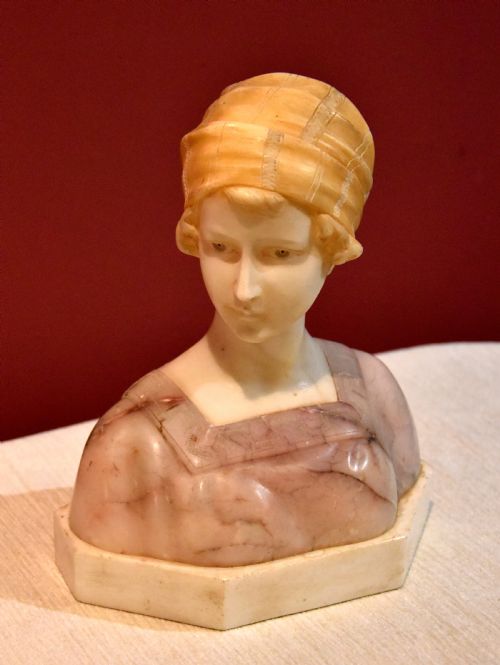
Art Nouveau Female Statue
When you handle an art nouveau female statue, you touch a flowing line where turn-of-the-century sculptors captured myth, nature, and the grace of the human form.
Art Nouveau Female Statue
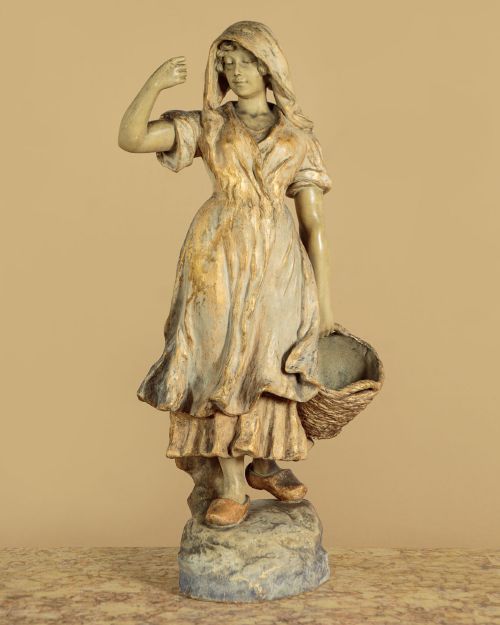
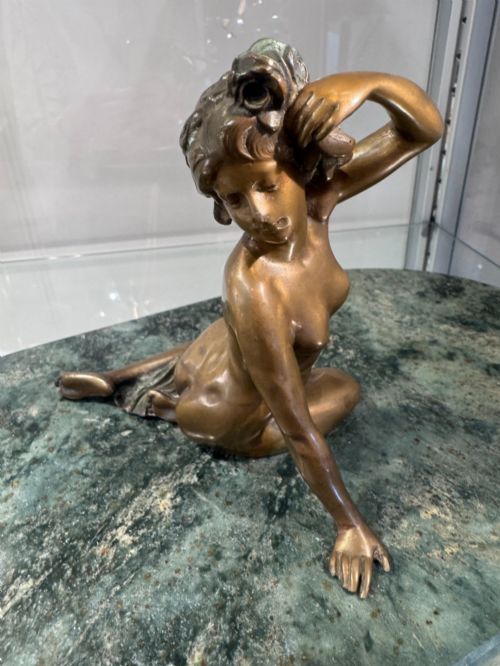
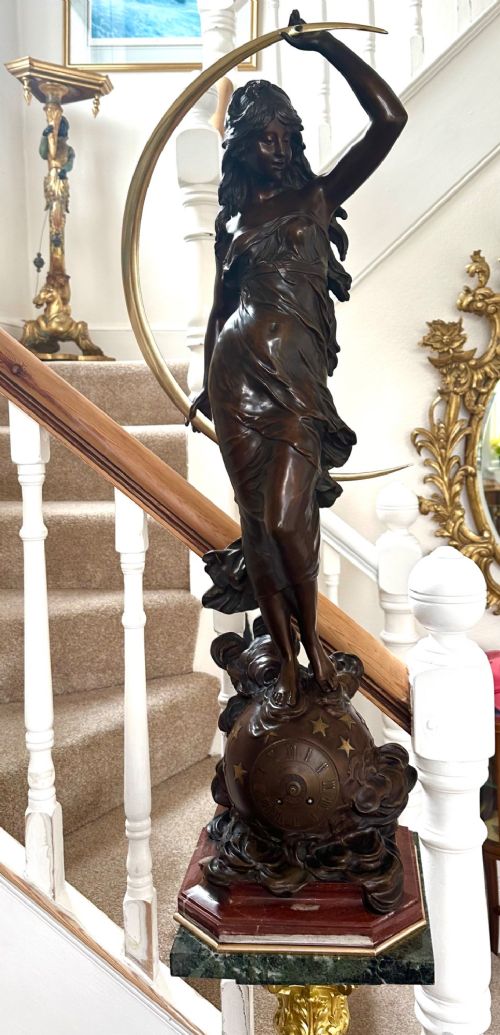
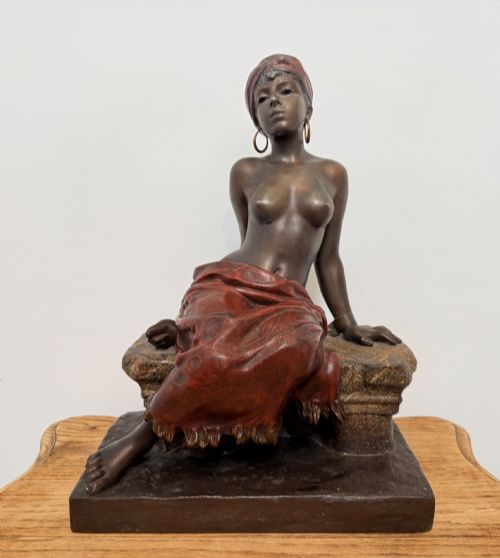
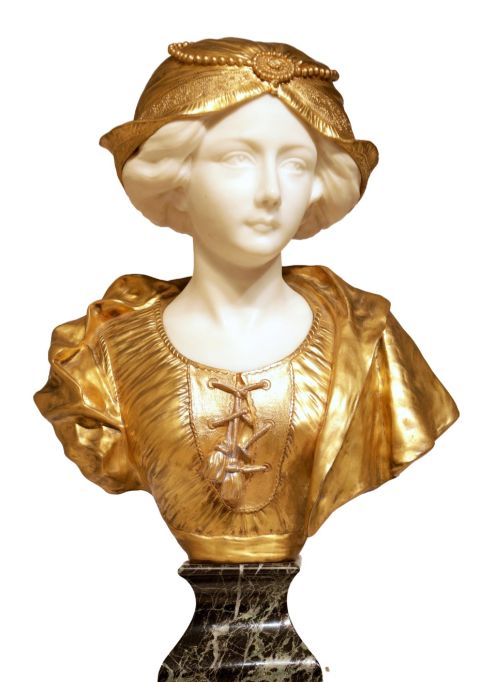
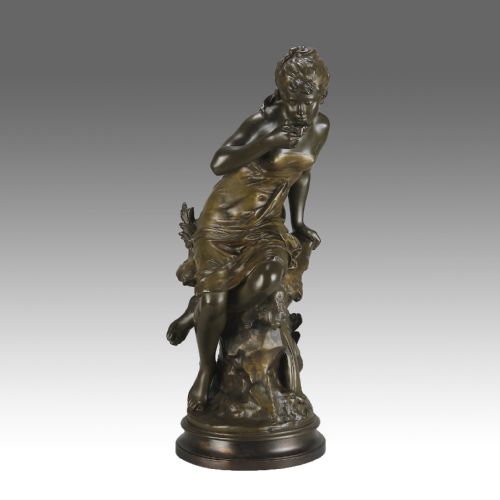
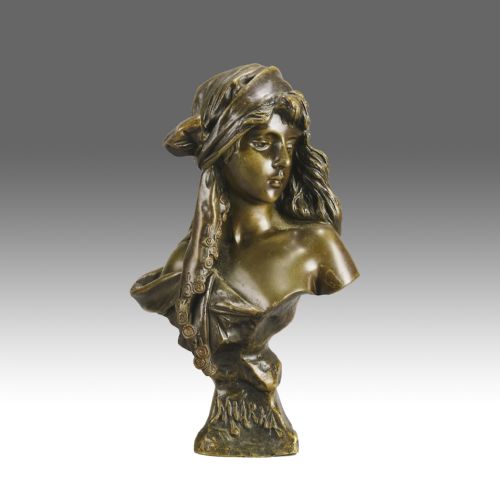
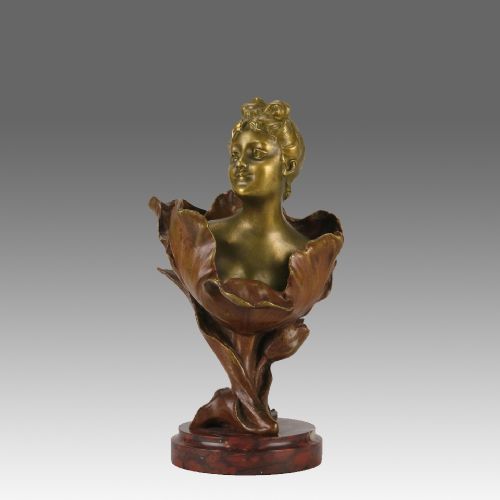
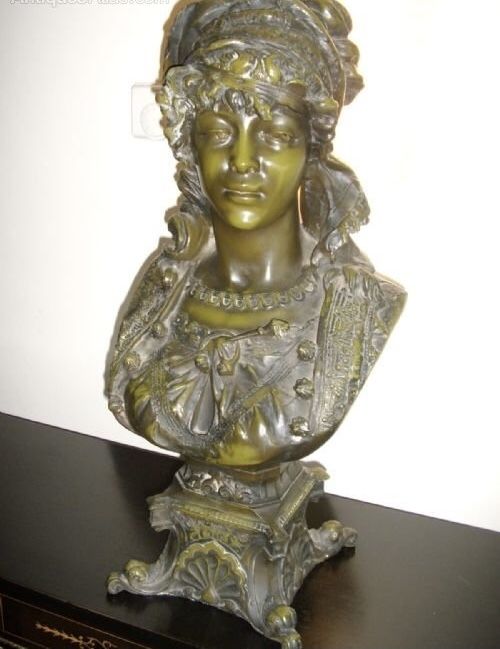
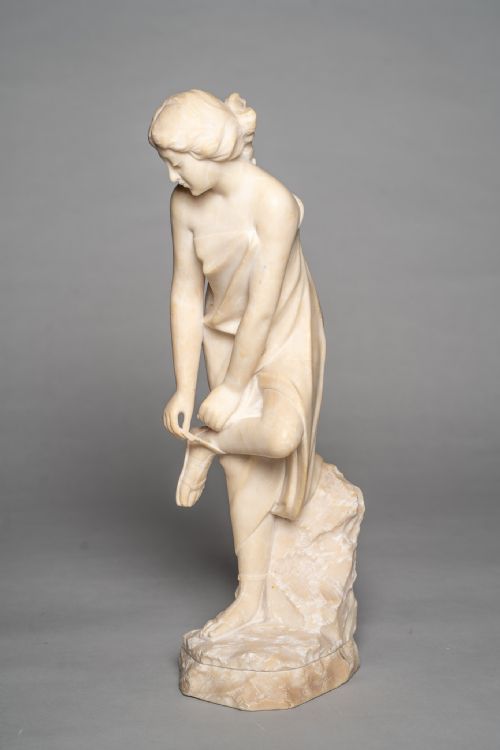
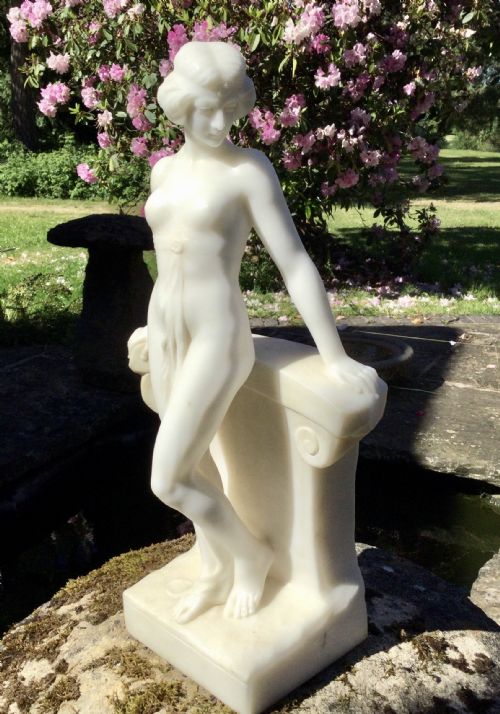
An art nouveau female statue encompasses sculpted figures, busts, and decorative statuary representing women in fluid, naturalistic postures typical of the late nineteenth and early twentieth centuries. These pieces frequently draw upon mythological themes, allegories of nature, and graceful maidens, reflecting the dominant aesthetic of the Belle Epoque.
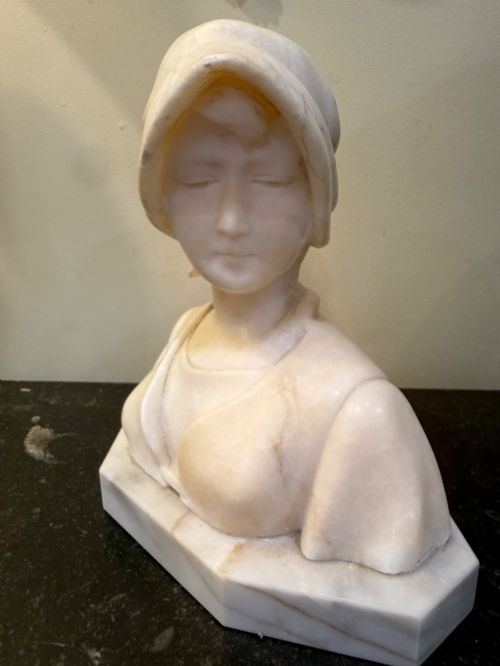
You are most likely to encounter freestanding bronze figures or mixed-media busts combining marble and alabaster on this page. The sculptural forms range from intimate tabletop figurines to monumental works produced by continental foundries and potteries.
Materials and Working Methods
Foundries cast these statues using both traditional bronze methods and patinated or gilt finishes to accentuate the subtle textures of drapery and hair. Artisans combined metals with cold-painted details or mounted figures upon heavy marble bases for stability and contrast.
Stone carvers worked directly with alabaster and white marble to achieve translucent flesh tones and soft contours on female busts. Ceramic and terracotta ateliers utilised specialised mould techniques, often finished with polychrome paint or iridescent glazes characteristic of the period.
Listings feature works spanning the late nineteenth century through the early twentieth century, encompassing Victorian, Edwardian, and Art Deco periods.
Evaluating Craftsmanship
Artisanal execution dictates the depth of character in a bust or full-length figure, where lesser castings blur the flowing lines inherent to the style. The choice of materials, such as the use of multi-coloured marbles paired with high-grade patinated bronze, signals ambition in the original workshop.
Goldscheider·Rudolf Küchler·Emmanuel Villanis·Mathurin Moreau·Henri Godet·Georges Van Der Straeten·Royal Dux Bohemia·Edouard Drouot·Hans Müller·Ernst Barrias
The Art Nouveau Female Statue Glossary
- Patina
- The surface coloration and chemical sheen developed naturally over time or applied chemically by the foundry. It protects the metal and highlights the sculptural details.
- Alabaster
- A fine-grained, translucent stone used frequently for carved female busts and reclining figures. Its softness allowed artisans to achieve delicate facial expressions.
- Terracotta
- Baked red clay shaped into sculptural figures and decorative works. Workshops often painted or glazed these pieces after firing.
- Gilt Bronze
- Bronze metal coated with a thin layer of gold or gold-coloured alloy. This technique added luminosity to decorative robes and hair.
Art Nouveau Female Statue: Frequently Asked Questions
How do I identify an art nouveau female statue?
Look for characteristic whiplash curves, flowing hair integrated with natural elements like flowers or water, and robes that mimic organic movement.
These visual cues set the aesthetic apart from the rigid symmetry of earlier Victorian designs and the geometric abstraction of later art deco work.
What materials were commonly used for these sculptures?
Foundries and studios primarily employed bronze, carved alabaster, marble, and terracotta to render these female forms.
Mixed media pieces combining patinated bronze with marble pedestals or alabaster faces also appear frequently across continental European workshops.
Where were these decorative figures originally displayed?
Wealthy patrons placed these statues upon mantelpieces, pedestals, and side tables within late nineteenth-century drawing rooms and libraries.
They served as sophisticated indoor ornaments that reflected an owner's appreciation for modern continental art and classical allegory.
How should I care for an antique bronze or alabaster piece?
Dust bronze surfaces gently with a dry, soft cloth and avoid applying modern polishes that can strip the original patina.
Alabaster requires particular care because it is a soft stone sensitive to moisture; keep these carvings in dry environments away from direct sunlight.