21,084  PAGES BROWSED TODAY PAGES TODAY 71  ANTIQUES UPLOADED TODAY NEW ARRIVALS
ID #SA1226348
FOR SALE
£6,000
Email
Save
19th Century French School the Amazonmachy
Darnley Fine Art
for sale €7,020     $7,620
£6,000

Darnley Fine Art

Sellingantiques Verified Since Jul 2026
View Dealers Stock Page
Id #SA1226348
PDF SHARE
SAVE

19th Century French School the Amazonmachy

19th century
For Sale by Darnley Fine Art
Description

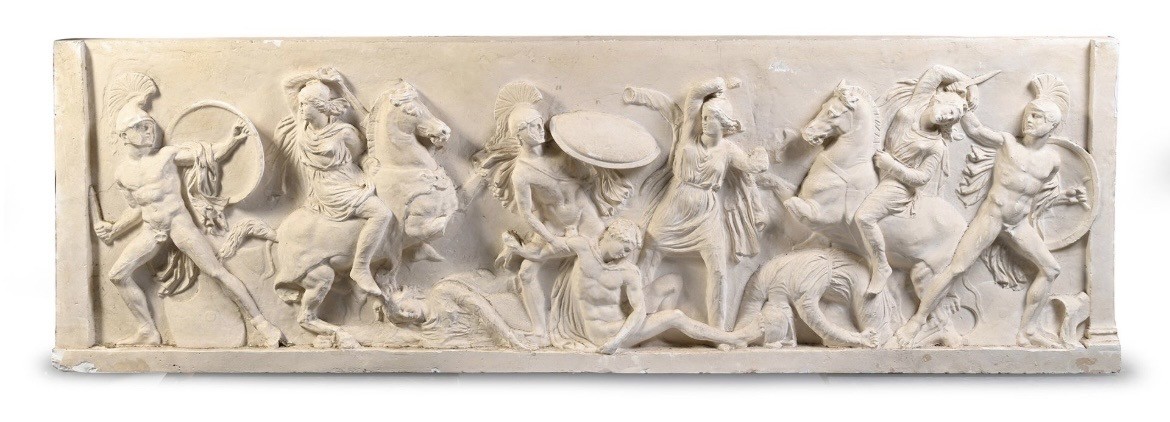
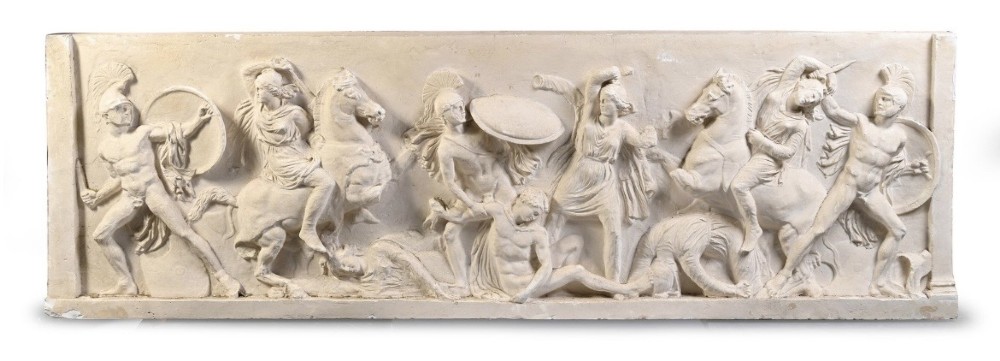
Plaster freize relief

Size: 32 2/3 x 100 3/4 inches (83 x 256 cm)

Amazonomachy represents the Greek ideal of civilisation. The Amazons were portrayed as a savage and barbaric race, while the Greeks were portrayed as a civilised race of human progress.
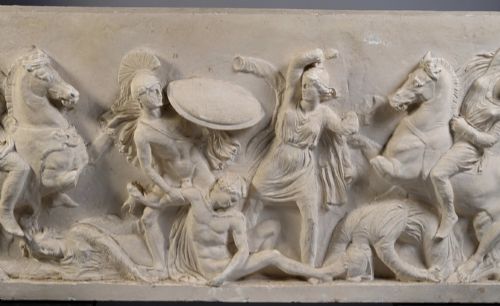
The original Roman marble sarcophagus, dating from 330-310BC, from which this cast is taken, was excavated in 1557 in the ancient royal city of Soloi, Cyprus. It was taken the following year to Venice. In 1567 it was acquired by the Fugger family and then in the 1st half of the 17th century purchased by the Hapsburgs.
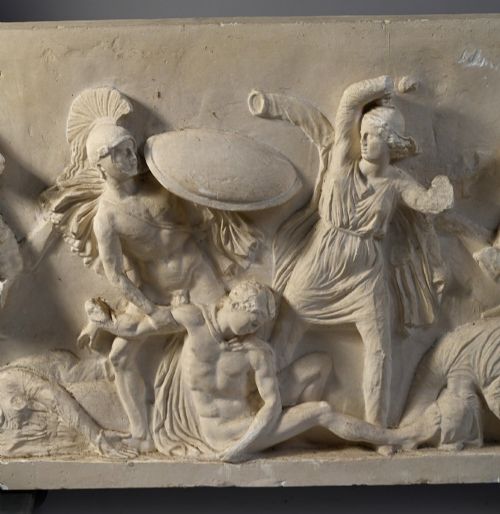
According to Bruno Snell’s view of Amazonomachy:

“For the Greeks, the Titanomachy and the battle against the giants remained symbols of the victory which their own world had won over a strange universe; along with the battles against the Amazons and Centaurs they continue to signalize the Greek conquest of everything barbarous, of all monstrosity and grossness.”
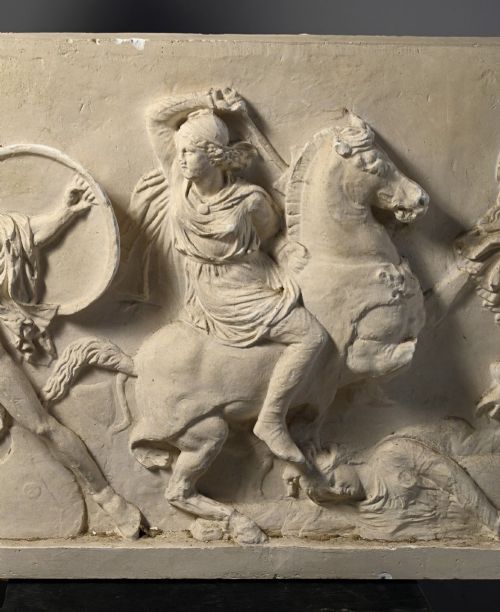
Amazonomachy is also seen as the rise of feminism in Greek culture. In Quintus Smyrnaeus’s The Fall of Troy, Penthesilea, an Amazonian queen, who joined on the side of the Trojans during the Trojan war, was quoted at Troy, saying:

"Not in strength are we inferior to men; the same our eyes, our limbs the same; one common light we see, one air we breathe; nor different is the food we eat. What then denied to us hath heaven on man bestowed?"

According to Josine Blok, Amazonachy provides two different contexts in defining a Greek hero. Either the Amazons are one of the disasters from which the hero rids the country after his victory over a monster; or they are an expression of the underlying Attis motif, in which the hero shuns human sexuality in marriage and procreation.

“In the 5th century, the Achaemenid Empire of Persia began a series of invasions against Ancient Greece. Because of this, some scholars believe that on most 5th-century Greek art, the Persians were shown allegorically, through the figure of centaurs and Amazons.”

The west metopes of the Parthenon depict a battle between Greeks and Amazons. Despite its mutilated state, scholars generally concur that the scene represents the Amazon invasion of Attica. The Bassae Frieze in the Temple of Apollo has different types of Amazonomachy depicted – Trojan/ Heraclean etc. – as does the Mausoleum at Halicarnassus. (Source: Wiki)

Physical Dimensions
Height
83cm (32.68")
Width
156cm (61.42")
Declaration

Darnley Fine Art has dated this Neoclassical Plaster Wall Relief to the Victorian era.

Reference Numbers
Sellingantiques Reference
SA1226348
Description
Plaster freize relief

Size: 32 2/3 x 100 3/4 inches (83 x 256 cm)

Amazonomachy represents the Greek ideal of civilisation.

The Amazons were portrayed as a savage and barbaric race, while the Greeks were portrayed as a civilised race of human progress.
Darnley Fine Art
fig 1. A horizontal cream plaster bas-relief panel depicting a classical battle scene between cavalry warriors and shield-bearing soldiers.
fig 1. 19th Century French School the Amazonmachy

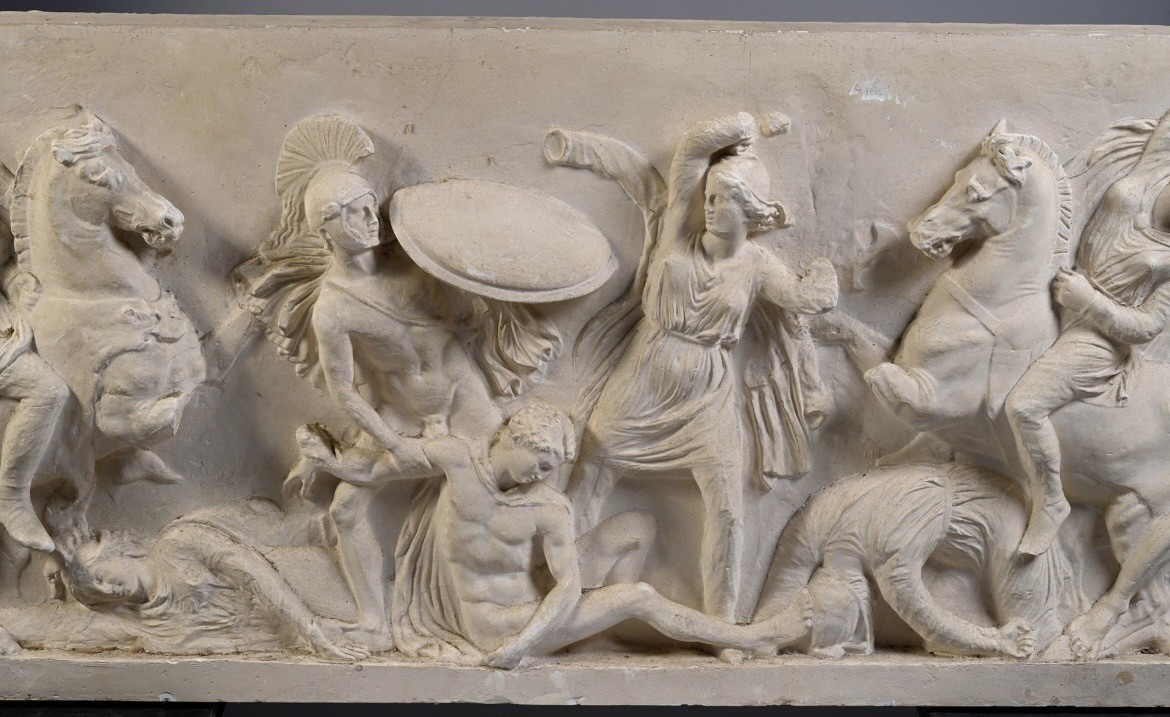
The original Roman marble sarcophagus, dating from 330-310BC, from which this cast is taken, was excavated in 1557 in the ancient royal city of Soloi, Cyprus. It was taken the following year to Venice. In 1567 it was acquired by the Fugger family and then in the 1st half of the 17th century purchased by the Hapsburgs.

fig 2. A horizontal cream plaster bas-relief panel depicting a classical battle scene between cavalry warriors and shield-bearing soldiers.
fig 2. 19th Century French School the Amazonmachy

According to Bruno Snell’s view of Amazonomachy:

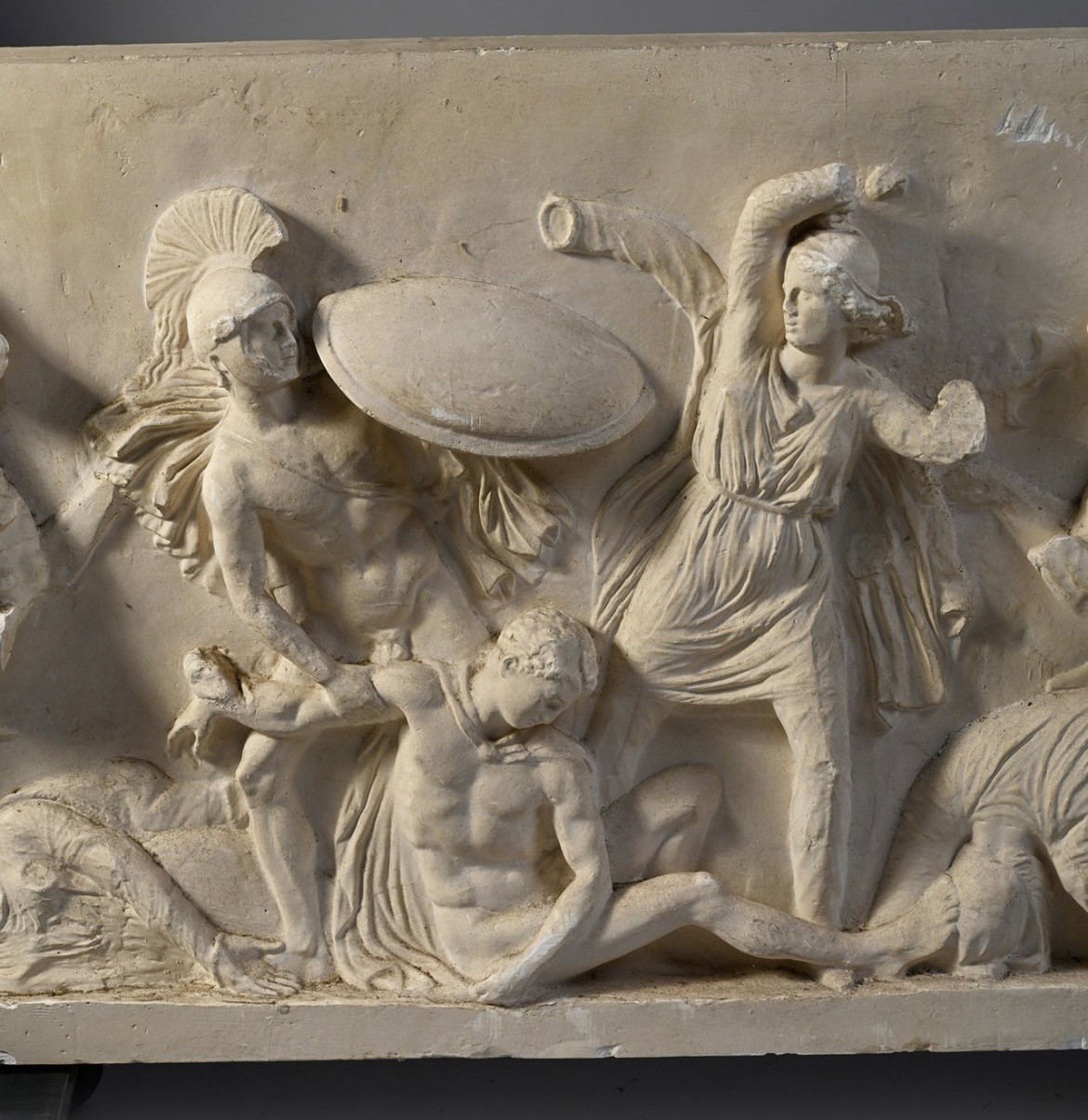
“For the Greeks, the Titanomachy and the battle against the giants remained symbols of the victory which their own world had won over a strange universe; along with the battles against the Amazons and Centaurs they continue to signalize the Greek conquest of everything barbarous, of all monstrosity and grossness.”

fig 3. A horizontal cream plaster bas-relief panel depicting a classical battle scene between cavalry warriors and shield-bearing soldiers.
fig 3. 19th Century French School the Amazonmachy

Amazonomachy is also seen as the rise of feminism in Greek culture. In Quintus Smyrnaeus’s The Fall of Troy, Penthesilea, an Amazonian queen, who joined on the side of the Trojans during the Trojan war, was quoted at Troy, saying:

"Not in strength are we inferior to men; the same our eyes, our limbs the same; one common light we see, one air we breathe; nor different is the food we eat. What then denied to us hath heaven on man bestowed?"

According to Josine Blok, Amazonachy provides two different contexts in defining a Greek hero. Either the Amazons are one of the disasters from which the hero rids the country after his victory over a monster; or they are an expression of the underlying Attis motif, in which the hero shuns human sexuality in marriage and procreation.

“In the 5th century, the Achaemenid Empire of Persia began a series of invasions against Ancient Greece. Because of this, some scholars believe that on most 5th-century Greek art, the Persians were shown allegorically, through the figure of centaurs and Amazons.”

The west metopes of the Parthenon depict a battle between Greeks and Amazons. Despite its mutilated state, scholars generally concur that the scene represents the Amazon invasion of Attica. The Bassae Frieze in the Temple of Apollo has different types of Amazonomachy depicted – Trojan/ Heraclean etc. – as does the Mausoleum at Halicarnassus. (Source: Wiki)

Height
83cm (32.68")
Width
156cm (61.42")
Date of Manufacture

Darnley Fine Art has dated this Neoclassical Plaster Wall Relief to the Victorian era.

Reference Numbers
Sellingantiques Ref
SA1226348
Darnley Fine Art
Sellingantiques verified Since Jul 2026
Dealer Profile

You can view the stock and full dealer information on the Darnley Fine Art Profile Page
PDF SHARE
SAVE
A horizontal cream plaster bas-relief panel depicting a classical battle scene between cavalry warriors and shield-bearing soldiers.
1 / 4
Archive I A horizontal cream plaster bas-relief panel depicting a classical battle scene between cavalry warriors and shield-bearing soldiers.

19th century French School The Amazonmachy

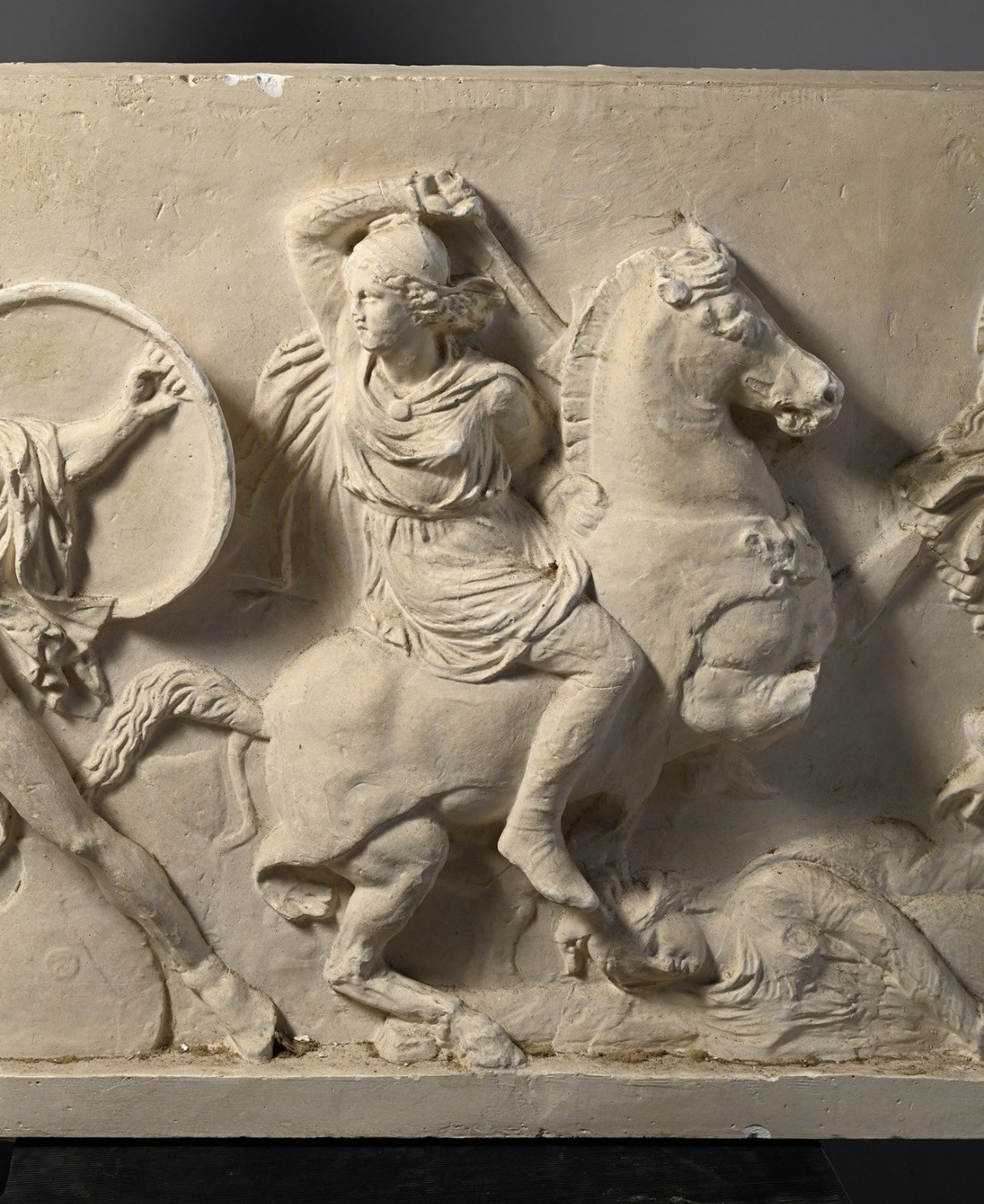
Archive II A horizontal cream plaster bas-relief panel depicting a classical battle scene between cavalry warriors and shield-bearing soldiers. View II
Archive III A horizontal cream plaster bas-relief panel depicting a classical battle scene between cavalry warriors and shield-bearing soldiers. View III
Archive IV A horizontal cream plaster bas-relief panel depicting a classical battle scene between cavalry warriors and shield-bearing soldiers. View IV
Enlarged Archival View
Telephone 0207 379 0499
Location
2-4 Cecil Court
London
WC2N 4HE
United Kingdom

Opening Times
Monday to Saturday: 10:30 - 5:30
(excluding Bank Holidays)
Dealer Profile Page sellingantiques.co.uk/dfa
Verified Since Jul 2026
Items For Sale 76
Darnley Fine Art
Verified Since Jul 2026
View Dealer Info
Location: 2-4 Cecil Court, London, WC2N 4HE, United Kingdom, , Opening Times, Monday to Saturday: 10:30 - 5:30, (excluding Bank Holidays)
Verified
Jul 2026
For Sale
76
A horizontal cream plaster bas-relief panel depicting a classical battle scene between cavalry warriors and shield-bearing soldiers.
19th century French School The Amazonmachy
Ref: SA1226348
A horizontal cream plaster bas-relief panel depicting a classical battle scene between cavalry warriors and shield-bearing soldiers.
Detail View 1
Detail View 2
Detail View 3
Archival Detail
Every single antique dealer on our platform is individually approved by our internal team. We verify their professional trade history, ethical standards, and photographic quality to ensure a secure, high-standard buying environment. Upon joining, every dealer agrees to a strict 9-point code of conduct. While issues can occasionally arise, our dealers typically resolve them swiftly and directly with the buyer. In fact, since our founding in 2002, Sellingantiques has only had to step in to help resolve an issue on roughly five occasions—a true testament to the quality of our dealers and their dedication to your happiness.
Our dealers are highly experienced in packing and shipping fragile, high-value antiques. Because you are in direct contact with the dealer, you will be able to easily go through all available shipping and insurance options together to ensure your item arrives safely.
Antiques are the ultimate green purchase. By choosing historical pieces over newly manufactured goods, you completely eliminate the carbon footprint of modern mass production while preserving exceptional, timeless craftsmanship.

Popularised during the 18th and 19th centuries amid the Grand Tour movement, plaster casts of classical Greek and Roman friezes were produced to study ancient sculpture and decorate grand interiors with classical motifs.

These reliefs were cast using fine gypsum plaster mixed with water and poured into moulds, frequently reinforced with hemp or jute fibres on the reverse to ensure structural stability.

Period plaster pieces exhibit natural surface patination, minor age wear, hand-chiseled trimming along edges, and occasionally plasterer marks or studio stamps on the reverse.

Positioning an architectural plaster relief above a mantelpiece or sideboard creates a dramatic focal point, contrasting traditional sculptured detail against clean contemporary lines.

Remove surface dust gently using a dry, soft-bristled brush. Avoid water or liquid solvents, as moisture can soften and damage untreated gypsum plaster.
items
Add keywords to the filter
Price
£100
£250000
Era
Movements
Material
Origin
Stock Location
Freshness
Online Payments
Categories