


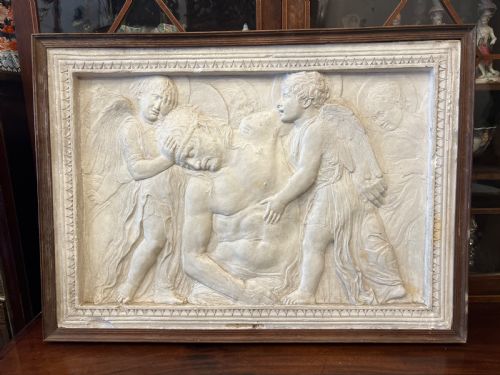

White Plaster Wall Relief
White plaster wall relief works bring classical form and crisp modelling into a room, offering tactile depth that flat paintings miss.
White Plaster Wall Relief
When you search for white plaster wall relief, you encounter moulded panels, framed intaglios, and architectural friezes drawn from the eighteenth and nineteenth centuries. These objects capture classical subjects, mythological scenes, and religious compositions translated into pale gypsum and plaster.
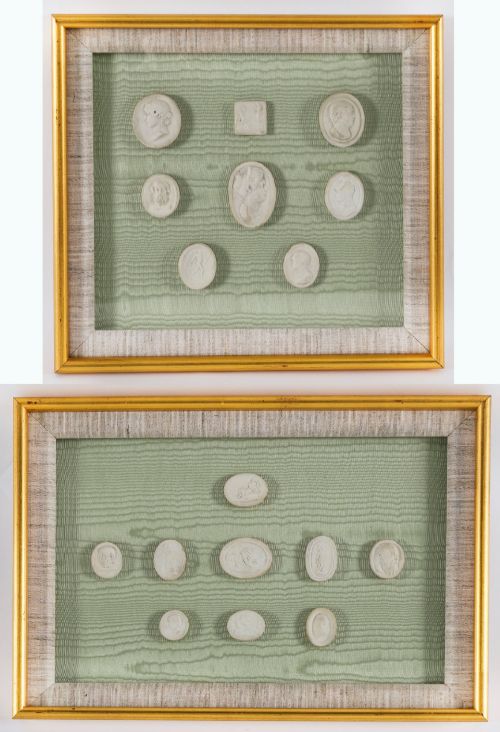
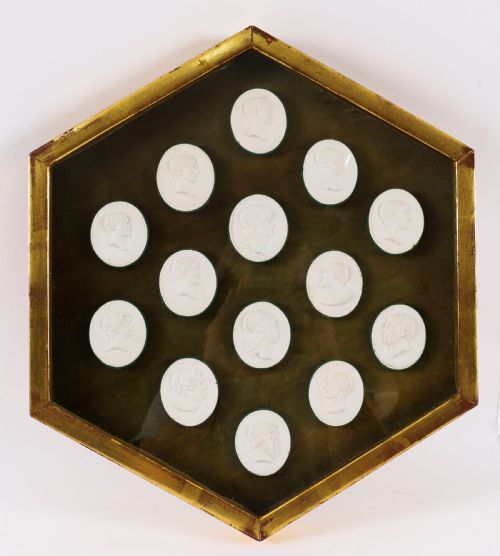
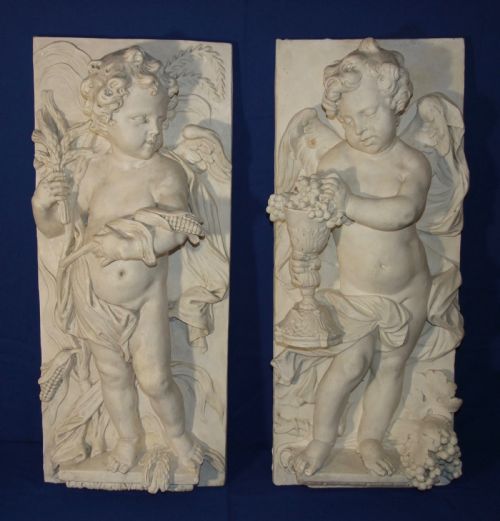
The versions most commonly met on this page include framed Grand Tour intaglios, classical horse riders, and winged cherub friezes. Such pieces range from modest Victorian collections to substantial eighteenth-century French panels and architectural fragments.
Neoclassical, Renaissance Revival, and Victorian aesthetic influences dominate these selections. They appear mounted behind glass, set within wooden frames, or presented as individual wall plaques ready for interior display.
How they were made
Artisans produced these works using gypsum and plaster, often incorporating marble dust to achieve a dense, stone-like surface finish. Some pieces combine plaster with wood, gilt wood, or gold leaf frames to enhance the visual presentation.
Moulding and deep carving techniques allowed makers to capture intricate details, from the musculature of Hellenistic figures to the delicate feathers of winged cherubs. Master craftsmen also employed textile and fabric backings within frames to provide a contrasting background for white casts.
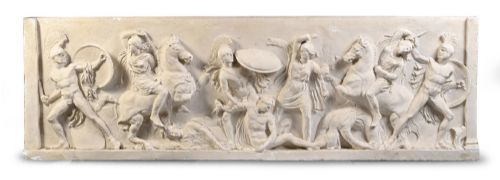
One nineteenth-century plaster mould captures an Amazonmachy, preserving ancient battlefield chaos in crisp white gypsum.
What varies in quality
The care taken in arrangement and framing elevates certain pieces above standard decorative items. Cohesive groupings, such as arranged Grand Tour intaglios or deeply carved architectural moulds, demonstrate greater artistic intent and execution.
The White Plaster Wall Relief Glossary
- Intaglio
- A design engraved into a material so that the impression sinks below the surface. Grand Tour intaglios were collected by travellers in Italy during the eighteenth and nineteenth centuries.
- Frieze
- A broad horizontal band of sculpted or painted decoration, often placed near a ceiling. Plaster friezes depicted classical figures or cherubs in high relief.
- Gypsum
- A soft sulphate mineral used to create plaster of Paris for moulding and casting. It provides the smooth, bright white surface characteristic of these wall reliefs.
- Grand Tour
- A traditional trip of Europe undertaken by upper-class European young men of sufficient means. Travellers collected plaster casts and intaglios as souvenirs of classical antiquity.
- Neoclassical
- A Western cultural movement inspired by the classical art and culture of ancient Greece and Rome. This style prioritises symmetry, restraint, and mythological subject matter.
White Plaster Wall Relief: Frequently Asked Questions
How should I hang a heavy plaster relief?
Plaster and gypsum objects carry substantial weight, particularly when framed with wood and glass. Ensure you locate wall studs or utilise appropriate fixings rated for heavy loads to support the piece securely.
Position the work at eye level where natural light can strike the surface at an angle. Side lighting accentuates the crisp shadows and deep modelling characteristic of these reliefs.
Are these pieces fragile?
Plaster and marble dust compositions require careful handling to prevent chipping or surface abrasion. While robust enough for interior walls, they can sustain damage if struck or dropped.
Keep framed works away from areas of high humidity or direct moisture. Use a soft, dry brush gently to remove dust from the crevices without disturbing the delicate modelling.
What is a Grand Tour intaglio collection?
Grand Tour collections consist of multiple small plaster or sulphur casts reproducing ancient gems and intaglios. Travellers gathered these sets as portable cabinets of classical art during European journeys.
In modern interiors, these framed sets function as detailed focal points. The uniformity of the white casts against a dark fabric background highlights the precision of nineteenth-century moulding.
How do I date an antique plaster relief?
Dating relies on examining the framing materials, the backing boards, and the crispness of the subject matter. Eighteenth-century pieces often display hand-carved wooden elements, while Victorian examples feature specific revival motifs.
Consulting the specific school or historical source referenced by the cast provides further chronological context. Makers frequently copied Renaissance or Hellenistic masterpieces using contemporary nineteenth-century techniques.