


Classical Marble Pedestal Stand
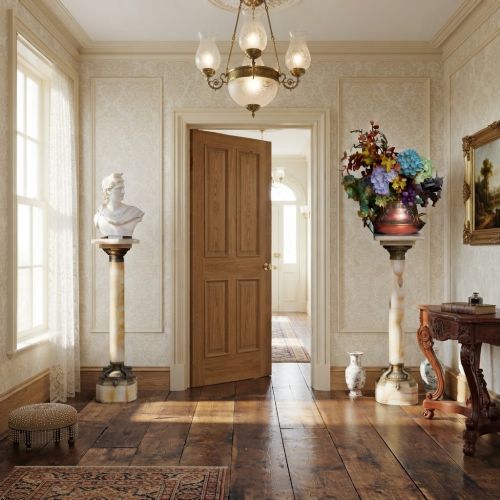
A classical marble pedestal stand serves to elevate sculpture or light, appearing here across nineteenth-century and neoclassical revivals.
Classical Marble Pedestal Stand
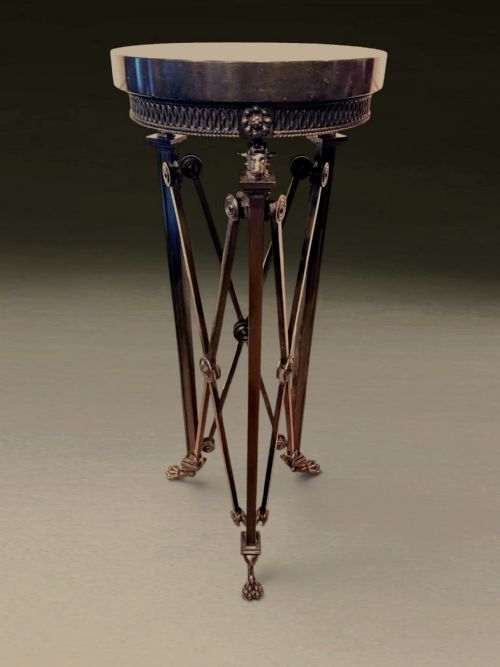
A classical marble pedestal stand brings architectural presence into a room, taking the form of columns, torcheres, and plinths designed to hold busts, urns, or lamps. Buyers searching this phrase meet substantial nineteenth-century examples alongside early twentieth-century interpretations rooted in neoclassical styles.
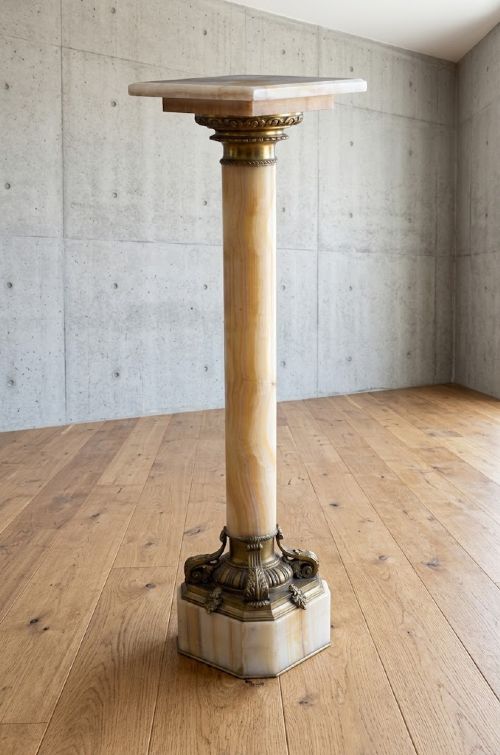
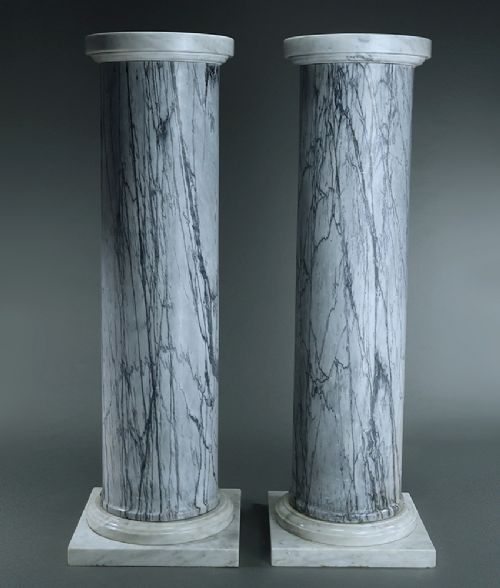
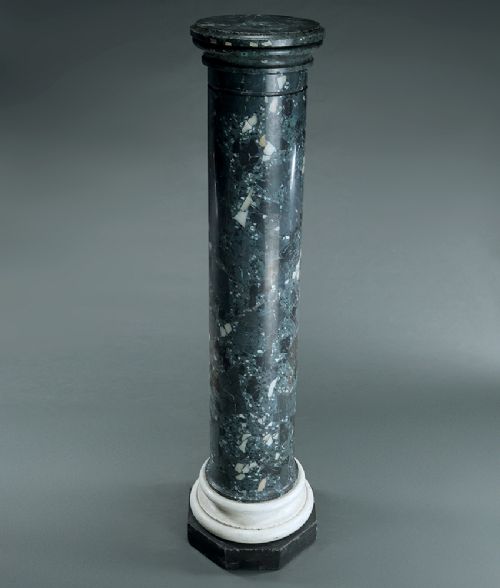
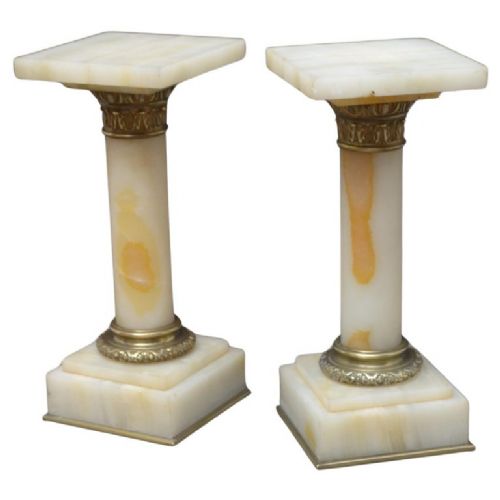
The selection ranges from tall, slender columns in variegated green or honey-coloured stone to lower plant stands and bedside pieces. Many reflect French Empire or Grand Tour influences, utilising traditional cylindrical and square formats intended to display decorative objects at eye level.
Materials and Construction
The pieces rely heavily on natural stones including Carrara, Bardiglio, Verde Antico, and onyx, often paired with cast or chased ormolu collars and brass mounts. Artisans also employed scagliola and painted finishes to create convincing faux marble surfaces over plaster or timber cores.
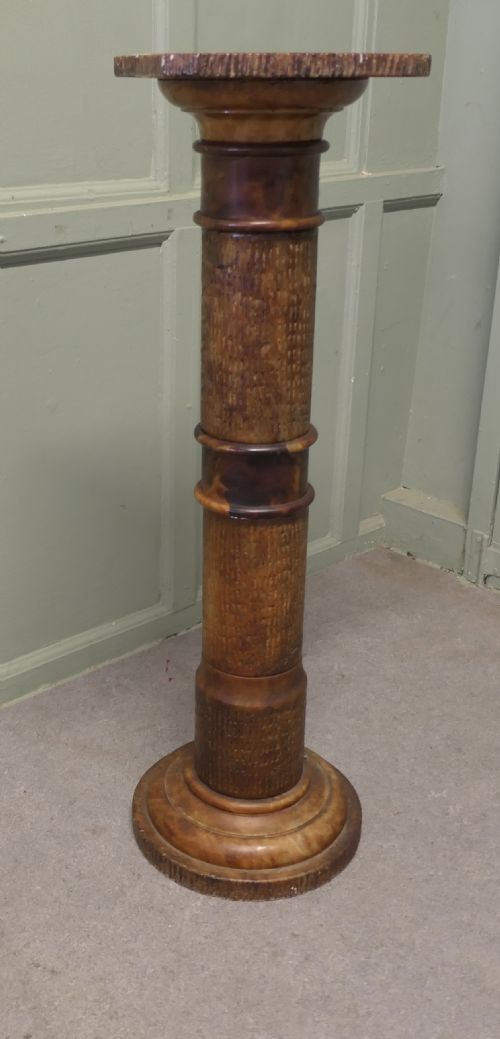
Cabinetmakers constructed supporting elements from mahogany, satinwood, and alabaster, integrating turnings and carved details. Structural integrity depends on the precise fitting of stone sections to wooden or metal internal supports.
Napoleon Bonaparte retains a towering presence here through an early nineteenth-century marble bust perched atop its own column.
Evaluating the Pieces
Quality rests upon the selection and figuration of the stone, where deeply variegated marbles and finely turned shafts demonstrate superior material ambition. The crispness of carved details and the weight of cast ormolu mounts distinguish standard production from exceptional examples.
The retention of original painted surfaces on faux marble pieces or simulated finishes dictates authenticity. Proportion and stability across larger columns also separate simpler utilitarian stands from grander architectural statements.
The Classical Marble Pedestal Stand Glossary
- Ormolu
- Gilded bronze mounts applied to furniture and pedestals. This technique was widely utilised in French nineteenth-century cabinetmaking to accent stone columns.
- Scagliola
- A composite substance made from glue, isinglass, and pigments mixed with alabaster powder. Artisans used it to imitate expensive marbles on large pedestals.
- Torchere
- A tall stand designed to support a light or candle. These pieces frequently adopt classical column proportions.
- Grand Tour
- A cultural journey undertaken by wealthy young Europeans to collect antiquities. It inspired many nineteenth-century marble and alabaster stands.
- Verde Antico
- A dark green serpentine marble favoured in classical architecture. It appears frequently on Italian columns from the nineteenth century.
Classical Marble Pedestal Stand: Frequently Asked Questions
What were classical marble pedestal stands used for originally?
These pieces served primarily to elevate sculpture, urns, and lighting within formal rooms. By raising objects to eye level, they displayed collections effectively.
They also acted as architectural accents in hallways and reception spaces, reflecting classical design principles.
How do I identify a nineteenth-century pedestal from a later revival?
Nineteenth-century examples often exhibit heavier bronze or ormolu mounts and denser stone composition. Construction techniques in the core structure align with period cabinetmaking standards.
Later revivals from the twentieth century tend to use lighter internal framing and different finishing compounds on faux surfaces.
Are faux marble pedestals authentic antiques?
Painted plaster and simulated marble stands date back to the nineteenth and early twentieth centuries. Artisans created them as lighter or more affordable alternatives to solid stone columns.
Retaining the original painted finish validates their age and historical status as decorative furnishings.
Where should I place a heavy marble column at home?
These stands require stable, level flooring due to their considerable weight. Placing them against structural walls or in corners prevents accidental tipping.
They function well supporting heavy lamps, bronze busts, or large architectural plants.