


Victorian Green Pedestal
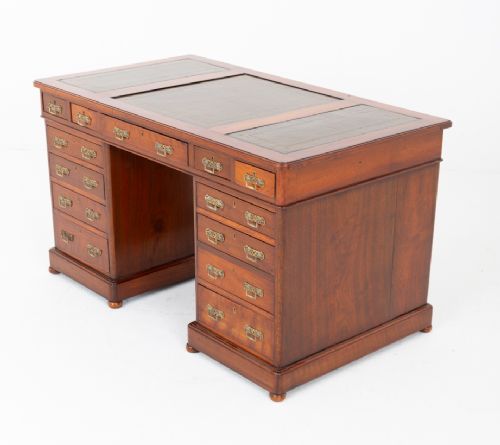
When you search for a victorian green pedestal, you encounter substantial writing desks and functional office furniture defined by their distinctive coloured leather inserts.
Victorian Green Pedestal
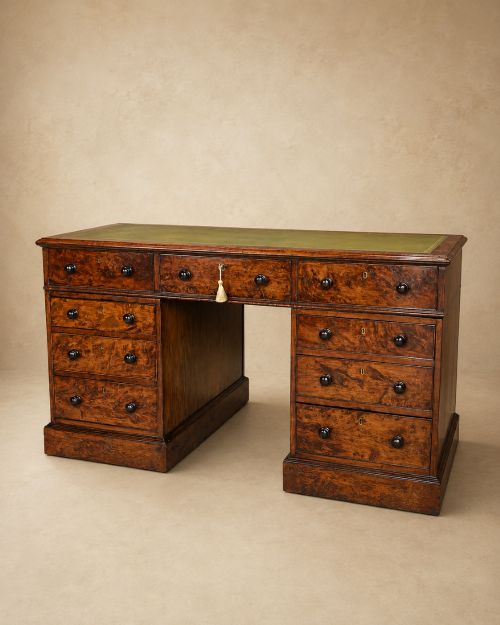
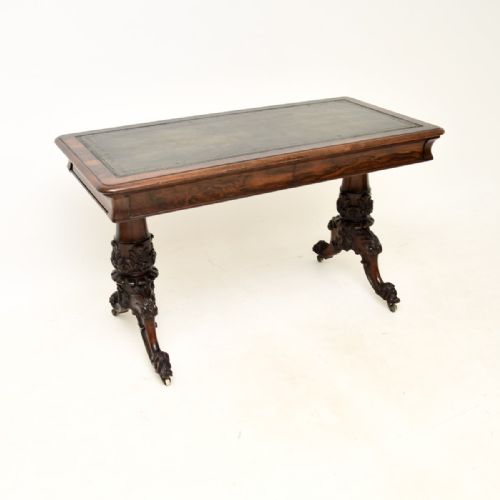
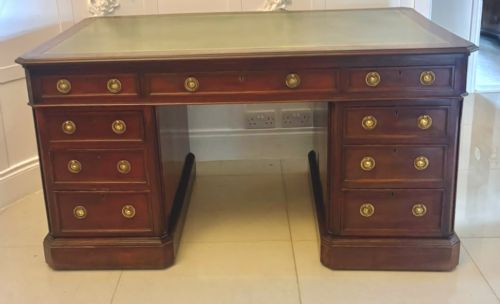
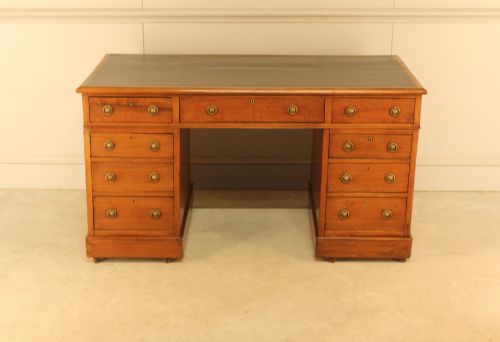
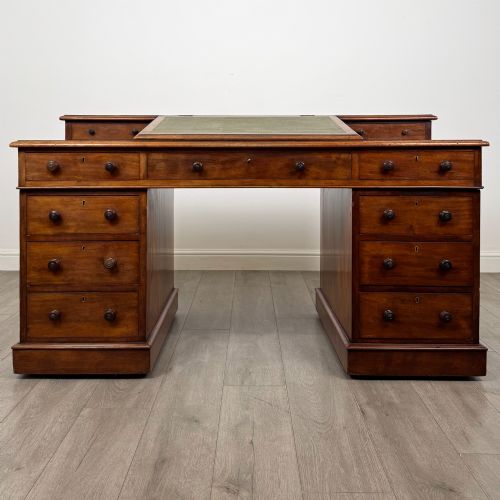
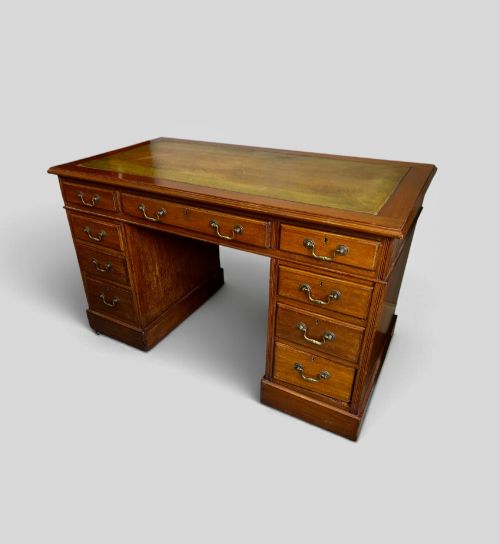
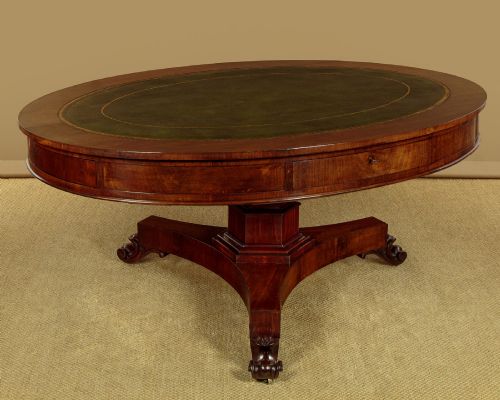
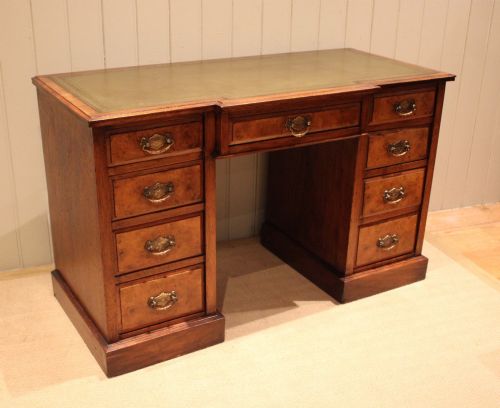
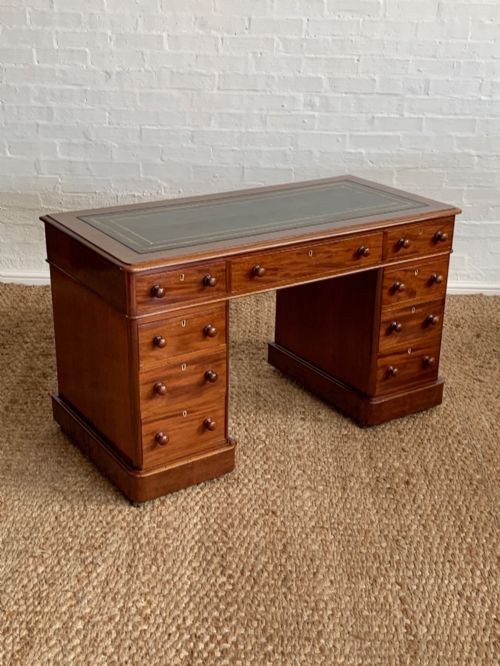
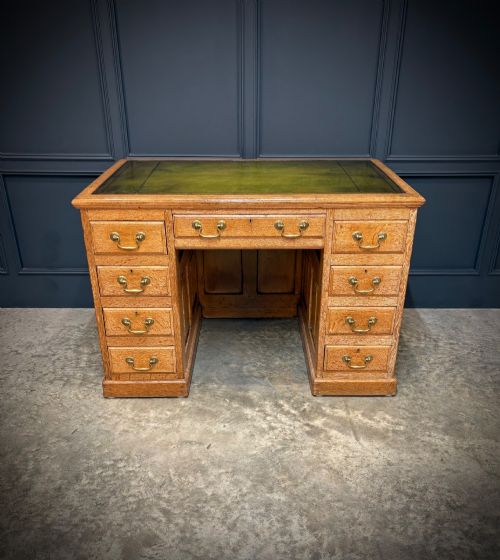
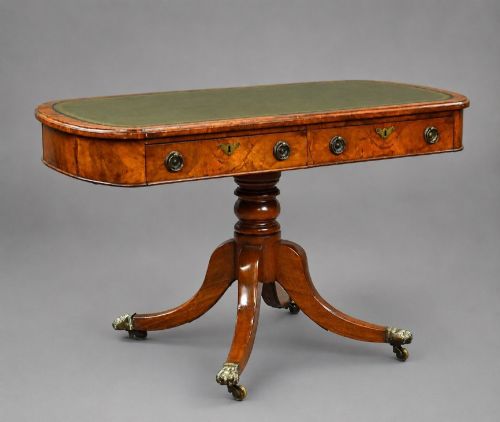
A victorian green pedestal primarily points toward heavy timber partner desks and single-pedestal writing tables equipped with contrasting writing surfaces. The dominant configuration pairs carved oak, mahogany, or walnut cabinetry with a tooled olive or emerald leather skiver inset into the top. These pieces serve principally as working library and study desks originating from the nineteenth century.
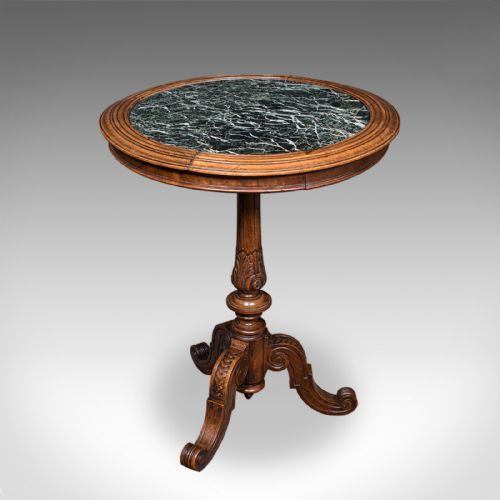
The archive shows strong representation of carved oak examples featuring Green Man motifs alongside mahogany and ash variations. These heavy pedestal formats span multiple decades of the nineteenth century, holding practical workspaces within twin columns of drawers. The green element refers specifically to the dyed leather writing surfaces integrated into the desk tops rather than the timber structure itself.
Materials and construction methods
Makers utilised dense timbers such as mahogany, oak, walnut, and pitch pine to build the heavy pedestal bases and panelled carcases. Cabinetmakers joined these woods using traditional dovetail methods for drawer construction and sturdy framing to support substantial writing loads.
Writing surfaces received bonded inserts of dyed green leather, frequently decorated with gold-tooled borders. Brass hardware, including drop handles and escutcheons, fastened securely to the drawer fronts of mahogany and oak pedestals.
Listings feature nineteenth-century furniture spanning the Victorian and Edwardian eras, constructed from mahogany, oak, walnut, and leather.
Differentiating quality across pieces
Quality rests upon the depth of the timber figuring, such as flame mahogany or burr walnut, and the crispness of the hand-carved ornamentation found on oak Green Man desks. Superior examples display substantial proportion, solid secondary woods inside the drawers, and integrated architectural mouldings.
The execution of the leather writing surface and its surrounding blind tooling indicates the grade of the piece. Master craftsmen applied finer gold leaf tooling and thicker hide inserts, whereas utility office desks utilised simpler panels.
Wolfe & Hollander
The Victorian Green Pedestal Glossary
- Pedestal desk
- A heavy writing table supported by two separate stacks of drawers flanking a central kneehole space. These units often separate into three modular sections for transport.
- Partners desk
- A large double-sided pedestal desk designed for two people to work opposite one another, featuring drawers and cupboards on both faces.
- Skiver
- The flat leather panel inset into the top of a desk to provide a smooth writing surface. These are frequently dyed green and ornamented with gilt tooling.
- Green Man
- A sculptural architectural motif depicting a human face surrounded by or sprouting from foliage, commonly carved into nineteenth-century oak furniture.
- Kneehole
- The central recessed space beneath a desk top situated between the supporting drawer pedestals, allowing room for the user's legs.
Victorian Green Pedestal: Frequently Asked Questions
How do I care for leather desk tops?
Leather desk skivers require gentle cleaning with a damp cloth and occasional application of specialised leather balms to prevent drying and cracking. Avoiding excessive direct sunlight helps preserve the dyed green colour.
Harsh chemical cleaners strip the original gold tooling and damage the leather surface, so mild saddle soaps are preferred by conservators.
Are these desks modular?
Many nineteenth-century pedestal desks are built in three separate sections consisting of two drawer columns and a heavy top. This modular construction assists with moving the furniture through doorways.
The top simply lifts off the pedestals once internal securing screws or wooden pins are removed.
What woods were used?
Cabinetmakers utilised dense native and imported timbers, predominantly mahogany, oak, walnut, and pitch pine. Burr walnut and flame mahogany veneers appeared on higher-status pieces.
Secondary timbers like pine and oak were routinely selected for hidden drawer linings and internal carcase framing.