



Classical Landscape Wall Art
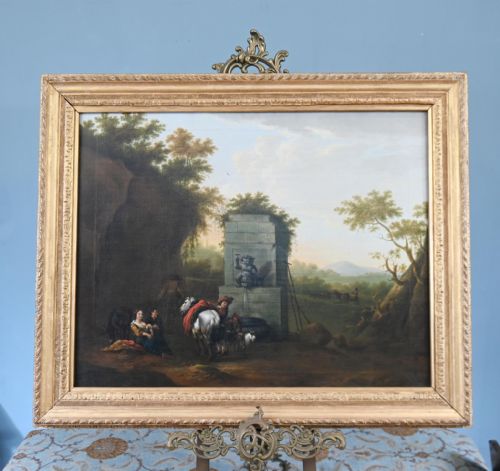
Classical landscape wall art brings pastoral ruins, mythological figures and wooded vistas into a room through oil paintings, engravings and tapestries.
Classical Landscape Wall Art
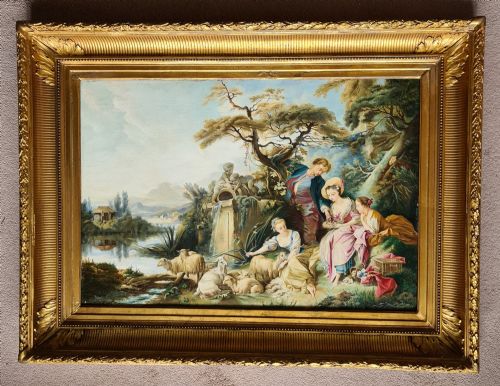
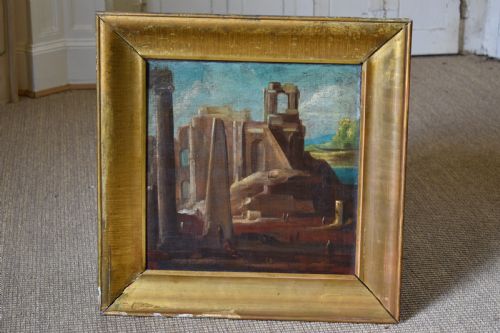
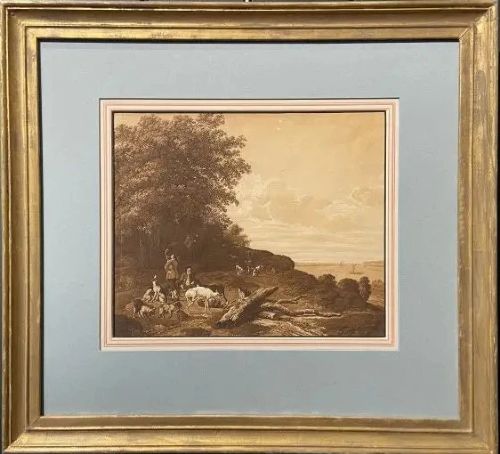
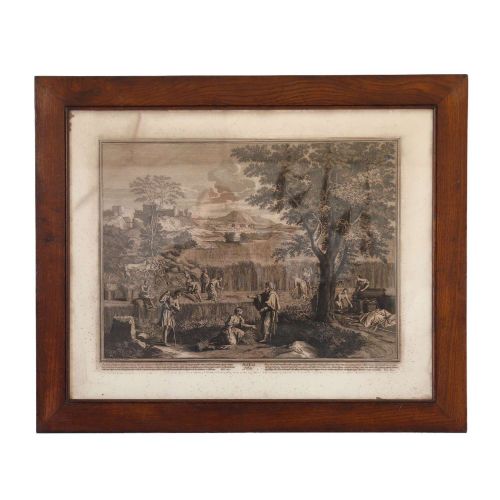
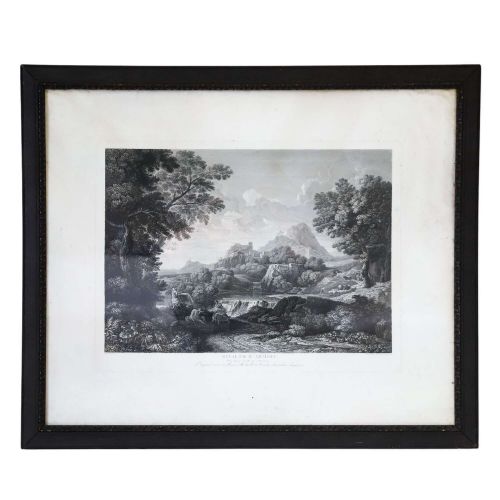
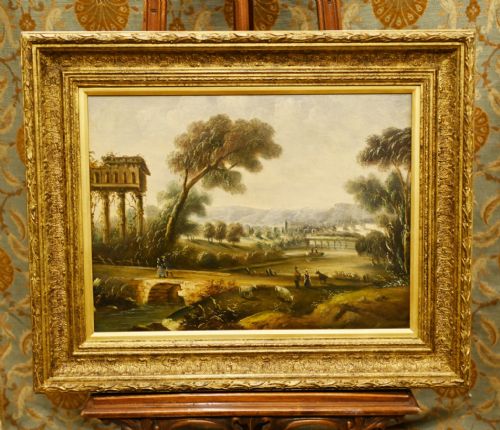
Classical landscape wall art encompasses oil paintings, engravings, watercolours and tapestries depicting idealised scenes with architectural ruins, shepherds and mythological figures. You will encounter seventeenth-century Dutch and Flemish works alongside eighteenth-century Italianate compositions and nineteenth-century Grand Tour souvenirs.
The subjects range from tranquil pastoral gatherings and harbour views to expansive mountainous vistas and wooded rivers. These pieces draw on French Baroque, Dutch Golden Age and Neoclassical traditions to construct balanced, theatrical compositions of nature.
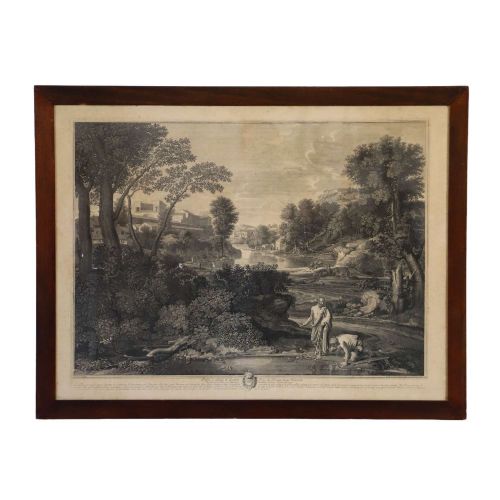
Canvas oil paintings and framed paper engravings dominate the selection, supported by large woven tapestries and period watercolours. Many pieces record direct copies or prints after masters such as Claude Lorrain, Nicolas Poussin and François Boucher.
Materials and construction
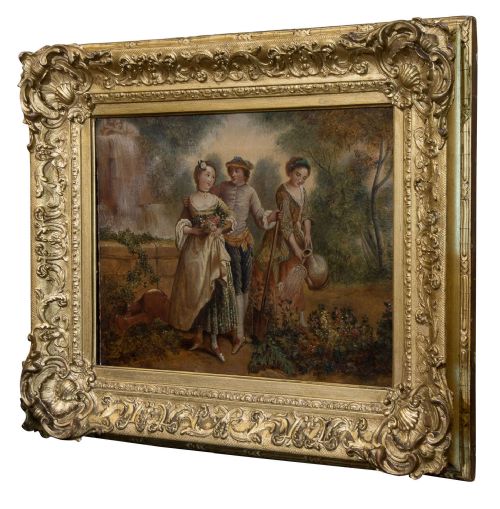
Painters utilised oil paint on canvas or wood panels, building atmospheric depth through layered glazes and fine brushwork. Engravings and prints rely on paper substrates, sometimes hand-tinted or paired with period wooden frames enriched with gesso and gold leaf.
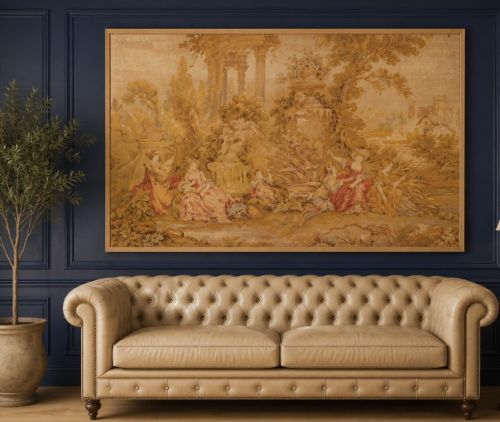
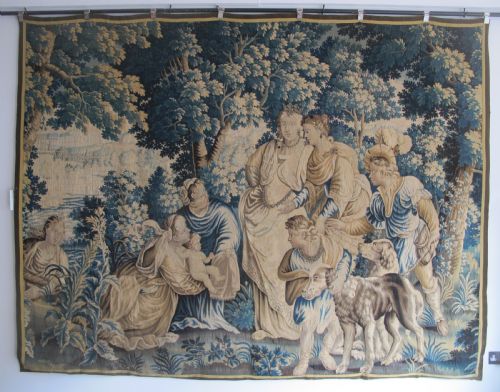
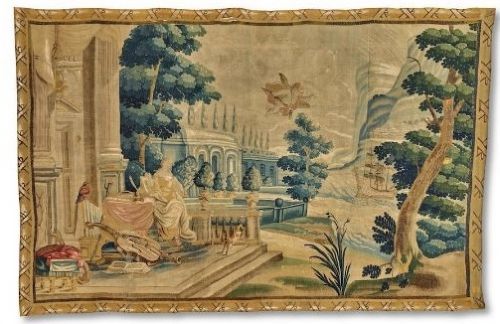
Tapestries employ wool and silk threads woven by hand on large looms to construct complex narrative scenes of verdure and mythology. Original frames often feature carved wooden mouldings that match the specific period of the artwork they enclose.
A seventeenth-century canvas captures a chestnut horse standing by a river, keeping watch over centuries of changing pastures.
Evaluating quality and execution
Quality rests upon the delicacy of the brushwork or the crispness of the plate impression, distinguishing skilled studio output from hurried copies. The handling of atmospheric light, distant perspective and the anatomical accuracy of figures set superior paintings apart.
Condition plays a central role, particularly the preservation of original canvas surfaces, minimal overpainting and the intact state of period frames. Woven tapestries depend on thread retention and colour vibrancy across large expanses.
Johannes Lingelbach·Étienne Baudet·John Ferneley Senior·Frederick Waters Watts·Eugene Verboeckhoven·Jan Evert Morel·Augustus Jules Bouvier
The Classical Landscape Wall Art Glossary
- Grand Tour
- A traditional trip through Europe undertaken by upper-class young men to collect art and antiquities. Pieces from this travel tradition often record Italian views and classical ruins.
- Capriccio
- An architectural fantasy placing together fictional or real buildings, ruins and other architectural elements in a picturesque composition. Artists often populated these scenes with small figures.
- Verdure tapestry
- A wall hanging featuring a stylized landscape dominated by plants, trees and foliage, frequently including birds or animals. These Flemish weavings date predominantly to the seventeenth century.
- Engraving
- A printmaking process where an artist cuts an image into a metal plate with a burin. The inked plate then transfers the detailed design onto paper under pressure.
Classical Landscape Wall Art: Frequently Asked Questions
What defines a classical landscape?
A classical landscape presents an idealized view of nature structured around architectural ruins, mythological narratives, and balanced compositional elements. These works draw inspiration from ancient classical antiquity and Mediterranean geography.
The genre prioritizes harmony and theatrical depth over raw realism, using trees and buildings to frame distant horizons populated by small figures.
How do I date an antique painting?
Dating relies on examining the canvas preparation, stretcher construction, pigment types, and the style of the framing. Seventeenth and eighteenth-century works often exhibit hand-woven linen supports and specific priming methods.
Subject matter, costume details, and artist signatures or attribution labels further help anchor a piece within a precise historical decade.
Where were tapestries displayed?
Large tapestries hung in the principal reception rooms and halls of wealthy residences to display taste and wealth. Beyond decoration, their dense wool and silk weaves provided insulation against drafts on stone walls.
Flemish verdure panels and biblical tapestries were commissioned specifically to fit expansive architectural wall spaces.
What is a Grand Tour souvenir?
Grand Tour souvenirs are paintings, watercolours, and prints purchased by travellers visiting cultural sites in Italy and France during the eighteenth and nineteenth centuries. These items captured famous ruins, classical sculptures, and panoramic views.
They served as portable proof of education and refinement upon the traveller's return home.