

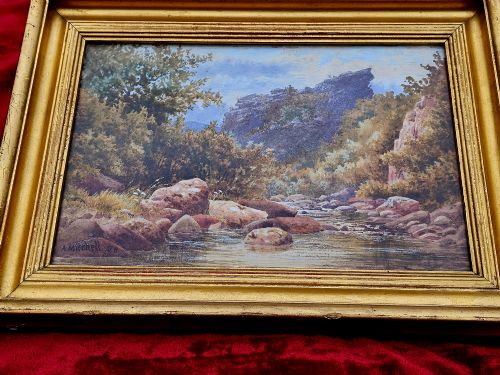
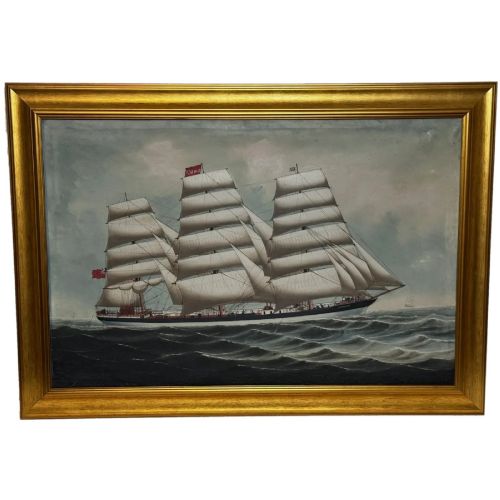
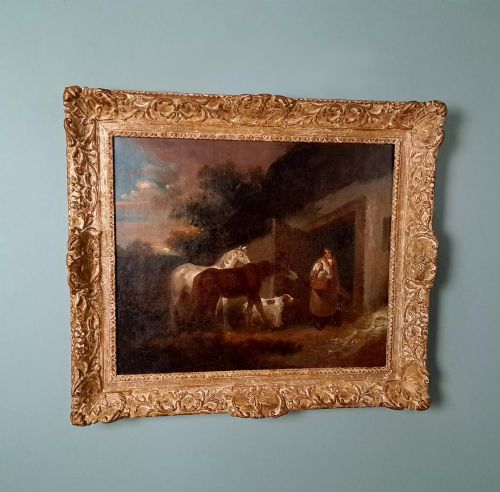
Gold Frame Landscape Artwork
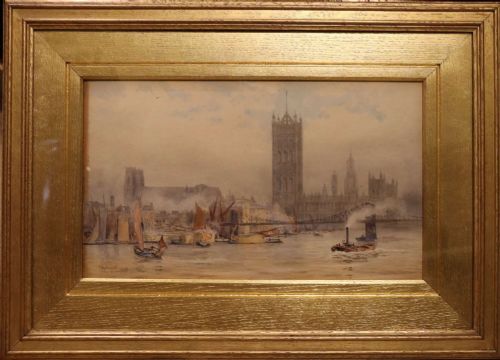
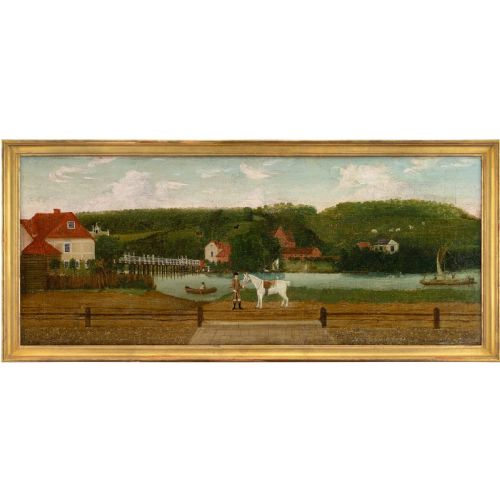
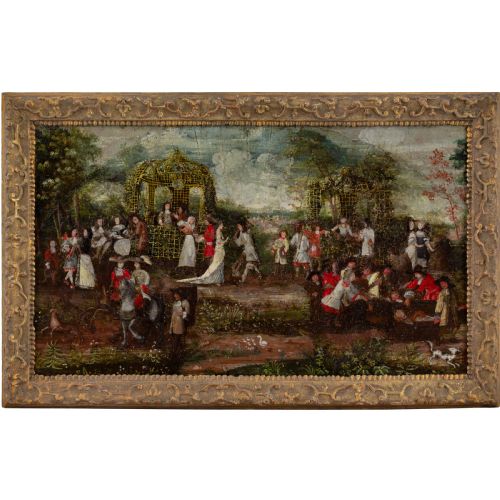
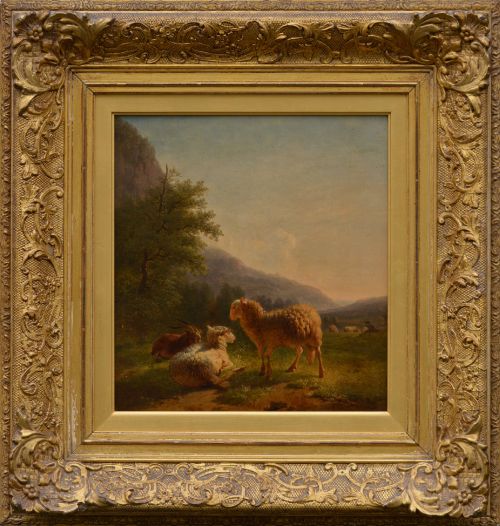
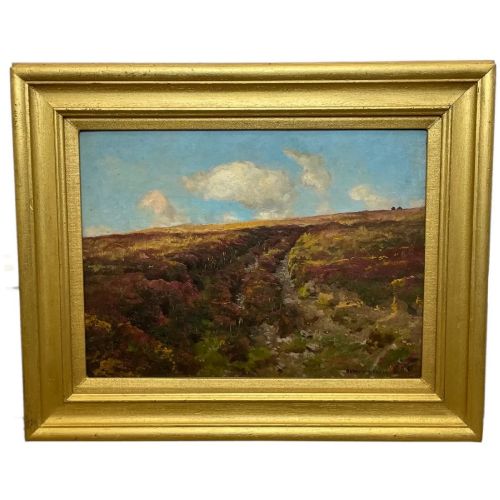
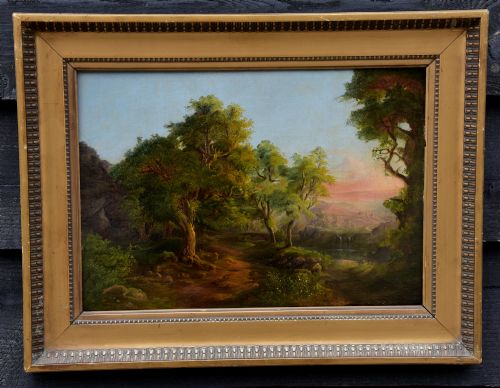
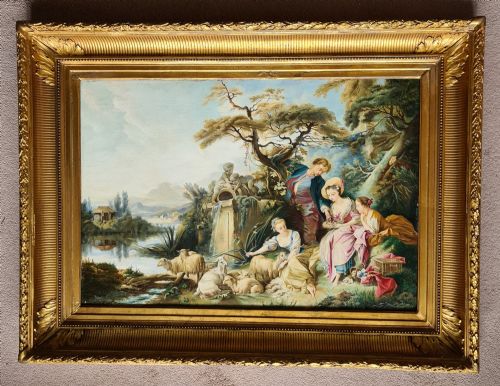
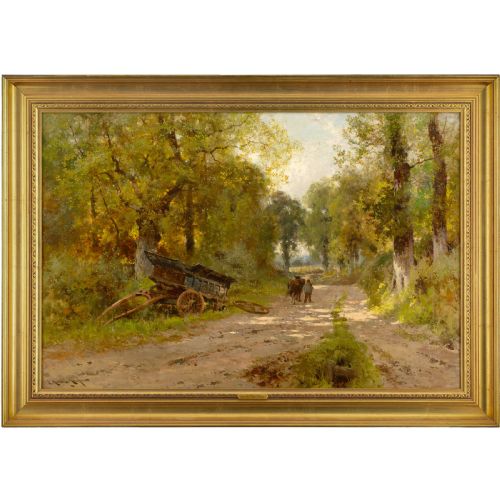
When you search for gold frame landscape artwork, you are looking at oil paintings and watercolours enclosed in carved or moulded surrounds.
Gold Frame Landscape Artwork
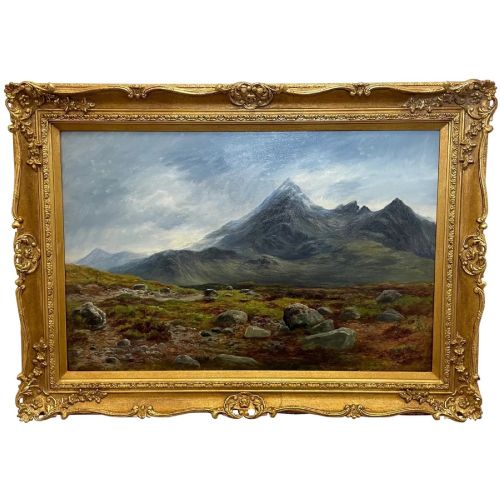
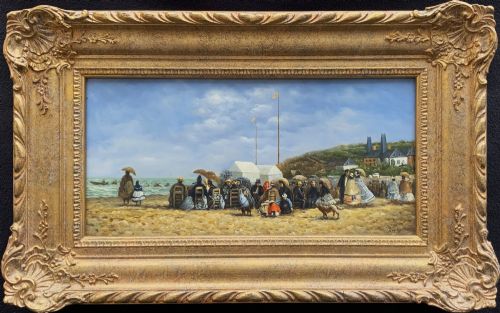
A gold frame landscape artwork brings together scenic views of the countryside, sea or coast with a gilded enclosure. Buyers browsing this selection encounter pieces originating from the nineteenth century through to the mid-twentieth century, including Victorian pastoral scenes, British and French impressionism, and Dutch manner works.
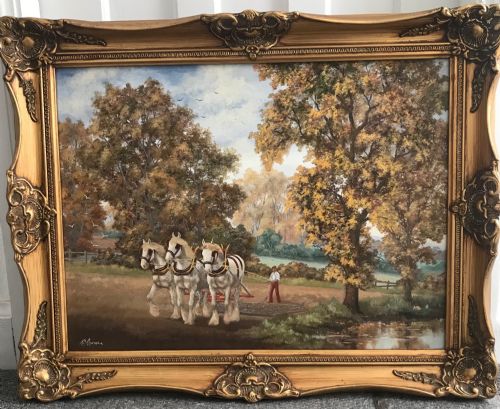
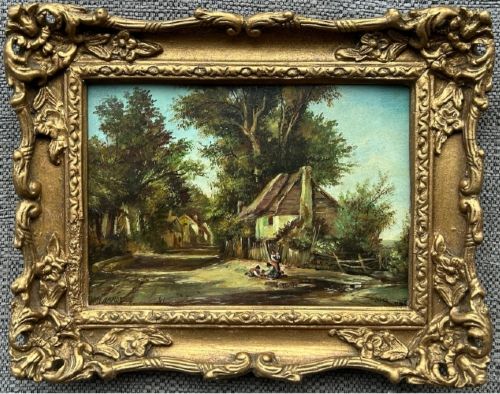
The subjects span mountain ranges, river paths, woodland clearings, marine views, and agricultural fields populated by figures, livestock, or horses. These works are predominantly executed as oil paintings on canvas, panel, or board, alongside occasional watercolours on paper.
The enclosing surrounds vary from simple wooden mouldings to elaborate period pieces finished in gold leaf, gesso, or giltwood. Such works serve as traditional wall art and framed paintings designed to anchor a room with a defined historical focus.
Materials and Construction
Artists painted primarily with oil paint on stretched canvas, wooden panels, or prepared board, layering pigments to achieve depth in foliage, water, and skies. Watercolours were similarly applied to paper for lighter, more translucent atmospheric effects.
The surrounding frames were constructed from wood, then coated with gesso to create a smooth surface for gilding. Craftsmen applied fine gold leaf or gilt finishes to the moulded timber, often incorporating decorative corner ornaments or textured patterns.
Materials recorded across the inventory include oil paint, canvas, wood, paper, gesso, gilt wood, and giltwood.
Factors of Quality
The proficiency of the brushwork and the artist's ability to render light, shadow, and perspective dictate the visual success of the painted scene. Superior works display confident handling in details such as foliage, water reflections, and human or animal anatomy.
The integrity and craftsmanship of the surround contribute significantly to the overall piece. Hand-carved or deeply moulded wooden frames finished with genuine gold leaf demonstrate a higher standard of manufacture than simple modern substitutes or damaged plaster.
Eugène Verboeckhoven·William Beattie-Brown·William Howard Hardy·Arthur Wardle·John Horace Hooper·Reginald Arthur Borstel·William Joseph Shayer Senior·Alfred Fontville de Breanski Jr·Kershaw Schofield·George Houston·William Banks Fortescue·Robert Morson Hughes·Thomas W Lascelles·James Kay·Augusto Alberici·Gabriel Mathieu·David Bates·Benjamin Barker of Bath·Thomas Smythe·Robert John Hammond·Alfred Pollentine·Walter Heath Williams
The Gold Frame Landscape Artwork Glossary
- Giltwood
- Wood that has been covered with a thin layer of gold leaf or gold paint. This finish provides a bright, reflective boundary that enhances the colours within the painted scene.
- Gesso
- A mixture of binder mixed with chalk, gypsum, or pigment used as a base on wood frames before gilding. It allows craftsmen to carve crisp relief details into the moulding.
- Oil on Canvas
- Pigments mixed with drying oils applied to a woven fabric support stretched over a wooden frame. This medium allows for rich colour blending and textured brushstrokes.
- Watercolour
- Paint consisting of colour pigments suspended in a water-soluble vehicle, typically applied to paper. It yields transparent washes that capture light effects quickly.
Gold Frame Landscape Artwork: Frequently Asked Questions
What periods do these artworks cover?
The pieces span the nineteenth and twentieth centuries, encompassing Victorian pastoral and marine traditions alongside later impressionist movements. Artists worked across distinct regional schools in Britain and continental Europe.
Buyers will find dates stretching from the eighteen-thirties through to nineteen-sixty, reflecting evolving approaches to landscape painting over more than a century.
How should I hang a heavy framed painting?
Secure the piece directly into wall studs or use appropriate masonry anchors capable of supporting the combined weight of the painting and its wooden surround. Ensure the hanging wire and D-rings on the back are robust enough for the load.
Position the artwork at eye level away from direct sunlight and moisture sources to protect both the canvas and the gilded finish.
Are watercolours as durable as oil paintings?
Watercolours on paper are more sensitive to light and humidity than oil paint on canvas or panel. They require framing under glass with acid-free mounts to prevent fading and paper degradation.
Oil paintings present a more resilient surface, though both mediums benefit from stable indoor environments free from extreme temperature fluctuations.
How do I identify a Victorian landscape?
Victorian landscapes often feature narrative elements such as figures working in harvest fields, livestock near rivers, or cottages nestled in woodland. The palette tends towards naturalistic earth tones, deep greens, and dramatic sunset skies.
Brushwork is typically controlled and detailed, capturing realistic textures in foliage, water, and animal coats consistent with nineteenth-century academic standards.