




Green Tree River Painting
Green tree river painting works bring peaceful landscape views into a room through watercolours and oils.
Green Tree River Painting
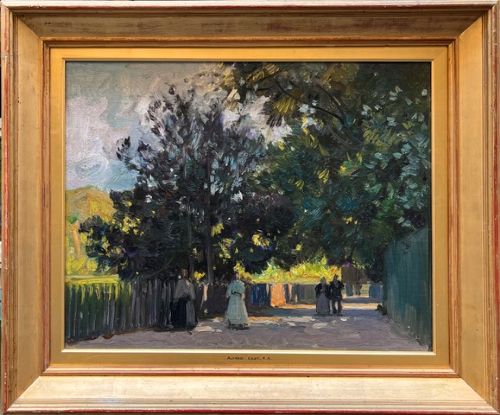
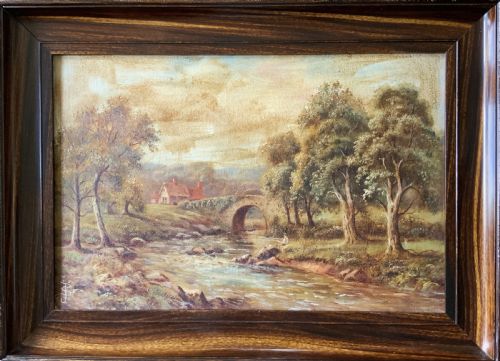
A green tree river painting captures natural waterways, wooded banks, and quiet rural streams through traditional artistic mediums. Buyers hunting for a green tree river painting will encounter rural scenes rendered in both oil and watercolour from various European schools.
The pieces available span from the late nineteenth century into the mid-twentieth century, capturing both British and continental European countryside views. Works range from intimate watercolour studies of the Thames Valley to larger oils depicting French rivers and canals.
Common subjects across these landscapes include willow trees, pastoral river crossings, and waterside paths under changing morning light. Artists from British Impressionist, Victorian, and French Barbizon backgrounds shaped this varied selection of pastoral scenery.
Materials and technique
Canvas and paper serve as the primary supports for these landscape works, carrying oil paint or watercolour pigments applied by hand. Oil on canvas pieces utilise rich pigments to build texture in foliage and water, while watercolours rely on delicate washes on paper.
Many surviving examples retain their original gilt wood frames that complement the painted scenes. Artists employed traditional brushwork techniques ranging from the fine detail of late nineteenth century realism to the looser application seen in post-impressionist board works.
Materials across this selection include canvas, oil paint, paper, watercolour pigment, and gilt wood frames from the nineteenth and twentieth centuries.
What varies in quality
The standard of execution in handling light, shadow, and reflection across water dictates the strength of a composition. Works by recorded artists with documented exhibition histories command attention through assured brushwork and atmospheric depth.
Condition plays a role in preservation, from the stability of the canvas and paint layers to the integrity of the accompanying wood frame. Finer pieces demonstrate a strong spatial awareness that draws the eye naturally along the riverbank.
George Graham·Alfred Young Nutt·Sir Alfred East·Sydney Yates Johnson·William Bradley·Alois Arnegger·Antoine Bouvard
The Green Tree River Painting Glossary
- Oil paint
- A slow-drying paint made by mixing pigments with a drying oil, commonly linseed. This medium allows artists to build rich textures and deep tones on canvas.
- Watercolour
- A paint consisting of colour pigments suspended in a water-soluble vehicle, typically applied to paper. It produces transparent washes that capture delicate atmospheric effects.
- Gilt wood
- Wood carved and coated with a thin layer of gold leaf or gold paint. This material forms the traditional decorative framing for classical paintings.
- Impressionism
- An art movement focusing on accurate depiction of light and its shifting qualities. Practitioners often use small, thin brush strokes and open composition.
Green Tree River Painting: Frequently Asked Questions
What periods do these paintings come from?
The selections span the late nineteenth century through to the mid-twentieth century, taking in Victorian and Edwardian eras. Continental European works from French and Austrian painters also feature alongside British scenes.
Dates cluster around the 1890s and early decades of the twentieth century, representing traditional landscape and impressionist movements.
How should I care for an oil painting?
Keep canvases away from direct sunlight and sources of extreme heat to prevent the oil paint from cracking or fading over time. Dust gently with a soft, dry cloth without applying pressure.
Avoid using liquid cleaners on the canvas or the gilt wood frame, as moisture damages traditional painted surfaces.
Are watercolours framed differently than oils?
Works on paper require glass protection and mounts to keep the delicate watercolour pigments away from humidity and the frame surface. Oils on canvas or board remain open to the air within their wooden frames.
Both presentation styles rely on period frames that match the age and character of the artwork.
Where were these landscape scenes painted?
Locations include British waterways such as the Thames Valley, Bolton Abbey in North Yorkshire, and Marble Hill. Continental locations feature French rivers including the Seine and scenes in Provence.
Artists often travelled to rural spots to record natural light upon trees, streams, and canals.